Patriots draft analysis: How today’s picks shape the 2026 depth chart
Patriots draft analysis matters because each selection reshapes the roster. A single pick can alter the starting lineup and the depth chart. Therefore, fans need clear context on strategy and player potential.
If you follow New England closely, this breakdown answers tough questions. We will examine how trades, tackle additions, and pass rush plans connect. However, we keep jargon low so all fans can follow along. Expect tape-based takes, measurable traits, and realistic projections for playing time.
This Patriots draft analysis shows who bolsters depth now and who projects long term. As a result, you can judge whether New England improved its pressure rate and run defense. I break down each pick and its projected snap share. Read on for grade breakdowns, roster impact, and buy or sell takes. This is must-read analysis for fans who care about roster building.

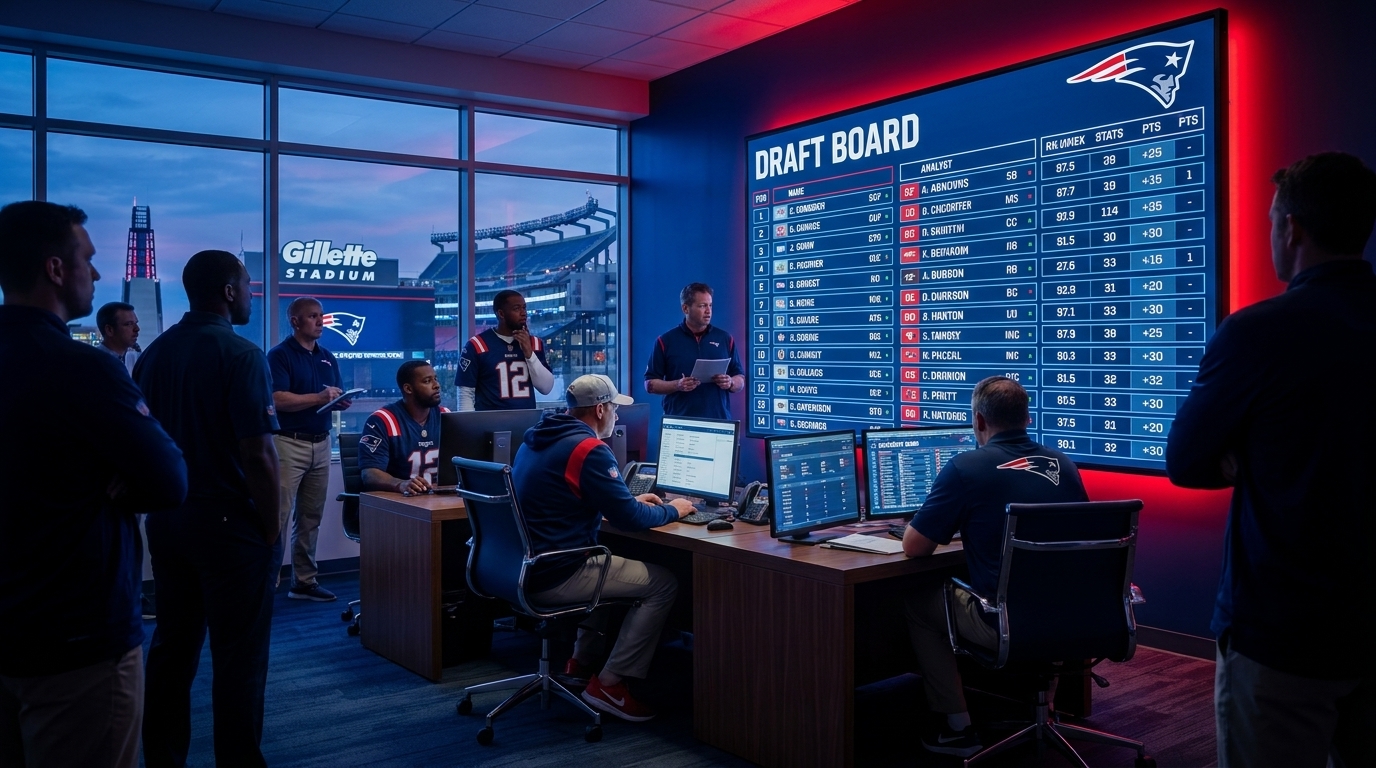
Image description: Dynamic silhouettes at an NFL draft stage in Patriots colors with a blank draft board, football icons, and schematic arrows.
Patriots draft analysis: Strategy and key player breakdowns
New England entered the draft with a clear plan. The front office traded into early picks to target immediate needs. As a result, the team prioritized offensive line help and upside pass rushers.
Why this matters now
Each selection affects the depth chart and future starters. Therefore, understanding player profiles helps fans predict snap shares. Limiting pressure in 2026 is just as key as getting pressure, and these picks reflect that balance.
Primary targets and how they fit
- Caleb Lomu — projected left tackle
- Size and measurables: 6 foot 6, 313 pounds, about 33.75 inch arm length
- College traits: Strong quick feet and consistent PFF pass blocking grades above 75.0 in two seasons at Utah
- Roster fit: Expected to compete for a long term left tackle role, and he gives the Patriots starter level upside early
- Quote: “Patriots fans will likely want to know his arm length — it’s 33¾ inches, much more in line with standards at the position.”
- Gabe Jacas — edge rusher with upside
- 2025 production: 11 sacks at Illinois, high motor and bend around the edge
- Roster fit: Provides a potential factor on third downs and rotational pass rush if unleashed. He adds depth behind top rushers
- Quote: “I enjoyed his tape in the predraft process.”
- Dametrious Crownover — developmental tackle
- Size and measurables: 6 foot 7, 319 pounds, over 35 inch arms
- 2025 pass blocking: 58.4 grade; allowed 2 sacks, 2 hits and 23 hurries on 428 snaps
- Roster fit: High upside in the long run because of length; may need technique polishing early
- Obiazor — multi role defensive piece
- Stability: Three season grades showing 72.9 run defense, 82.3 tackling and 77.8 pass rush
- 2025 impact: 9 pressures on 54 blitzes, 26 defensive stops and two interceptions
- Roster fit: Versatile option for sub packages and early special teams contributions
- Morton — quarterback upside with injury history
- 2025 metrics: 6.3 percent big time throw rate and a 72.7 PFF passing grade
- Injury note: Played through two injuries in 2025; durability remains a question
- Roster fit: Projects as developmental depth with potential to push for backup work
- Karon Prunty — coverage and playmaking corner
- 2025 grade: 86.8 overall, allowed 20 receptions for 220 yards on 45 targets
- Coverage impact: Two touchdowns allowed, one interception and six pass breakups; passer rating allowed 65.0
- Roster fit: Adds depth to the secondary and immediate nickel possibilities
Strategic takeaways
The Patriots spent draft capital to move up and target specific traits. Consequently, they mixed immediate starters with developmental pieces. There is no requirement for their top three picks to see significant playing time in their rookie year, but the talent pool improves roster competition.
Overall, these choices aim to shore up New England’s offensive line and add edge rush depth. As a result, the draft class should help reduce pressure allowed and improve run defense over time.
Draft pick grades and depth chart impact
Below is a quick reference table showing each key Patriots pick, their measured grades, physical traits, and expected role on the 2026 depth chart.
| Player Name | Draft Round/Pick | PFF Grades / Notes | Physical Metrics (height, weight, arm length) | Projected Impact |
|---|---|---|---|---|
| Caleb Lomu | 1st Round 28th overall | Pass blocking grades above 75.0 in two seasons | 6 foot 6, 313 pounds, about 33.75 inch arms | Projected long term left tackle starter; immediate competition for starting job |
| Gabe Jacas | Selection not listed | 11 sacks in 2025; high pass rush upside | Not available | Rotational edge rusher with upside on third downs |
| Dametrious Crownover | Selection not listed | 58.4 pass blocking grade in 2025; needs polish | 6 foot 7, 319 pounds, over 35 inch arms | Developmental tackle; long term upside due to length |
| Obiazor | Selection not listed | Stable three year grades: 72.9 run defense, 82.3 tackling, 77.8 pass rush | Not available | Versatile sub package defender and special teams contributor |
| Morton | Selection not listed | 72.7 PFF passing grade; 6.3% big time throw rate in 2025 | Not available | Developmental quarterback depth; potential backup if healthy |
| Karon Prunty | Selection not listed | 86.8 overall grade in 2025; coverage passer rating allowed 65.0 | Not available | Immediate nickel/slot option; adds coverage depth |
Use this table to compare traits and see who might climb the depth chart sooner. The picks mix immediate help with developmental pieces, improving competition across positions.
Roster moves around the draft: Offseason management and UDFA signings
The Patriots managed roster spots with clear intent during the draft period. They balanced draft picks, rookie invites, and undrafted talent to maximize competition. As a result, the roster heading into minicamp reflects both immediate needs and long term planning.
Rookie mini camp invites and IPP impact
- Players invited included Korey Foreman, Jordan Kwiatkowski, Peter Manuma, Demarcus “Floyd” Lacey, Mitch McCarthy, Eli Simonson, Declan Williams, Malcolm Greene, and Logan Collier
- The team lists Lorenz Metz as its IPP player with a roster exemption, which opens four roster spots
- Therefore, the Patriots can evaluate more prospects without sacrificing existing roster flexibility
UDFA class and retention compared to last year
- The club kept two UDFAs on Opening Day last season, including Elijah Ponder and Efton Chism, showing the value of undrafted signings
- However, this year’s UDFA group appears less impactful than last year’s. “This doesn’t appear to be an outstanding UDFA class like last year’s class was.”
- Consequently, the team may rely more on draft picks to add meaningful depth in 2026
Cuts, elevations, and roster churn
- Corey Burden was added at cutdown while Lan Larison and Brock Lampe landed on injured reserve
- CJ Dippre, Mehki Butler, Jeremiah Webb, and Brandon Crossley were waived, though Dippre later earned elevation to the 53 man roster
- These moves show the Patriots will consistently test younger players in live settings
Front office and scouting notes
- Oium is not expected to return, a change reported by Aaron Wilson. This shift could alter how the team sources mid round and UDFA prospects
- As a result, scouting priorities may shift toward more measurable traits and tape-based fits for New England’s system
Strategic significance
Short term, the moves increase competition at key positions. Long term, the IPP exemption and rookie invites let the Patriots develop targeted depth. Therefore, the roster maneuvers support both immediate competition and sustained roster building.
CONCLUSION
The Patriots draft analysis shows a clear, targeted approach to roster building. New England traded to reach players who fit scheme needs. As a result, the team balanced immediate starters with developmental pieces.
Caleb Lomu gives the offensive line a potential long term left tackle. Gabe Jacas and other pass rushers add depth for third downs. Meanwhile, developmental tackles and secondary additions create competition across the depth chart.
Strategically, the IPP exemption and rookie invites widen evaluation opportunities. However, the UDFA class appears less eye catching than last year’s group. Therefore, the draft picks carry greater importance for immediate depth.
There are reasons for optimism. The front office improved measurable traits and positional competition. “The roster is much better than it was a year ago,” and these picks should speed growth.
For fans, this class matters because it changes the 2026 roster picture. Expect increased competition in training camp and a clearer path to starting snaps for top performers.
Stay connected for ongoing coverage from Patriots Report LLC at Patriots Report LLC and on Twitter/X Zach Gatsby for updates, film notes, and roster tracking.
Frequently Asked Questions (FAQs)
Q: How much will the top picks move the 2026 depth chart?
The top picks should move the needle. Caleb Lomu projects as a long term left tackle option. He brings size, quick feet, and pass blocking grades above 75.0. Therefore, he can challenge for a starting job sooner rather than later. Gabe Jacas supplies edge rush depth after an 11 sack 2025 season. As a result, the class improves competition and starter upside across several positions.
Q: Is Caleb Lomu ready to start as a rookie?
Not automatically, but he is close. He measured 6 foot 6, 313 pounds with about 33.75 inch arms. His tape and PFF grades suggest starter traits. However, the team will still test him in camp and early practices. Coaches will decide based on technique and consistency.
Q: Will these picks fix New England’s pressure rate quickly?
Expect gradual improvement. The Patriots finished 2025 with a 31.1 percent pressure rate. Jacas and other rushers add pass rush juice in sub packages. Over time, rotations should lift the team’s pressure figures.
Q: What should fans expect from the UDFA pool and rookie invites?
The UDFA class looks quieter than last year. The team did keep UDFAs like Elijah Ponder before, so opportunities exist. Meanwhile, Lorenz Metz’s IPP exemption opens extra spots for evaluation.
Q: Do front office changes affect scouting and roster building?
Yes. Oium’s departure was reported by Aaron Wilson. As a result, scouting priorities may shift. Expect more emphasis on measurable traits and tape fits for New England’s system.