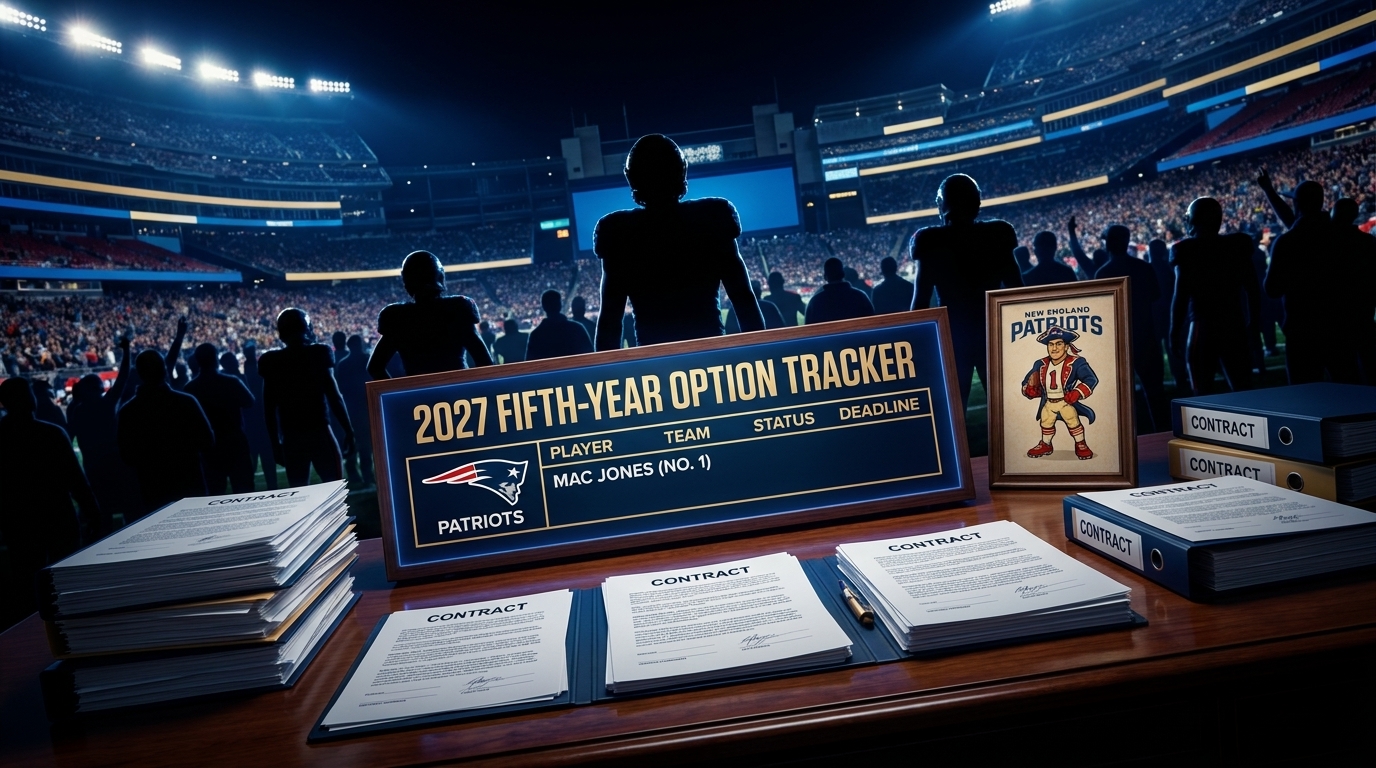
The 2027 NFL fifth-year option tracker arrives at a critical moment for teams and fans. It shows which 2023 first-rounders earned extra security and which players enter a pivotal offseason. Fifth-year options let teams lock a player for a fifth season, and the 2020 CBA changed them to be fully guaranteed rather than injury only. Because of that change, option decisions now carry bigger cap and roster implications.
This tracker reveals team contract strategy in clear terms. For example, it highlights whether franchises favor long-term deals or short-term control. It also signals how clubs value performance-based benchmarks and usage-based benchmarks when setting option salaries.
Fans should watch trends like exercised options, declined options, snap-rate benchmarks, and how teams compare to franchise tag or transition tag moves. In short, the 2027 tracker offers an early window into roster planning, salary-cap posture, and draft evaluation philosophy. Read on to see what each decision means for players, teams, and the market moving forward.
What are fifth-year options?
A fifth-year option lets a team extend a first-round pick’s rookie contract by one season. Teams choose by the May 1 deadline for 2023 draftees. Under the 2020 CBA, those options became fully guaranteed. As a result, teams face bigger cap and roster risk. Therefore teams weigh performance, health, and long-term fit before deciding.
2027 NFL fifth-year option tracker: what it shows
The 2027 NFL fifth-year option tracker catalogs each decision. It highlights which players earned security and which face free agency sooner. For example, the Panthers exercised Bryce Young’s option at about 25.9 million dollars. The Texans picked up C.J. Stroud’s and Will Anderson Jr.’s options. By contrast, the Colts declined Anthony Richardson’s option. These entries reveal patterns in team contract strategy and draft evaluation.
How salaries are determined
Option salaries come from performance- and usage-based benchmarks. They blend a player’s stats, position, and snap rates. For quarterbacks like Young and Stroud, benchmarks push salaries higher. For linemen and defensive players, the formula uses position tiers and snap-rate thresholds. Importantly, because options now fully guarantee pay under the 2020 CBA, teams must be precise in forecasting future production.
Real-world implications
Teams use the tracker to guide roster planning and salary-cap moves. Consequently clubs decide between short-term control and early long-term deals. Fans and analysts can read the tracker as an early signal of a franchise’s valuation and risk tolerance.

2027 NFL fifth-year option tracker — Key fifth-year option decisions
Quick table of notable 2023 first-rounders and their 2027 fifth-year option outcomes.
| Player | Team | Status | Fifth-year option salary |
|---|---|---|---|
| Bryce Young | Panthers | Exercised | $25.9M |
| C.J. Stroud | Texans | Exercised | $25.9M |
| Will Anderson Jr. | Texans | Exercised | $21.51M |
| Anthony Richardson | Colts | Declined | $22.48M |
| Devon Witherspoon | Seahawks | Exercised | $21.16M |
| Paris Johnson Jr. | Cardinals | Exercised | $19.07M |
| Tyree Wilson | Raiders | Declined | $14.48M |
| Bijan Robinson | Falcons | Exercised | $11.32M |
| Jalen Carter | Eagles | Exercised | $27.13M |
| Darnell Wright | Bears | Exercised | $19.07M |
| Peter Skoronski | Titans | To be exercised | $19.07M |
| Jahmyr Gibbs | Lions | Exercised | $14.29M |
| Lukas Van Ness | Packers | Exercised | $13.75M |
| Broderick Jones | Steelers | Declined | $19.07M |
| Will McDonald | Jets | Exercised | $13.75M |
| Emmanuel Forbes | Rams | Declined | $12.63M |
| Christian Gonzalez | Patriots | Exercised | $18.12M |
| Jack Campbell | Lions | Declined | $21.93M |
| Dalton Kincaid | Bills | Exercised | $8.16M |
| Mazi Smith | Jets | Declined | $13.93M |
| Anton Harrison | Jaguars | Exercised | $19.07M |
| Myles Murphy | Bengals | Declined | $14.48M |
| Bryan Bresee | Saints | Exercised | $13.93M |
| Nolan Smith | Eagles | Exercised | $13.75M |
| Felix Anudike-Uzomah | Chiefs | Declined | $14.48M |
What the 2027 NFL fifth-year option tracker reveals about team strategy
The 2027 NFL fifth-year option tracker shows teams balancing risk and control. Because options are now fully guaranteed under the 2020 CBA, clubs act more cautiously. As a result, many franchises pick options only for players they see as cornerstone pieces.
Key strategic trends
- Teams keep young quarterbacks and elite pass rushers. For example, the Panthers exercised Bryce Young and the Texans picked up C.J. Stroud and Will Anderson Jr. Therefore franchises prioritize players with franchise-changing upside.
- Clubs often decline options for injury-prone or inconsistent players. For instance, the Colts declined Anthony Richardson. Consequently teams avoid large guaranteed payouts for uncertain projects.
- Defensive players face mixed outcomes. As one observer put it, “It’s pretty much a no win situation for defensive players of any kind.” Because defensive roles vary, snap-rate benchmarks can depress option values.
- Interior linemen and specialists sometimes get lower option figures. For example, Dalton Kincaid’s option was modest. Meanwhile teams weigh position tiers when forecasting salary benchmarks.
What teams signal with their choices
Short-term control versus early long-term deals matters. When a team exercises an option, it signals willingness to pay a guaranteed salary. Conversely declining an option often signals plans to either use the franchise tag or negotiate a long-term extension.
Implications for negotiations and the market
- Fifth-year option decisions affect cap flexibility. Therefore teams may decline options to preserve short-term salary room.
- The franchise tag becomes a fallback for many clubs. For example, off-ball linebackers rarely get high option values, so teams may prefer the tag.
- Market signaling matters. Because options are visible, each decision broadcasts a valuation of the player. Consequently agents and teams adjust strategy quickly.
In short, the tracker is an early window into clubs’ risk tolerance, positional valuation, and long-term planning. Fans should watch whether teams use the franchise tag or pursue a long-term deal next.
Conclusion
The 2027 NFL fifth-year option tracker distills complex contract choices into clear signals. It shows how clubs balance risk, cap room, and player value. Because of the 2020 CBA guaranteed options, teams now act more cautiously around guaranteed pay. As a result, franchises favor retaining young quarterbacks and elite pass rushers. Conversely, defensive and inconsistent players often face declined options.
For fans and analysts, the tracker provides fast insight into fifth-year option decisions, performance-based benchmarks, and usage-based or snap-rate benchmarks. It also highlights when a franchise tag or a long-term deal will likely follow. Therefore the tracker informs cap planning, negotiation strategy, and draft valuation.
For more in-depth tracking and analysis, visit Patriots Report LLC. Website patriotsreport.com and Twitter/X @ZachGatsby offer ongoing updates. Follow them to stay current on exercised options, declined options, and market shifts.
Frequently Asked Questions (FAQs)
What is a fifth-year option?
A fifth-year option lets a team extend a first-round pick’s rookie deal by one season. Teams make the choice in the offseason after the player’s third year. Under the 2020 CBA these options are fully guaranteed. As a result the decision carries more financial risk for teams. In short, it gives clubs short-term control while protecting players with guaranteed pay.
How did the 2020 CBA change fifth-year options?
The 2020 CBA moved options from injury-only guarantees to full guarantees. Therefore teams now must account for guaranteed money on the salary cap. Consequently clubs weigh health, production, and position before picking an option. The change increased the importance of performance-based and usage-based benchmarks when setting salaries.
What does the 2027 NFL fifth-year option tracker show?
The 2027 NFL fifth-year option tracker lists every exercised and declined option for 2023 first-rounders. It highlights which players earned fifth-year security and which did not. For example, teams exercised options on Bryce Young, C J Stroud, and Will Anderson Jr. Meanwhile clubs declined options for Anthony Richardson and several defensive players. The tracker therefore signals franchise priorities and early market values.
How do these decisions affect players and teams?
Exercising an option gives a player guaranteed pay and short-term stability. Conversely declining an option can push a player toward free agency or the franchise tag. For teams the choice impacts cap flexibility and roster planning. In practice franchises use options to lock in cornerstone players. Meanwhile they avoid big guarantees for uncertain cases.
What trends emerged from 2027 and how should fans use the tracker?
Key trends include a bias toward young quarterbacks and elite pass rushers. Defensive and inconsistent players saw mixed results. Fans should use the tracker to read team valuation, predict franchise tag use, and anticipate long-term deals. Finally the tracker serves as an early market guide for agents, front offices, and analysts.