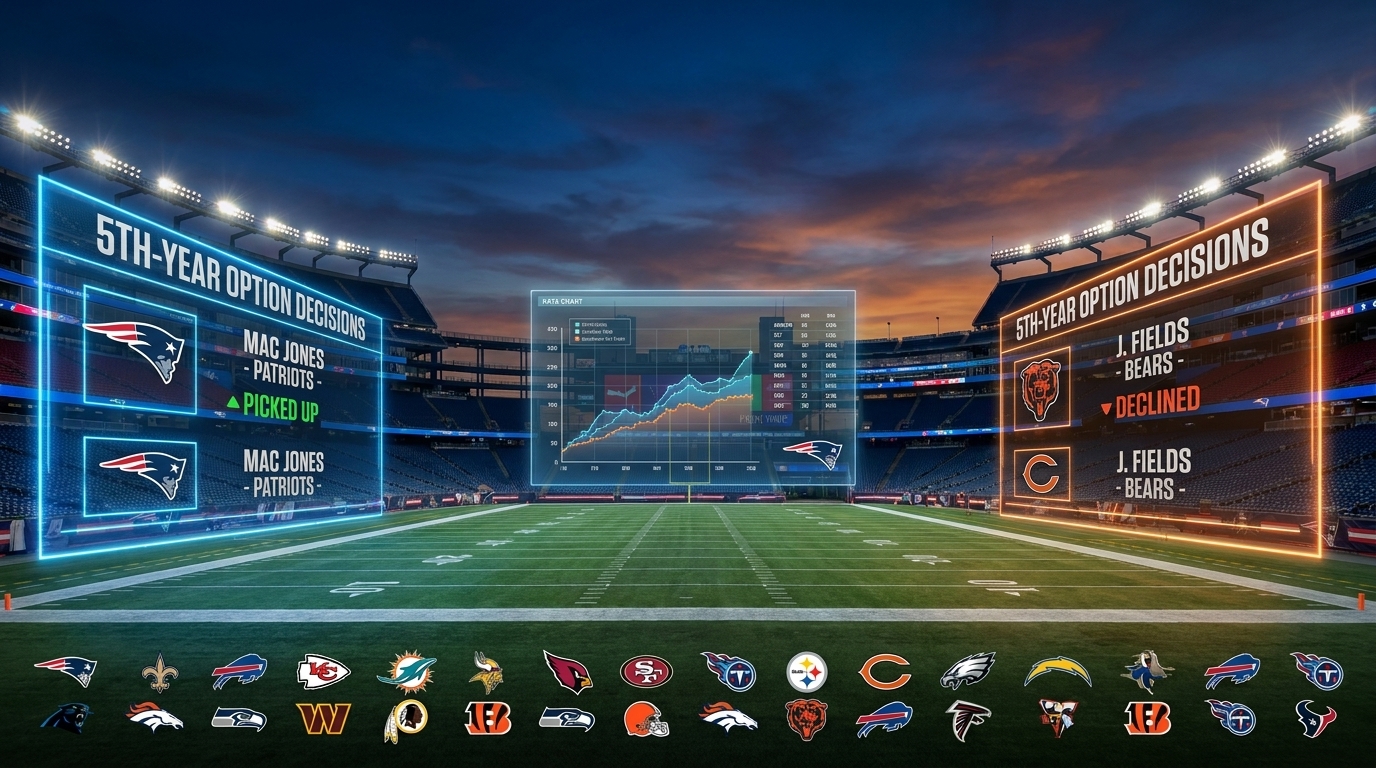
NFL fifth-year option tracker 2027
The NFL fifth-year option tracker 2027 gives a clear line of sight on every decision teams must make for 2023 first round picks. Because teams face a May 1 deadline, these choices land early in the offseason calendar. This introduction explains what a fifth-year option is, why the May 1 date matters, and why the 2027 tracker matters to cap planning and roster building.
A fifth-year option lets teams extend a rookie first-round contract by one season. However, the 2020 CBA changed the rules, making those options fully guaranteed once exercised. Therefore, clubs weigh performance, usage and financial exposure before deciding.
Why this tracker matters
- It shows which teams accepted or declined options, and why.
- It highlights guaranteed salary impacts under the 2020 CBA.
- It flags potential trade talks and contract negotiations later in the offseason.
- It outlines how benchmarks and Pro Bowl status affect pay levels.
Quick overview of benchmarks and terms
- Performance and usage benchmarks drive option amounts, and they reward snaps and impact.
- Two-time Pro Bowl selections earn franchise-tag level pay, while one-time Pro Bowlers earn transition-tag equivalents.
- Players who miss benchmarks receive a lower salary tied to positional averages.
This tracker combines technical rules and team-by-team decisions. As a result, readers get a concise, analytical snapshot of how the 2027 fifth-year option landscape will shape cap strategy, free agent markets and long-term roster building.

NFL fifth-year option tracker 2027: 2020 CBA impact and eligibility
The 2020 CBA materially changed the economics and stakes for fifth-year options, and those changes frame the NFL fifth-year option tracker 2027. Because the new rules made options fully guaranteed, teams now face immediate cap exposure when they exercise an option. Therefore front offices weigh performance, injury risk and usage before deciding.
Under the revamped structure, option pay is tied to performance benchmarks and usage-based benchmarks, not just injury guarantees. As a result, a player who hits high usage marks can earn significantly more than a player who does not. Two-time Pro Bowlers receive pay equal to their position franchise tag, while one-time Pro Bowlers earn a transition-tag equivalent. Players who fail to reach benchmarks receive a lower number based on the average of the third through 25th highest salaries at their position.
Key eligibility and benchmark criteria
- 75 percent snap rate in at least two of the first three seasons
- A 75 percent snap average across all three seasons
- At least 50 percent snaps in each of the first three seasons
Snap rate here refers to the percentage of offensive or defensive plays a player participates in. Because snap percentage drives the calculations, coaches and schemes that limit playing time can directly lower a player’s option payout. In addition, the benchmarks reward consistent availability and high usage rather than one-off performance spikes.
The 2020 CBA’s shift to fully guaranteed fifth-year options changed negotiating dynamics for first-round contracts. Teams now factor in guaranteed money when they set their roster and cap plans. However players and agents can use benchmark outcomes to negotiate extensions, because hitting thresholds raises a player’s market value. As the tracker shows, those mechanics explain why clubs exercised some options and declined others in 2027.
| Team | Player | Status | Option salary (2027) |
|---|---|---|---|
| Panthers | Bryce Young | Exercised options | $25.9 million |
| Colts | Anthony Richardson | Declined options | $22.48 million |
| Lions | Jahmyr Gibbs | Exercised options | $14.29 million |
| Vikings | Jordan Addison | Exercised options | $18.0 million |
| Ravens | Zay Flowers | Exercised options | $27.3 million |
| Bills | Dalton Kincaid | Exercised options | $8.16 million |
| Chiefs | Felix Anudike-Uzomah | Declined options | $14.48 million |
Notes
- Option salaries shown are the fifth-year option amounts. They become fully guaranteed if exercised.
- Figures reflect benchmark and positional calculations under the 2020 CBA.
Fan and expert reaction to fifth-year option decisions
Fans and analysts supplied quick takes and technical context on the 2027 option decisions. Their quotes show why some choices surprised observers. They also explain structural issues that drive front office strategy.
“I’m surprised the Lions declined Jack Campbell…interesting”
“Off ball linebackers don’t get franchise tagged or have their options picked up because they’re lumped in with edge rushers who get classified as linebackers, like TJ Watt. The option or tag would be higher than the highest paid off ball linebacker in football.”
“They’re working on a long term deal”
“I was interested in historical data related to the 5th year option. I found something at Over the Cap (although it needs to be updated).”
“If there were 32 first round picks, why only 31 options? Did somebody retire?”
These reactions highlight three recurring themes. First, teams weigh guaranteed money against roster flexibility. Because the 2020 CBA made options fully guaranteed, clubs must manage risk. Therefore declining an option can signal confidence in a cheaper path. Second, positional classification matters. As one analyst noted, linebackers can lose out when tags and options use broader categories. As a result, some defensive players face lower option outcomes than fans expect. Third, historical context guided many fans. Over the Cap and other data sources offer precedent and salary context, and that history shaped expectations.
Taken together, these quotes add color to the technical discussion. They also remind readers that contract mechanics, positional labels and cap math drive exercised options and declined options across the league.
Conclusion
The NFL fifth-year option tracker 2027 distills critical contract decisions across the league. Because the tracker records exercised options, declined options and option salaries, it informs cap planning. Teams must balance guaranteed money, roster flexibility and long-term strategy before the May 1 deadline.
For front offices, exercising an option means immediate cap exposure. Because options became fully guaranteed under the 2020 CBA, clubs now weigh performance and injury risk. Therefore agents and players view benchmarks as leverage in extension talks.
Declined options sometimes signal confidence in internal depth or a preference for cheaper alternatives. However, unusual choices—like declining a high-profile linebacker—reveal classification and market quirks. As a result, data-driven trackers help fans, analysts and teams compare risk-reward outcomes.
Patriots Report LLC compiled this analysis. Find more coverage at Patriots Report and follow the author on X at Twitter. Readers can use the tracker to monitor future contract trends and negotiating leverage. This analysis is data-driven and timely.
Frequently Asked Questions (FAQs)
What is a fifth-year option and why does it matter in the NFL fifth-year option tracker 2027?
A fifth-year option is a team-controlled extension year on a rookie first-round contract. It lets clubs lock a player for a fifth season. Because options became fully guaranteed under the 2020 CBA, the choice affects cap planning and roster building. The NFL fifth-year option tracker 2027 records exercised options, declined options and option salaries so analysts can compare team decisions.
What changed under the 2020 CBA and how do those changes affect decisions?
The 2020 CBA shifted options to fully guaranteed status when exercised. In addition, option amounts tied to performance and usage-based benchmarks replaced older injury guarantees. Therefore teams now weigh guaranteed money against projected production. As a result, front offices use snap rate and usage metrics to forecast option costs.
What specific performance benchmarks determine option salaries?
Benchmarks focus on snap rate and Pro Bowl status. Key criteria include:
- 75 percent snap rate in two of the first three seasons
- A 75 percent snap average across all three seasons
- At least 50 percent snaps in each of the first three seasons
Two-time Pro Bowlers receive franchise-tag level pay. One-time Pro Bowlers receive a transition-tag equivalent. Players who miss benchmarks get a lower salary based on the average of the third through 25th highest pay at their position.
Why do teams exercise options or decline them?
Teams exercise options when expected value exceeds risk. They consider production, durability and cap impact. However teams decline options to preserve flexibility or to avoid large guaranteed sums. For example, a declined option can signal intent to pursue a cheaper extension or free agency strategy.
How are option salaries calculated in practice?
Option salaries derive from benchmark outcomes and position groups. For example, hitting high-usage benchmarks can award a franchise-tag level figure. Conversely missing benchmarks sets the pay to a positional average. Therefore usage-based benchmarks and snap rate drive final option salaries.