Patriots cap space boost from Onwenu restructure and AJ Brown trade rumors has become the central talking point for New England’s offseason plans as the 2026 season approaches. Mike Onwenu’s restructured deal reportedly carved out roughly $7.5 million in immediate cap space, and that number changes the math for extensions and potential blockbuster moves.
Consequently, analysts now debate whether that flexibility targets a Christian Gonzalez extension or funds pursuit of A.J. Brown in trade chatter. The front office appears deliberate, and cap engineering suggests a domino strategy rather than a one-off adjustment. As a result, speculation grows that this maneuver signals readiness to add top receiver talent or to create long-term cornerback security.
The timing matters because teams commonly rework contracts to enable midseason or early-summer trades. Moreover, with training camp looming and roster battles underway, salary cap levers become roster-building tools as much as accounting moves. Therefore, this introduction frames the facts and the possibilities while keeping an eye on how these cap changes could reshape the Patriots’ offense and defense heading into 2026.
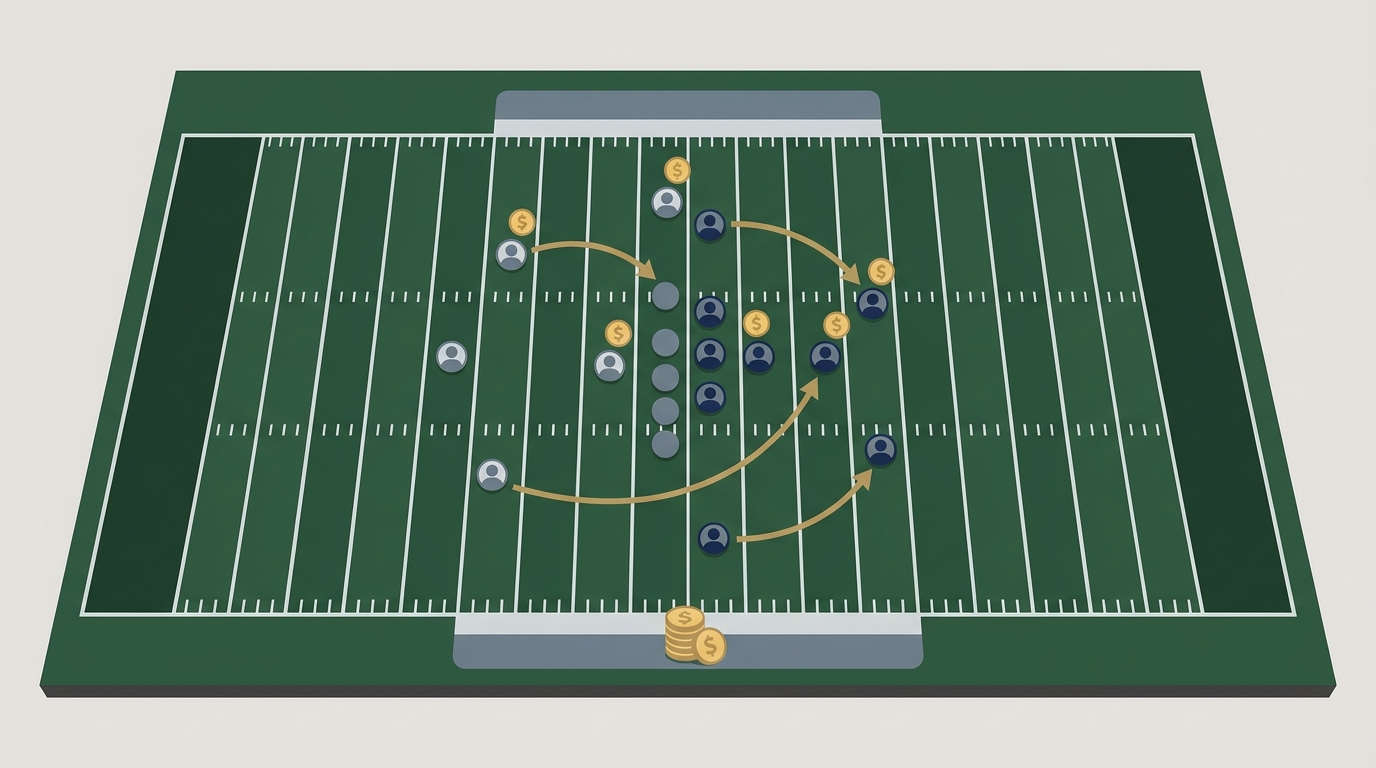
Mike Onwenu’s contract restructure delivered a tangible salary cap win for the Patriots, and that boost reshapes New England’s offseason choices. By freeing roughly $7.5 million in cap space, the team gained immediate flexibility to chase extensions or larger market moves. As a result, this transaction moved from routine bookkeeping into strategic roster engineering.
The mechanics behind the $7.5 million figure likely involved converting salary into bonus money or shifting cap charges across seasons. Consequently, the Patriots lowered Onwenu’s 2026 cap hit while spreading costs into future years. This approach preserves Onwenu’s roster spot and protection, yet it also creates future dead cap risks if the team parts ways later. However, teams often accept that tradeoff when they seek short-term maneuverability.
With that flexibility, one clear priority could be locking up young talent. For example, a Christian Gonzalez extension makes sense because he protects the secondary for years. Moreover, extending Gonzalez would reward performance and stabilize the payroll picture at cornerback. Therefore, the $7.5 million cushion could act as the down payment on a contract that keeps Gonzalez in New England.
Alternatively, that cap room could help fund a pursuit of A.J. Brown if trade talks heat up. Although Brown remains an expensive target, the added space reduces the immediate financial pain of absorbing a large salary. Meanwhile, the Pats would still need draft picks or players in a trade package, and cap space only addresses part of the equation. As a result, the Onwenu restructuring reads as a signal that the front office wants options, not constraints.
Beyond those headline scenarios, the restructure also affects depth and special teams budgeting. In short, the Patriots can now choose to spend on incumbents, trade for elite talent, or simply add short-term deals for depth. With training camp approaching and a Week 1 road opener against Seattle on the slate, the timing matters. Therefore, Mike Onwenu’s deal represents both a practical cap move and a potential domino in New England’s larger roster strategy for 2026.
Preface: The table below compares key elements of Mike Onwenu’s original contract and his restructured deal. Read the left column for the metric being compared, then move right to view the original contract details, the restructured contract effects, the immediate cap impact including the estimated 7.5 million savings, and how each change affects the team’s flexibility to extend Christian Gonzalez or pursue A.J. Brown. Column wording is consistent to make cap timing, future risk, and roster implications clear.
Table 1: Mike Onwenu Original versus Restructured Contract and Team Implications
| Metric | Original Contract | Restructured Contract | Immediate Cap Impact | Impact on Gonzalez Extension | Impact on A.J. Brown Pursuit |
|---|---|---|---|---|---|
| 2026 cap charge | Higher base salary and full year charge | Base salary converted to prorated signing bonus reducing 2026 hit | Savings estimated at 7.5M | Frees room to begin extension talks or increase signing bonus | Lowers immediate absorption cost but is not sufficient alone |
| Contract structure and proration | Straight salary heavy in 2026 | More prorated bonus money spread into future years | Shifts cap pressure to later seasons | Enables a more meaningful upfront extension payment | Helps cover year one cap but trade assets still required |
| Contract status and length | Entering final year of original term | Same contract length but altered guarantee timing | Short term flexibility gained | Makes multi year deal for Gonzalez more feasible | Provides limited short term cap relief for a veteran addition |
| Future dead cap risk | Lower future prorations if released now | Higher future dead cap due to bonus proration | Increases long term cap memory | Requires balancing retention versus future cost | Adds caution when adding large veteran salary |
| Roster and depth implications | Less immediate maneuverability | More room for depth signings and short term deals | Adds usable roster levers worth roughly 7.5M | Could fund part of Gonzalez signing bonus or restructure | Can be combined with draft capital to pursue Brown |
Takeaway: The restructure creates an immediate 7.5 million cushion that increases short term flexibility while raising future dead cap risk, giving the Patriots clearer options to either prioritize locking up Christian Gonzalez or help absorb part of a trade for A.J. Brown.
Integrating the A.J. Brown trade rumors with the Patriots cap space boost from Onwenu restructure reveals a clear strategic narrative. Mike Onwenu’s $7.5 million cap savings did more than improve bookkeeping. Consequently, it created immediate wiggle room for the front office to explore big moves.
PatsFans.com framed the Onwenu move as a potential domino. As PatsFans.com wrote:
“This does feel like maybe one of those dominoes towards some kind of significant move being made that involves the cap.”
Meanwhile, CLNS Media added a broader context, noting:
“Yeah, I think it’s part of the NFL. They throw names around there around every team.”
These observations help explain why rumors around A.J. Brown stick.
Analytically, the extra cap space changes timelines and leverage. For example, the Patriots can absorb a larger 2026 salary or offer a bigger signing bonus in an extension. Therefore, targeting A.J. Brown becomes more feasible on paper. However, cap space alone will not close a deal. New England would still need trade assets, and the Eagles or other teams would demand premium picks or players. As a result, Onwenu’s restructure functions as a facilitator, not a guarantee.
From a roster-build angle, flexibility favors two clear paths. First, extend Christian Gonzalez and lock down the secondary. Doing so would stabilize long-term payroll and protect a high-value young cornerback. Second, pursue a receiver upgrade like A.J. Brown to immediately boost the offense. Moreover, a hybrid approach remains possible. The Pats could use part of the $7.5 million while packaging draft capital to complete a trade.
In short, the Onwenu transaction signals intent. It increases New England’s options and sharpens trade chatter. Therefore, the A.J. Brown rumors deserve serious consideration by fans and analysts alike. With training camp approaching, expect the Patriots to test the market while weighing Gonzalez retention and blockbuster upside.
The Patriots cap space boost from Onwenu restructure and AJ Brown trade rumors gives New England clearer options.
Mike Onwenu’s restructure freed roughly $7.5 million, and that money buys the team short term flexibility. Therefore, the front office can prioritize a Christian Gonzalez extension, pursue a receiver upgrade, or add depth. However, cap room only solves part of the puzzle since trades demand assets and roster fit.
As training camp nears, timing will affect whether these moves materialize or remain talk. Consequently, fans should watch contract maneuvers and trade chatter for clues about the team’s plan. Furthermore, Patriots Report LLC will continue tracking developments and analysis on cap strategy and roster building.
Visit patriotsreport.com and follow Twitter @ZachGatsby for timely updates and expert commentary. The team must balance short term urgency with long term dead cap implications for future flexibility. Expect more small moves and possible larger gambles as the season approaches.
Frequently Asked Questions
What did the Mike Onwenu restructure actually do and how much cap space did it create?
The restructure converted salary into signing bonus proration and lowered Onwenu’s 2026 cap charge. As a result, the Patriots freed roughly $7.5 million in immediate cap space. This move keeps Onwenu on the roster while shifting costs into future seasons. However, it also raises potential future dead cap if the team releases him later.
Does the $7.5 million mean the Patriots can trade for A.J. Brown right away?
Not by itself. The added space improves short term flexibility, and therefore the team can absorb a larger 2026 cap hit or offer a bigger signing bonus in a deal. However, trades still require draft capital or player assets. Consequently, Onwenu’s money helps the financial side but cannot replace trade chips or roster fit considerations.
Could the restructure fund a Christian Gonzalez extension instead of pursuing a trade?
Yes, the cushion makes an extension more feasible. The $7.5 million could serve as a down payment or to boost Gonzalez’s signing bonus. Therefore, New England can prioritize locking up its young cornerback without mortgaging other roster needs. At the same time, the front office might split resources between retention and outside additions.
What are the long term risks of this kind of cap engineering?
Converting salary to bonuses spreads cap charges into future years and increases dead cap risk. If the team releases or trades the player later, those prorated bonuses accelerate. As a result, the Patriots trade short term room for longer term payroll commitments. Teams accept that tradeoff when they need immediate maneuverability.
What should fans watch next for signs of a blockbuster move?
Watch for additional restructures, big extensions, and trade rumors tied to draft capital. Monitor training camp depth battles and reports from trusted outlets. Meanwhile, pay attention to timing. If activity spikes before camp or around the draft, the front office likely prepares for significant roster decisions.