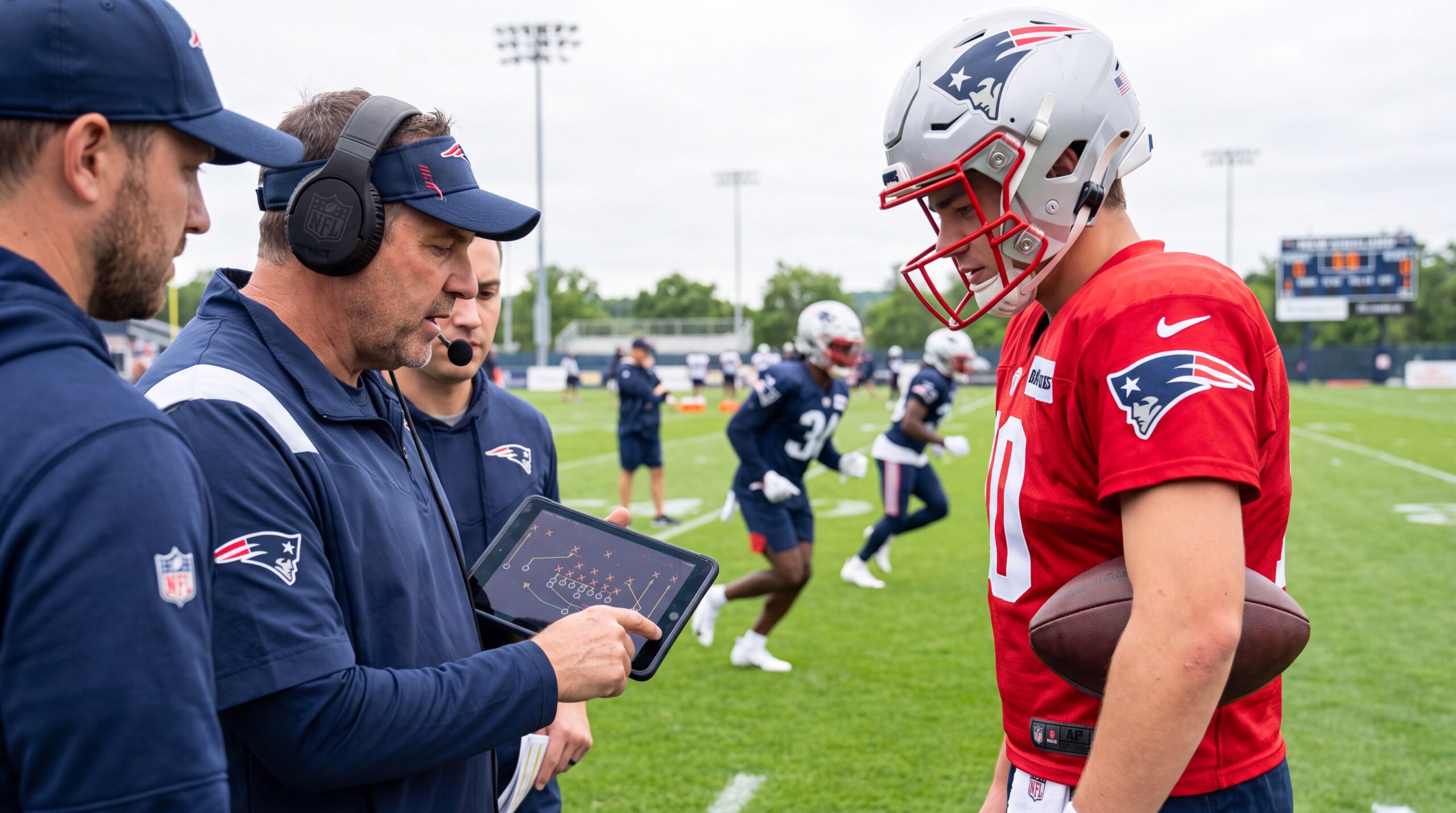
A practical, system-focused projection of Maye’s 2026 season: what the Patriots’ coaching, supporting cast, and game plans mean for his near-term growth. Drake Maye enters the 2026 discussion with clear upside and a development timeline that needs context. This Drake Maye 2026 outlook is a realistic projection of his path in New England — focused on skill development, offensive fit, and the roster factors that will determine how quickly he can lead consistent NFL production. Short version: Maye’s physical tools and college tape give him a foundation, but the first full season in the Patriots system will likely emphasize process over immediate box-score fireworks. Under Josh McDaniels and head coach Mike Vrabel, priorities will be play-call fit, decision-making under pressure, and leveraging veteran weapons to create manageable reads. Maye arrives having shown arm strength, intermediate-to-deep timing, and the mobility to extend plays. The standard transition areas for a young QB apply: timing with receivers, reading pre- and post-snap defensive cues, and the discipline to favor high-percentage choices when plays break down. How quickly he converts physical tools into consistent process will define the 2026 arc. McDaniels’ offense rewards structure, progression reads, and play-action that creates simplified post-snap choices. That environment can help a young passer who benefits from defined reads and scheme-based advantages. Coaching emphasis will likely include quicker releases to limit negative plays, mastering intermediate timing routes, and sharpening third-down and two-minute processing. The Patriots’ receiving room and skill corps can materially affect Maye’s ceiling. Players such as A.J. Brown, Romeo Doubs, Rhamondre Stevenson, DeMario Douglas, and Hunter Henry provide a mix of contested-catch ability, run-game balance, and red-zone reliability. For context on roster battles affecting those reps, see the piece on demario douglas contract. Pass protection will shape how often Maye can work through full progressions. Cleaner pockets favor intermediate concepts that fit his arm; frequent pressure will push the offense to quicker throws and misdirection. That distinction will show up in early-season game scripts. Mike Vrabel and defensive coordinator Zak Kuhr create a team identity that can either expand or limit a young QB’s opportunities. Conservative game plans that prioritize field position and turnover avoidance tend to slow a quarterback’s statistical growth but can protect development. Weather at Gillette Stadium late in the year also affects the volume of downfield passing, which matters for a player learning to throw the full field. Defensive pieces such as christian gonzalez and a veteran secondary help keep opponent scoring in check and reduce the need for high-variance comeback play-calling. That defensive stability gives the offense more space to prioritize process over immediate results. Think in scenarios rather than promises. Three clear paths capture the most plausible outcomes given the roster and coaching staff: Milestones are useful because they focus observation on behaviors that indicate real progress: Practical, observable indicators fans and beat writers can track: Pay attention to practice reports and in-game play-calls. If McDaniels increasingly scripts intermediate timing concepts and reduces negative plays, that’s a sign the staff is prioritizing controlled growth. Conversely, a sudden increase in aggressive downfield volume without clear protection improvement can accelerate development but also raise turnover risk. This Drake Maye 2026 outlook centers on one premise: the Patriots have supplied structure and veteran pieces that can accelerate a young QB’s learning curve, but Maye’s progress will be defined by decision-making and timing more than raw arm talent. Track protection, situational play-calling, and early chemistry with the offense — those are the clearest signals about whether his 2026 season will be foundational or a breakout.
Drake Maye 2026 outlook: Patriots fit, timeline, and what to expect
Quick summary
Where Maye starts — traits and development areas
Fit in Josh McDaniels’ offense
Supporting cast and protection
Protection and pocket time
Team environment and situational factors
How key areas affect Drake Maye’s 2026 outlook
Area
Short-term outlook (2026)
What it means for the Patriots
Passing Accuracy
Area to monitor
Improved timing with receivers will be required for consistent drive finishes.
Decision-making
Primary development focus
Reduced turnovers and quicker reads will materially raise the offense’s floor.
Mobility
Strength
Ability to extend plays helps mask protection issues and create chunk gains.
Supporting Cast
Neutral-to-positive
Veteran weapons ease the learning curve if chemistry develops early.
Coaching / Play-calling
Crucial
McDaniels’ approach will determine how quickly Maye assumes higher-volume passing responsibilities.
Realistic expectations for 2026
Short-term milestones and a practical timeline
What to watch in the first five games
Coaching signals that matter
Final note for Patriots fans
Drake Maye 2026 outlook: Patriots fit, timeline, and what to expect
A realistic Drake Maye 2026 outlook: this analysis examines his development path, how Josh McDaniels' offense and the Patriots' supporting cast shape short-term ceilings, and the key signs fans should monitor.