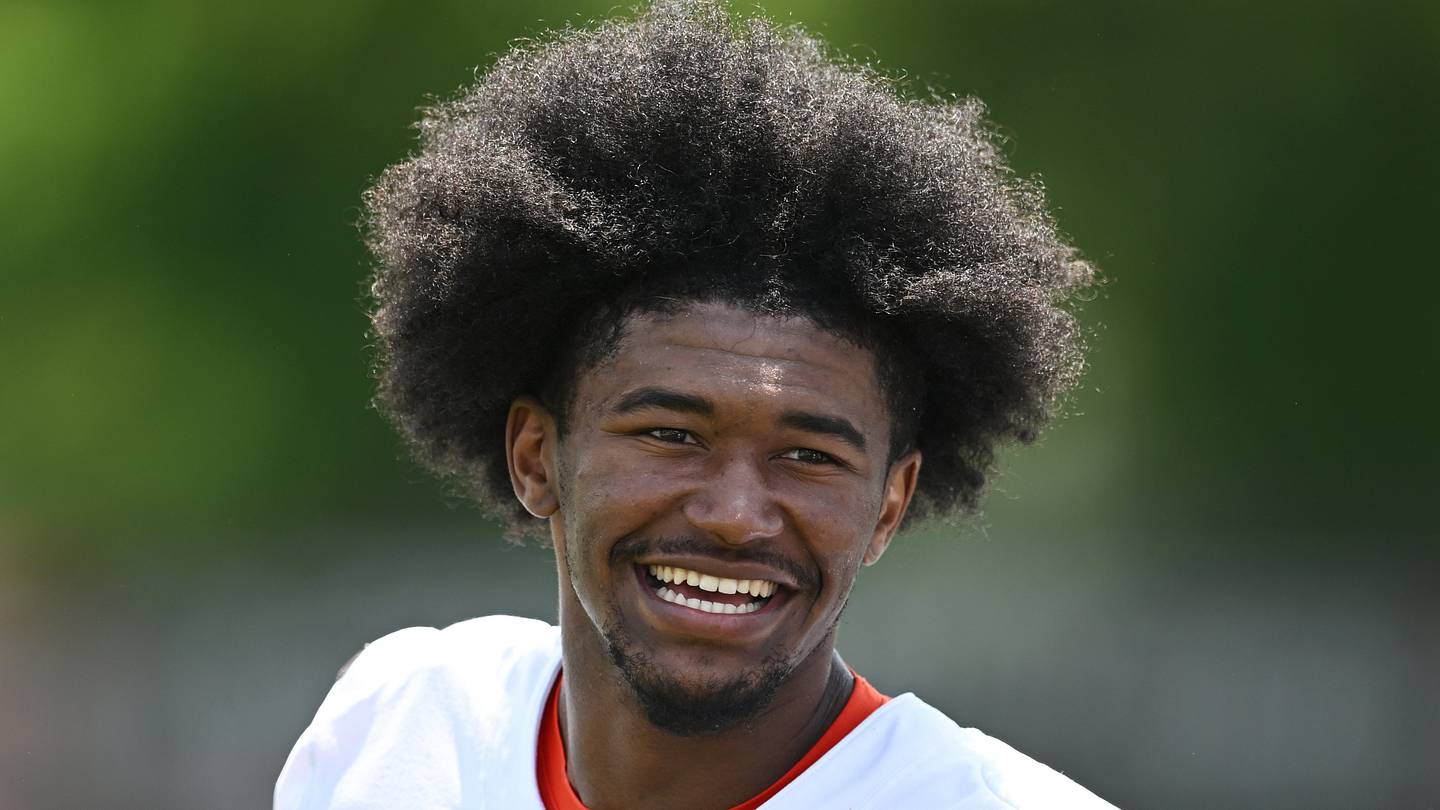
KC Concepcion was selected at No. 24 overall by the Cleveland Browns, leaving the New England Patriots — who held No. 31 — out of position to take him without a larger trade. New England later moved up and used draft capital to take tackle Caleb Lomu a few picks after Concepcion was off the board. This analysis uses the Musketfire / Trade Rumors coverage as the core source and supplements it with the publicly reported Pro Football Focus drop totals and analyst notes from Bucky Brooks and reporter Daniel Oyefusi to explain why passing on Concepcion at No. 31 is defensible rather than panic-inducing.
KC Concepcion’s profile: speed, playmaking, and the PFF drop flag
Concepcion arrived with clear traits that appeal to modern NFL offenses: explosive speed, the ability to win vertically, and run-after-catch instincts that create big-play potential once the ball is in his hands. Those physical traits are why evaluators project him as a perimeter playmaker and why some analysts peg him as a high-upside rookie.
That upside is balanced by a measurable concern tracked by third-party evaluators. Pro Football Focus recorded 19 drops for Concepcion across his college career, including seven in his final season. Those numbers are not a judgmental headline so much as a statistical flag teams use when estimating a player’s early-down reliability, contested-catch ability and readiness to handle a volume role.
Teams combine raw metrics like drop totals with hands-on scouting — inconsistent hands in live and simulated catch situations can push a receiver from immediate contributor to developmental project. In Concepcion’s case, the 19-drop figure anchors the risk side of the ledger and helps explain why clubs might hesitate to use high first-round capital unless they can move significantly up the board.
What reporters and analysts are saying
NFL.com analyst Bucky Brooks identified Concepcion as a potential sleeper for Offensive Rookie of the Year, praising his vertical speed and game-breaking ability. Brooks framed that as an analyst opinion tied to scheme fit rather than a statement of certainty.
Cleveland-focused reporting from Daniel Oyefusi of ESPN after Browns OTAs echoed a mixed-but-hopeful tone: Concepcion made plays in team settings, but the drop issues remain an area teams expect him to clean up. Both voices are useful but should be read as evaluative: analyst projections and reporter observations are ongoing calibrations rather than fixed outcomes.
Draft timeline and how picks landed
The basic timeline is straightforward and central to the decision: Concepcion came off the board at No. 24, inside New England’s initial range but out of reach without surrendering additional assets. With Concepcion unavailable, the Patriots chose to prioritize the trenches and later traded up modestly to select Caleb Lomu. That sequence reflects a standard draft-day trade-off between immediate starting help and developmental upside at a premium position.
From New England’s perspective, the choice between a high-upside but somewhat raw receiver and an offensive-line prospect who projects to contribute earlier tilted toward the latter. The Musketfire piece characterizes this as a pragmatic allocation of limited draft capital: secure a possible long-term boundary play if the price is right, or shore up a starter now if the board makes that the more efficient move.
Why the Patriots’ choice fits roster and scheme context
New England entered the draft with a defined top-end receiver in A.J. Brown, plus supplemental depth and veteran additions around the roster. The prior public commitments around Brown shifted the marginal value of adding another perimeter speed target in the first round; the team could reasonably expect to layer in complementary pieces through later rounds or free agency. For a deeper look at the incoming wideout landscape the Patriots were weighing, see Patriots 2026 Draft WR Prospects.
Similarly, the organization’s investment in Brown reoriented where first-round capital made the most sense for roster-building. For more on how that trade and commitment changed New England’s priorities, consult Patriots Acquire A.J. Brown and read additional context in A.J. Brown Trade Rumors Patriots.
Special teams and upside: returner role and the Marcus Jones benchmark
Part of Concepcion’s appeal is special-teams upside: his speed and ball skills project to punt-return value in addition to offensive snaps. Still, the Patriots already have a proven return asset in Marcus Jones, which dampens the incremental value Concepcion would bring specifically as a return upgrade for New England.
Teams that lack an established returner can justify clutching a speed weapon for that dual role. For New England, that particular box was largely checked entering the draft, which reduced the relative urgency to reach for another return-capable rookie at No. 31.
Immediate roster fit and risk/reward balance
Concepcion’s upside is real: the traits that create explosive plays also produce the floor of a work-in-progress hands profile. A front office weighing immediate starters versus long-term upside will often prefer the more certain starter — particularly if the team’s offense already has a proven No. 1 target and multiple role players who can eat routes while a rookie develops.
New England’s decision to prioritize offensive-line help reflects that calculus: invest in impact players who can influence the upcoming season right away while allowing high-upside receiver scenarios to develop elsewhere where the pick price is lower or the team is willing to accept more risk.
Verdict, uncertainty and what to watch next
There is a clear path for Concepcion to produce at a high level: his speed, separation and run-after-catch ability fit modern spacing concepts and gadget usage. Analyst projections like Bucky Brooks’ OROY-sleeper mention are legitimate reasons to be excited about his ceiling. However, the PFF-documented 19 drops and on-the-ground reporting that dropping issues persist mean clubs and fans should temper immediate expectations.
For the Patriots, passing at No. 31 was not a definitive statement about Concepcion’s eventual NFL outcome; it was a pragmatic roster decision based on pick economics, existing receiver investments and a preference for more immediate starter-like contributions on the offensive line. What remains unclear is how quickly Concepcion can convert traits into consistent, catch-first play — something only on-field NFL snaps in meaningful situations will resolve.
FAQ
What happened with KC Concepcion? He was drafted No. 24 by the Cleveland Browns. New England had No. 31 and later drafted Caleb Lomu after Concepcion was off the board.
Why does KC Concepcion matter? He combines top-end speed and playmaking upside with special-teams value, but Pro Football Focus tracked 19 drops in college which signals a hands-related development need.
What happens next? Expect Cleveland to emphasize hands work in offseason programs while evaluators monitor whether the drop issues are corrected; for New England, the team will hope its receiver room and the new offensive-line addition keep the offense on track while other draft and personnel moves unfold.
Final takeaway
KC Concepcion’s ceiling remains high, and analyst praise is understandable. But when a prospect carries a measurable hands concern and the board presents a chance to shore up immediate needs, passing at No. 31 was a defensible call from New England rather than a panic mistake.
Source: One Patriots draft decision already looks easier to defend — Musketfire / Trade Rumors. Analysis also draws on publicly reported Pro Football Focus drop totals and remarks from Bucky Brooks and Daniel Oyefusi.