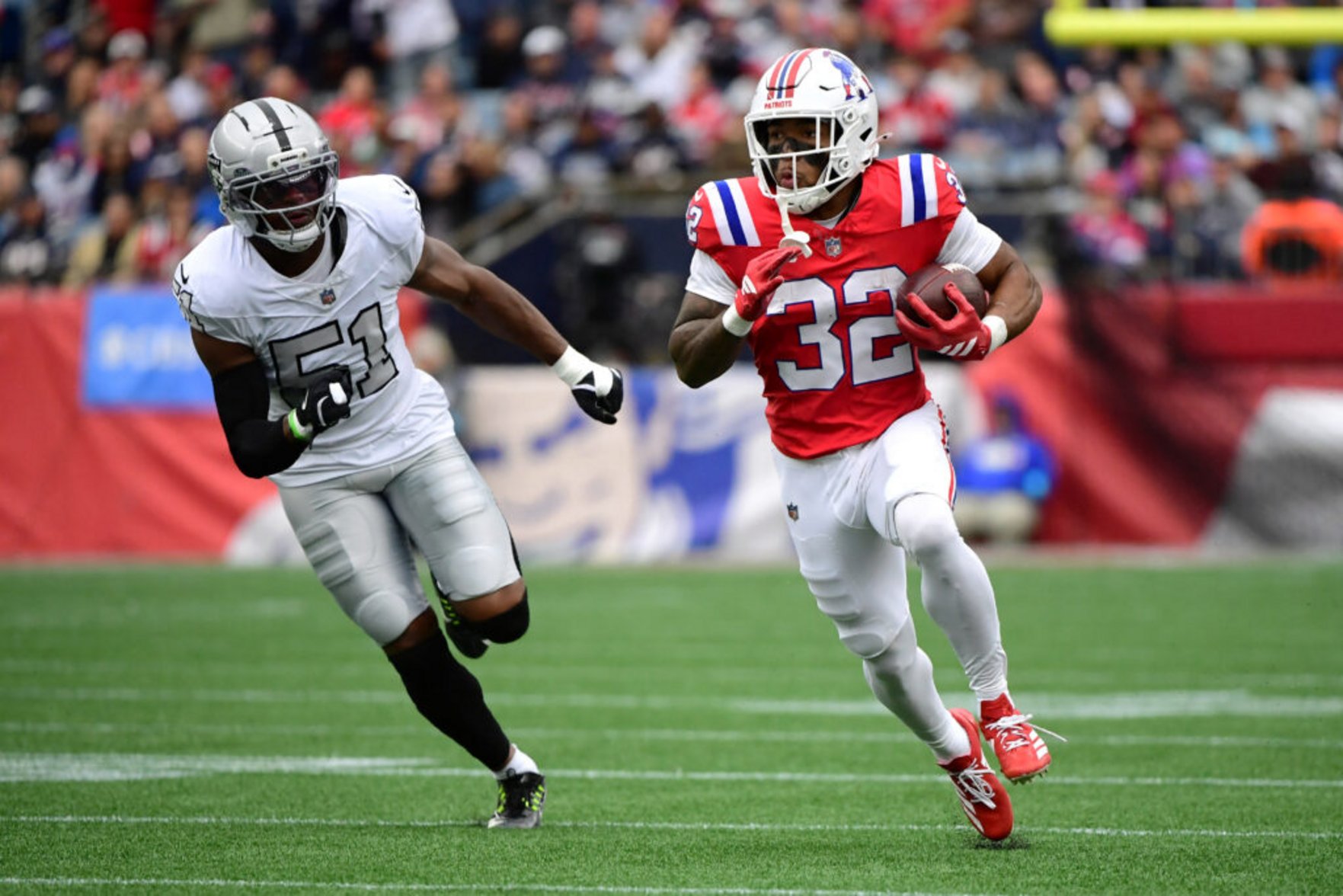
Graham Wilker identified Tim Patrick, T’Vondre Sweat and David Bailey as New York Jets players who could challenge the New England Patriots in Week 6.
Wilker identified three potential matchup problems: Patrick’s size, Sweat’s interior presence and Bailey’s pass-rush production. In his Musket Fire analysis, he framed the players as possible challenges rather than predicting a specific game outcome.
Wilker also connected the matchup to New England’s offensive-line situation and the Patriots’ offensive performance entering Week 6. He wrote that the Patriots were 3-2 after wins over Buffalo and Las Vegas, while Drake Maye had eight total touchdowns and two total turnovers across those victories.
Jets players who could challenge the Patriots in Week 6
Wilker’s breakdown covers three different areas of concern for New England. Patrick could test the Patriots with his size on the perimeter, Sweat could make interior rushing attempts more difficult, and Bailey could pressure Maye if the Patriots are forced into obvious passing situations.
Those evaluations are matchup projections from Wilker’s analysis, not established results. The potential impact of each player would depend on how New England handled the assignments and which offensive-line combinations were available in the timeframe Wilker examined.
Tim Patrick gives the Jets a size threat
Patrick caught two passes for 26 yards in his Jets debut, according to Wilker. The receiver is listed at 6-foot-5, and Wilker identified that size as the foundation of his concern about Patrick’s potential matchup with New England.
Wilker wrote that the Patriots had recently struggled against taller pass catchers. His point was not that Patrick had already produced a major statistical game for New York, but that his frame could create a different challenge for the Patriots’ coverage responsibilities.
Patrick’s debut production was modest, according to Wilker, but the analysis focused on the type of matchup he could create rather than on an established target volume. A larger receiver can force defenders to manage the catch point and contest throws differently, which is why Wilker highlighted Patrick among the Jets players who could challenge the Patriots in Week 6.
T’Vondre Sweat could test New England inside
Wilker highlighted T’Vondre Sweat as a possible challenge for a Patriots offensive line he described as depleted in the article’s timeframe. Wilker wrote that Will Campbell and Morgan Moses were listed as questionable, while Ben Brown was described as New England’s third option at right guard.
Wilker tied that personnel situation to the Patriots’ interior blocking responsibilities. He also wrote that Mike Onwenu had suffered a season-ending injury and that Greg Van Roten had been placed on injured reserve, details that increased the importance of New England’s available combinations up front in his assessment.
The Jets had allowed 118 rushing yards per game, according to Wilker. He also cited New York holding Cleveland running backs to 56 yards on 15 carries in the previous week, giving the matchup two different statistical reference points: the season average and a recent performance against opposing backs.
Wilker presented Sweat as a player who could make it harder for New England to create consistent running lanes. The concern was not a guaranteed result, but the possibility that Sweat’s interior presence could force the Patriots to win individual blocks repeatedly while working through an offensive-line group affected by the personnel issues Wilker described.
David Bailey’s pass rush meets a banged-up offensive line
David Bailey had five sacks in five games, including three against Cleveland, according to Wilker. He also attributed a 15% season pressure rate and a 29% pressure rate against Cleveland to Bailey.
Those figures made Bailey the clearest pass-rush concern in Wilker’s breakdown. The analyst connected Bailey’s production to the Patriots’ tackle situation, writing that Campbell and Moses were listed as questionable during the timeframe of his analysis.
Wilker also described the broader condition of New England’s offensive line as a factor in the matchup. His evaluation centered on whether the Patriots could protect Maye without allowing Bailey to dictate passing downs, particularly if New York created situations in which the quarterback had to hold the ball while routes developed.
Bailey’s numbers against Cleveland were especially important to Wilker’s argument because they showed how quickly the edge rusher could affect a game. The five-sack total and the pressure-rate figures were presented by Wilker as evidence of a potential problem for New England, not as a prediction that Bailey would duplicate those numbers against the Patriots.
How New England could try to limit Bailey
Wilker suggested that the Patriots could use tight ends and running backs to chip Bailey before releasing into their routes. That approach could give the offensive line additional help against the edge rusher while also creating a way to protect Maye without relying exclusively on one blocker.
Wilker’s proposed solution would also require New England to balance protection with its passing-game responsibilities. Tight ends and running backs chipping Bailey could reduce the immediate pressure threat, but it could also affect how quickly those players entered their routes.
The Patriots’ offensive production was another part of Wilker’s framing. He wrote that Maye had eight total touchdowns and two total turnovers across New England’s wins over Buffalo and Las Vegas, giving the quarterback’s recent efficiency a prominent place in the matchup discussion.
Wilker’s analysis ultimately identified three distinct tests for New England: handling Patrick’s size, maintaining blocking leverage against Sweat and accounting for Bailey’s pass rush. Each concern was tied to a specific player trait or statistic, while the Patriots’ offensive-line availability could influence how much attention New England needed to devote to the Jets’ front.