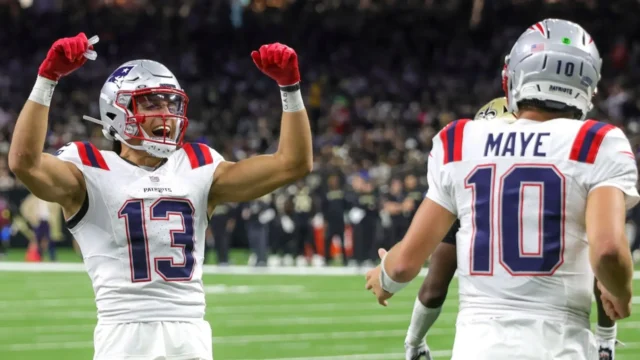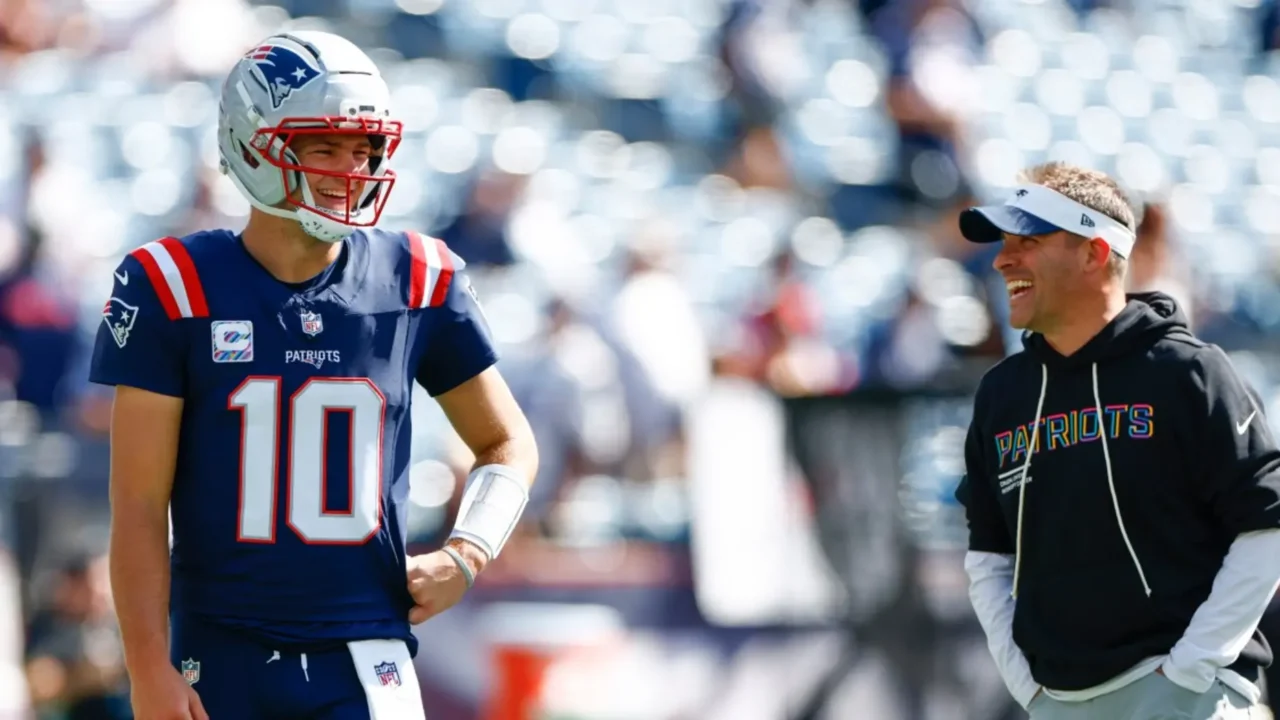
Drake Maye is drawing a clear schematic response from opponents: more two-high or split-safety shells that take away his biggest downfield plays. That trend — documented by PatsPulpit and repeated by Patriots coaches — already shaped Week 1 and is central to how New England should plan its attack moving forward.
This analysis reviews what the numbers show, breaks down the Seahawks Week 1 case study, highlights the prescriptions from offensive coordinator Josh McDaniels, and outlines practical adjustments New England can use to force defenses to change.
What the numbers show: Drake Maye and two-high safeties
Across recent matchups the sample suggests opponents are leaning into two-high looks. PatsPulpit reports that in the last five matchups — including two against Seattle, plus Denver, Houston and Los Angeles — Maye faced two-high safeties just over 50% of the time. In the season opener the Seahawks ran split-safety looks on dropbacks at a 57% clip, per the same report.
Two-high shells compress vertical options and invite offenses to operate underneath. For a quarterback whose downfield shot-making is a core strength, that can alter play-calling balance and completion profile: more short-to-intermediate throws, fewer explosive pass plays, and a heavier burden on the running game and play-action to pull a safety down.
Week 1 case study: the Seattle opener
The season opener illustrated the dynamic plainly. Maye built a 10-0 start operating through shorter, controlled reads. Later, three interceptions on downfield throws — characterized in PatsPulpit as connected to Maye pressing the ball into tighter windows — changed the game script and gave future opponents a playable blueprint.
That characterization — that Maye “lost his patience” — is an interpretive framing from the source and should be read as analysis of patterns and context, not a definitive psychological diagnosis. Still, the sequence made it easier for following teams to justify a conservative blueprint: occupy the middle with two safeties and dare New England to prove otherwise.
McDaniels’ prescription: patience, discipline and the run game
McDaniels has publicly acknowledged a league reaction when a young passer breaks out and framed the response as operational rather than schematic. He emphasized three linked priorities: be productive, remain disciplined, and make the running game credible enough to move the second safety.
McDaniels used the word discipline to describe the kind of play he wants: controlled aggression that protects Maye’s strengths while avoiding forced shots that lead to turnovers. He also pointed to volume and persistence in the run game as levers — not because a single drive proves anything, but because sustained rushing success changes defensive leverage over a game.
Practical adjustments the Patriots can try
Below are coach-friendly, fan-readable adjustments McDaniels outlined or that logically follow from the coverage trend. These are schematic concepts rather than invented play calls.
- Prioritize short-to-intermediate passing concepts: quick outs, slants, mesh and shallow crossers to move the chains while protecting downfield windows.
- Use play-action and RPOs selectively to manipulate the second safety: credible run volume forces a decision for split shells.
- Schedule vertical shots as part of a balanced plan: seam/crossing combinations and boundary corner routes can exploit split-safety windows if executed with timing.
- Increase situational run volume to change defensive alignment later in games; consistent 3–6 play sequences can reshape second-safety choices.
- Employ tempo and formation diversity to disguise intent and create pre-snap conflict for safeties tasked with split responsibilities.
Execution is the limiting factor: the concepts only work if the line sustains blocks, running backs win yards, and receivers create separation at the right times.
What it means for the roster
Concrete, non-speculative implications flow naturally from the coverage trend and McDaniels’ prescriptions:
- Offensive line: increased emphasis on run-blocking consistency and communication. If the plan calls for sustained rushing sequences to pull a safety down, interior line play and guard/center combo work matter more than occasional splash runs.
- Running backs: backs who can reliably gain tough yards between the tackles rise in importance for the plan to be credible. That affects snap allocation and situational roles.
- Receiving corps: players who can reliably convert intermediate targets — move-the-chains receivers and reliable tight ends — become tactical assets against two-high shells.
- Quarterback management: decision-making and protection of downfield attempts are immediate focus points for coaching; reducing high-risk throws helps the wider game plan work.
These are roster-level priorities rather than predictions about transactions. If the Patriots make sustained, intentional choices to coax safeties down, that will inform how coaches allocate snaps and which skill sets rise in value.
What to watch next and metrics to track
Key indicators fans and analysts should monitor over the next several weeks:
- Opponent two-high percentage on Maye dropbacks (trend over multiple games rather than single-game spikes).
- Maye’s downfield attempts per game and turnover rate on those attempts.
- New England’s rushing efficiency and run volume by quarter — sustained carries matter more than short-term swings.
Note on a reported metric: the PatsPulpit piece reported New England ranked last in rush EPA. That is presented here as a source-reported claim and should be independently verified against official NFL metrics before being used as an authoritative ranking.
For longer-term stakes linked to Maye’s role and outlook, see our related piece on the drake maye contract.
What remains unclear
All current trends are drawn from a small sample. Defensive game-planning shifts week to week; percentages that look decisive after five games can regress or flip as opponents and the Patriots adjust. The reported two-high rates are a useful signal, not a definitive forecast.
Bottom line
Opposing defenses are showing a coherent response to Drake Maye: two-high and split-safety shells designed to slow his downfield production. Josh McDaniels has laid out a pragmatic path — disciplined execution, a healthier running game and selective aggression downfield — to force opponents off that approach. Whether the Patriots translate those prescriptions into consistent in-game adjustments will determine how quickly opponents must adapt back.
Source: PatsPulpit — Josh McDaniels knows defenses are adjusting. Photo credit: Danielle Parhizkaran / The Boston Globe via Getty Images. Note: the PatsPulpit piece frames some moments (e.g., Maye “losing his patience”) as interpretive observations from the source rather than established fact. The report of New England being “last in rush EPA” is presented as source-reported and should be verified against official NFL metrics.