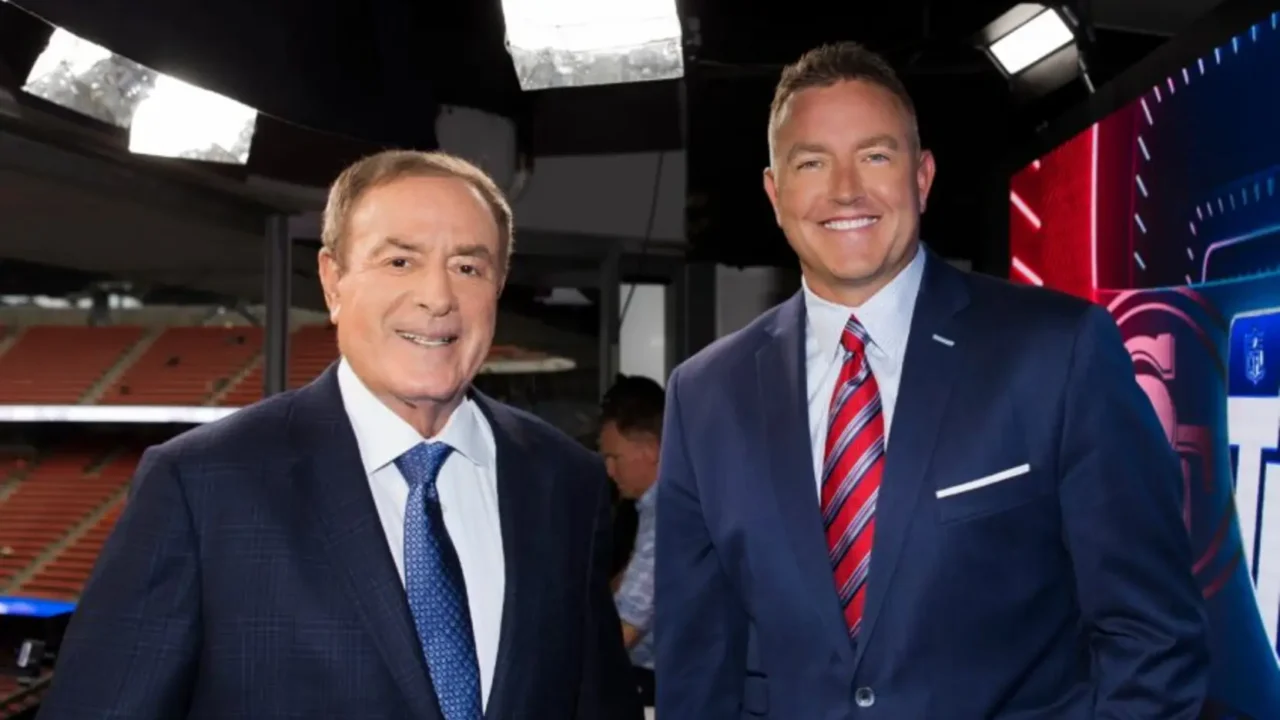
Boston.com columnist Chad Finn sharply criticized the way veteran broadcasters framed Deshaun Watson during Amazon Prime’s preseason telecast of the Patriots–Browns game, arguing that Al Michaels and Kirk Herbstreit presented a redemption narrative that downplayed the continuing reputational consequences tied to Watson’s past.
Finn’s piece at Boston.com spends much of its column unpacking the language and tone of the broadcast, and he explicitly argues that the segment gave Watson an outsized benefit of the doubt in public commentary. That critique — and Finn’s careful linkage to the legal and commercial fallout surrounding Watson — is the basis for this summary.
What Michaels and Herbstreit said on the Amazon Prime broadcast
The comments Finn scrutinizes occurred during Amazon Prime’s preseason coverage of the Patriots and Browns. As Finn reports, Michaels and Herbstreit discussed Watson’s trajectory in the league, recalling his prior status as a top draft pick and describing the idea that he might still reclaim a prominent NFL standing.
Finn highlights moments when the broadcasters framed Watson as a potential comeback story or emphasized second-chance language. He interprets that tone as insufficiently attentive to the gravity of the civil claims that have shadowed Watson’s career; Finn writes that that framing struck him as “disappointing and surprising” from two high-profile voices in sportscasting.
Finn’s critique does not claim malicious intent by the broadcasters; instead, he frames it as a mistake of emphasis and context. He urges that national commentators balance conversational sympathy with clear acknowledgment of unresolved reputational harms, particularly when civil allegations and confidential settlements remain part of the public record.
Deshaun Watson: legal context and settled civil lawsuits
Grounding his column in reported facts, Finn notes that Deshaun Watson settled more than 20 civil lawsuits filed by massage therapists in the Houston area. These were civil claims alleging sexual misconduct, and, as Finn emphasizes, the settlements are confidential.
Finn uses those settled suits as the factual basis for his argument that broadcasters should avoid narrating an uncomplicated comeback. He does not assert criminal guilt; instead, he repeatedly frames his concerns as a media-critique: given the number and nature of the civil claims and the confidentiality of the settlements, broadcasters owe audiences clearer context when discussing a player’s reputation.
That legal context is central to Finn’s point: it is the public record of settled civil litigation, rather than contested criminal findings, that he says made the sympathetic broadcast framing ill-advised. Finn frames his assessment as opinion grounded in those public facts rather than new reporting about the suits themselves.
Sponsorship fallout: Good Good, Callaway, Golf Channel and the PGA Tour
Finn broadens his column to show how media narratives connect to commercial decisions. He recounts the recent controversy involving the YouTube brand Good Good, which produced an ad tied to golf that drew immediate industry pushback.
As Finn reports, golf-equipment maker Callaway ended a relationship with Good Good and said it would donate $1 million to organizations working to prevent domestic violence. Finn also reports that the Golf Channel pulled the Good Good–branded competition show Big Break and that Good Good stepped away from a planned PGA Tour event sponsorship.
Finn uses those actions to illustrate reputational and financial risk: when audiences reject a creative or when advertisers conclude a partnership is untenable, sponsors and media outlets can and often do make quick decisions to sever ties. Finn explicitly frames this as a lesson for broadcasters and brands alike about the ripple effects of tone and portrayal.
Ryan Fitzpatrick’s postgame comment and the Browns context
Finn also contrasts the network commentators’ tone with sharper on-air assessments from other analysts. On the postgame show, former NFL quarterback Ryan Fitzpatrick was quoted in Finn’s column with a blunt, performance-focused view of the Browns’ quarterbacking situation.
Finn points to Fitzpatrick’s comment as an example of straightforward in-game analysis that, in his view, better balances performance assessment with the realities of a player’s current standing — without attempting to recast the broader reputational context.
Why this coverage matters
At its core, Finn’s argument is about media framing and responsibility. He suggests that when high-profile commentators foreground redemption narratives for players who face significant civil allegations, that choice can influence public perception, sponsor behavior, and the broader cultural conversation around alleged victims and accountability.
Finn cautions that sympathetic storytelling by respected broadcasters can be perceived as minimizing alleged victims’ experiences, which in turn can trigger swift corporate responses from sponsors and rights-holders. He frames this as an accountability and vetting issue for broadcast outlets and commercial partners.
What remains unclear and what to watch next
Finn’s column acknowledges limits: the confidential nature of the settlements means the full details are not public, and any assessment of a broadcaster’s intent remains interpretive. Finn explicitly frames parts of his column as opinion rather than as new factual reporting.
Observers should watch whether national broadcasters adjust how they discuss players with contentious pasts, whether sponsors revise vetting practices, and whether other media critics echo Finn’s concerns. Future broadcasts, advertiser statements, and any responses from the networks or the commentators themselves will be key to seeing if Finn’s critique prompts changes.
This article is based on Chad Finn’s column at Boston.com. Read the original for full context: Boston.com — Al Michaels, Kirk Herbstreit gave Deshaun Watson far more benefit of the doubt than he deserves.
Dateline: Boston — Aug. 29, 2026.