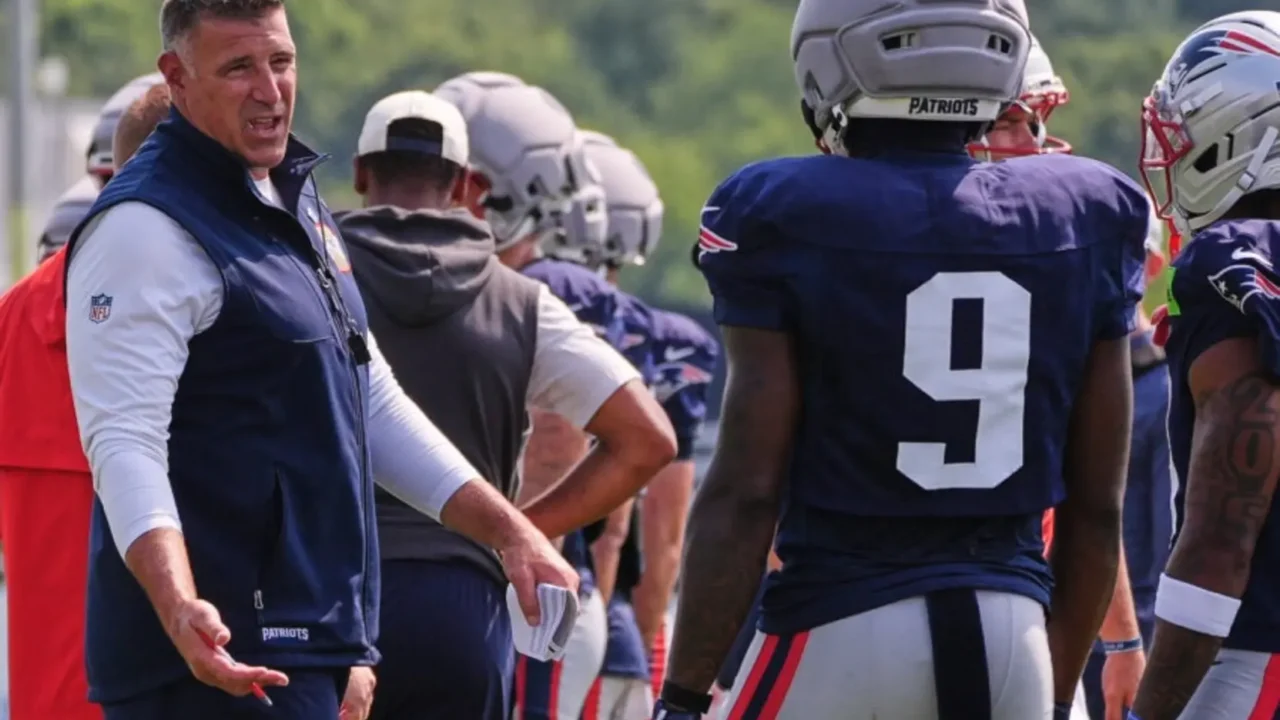
Kayshon Boutte‘s trade to Houston landed with extra context after Patriots coach Mike Vrabel said on Aug. 28, 2026 that “without injuries, Boutte probably would have been inactive.” That direct comment — reported by Colin McCarthy at Boston.com — sits at the center of why New England moved the former receiver: roster construction, special-teams value and the arrival of a top outside target changed Boutte’s path in Foxborough.
This article summarizes McCarthy’s reporting, labels projections and reported requests explicitly as such, and avoids independent verification of internal locker-room motivations.
What Vrabel actually said about Kayshon Boutte (and where it came from)
Boston.com columnist Colin McCarthy published Vrabel’s assessment on Aug. 28, 2026, quoting the coach that “without injuries, Boutte probably would have been inactive.” The line appears in the context of roster-formation remarks and should be read as Vrabel’s evaluation of Boutte’s likely gameday status, not an absolute judgment of the player’s talent.
McCarthy’s reporting frames the quote as explanatory: it helps readers understand why the Patriots and Boutte ultimately completed a trade. This piece treats the comment as source-attributed reporting rather than an independently confirmed mandate from the team.
Roster math and special teams: why that comment matters
NFL roster mechanics force coaches into difficult choices. Teams carry a 53-man roster but can activate only 46 players on game day. That seven-man gap makes special-teams ability, positional versatility and direct gameday roles decisive when coaches choose which backups to dress.
According to Boston.com, the Patriots’ receiving corps was constructed so that, in a fully healthy scenario, Boutte likely would not have been among the 46 active players. The reporting emphasizes that special-teams contributions — punt and kick coverage, return duties, blocking and reliable assignment work — often tip the balance in favor of one backup over another. In this case, McCarthy notes that Mack Hollins offered a dependable special-teams résumé that elevated his gameday value relative to Boutte.
Label: roster-impact and special-teams value described here are projections and summaries of the Boston.com account, not new team disclosures.
How the Patriots Acquire A.J. Brown reshaped receiver opportunities
The addition of A.J. Brown changed the pecking order at wide receiver. Brown projects to command the X outside role and the defensive attention that comes with a clear No. 1 target. McCarthy’s piece describes how that profile narrows meaningful snap opportunities for other outside options.
When a roster is built around a dominant outside threat, the backup X ideally contributes on special teams or at multiple receiver spots. Boston.com reported that Hollins fit that combined profile better than Boutte did in New England’s projected game-day plans. That dynamic reduced Boutte’s pathway to consistent playing time, which the article ties to the later trade.
Projected receiver roles after the trade (post-trade projections)
Note: the table presents post-trade projections derived from the Boston.com roster outline and should be treated as informed interpretation rather than definitive depth charts.
Boutte’s timeline and the reported trade request
Boston.com reports that Boutte requested a trade earlier in the offseason after assessing how the roster shake-up would affect his playing time. McCarthy’s account states that the Patriots agreed to a deal sending Boutte to Houston. This article treats the trade request as reported information and does not independently verify internal motivations or conversations.
That characterization in the reporting frames the move as pragmatic for both sides: Boutte gets a clearer path to snaps in Houston; New England clears a roster spot that better fits its active-game-day priorities.
What this means for Boutte and the Patriots — measured takeaway
For Boutte, a new setting in Houston offers the potential for more targets and consistent game snaps. For New England, the trade freed room for a receiving room built around an elite X and backups who can contribute on special teams. Boston.com’s author called the result a “win-win,” which this article presents as an opinion rooted in the reported outcomes. That phrasing is credited to the source and marked as evaluative rather than a verified league judgment.
Ultimately, the episode underscores a consistent NFL reality: roster fit and special-teams contribution can outweigh raw receiving talent when coaches decide who dresses on Sundays. The Patriots’ move reflects that calculus, as reported by Boston.com.
Source: Reporting by Colin McCarthy at Boston.com (Aug. 28, 2026).