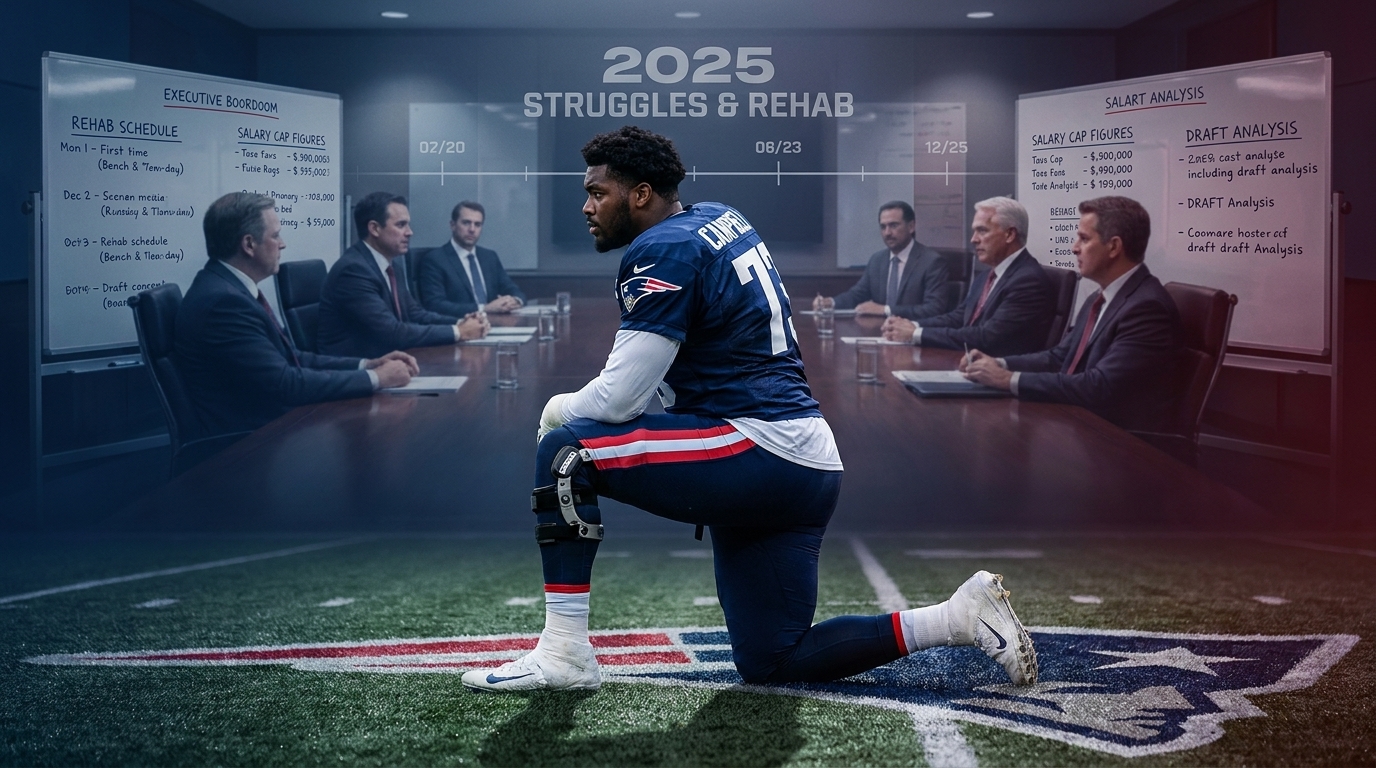
The New England Patriots entered 2025 with high hopes, but injury woes flipped that script quickly. At the center of the turmoil was Will Campbell injury and Patriots 2025 struggles, an issue that reshaped the offensive line and the team’s identity. Campbell suffered a serious MCL tear and missed four regular season games. He returned for the finale and the postseason, yet he struggled badly in key moments. Executive vice president Eliot Wolf linked those struggles to lost lower body strength.
Meanwhile, Drake Maye also battled injury late in the year, compounding the problem. As a result, the Patriots’ line surrendered six sacks and three costly turnovers in the Super Bowl. Therefore the club faces questions about depth, rehab timelines, and roster construction. This article examines Campbell’s recovery, the staff’s evaluation, and team implications. It blends senior executive insight with film study to explain what must change for 2026 urgently.
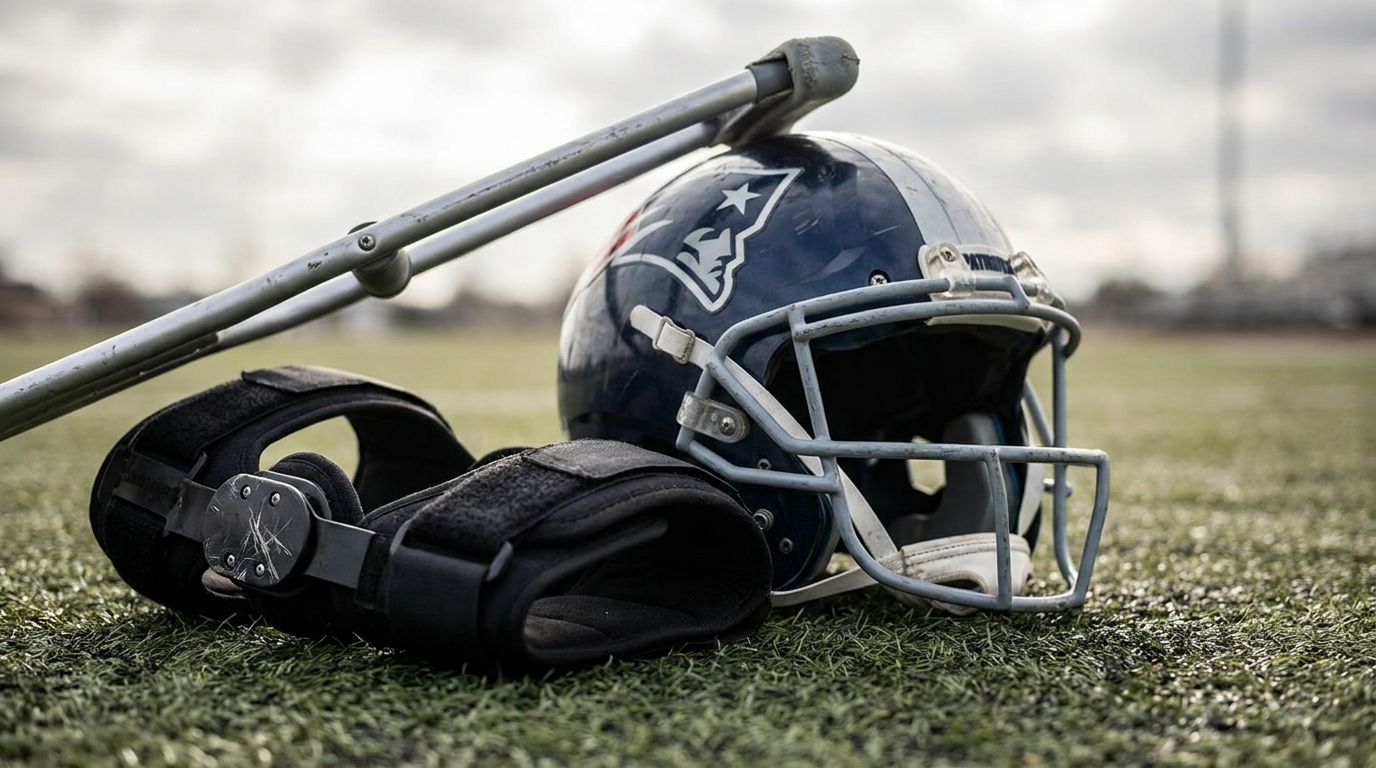
Analysis: Will Campbell injury and Patriots 2025 struggles
Will Campbell suffered a torn MCL that cost him four regular season games in 2025. He returned for the regular-season finale and the playoff run, however he did not look like the same player. Eliot Wolf, the team’s executive vice president of player personnel, said Campbell lost lower-body strength because of the injury. As a result, the rookie struggled in key moments, and three of his four worst games came in the postseason. This analysis breaks down the injury specifics and the ripple effects on the offensive line.
Key facts
- Will Campbell suffered a tear in his medial collateral ligament, a serious knee injury.
- Games missed due to the injury: four regular season games.
- Campbell returned for the regular-season finale and postseason, but he struggled upon return.
- Offensive line failures in the Super Bowl included six sacks allowed and three turnovers conceded.
Campbell’s loss of lower-body power showed up on film. Because he could not consistently anchor or mirror edge rushers, pressure forced quicker throws and more rollback protections. Therefore the line allowed free rush lanes more often. Meanwhile, the unit’s cohesion suffered as backups cycled in and out.
Campbell committed to heavy offseason rehabilitation. He did physical therapy five days a week until April 20, and he worked to rebuild knee stability and drive. Medical guidance for MCL recovery stresses progressive strengthening and sport-specific drills, which can take months to restore peak performance. For context on typical MCL recovery paths, see Mayo Clinic.
The injury also complicates roster planning, therefore the Patriots must weigh depth and draft options. The club faces left tackle uncertainty heading into 2026, and evaluation of fit and insurance will matter. For season outlook and left tackle risk, see PatriotsReport. Meanwhile consider potential re-draft moves that could help the line: PatriotsReport. Finally, for a breakdown of how the Super Bowl collapse exposed line issues, review: PatriotsReport.
| Metric | Pre-injury (regular season before MCL tear) | Post-injury (regular-season finale and playoff run) | Strength and rehab notes |
|---|---|---|---|
| Games played | Started the season at left tackle; then suffered MCL tear and missed four regular-season games | Returned for the regular-season finale and the full playoff run; struggled in multiple games | Missed four games during recovery; returned while still rebuilding lower-body power |
| Sacks allowed | Film and reports show he generally held up before the injury; no single-game collapse documented pre-injury | Film shows more pressure surrendered after return; three of his four worst games occurred in the postseason; team allowed six sacks in the Super Bowl | Eliot Wolf linked the issue to loss of lower-body strength from the MCL injury |
| Turnovers contributed to | No clear, direct turnovers attributed to Campbell before the injury | Offensive line gave up three turnovers in the Super Bowl while Campbell played; some pressures led to quick throws and turnovers | Turnovers were team outcomes, however film ties some mistakes to increased edge pressure after the injury |
| Strength / rehab progress | Baseline lower-body strength and drive established during rookie preparation | After offseason rehab he reports daily work; struggles faded as strength returned in film samples | Campbell did physical therapy five days a week through April 20 to rebuild knee stability and power |
Note: Numbers and film grades reflect team context and public reporting. The table avoids assigning sole responsibility for team sacks or turnovers to one player. It emphasizes the link between the MCL recovery, lost lower-body strength, and Campbell’s uneven postseason performance.
Campbell returned to work immediately after the season and committed to intensive rehab. “Getting back healthy, I did physical therapy five days a week the entire offseason until we got back (April 20),” he said. As a result, he focused on progressive strength rebuilding and knee stability drills designed to restore functional power.
The program emphasized lower-body strength and sport-specific movement. He worked on single-leg strength, lateral drive, and resisted sprint mechanics. Because the MCL tear reduced his base and anchor ability, trainers prioritized force transfer through the hip and core.
Film during spring workouts showed encouraging signs, yet the staff remains measured. Campbell reported he felt stronger and more stable; however, the club wants consistent game-speed reps before declaring full recovery. Medical best practices for MCL rehab recommend gradual load increases and neuromuscular retraining to cut re-injury risk and restore explosiveness.
There is cautious optimism about his 2026 outlook. If Campbell sustains the offseason gains, he can likely return to his pre-injury level and possibly exceed it. However, risks remain because the postseason struggles revealed lingering deficits in drive and mirror strength.
The Patriots therefore balance hope with prudent contingency planning. They expect Campbell to compete for the starting left tackle job in 2026, but they will also evaluate depth and draft options. Ultimately, the goal is to protect the quarterback and stabilize the offensive line while monitoring Campbell’s snap-to-snap power and consistency.
The 2025 season left more questions than answers for the Patriots. Uncertainty remains because injuries to key players exposed depth and durability issues. Will Campbell’s MCL tear and uneven return altered the offensive line’s trajectory, and therefore the team must treat his rehab as a cornerstone of its recovery plan. Campbell committed to daily physical therapy through April 20, and he reported meaningful strength gains. However the film still showed inconsistencies late in the postseason, so cautious optimism is the right stance.
Looking ahead to 2026, the Patriots need both patience and contingency. The staff should give Campbell meaningful reps while also investing in depth and draft options. In addition, coaching adjustments to scheme and protection calls can reduce pressure during his reintegration. If Campbell sustains his offseason progress, he can likely return to his pre-injury level and possibly surpass it. Conversely lingering deficits would force a quicker roster response.
In short, the club’s path forward balances hope and prudence. The success of Campbell’s rehab will shape offensive line planning and the team’s 2026 ceiling. For further analysis and coverage, see Patriots Report LLC and follow on Twitter/X @ZachGatsby.
Frequently Asked Questions (FAQs)
What exactly happened to Will Campbell during 2025?
Campbell suffered a tear to his medial collateral ligament. He missed four regular-season games because of the injury. He returned for the regular-season finale and the playoff run. However, he struggled in several postseason games as he rebuilt strength.
How did the injury affect his on-field performance?
The MCL tear robbed Campbell of lower-body power and anchor ability. Therefore he could not consistently mirror edge rushers or sustain drive. As a result the offensive line faced more pressure, and the team surrendered six sacks and three turnovers in the Super Bowl.
What have Patriots executives said about Campbell?
Eliot Wolf noted that Campbell lost lower-body strength after the injury. Meanwhile the staff praised his work ethic during rehab. The team remains measured, however they expect Campbell to compete for a starting role in 2026.
What did Campbell do in the offseason to recover?
Campbell did physical therapy five days a week through April 20 to rebuild knee stability. He focused on single-leg strength, lateral drive, and sport-specific drills. As a result he reported feeling stronger, but the team wants consistent game-speed reps.
What are the realistic expectations for 2026?
There is cautious optimism that Campbell can return to his pre-injury level and possibly exceed it. However risks remain, and the Patriots will balance his reintegration with added depth and draft or roster options. Ultimately the timeline depends on game reps and consistency.