Morgan Moses workload management for the 2026 Patriots season will shape New England’s offensive line plans. His role matters because the Patriots struggled with protection and run gaps in 2025. Vrabel’s public comments this spring signaled a planned approach to Moses’s reps and snaps. Therefore his usage is both a vote of confidence and a strategic safeguard.
Moses turned in the team’s most consistent performances last year, so the staff must protect him. However the club also added youth and depth, including a Day 1 pick at tackle. As a result the 2026 training camp will test rotation schemes, pass protection assignments, and snap counts. Because managing reps affects durability and late-season performance, this topic demands analytical attention.
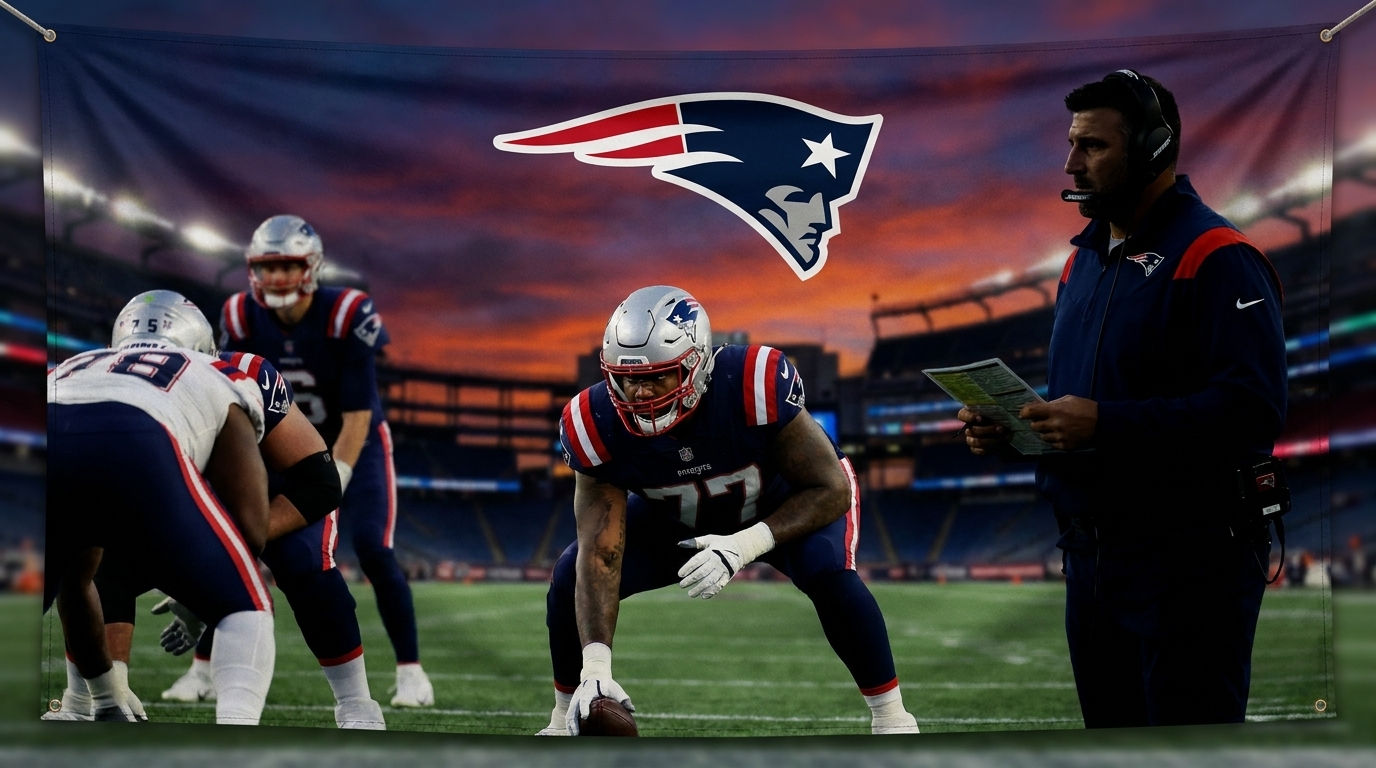
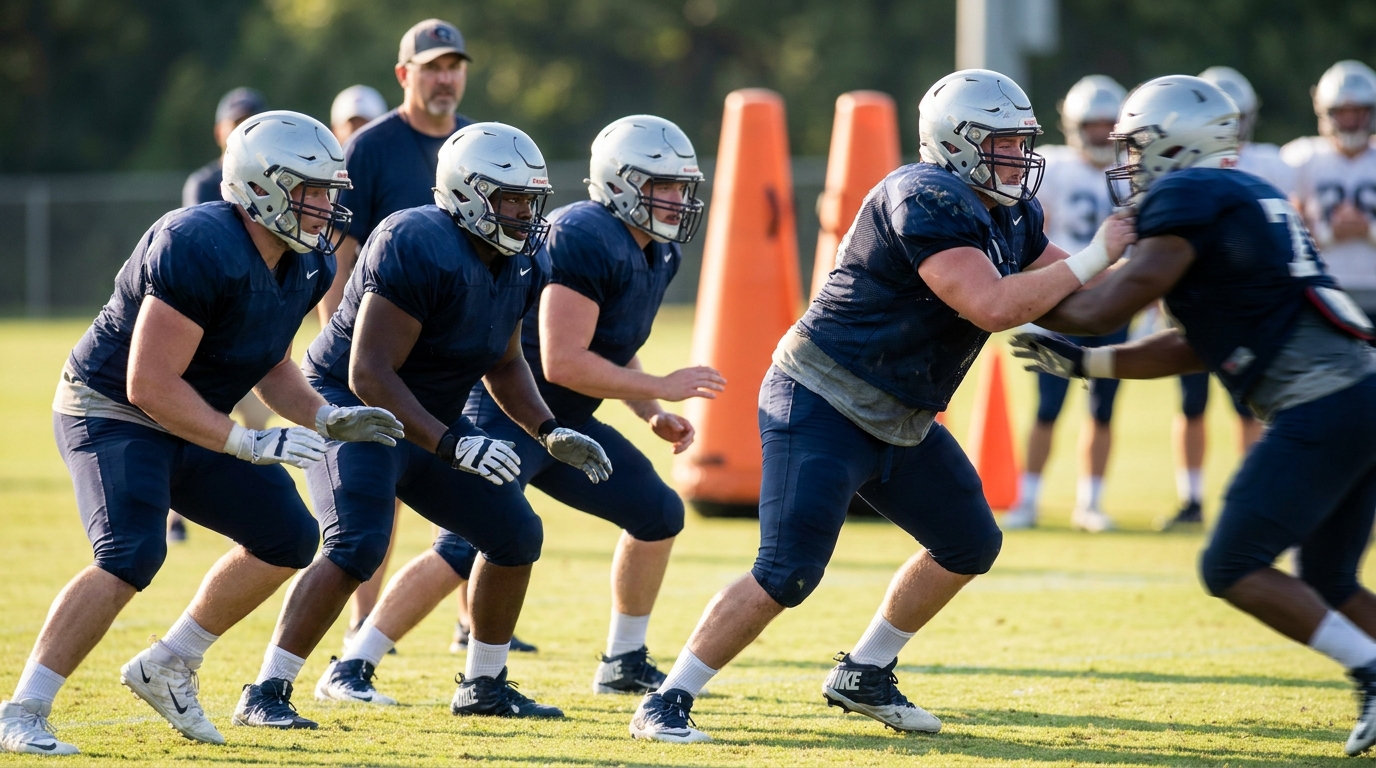
Image idea: a dynamic action shot of Morgan Moses engaged in pass set, shoulder braced, with blurred teammates around him. Alternatively a conceptual image could show a playbook overlay and a stopwatch to symbolize workload management. This article will analyze Vrabel’s remarks, Moses’s 2025 metrics, and what that means for 2026.
Mike Vrabel on Morgan Moses workload management for the 2026 Patriots season
Mike Vrabel made the team plan simple and clear. “We are just managing Morgan and are excited that he is so committed to our football team and the people here,” he said. Therefore the message was both praise and process. Vrabel added that Moses “will have a plan through training camp. It’s a long season.” As a result the staff set a measured path for reps this spring and into camp.
Why the team is managing reps
- Moses is 35 years old, so durability matters more than ever. Because of age, the team wants to limit wear and tear.
- Per Pro Football Focus Moses allowed one sack, 29 pressures, and five total quarterback hits in 2025. However the Patriots still surrendered 47 sacks teamwide that year.
- Moses was arguably New England’s best offensive lineman in 2025, and therefore preserving him makes strategic sense.
How workload management looks in practice
- Controlled reps during OTAs and mandatory minicamp, including four open practices this spring, to test schemes but protect snaps.
- A planned snap-count and rotation approach in training camp to phase in rookie Caleb Lomu and keep Moses fresh.
- Matchup-based usage on game days, plus situational series to limit cumulative exposure.
Conclusion
In short, Vrabel’s comments signal a clear balance. The Patriots will protect a veteran anchor while developing depth. As a result Moses should remain central, but healthier, deeper, and more effective late in the season.
How recent offensive line moves affect Morgan Moses workload management for the 2026 Patriots season
The Patriots reshaped the offensive line this offseason, and therefore Moses’s role will adapt. They traded up on Day 1 of the 2026 draft for tackle Caleb Lomu. Lomu allowed no sacks in 2025 playing left tackle for Utah. As a result the Patriots now add a high level rookie prospect opposite Moses. The club also signed guard Alijah Vera Tucker and moved Jared Wilson to center. Meanwhile Garrett Bradbury was traded to the Chicago Bears. For more on Vrabel’s comments, see the press conference transcript at this link.
Why this matters for Moses
- Age and workload: Moses is 35 years old, so limiting cumulative snaps makes sense. Because of that the team can use depth to protect him.
- Performance baseline: Per Pro Football Focus Moses allowed one sack, 29 pressures, and five total quarterback hits in 2025, and he was arguably the team’s best lineman. Therefore preserving his health protects the most reliable blocker.
- Rookie integration: Caleb Lomu’s rookie growth creates flexibility on the right side. As a result coaches can rotate reps and test combinations without overexposing Moses.
Practical roster effects
- Interior upgrade: Alijah Vera Tucker strengthens run blocking and pass sets. Consequently Moses may face fewer second level rushers.
- Jared Wilson at center: Improves continuity in the core. Therefore line calls and adjustments become smoother.
- Trading Garrett Bradbury: Frees cap and roster space to mix veterans and youth.
In short, these moves build strategic depth. As a result Moses can stay a central starter while receiving managed reps and situational relief. For context on New England offense plans, see this link and the primetime schedule notes at this link.
Comparison: Morgan Moses workload management for the 2026 Patriots season — key linemen
| Player | Age | 2025 performance stats | Position (2025 -> 2026) | Trade or signing notes | 2026 role and impact on Moses |
|---|---|---|---|---|---|
| Morgan Moses | 35 | 1 sack, 29 pressures, 5 QB hits (Pro Football Focus) | Right tackle -> Right tackle (incumbent) | Team retained; Vrabel committed to managing his reps | Veteran anchor; managed snaps to protect durability |
| Caleb Lomu | N/A | 0 sacks allowed (2025, Utah); pressures N/A | Left tackle (Utah) -> Rookie offensive tackle | Traded up on Day 1 of 2026 NFL Draft | High-level rookie depth; allows rotation and situational relief for Moses |
| Alijah Vera-Tucker | N/A | Not available | Guard -> Guard | Signed by Patriots (2026) | Interior upgrade; strengthens run and pass sets, easing pressure on tackles |
| Jared Wilson | N/A | Not available | Guard -> Center | Moved from guard to center in offseason | Improves center continuity and line calls; aids overall line efficiency |
| Garrett Bradbury | N/A | Not available | Center -> Traded to Chicago Bears | Traded to Chicago Bears in offseason | Departure freed roster and cap space; opened path for Wilson and interior reshuffle |
Summary: The table shows clear depth additions. As a result Moses can stay central while receiving managed reps.
The Patriots held four open practices this spring, and Moses saw limited time at right tackle. This restricted appearance was intentional and part of the workload plan. “While the youngster has seen extensive action both during organized team activities and mandatory minicamp, incumbent Morgan Moses still remains the team’s top right tackle. And even though he has not spent a lot of time in that role during the four open practices so far this spring, it is all part of the Patriots’ plan.” As a result the staff balanced evaluation with preservation.
Mike Vrabel made the strategy explicit. “We are just managing Morgan and are excited that he is so committed to our football team and the people here,” he said. Therefore his limited reps this spring should not be read as doubt. Instead it reflects precaution, planning, and long season thinking.
Key spring practice takeaways
- Limited reps for Moses preserved snaps and reduced wear and tear because he is 35.
- Coaches evaluated rookie Caleb Lomu and other backups in live reps to measure readiness.
- The four open practices offered situational work while avoiding full load for veterans.
- Staff emphasized communication, line calls, and rotation options to build depth.
Training camp preview
Training camp will expand on this approach. Coaches will set snap counts, implement rotation schemes, and practice matchup-based series. Consequently Moses can remain the veteran starter while avoiding overuse.
Image idea: a candid practice session photo of linemen in a drill, or a conceptual shot of a clipboard and stopwatch to symbolize planned workload management.
CONCLUSION
Morgan Moses workload management for the 2026 Patriots season shows deliberate planning by New England. Mike Vrabel’s comments confirm the team will protect Moses’ snaps while keeping him central. Per Pro Football Focus his 2025 metrics and veteran play justify careful rep control. Because the line struggled with sacks in 2025, this matters greatly.
Meanwhile the Patriots added depth with Caleb Lomu and Alijah Vera-Tucker. Therefore coaches can rotate without abandoning continuity. Training camp will refine snap counts, matchup series, and situational usage. Coaches will monitor Moses during camp and adjust plans weekly. As a result Moses should be fresher late in the season.
Patriots Report LLC tracks these developments closely at Patriots Report. Follow coverage on Twitter at @ZachGatsby for updates and analysis. We expect rotation plans to evolve as rookies acclimate and veterans inform strategy. Overall this approach balances veteran leadership, rookie talent, and long season durability. Consequently New England enters 2026 positioned to protect the quarterback and sustain offense.