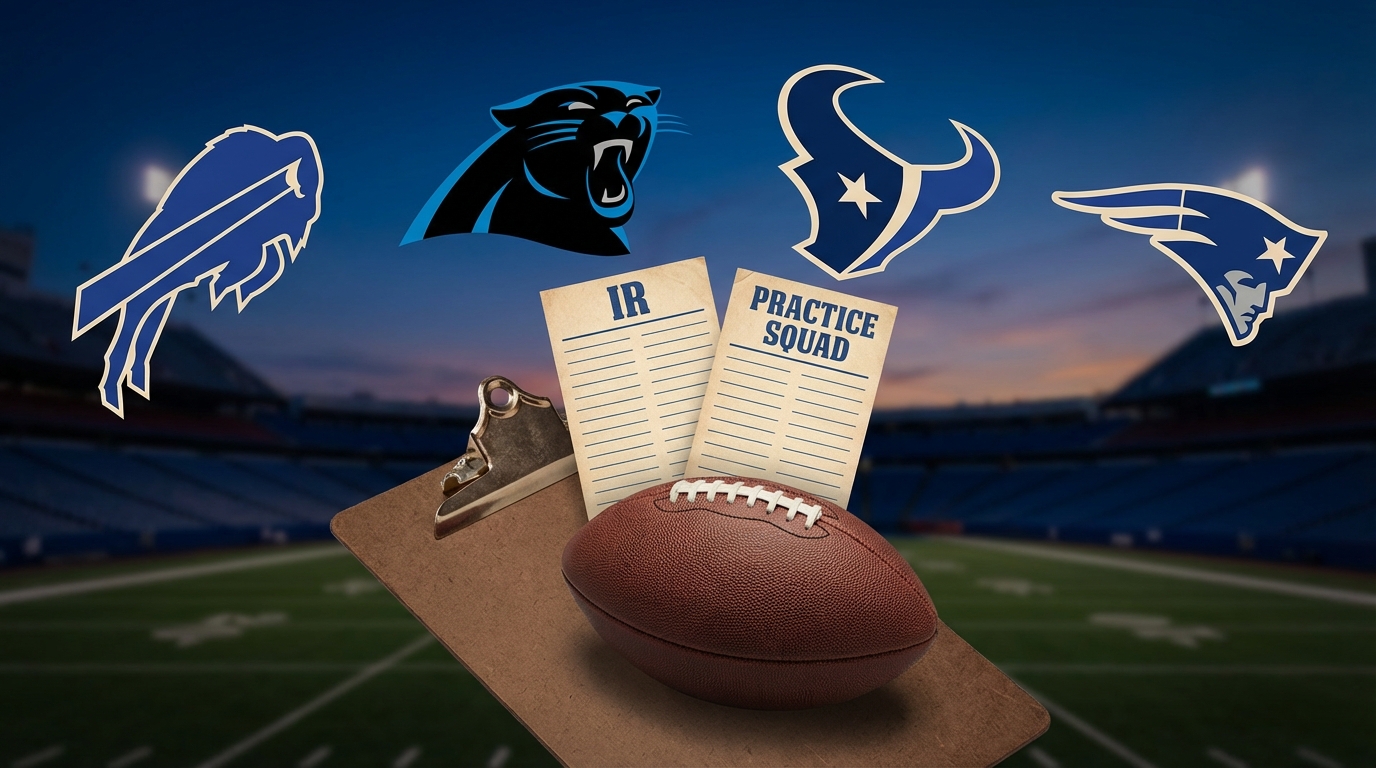
Minor NFL Transactions dominated Wednesday roster updates, and they carry outsized importance for playoff-bound teams.
These small moves include practice squad signings, waivers, and injured reserve updates. Because many teams manage tight rosters, each change can shift depth charts quickly. As a result, coaches adjust game plans and personnel plans heading into the postseason.
On January 14, 2026, several clubs logged transactions that matter. The Buffalo Bills placed wide receiver Tyrell Shavers on injured reserve after he tore his ACL. Consequently, their postseason receiving depth looks thinner, and they may seek practice squad help. Meanwhile, the Houston Texans and Carolina Panthers made moves that affect their cornerback and safety depth.
This midweek report will break down practice squad additions, IR updates, and waiver activity. First, we will summarize each notable move. Then, we will explain likely short term effects for contenders and long term roster implications. Finally, we include context for fantasy and betting readers who track depth changes.
Minor NFL Transactions midweek: practice squad moves and IR updates
Buffalo Bills placed wide receiver Tyrell Shavers on injured reserve after tearing his ACL. As a result, the Bills’ postseason wide receiving corps thinned immediately. This move forces Buffalo to explore depth from practice squad options and possible free agent pickups.
Shavers’ injury is significant because he provided contested catches and situational depth. Consequently, he will miss the rest of the season while on injured reserve. For bettors and fantasy managers, the Bills’ target distribution likely shifts toward top receivers and tight ends.
Houston Texans: Ajani Carter reverts to season-ending IR
Cornerback Ajani Carter did not make it off injured reserve within the 21-day practice window. Therefore, the Texans reverted Carter to season-ending IR. This official change removes any chance of activating him for the postseason.
Carter’s reversion matters for Houston’s depth at corner. With him out, the Texans must lean on backups and special teams contributors. As a result, coaching staffs may take a more conservative game plan against pass heavy opponents.
Carolina Panthers waive D’Anthony Bell
The Carolina Panthers waived safety D’Anthony Bell. This roster move clears space and could reflect a desire to shuffle defensive depth. Bell’s departure opens opportunities for other safeties and potential practice squad signings.
Teams often waive players midweek to finalize practice squad candidates. Therefore, Bell could surface on another club’s taxi squad. Fans should track waiver wires closely for late additions.
New England Patriots designate Terrell Jennings for return from IR
The New England Patriots designated running back Terrell Jennings for return from injured reserve. This designation starts his 21-day practice window. Consequently, the Patriots can evaluate Jennings in practice before deciding to activate him to the 53-man roster.
Jennings’ potential return gives New England more backfield versatility. However, teams must weigh game readiness and special teams value. If activated, Jennings could provide rotational snaps and pass protection help.
What these Minor NFL Transactions mean for the postseason
Overall, these midweek moves reshape short-term depth charts. Because rosters tighten in January, every waiver and IR update carries outsized importance. Teams like Buffalo and Houston now face altered personnel plans, while New England gains a low-risk option to evaluate.
For more context on similar moves earlier this week, see related coverage at PatriotsReport: https://patriotsreport.com/2026/01/12/minor-nfl-transactions-11026/, https://patriotsreport.com/2026/01/11/minor-nfl-transactions-1-10-26/ and https://patriotsreport.com/2026/01/13/patriots-stock-watch-chargers-2/.

| Team | Player(s) Involved | Transaction Type | Reason/Notes | Impact on Team Roster/Postseason |
|---|---|---|---|---|
| Buffalo Bills | Tyrell Shavers | Placed on injured reserve | “After tearing his ACL, further thinning out the Bills’ postseason wide receiving corps, Shavers has been placed on injured reserve.” | Removes a situational receiver. Bills must pursue practice squad depth and adjust target distribution. |
| Carolina Panthers | D’Anthony Bell | Waived | Waived to clear roster space and reshuffle safety depth. | Opens a roster spot for other safeties. Bell could land on a practice squad. |
| Houston Texans | Ajani Carter | Reverted to season-ending IR | “Carter wasn’t able to make it off IR within his 21-day practice window. He’ll revert back to IR without the ability to be activated again this season.” | Removes any chance of activation. Texans lose cornerback depth and must rely on backups. |
| New England Patriots | Terrell Jennings | Designated to return from IR | Designated to return starts his 21-day practice window for evaluation. | Provides optional backfield depth if activated. Patriots gain a low-risk roster option. |
How midweek Minor NFL Transactions shift playoff team dynamics
These midweek moves create ripple effects in roster construction. Because the postseason compresses rosters, even small changes carry extra weight.
The Buffalo Bills losing Tyrell Shavers to injured reserve after an ACL tear is the clearest example. Shavers offered contested catches and situational snaps. Consequently, Buffalo’s postseason wide receiving corps thinned significantly. As a result, the Bills must prioritize adding depth from the practice squad or the free agent market.
Houston’s situation with Ajani Carter shows how procedural rules matter. Carter did not come off injured reserve within his 21-day practice window. Therefore, he reverted to season-ending IR. This outcome removes any activation option and forces the Texans to rely on backup corners and special teams contributors.
Roster flexibility also factors into the Patriots’ decision to designate Terrell Jennings for return from IR. Designating Jennings starts his evaluation window. If he practices well, New England gains a rotational running back for the postseason. However, coaches must judge whether he can pass game speed and contribute on special teams.
Waivers such as the Carolina Panthers releasing D’Anthony Bell affect depth charts differently. Bell’s waiver opens a roster spot and creates the possibility of a practice squad return or a pickup by another team. Therefore, these moves can shuffle safety depth across multiple clubs in a short time.
Strategically, teams will emphasize versatility and special teams value in replacements. Because starter-level talent is scarce in January, coaches favor players who can fill multiple roles. As a result, practice squad promotions and emergency signings often focus on blocking, coverage, and return ability.
In short, these Minor NFL Transactions change how teams plan for single-elimination games. Injuries like Shavers’ ACL alter matchups and playcall priorities. Meanwhile, IR and practice squad maneuvers determine which depth pieces can step up when needed.
Conclusion
Overall, these Minor NFL Transactions changed depth charts across multiple playoff teams.
Buffalo lost Tyrell Shavers to injured reserve after an ACL tear, thinning its wide receiving corps.
Houston reverted Ajani Carter to season-ending IR because he missed the 21-day practice window.
As a result, teams shifted focus to practice squad options and emergency signings.
Carolina’s waiver of D’Anthony Bell and New England’s designation of Terrell Jennings highlight roster flexibility.
Coaches will favor versatile players who can contribute on special teams and multiple positions.
For continuing coverage of Minor NFL Transactions and roster news, visit Patriots Report LLC.
Follow updates on Twitter/X at @ZachGatsby for timely transaction alerts.
Stay tuned to midweek reports because these moves often decide playoff depth.
We will monitor developments and update accordingly.
Frequently Asked Questions (FAQs)
What are Minor NFL Transactions?
Minor NFL Transactions refer to practice squad signings, waivers, and roster designations. Therefore, they carry outsized importance near the playoffs. Because teams must manage tight rosters, these moves affect depth quickly.
What is the practice squad and how do players move?
Practice squad holds reserve players who train with the team. Also, teams can promote players for game day or sign them to the active roster. Meanwhile, other clubs can sign eligible players off a practice squad to their 53-man roster.
What does injured reserve mean and what is the 21-day practice window?
Injured reserve removes an injured player from the active roster. Some players receive a designation to return and get a 21-day practice window. However, if a player does not return in that window, he can revert to season-ending IR.
How do these moves change playoff planning?
Injuries like Tyrell Shavers’ ACL tear thin depth for the Buffalo Bills. Ajani Carter reverted to season-ending IR after missing his 21-day window. As a result, coaches adjust matchups and rely on backups and special teams.
What should fantasy and betting managers watch for?
Also, monitor practice squad promotions and IR updates daily. Short term, target distribution can shift when a receiver or back goes down. Therefore, act quickly on reliable reports to update lineups and wagers.
Frequently Asked Questions (FAQs)
What are Minor NFL Transactions?
Minor NFL Transactions are practice squad signings, waivers, and roster designations that quickly alter depth charts. They matter most late in the season when rosters are tight.
How does the practice squad work?
A practice squad stores reserve players who train with the club and can be promoted or signed by other teams. Clubs use it to cover injuries and test depth without a 53-man commitment.
What is injured reserve and the 21-day window?
Injured reserve frees a roster spot for an injured player. A designation to return opens a 21-day practice window; failure to activate usually results in season-ending IR.
How do these moves affect playoff planning?
They change matchup prep and personnel choices, pushing coaches to prefer versatile players and special teams contributors. Even one waiver or IR move can alter target shares and defensive matchups.
What should fantasy and betting managers watch?
Track practice squad promotions, IR designations, and official transactions for lineup and wager adjustments. Watch snap counts and target shares in the days after a move for clearer signals.
Key takeaways
- Prioritize players who gain snaps or targets after a roster change
- Act quickly on confirmed activations or IR placements
- Use depth charts and practice reports to judge short term value