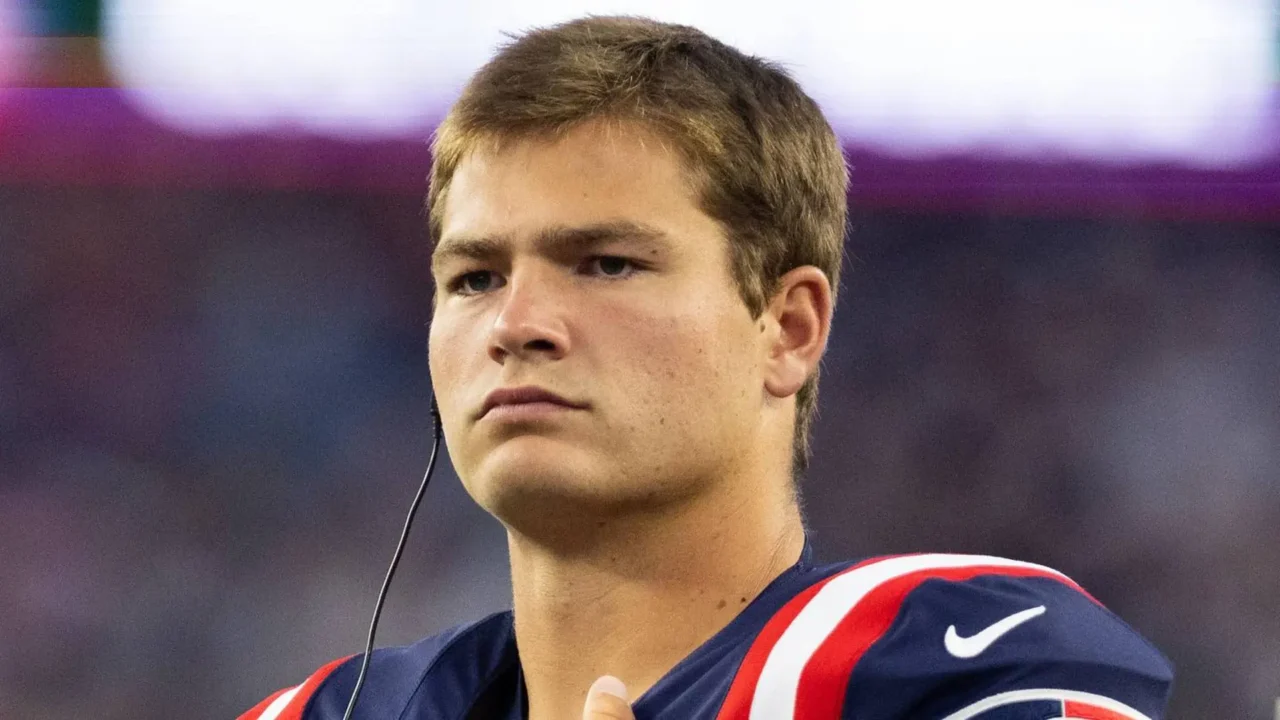
Drake Maye is the central reason for renewed optimism in Foxborough, according to reporting in Musket Fire that cites Pro Football Focus data. Musket Fire highlights PFF metrics — including an 80.7 PFF grade and a 4.9% big-time throw rate — and frames New England’s offseason additions as moves meant to accelerate Maye’s development.
Those numbers and roster moves (Musket Fire calls out A.J. Brown, Alijah Vera-Tucker and Romeo Doubs) increase optimism, but the same reporting also flags remaining depth problems that should temper expectations. The assessments below attribute PFF figures and Musket Fire analysis where stated and treat forward-looking claims as projections or opinions made by those sources.
Drake Maye — PFF numbers and what they actually tell us
Musket Fire cites Pro Football Focus data to summarize Maye’s 2025 profile: an 80.7 PFF grade and a 4.9% big-time throw rate. Those metrics, as reported by PFF and relayed by Musket Fire, emphasize Maye’s ability to make high-value throws and an overall efficiency that PFF’s grading system measures across accuracy, decision-making and play impact.
Put plainly, the numbers point to a quarterback with clear upside when his protection and target quality are reliable. Musket Fire also characterizes Maye as an MVP runner-up in its narrative framing and cites completion-percentage leadership claims; those descriptions should be read as the outlet’s interpretation of the numbers and not as league-official awards.
“The Patriots dedicated the offseason to building around him, with the additions of A.J. Brown, Alijah Vera-Tucker and Romeo Doubs upgrading three key spots on offense.”
This description is Musket Fire’s summary of how New England prioritized surrounding Maye with weapons and protection upgrades. The PFF figures cited above are the underlying data points Musket Fire used to justify that framing.
How the offseason additions upgrade the offense
The moves Musket Fire highlights are targeted: A.J. Brown brings a top-tier downfield threat who can demand single coverage or roll safety help, opening intermediate windows for a developing quarterback. Romeo Doubs supplies contested-catch ability and route versatility that complements Brown and helps keep defenses honest. Alijah Vera-Tucker projects to stabilize interior line play, which—if he stays healthy and fits the scheme—should improve Maye’s pocket time and run-game balance.
Collectively, the additions reduce the burden on Maye to create from chaos on every dropback. That pipeline of targets and line upgrades is why Musket Fire and the PFF-sourced metrics are used to argue for increased optimism, but the claim itself is a projection based on available data.
Remaining roster concerns: edge, tight end and guard
Musket Fire identifies three persistent roster issues that temper the offseason optimism: edge depth, tight end depth and offensive guard play. Each area has direct on-field consequences.
- Edge depth — Without a consistent rotation, Maye risks more one-on-one pressure and hurried throws against teams that can generate sustained pass rush.
- Tight end depth — Limited options here can reduce seam and short-yardage utility, and affect protection versatility in heavy packages.
- Guard play — Interior protection impacts pocket integrity and the running game that helps neutralize defensive fronts.
On Will Campbell’s status: Musket Fire reports that Campbell has cleared a knee issue in recent team updates. That report should be considered a team-sourced health update relayed by Musket Fire and not an independent medical verification; Campbell’s availability still matters materially to left-side protection plans.
Deadline focus: what must change by Sept. 9
With kickoff at Seattle on September 9 looming, practical priorities for Mike Vrabel and the personnel staff are clear and time-sensitive:
- Acquire at least one proven edge-rotation player (signing or trade) to reduce single-matchup exposure and protect Maye from consistent heavy pressure.
- Clarify tight end roles and add a reliable backup who can block and run intermediate routes if camp performance is uncertain.
- Resolve guard questions via targeted signings or accelerated starter clarity to improve interior pass protection.
- Confirm updated health reports (including Will Campbell) and finish concentrated pass-pro reps with Maye to build timing under pressure.
- Install conservative game plans early that leverage new receiving matchups while masking still-developing depth issues.
These are primarily personnel and scheme items that fall to Mike Vrabel and the Patriots’ front office to complete before Week 1.
Bottom line: realistic expectations for Maye and the 2026 Patriots
PFF’s metrics and Musket Fire’s reporting together create a reasonable case for raised expectations around Drake Maye—a higher ceiling than a year ago, supported by better weapons and projected interior line improvement. That optimism must be qualified: the outlets’ positive framing includes projections, and persistent gaps at edge, tight end and guard could blunt early-season performance if unaddressed.
Realistic fans should expect higher upside but also meaningful uncertainty. If New England addresses the short-term depth issues before September 9, the offense could move toward above-average; if not, early struggles are a plausible outcome as the team tests a still-developing supporting cast.
For more on how Maye’s numbers compare to other top QBs and the narratives that follow, see our related analysis on drake maye vs matthew stafford.
Sources
Primary reporting in this piece relies on Musket Fire’s Patriots coverage and Pro Football Focus (PFF) data as cited by Musket Fire.
- Musket Fire — Patriots’ offseason upgrades are fueling even more optimism around Drake Maye
- Pro Football Focus (PFF) — PFF data referenced by Musket Fire
By Michael DeVito | Foxborough, Massachusetts, USA | 2026-08-22