
What makes Drake Maye offseason training pivotal for Patriots?
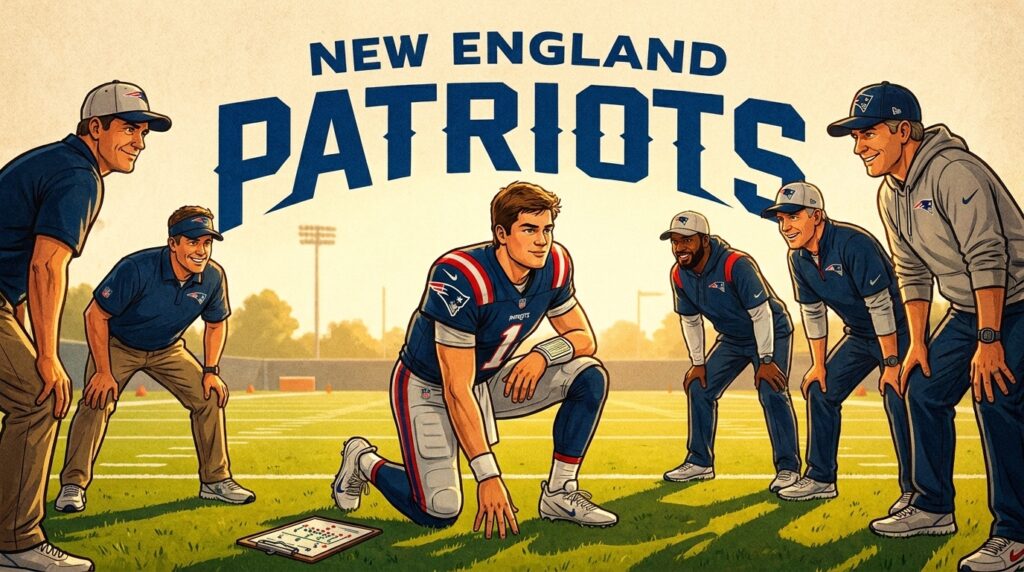
Drake Maye offseason training: What his QB prep means for New England’s offense
Drake Maye offseason training matters more than ever. In the first 100 words, that phrase captures why Patriots fans should pay attention. Maye’s blend of size and quick thinking gives New England a chance to reshape its attack. Because the Patriots built around him this spring, his offseason work now has real strategic stakes.
At 23 years old and standing 6-foot-4 and 225 pounds, Maye pairs rare physical tools with growing polish. He led the league in completion percentage and quarterback rating last season, and he starts Year 3 with proven accuracy. However, he also faced heavy pressure, which coaches want to fix.
Strategically, the Patriots added muscle around Maye in free agency and the draft. They brought in weapons like A.J. Brown and Romeo Doubs, and beefed up the offensive line. As a result, offseason drills, OTAs, and minicamp focused on quick reads and thinking under stress. Therefore, Maye’s offseason training will directly shape how New England attacks in 2026.

Drake Maye offseason training: strategic significance
Drake Maye offseason training does more than add reps. It reshapes how he reads defenses and runs New England’s offense. Because the Patriots asked him to think faster, his work this spring targeted mental processing as much as arm strength.
Coaching staff intentionally created pressure scenarios. For example, Mike Vrabel and Josh McDaniels had Maye hurry to the line of scrimmage without always giving a playcall. As a result, Maye practiced diagnosing fronts and making split-second decisions. That drill forces growth under game-like stress.
Josh McDaniels put it plainly: “We’re trying to weaponize Drake’s mind. As opposed to be just throwers of the football, we want them to be operators of the offense.” Therefore, offseason reps focused on quarterback leadership, pre-snap adjustments, and rapid progression through reads.
What the offseason aims to fix
- Decision-making and pre-snap identification, because correct reads cut sack rates
- Faster cadence and play tempo to control defenses and reduce negative plays
- Pocket presence and quick release to help avoid the 47 regular-season sacks Maye faced
- Chemistry work with new weapons, particularly after the A.J. Brown trade and Romeo Doubs additions see here
- Film-room feedback loops that turn practice choices into teachable moments
Ashton Grant described the evaluation process. He highlighted the post-drill meetings where coaches ask why Maye chose a play. Then they praise or tweak his thinking. That approach turns mistakes into growth, and it accelerates learning.
Finally, OTAs and minicamp offered early signs of this development. For more on spring work and standout reps, see the team’s minicamp coverage. Additionally, Maye’s OTA moments suggested he could capitalize on offseason work; read the OTA breakdown.
Offseason training comparison table
| Training Aspect | Maye’s Approach | Patriots QB Norms | Expected Impact |
|---|---|---|---|
| Decision-making and pre-snap ID | Coaches force hurry-up without playcall to test reads and answers; post-drill film reviews refine choices | Patriots often emphasize scripted reads with coach-directed calls | Faster, cleaner pre-snap decisions; fewer mental errors |
| Tempo and cadence | Practiced quick cadence to control defenses and exploit mismatches | Traditional cadence varied; some previous QBs relied on slower, managed pace | More aggressive clock control; improved rhythm for new weapons |
| Pocket presence and sack avoidance | Focus on quick release and pocket movement to reduce sacks (47 regular-season sacks) | Some Patriots QBs managed pockets conservatively | Reduced negative plays; higher yards per attempt |
| Chemistry with receivers | Reps with A.J. Brown and Romeo Doubs in live looks and timing drills | Patriots QBs historically built chemistry over camp and season | Faster on-field rapport; improved deep and intermediate timing |
| Mental processing and leadership | Film-room feedback loops; “weaponize Drake’s mind” to make him an operator | Norms include meetings, but less live problem-solving under pressure | Enhanced on-field adjustments; better exploitation of defenses |
| Physical conditioning and durability | Strength work to leverage his 6-foot-4, 225-pound frame and withstand contact | Patriots emphasize durability; team added offensive-line help | Better ability to absorb hits and extend plays |
This table highlights how Drake Maye offseason training targets specific weaknesses while building on elite accuracy and quarterback rating.
Drake Maye offseason training and the upgraded supporting cast
The Patriots improved the pieces around Maye in the offseason. As a result, his training matters more now. The team added back-to-back first-round offensive tackles. They also brought in A.J. Brown and Romeo Doubs to stretch defenses.
Offseason work prepared Maye to use those assets. Because coaches put him under real pressure in drills, he practiced quick reads and timing. Therefore, he should connect faster with new receivers. Meanwhile, a stronger offensive line gives him time to operate.
How the roster shifts help Maye
- Better pass protection from new tackles reduces sack risk and extends plays
- Elite targets like A.J. Brown force defenses to respect the deep ball
- Romeo Doubs adds reliable intermediate routes and yards after catch potential
- Losing Stefon Diggs removes 85 catches and 1,013 yards of production to replace
Coaches designed practice to match roster realities. Josh McDaniels said coaches want Maye to be an operator, not just a thrower. Mike Vrabel pushed hurry-up drills without playcalls to speed decision-making. Ashton Grant explained the value of post-drill feedback for problem-solving.
Overall, optimism is warranted. Drake Maye offseason training focused on tempo, reads, and chemistry. Therefore, he enters training camp better equipped to turn new talent into points.
Conclusion
Drake Maye offseason training mattered for more than physical reps. Coaches pushed him to think fast, make quick reads, and lead under pressure. As a result, his mental prep now stands beside arm talent and size.
The Patriots used innovative drills to force real-time problem-solving. Josh McDaniels summed it up: “We’re trying to weaponize Drake’s mind.” Therefore, practice multiplied into teachable moments through film-room feedback and live hurry-up tests.
The upgraded roster amplifies those gains. Because the team added A.J. Brown, Romeo Doubs, and stronger offensive tackles, Maye has more time and better targets. Consequently, his offseason work should translate into cleaner reads, fewer sacks, and more explosive plays.
Optimism is grounded in evidence. Maye led the league in completion percentage and quarterback rating last season. However, he also faced heavy pressure. Training addressed both strengths and weaknesses, which is vital as training camp approaches.
Follow ongoing coverage at Patriots Report LLC for updates and analysis. Visit Patriots Report and follow @ZachGatsby on Twitter for continuing insights into Maye’s progress and the Patriots’ offense.
Frequently Asked Questions (FAQs)
How does Drake Maye offseason training help his development?
Maye’s offseason training focuses on mental processing, quick reads, and pocket work. Coaches forced hurry-up reps without playcalls to test his decisions. As a result, he improved pre-snap ID and leadership. Training aims to lower sack rates and speed decision-making.
What drills did coaches emphasize?
The staff used hurry-to-the-line scenarios, cadence and tempo drills, quick-release work, and live timing reps with receivers. Then coaches used film-room feedback to review choices and tweak thinking.
How does the new supporting cast affect him?
Adding A.J. Brown, Romeo Doubs, and upgraded offensive tackles gives Maye clearer reads and more time. Offseason drills practiced connecting with those weapons. Therefore, chemistry should develop faster.
What challenges remain?
Losing Stefon Diggs creates a production gap to fill. Maye also must reduce sacks and adapt to defensive adjustments. However, training aimed to address these issues.
When will fans know if the training worked?
Expect answers once training camp and the early season start. Early preseason snaps and opening games will show progress.