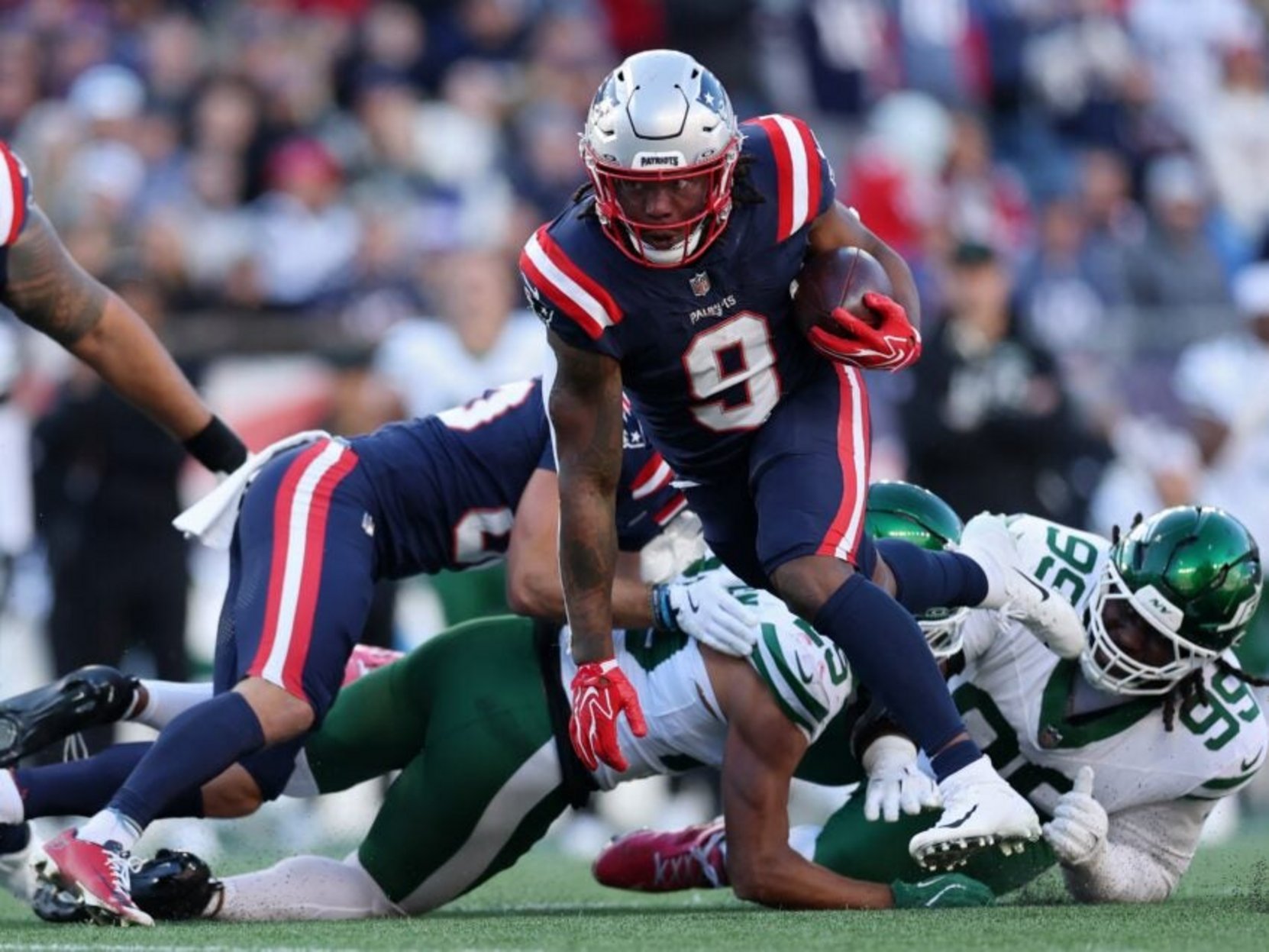
Boston.com reported that New England Patriots running back Corey Kiner carried 11 times against the New York Jets on Oct. 18 after the team acquired him near the end of the preseason.
Kiner finished with 57 rushing yards, and the Patriots used him for eight consecutive handoffs during their final scoring drive.
The sequence ended with Andy Borregales making a 26-yard field goal, according to Boston.com. Kiner’s workload gave New England another option in its running-back rotation without establishing a permanent change to the depth chart.
Corey Kiner Gives Patriots a Hot-Hand Spark Against the Jets
Boston.com reported that Kiner received the ball eight times in a row during the Patriots’ final scoring drive. The repeated handoffs made him the central part of New England’s effort to finish the possession with points.
Borregales then converted a 26-yard field goal, Boston.com reported. Kiner’s contribution was measured in volume rather than a single explosive play: his final line was 11 carries for 57 yards.
That performance matters because Kiner entered the Patriots’ backfield as a recent addition rather than as an established centerpiece. The Jets game provided a clear example of New England turning to him for a sustained stretch when the offense needed dependable rushing attempts.
Boston.com’s account also placed the performance within New England’s broader three-back approach. Kiner’s work against the Jets showed how quickly that rotation can narrow around the player the coaching staff believes is producing in a particular game.
Mike Vrabel Says Patriots Will Ride the Hot Hand
Mike Vrabel described the Patriots’ approach directly, according to Boston.com. “We got three capable backs and you ride the hot hand,” Vrabel said.
That comment framed Kiner’s usage as part of a game-specific decision rather than a formal promotion. Boston.com identified Rhamondre Stevenson, TreVeyon Henderson and Kiner as the three backs involved in that rotation.
Vrabel’s statement also leaves room for New England to distribute carries differently from week to week. The Patriots can keep multiple backs involved while giving more work to the player who earns the opportunity through his performance in that game.
Kiner’s 11 carries against the Jets therefore support a cautious conclusion. They show that the Patriots were willing to rely on him for an important stretch, but they do not establish that he has become New England’s permanent lead back.
Why Corey Kiner’s Late-Game Role Mattered
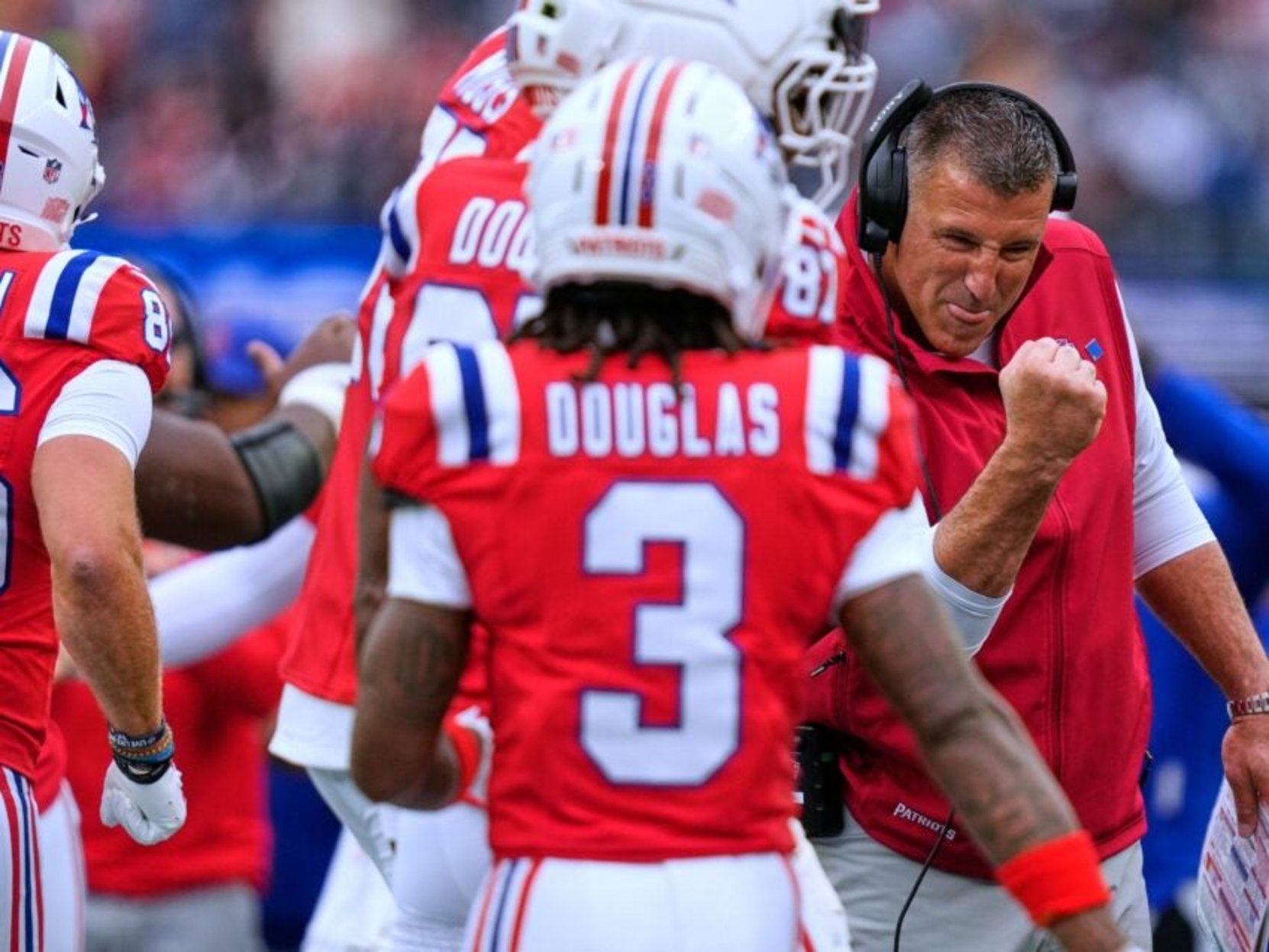
Kiner said the final minutes carried special meaning because his teammates and coaches trusted him with the ball, according to Boston.com. “The last few minutes of the game meant a lot, seeing the smiles on my teammates’ faces and coaches’ faces, knowing that they trusted me and it worked out,” he said.
He also described the experience simply. “It felt good,” Kiner said, according to Boston.com.
Those comments present the late-game workload as a trust-building moment from Kiner’s perspective. The Patriots gave him eight straight handoffs during the scoring drive, and his reaction reflected the importance he placed on converting that opportunity into a productive possession.
Vrabel also praised Kiner’s running style. “He runs hard. He runs hard, and it’s the same way he’s selling the kickoff returns,” Vrabel said, according to Boston.com.
That assessment helps explain the role Kiner filled against the Jets without requiring a larger projection. The reported performance was valuable because New England could stay with him for a sustained sequence, not because it confirmed a permanent workload or a new depth-chart designation.
Kiner’s Path From LSU to Cincinnati to New England
Kevin Faulk recruited Kiner to LSU, according to Boston.com. Kiner later finished his college career at Cincinnati before reaching New England.
Kiner described the Patriots’ environment as meaningful to him. “This team atmosphere is something special. This isn’t everywhere. It’s special,” he said, according to Boston.com.
He also emphasized that players remain committed regardless of their position on the depth chart. “No matter where you are on the depth chart, guys come to work every day and that’s what I respect,” Kiner said, according to Boston.com.
Kiner’s comments provide context for how he viewed his opportunity against the Jets. His route through LSU and Cincinnati led to a Patriots roster that, according to Vrabel’s explanation, has three backs capable of earning meaningful work.
What Kiner’s Performance Means for the Patriots’ Backfield
Kiner’s reported 11-carry, 57-yard performance gives New England a credible hot-hand option in its running-back room. The eight consecutive handoffs during the final scoring drive were the clearest indication of how much the Patriots trusted him in that game.
Vrabel’s three-capable-backs comment keeps the larger picture measured. Stevenson, Henderson and Kiner can all remain part of the rotation, with the distribution shaped by the circumstances and the back producing most effectively.
For Kiner, the Jets game is an important performance rather than a confirmed promotion. It gives the Patriots another option for a game plan and shows that the coaching staff was comfortable leaning on him for a decisive possession. No depth-chart change has been established, but Kiner’s 57 rushing yards give New England a meaningful data point as it evaluates its backfield rotation.