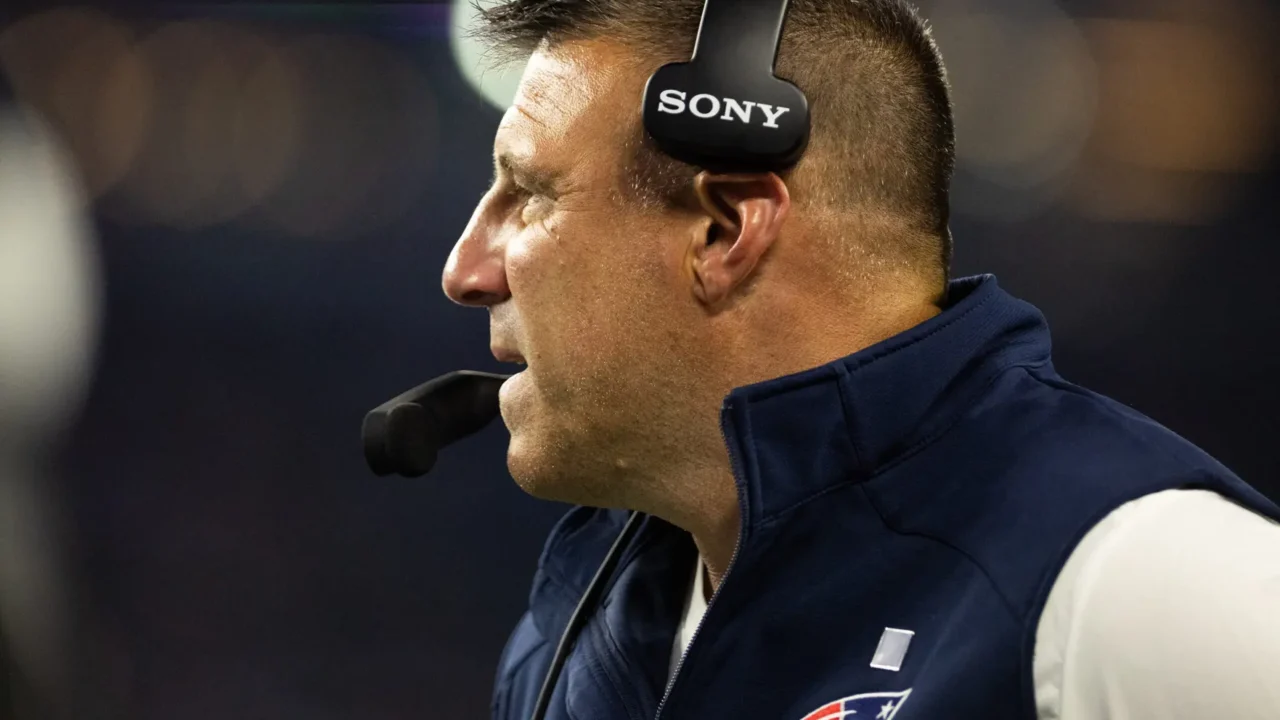
Mike Vrabel opened his Sep. 28 remarks in the Mike Vrabel press conference with three priorities: assessing Drake Maye‘s availability, fixing red-zone defense after Jacksonville’s efficiency, and shaping this week’s practice emphasis. On Maye, Vrabel said plainly, “No, no, I’m not.” when asked if he was aware of a lingering shoulder issue — a coach’s assessment rather than medical confirmation.
Mike Vrabel press conference — Drake Maye’s status
Vrabel reiterated that, from a coaching standpoint, he does not see evidence the shoulder will be a continuing problem and said he would not have listed Maye on the injury report based on his knowledge. He emphasized that this is a non-medical, observational position: evaluations and imaging — when applicable — are handled by medical staff.
The coach framed Maye’s situation as part of routine postgame care rather than an extraordinary injury. Vrabel said the team will continue to monitor Day-to-day variables such as soreness and recovery work, and he stressed that the staff will let medical professionals guide formal availability decisions. In short: the coach’s comments are a current read, not an official medical clearance.
Red-zone failures Vrabel flagged
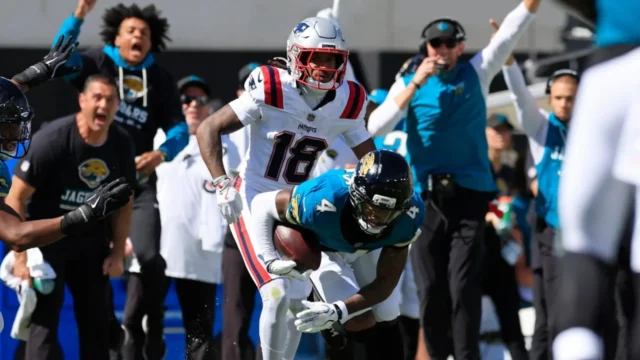
Vrabel singled out the red zone as a decisive problem in the loss, noting plainly that the Jacksonville Jaguars “they went 5 for 5 in the red zone.” He said that kind of efficiency by an opponent short-circuits a defense’s ability to stay in games and forces an offense into tougher fourth-quarter situations.
Rather than assigning blame to a single phase, Vrabel described the red-zone issues as a mix of opponent execution and New England lapses — coverages, tackling and situational communication. He stressed that the coaching staff will prioritize red-zone situational work because preventing touchdowns in those compressed spaces is both a schematic and detail-oriented challenge.
Practice and lineup notes: Ben Brown, Walter Rouse
Vrabel explained pregame intentions for interior line roles: the plan going in was for Ben Brown to be at center and then first left guard, with Walter Rouse prepared to work at that spot as needed. That sequencing — a planned-deployment approach rather than an ad-hoc switch — reflects how the staff balanced health, experience and practice reps.
Vrabel described both players’ work as competitive and noted that more live snaps in practice help coaches decide where each player gives the unit the best chance at consistent protection. He also said that pending evaluations and weekly practice performance will inform short-term lineup adjustments, and that coaches are mindful of matching schematic demands to available skill sets.
Positives Vrabel highlighted
Even while criticizing key areas, Vrabel pointed to plays and progress that offer building blocks. He called out specific positives the staff can use to shape practice and game plans:
- Protection improving — Vrabel said pockets cleaned up on several series and that offensive line push and timing have shown measurable improvement in spots.
- Pop Douglas X-play completion — a designed route and target that produced an efficient completion and showed the offense’s ability to connect on timing plays.
- A tipped pass that resulted in an interception — Vrabel noted the pressure that led to the turnover as a takeaway on how defensive pressure can create change-of-possession opportunities.
- Special-teams momentum — a kickoff return that reached near the 40-yard line and field-position plays that created manageable starts for the offense.
- Isolated successful plays on both sides of the ball that indicate the roster can execute when fundamentals are followed.
Vrabel used those examples to underline the point that there are teachable moments even in a loss — specific plays that can be replicated with consistent technique and situational preparation.
Roster context and youth
The coach repeatedly framed the team’s current condition through roster composition: 24 of the 54 players on the gameday roster are first-year Patriots. Vrabel used that fact to explain some inconsistency and the need for repetition in practice. “Confidence comes from your preparation,” he said, tying playing-time performance to the volume and quality of practice reps.
Vrabel emphasized that younger players can accelerate development with focused coaching attention, clear expectations and incremental responsibilities. He also cautioned that youth can produce variability — something the staff expects and plans to manage through practice design and situational reps.
What to watch in practice
Looking ahead, Vrabel provided specific guidance on which practice signals will indicate short-term progress. He told reporters the staff will “hit red zone on Friday,” meaning the team plans to rehearse compressed-field situations and protection scenarios late in the week.
Key indicators to watch during Friday practice and throughout the week include:
- The volume and realism of red-zone rep work — are coaches running live or near-live red-zone sequences?
- Protection reps — do interior linemen and quarterbacks execute cleaner pockets in team period and scramble/pressure simulations?
- Which players receive consistent lineup snaps — will Ben Brown and Walter Rouse settle into a predictable rotation?
- Special-teams execution — kickoff and coverage reps that can shift field position in future games.
Vrabel framed these practice items as measurable inputs the staff will use to judge readiness, not guarantees of immediate roster changes.
What Vrabel framed as next steps
Beyond the tactical items above, Vrabel summarized a return-to-basics stance: simplify where needed, reinforce technique, and ensure players can perform fundamentals at game speed. He said the staff will continue to evaluate health, tailor practice intensity, and make small, intentional changes designed to improve outcomes in high-leverage situations.
He also reminded reporters that coach observations are not medical determinations and that health updates flow from the medical staff as appropriate. In short, the immediate plan is to take the red-zone failures and protection issues identified, drill the corrective reps in practice, and look for cleaner execution under similar pressures in the next game window.
Source: Full transcript of the Sep. 28 press conference posted by Ian Logue on PatsFans.com. All quotes and paraphrases above are attributed to Mike Vrabel as transcribed by Ian Logue. Coach comments reflect his perspective and should not be read as independent medical conclusions.