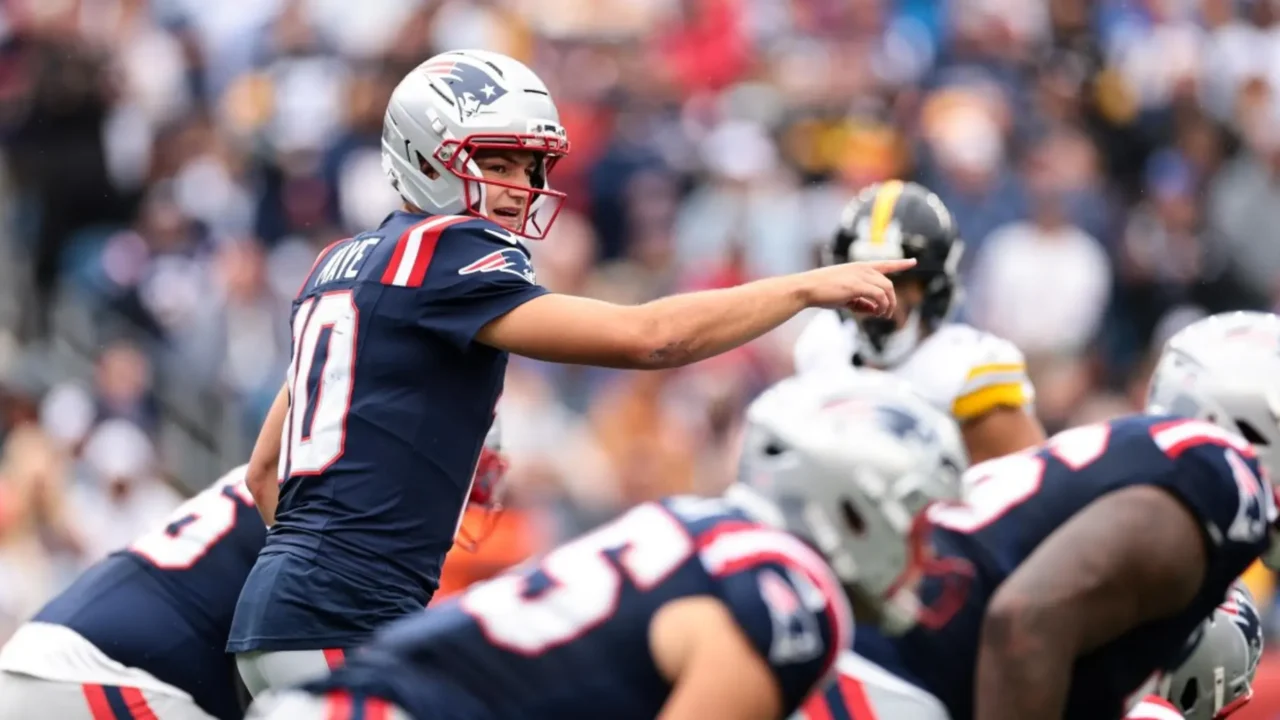
Drake Maye and the New England offense have been inconsistent through two games, and the early numbers point to clear problem areas. Through two games the unit is averaging 11.5 points per game, ranks 23rd in EPA/play, and Maye has thrown four interceptions, per Pats Pulpit reporting.
Those figures set the frame for what the team and fans want to see corrected before the Patriots head to Jacksonville: cleaner decision-making, better early-game execution, and a reset of risk management that still allows downfield attacking when appropriate.
Quick snapshot — Drake Maye and the offense through two games
The concise, sourced picture: the Patriots are struggling to score (11.5 points per game) and their efficiency metric sits in the bottom half of the league (23rd in EPA/play). The turnover count is especially salient: Maye has four interceptions through two games, an issue that directly correlates to scoring droughts and shortened possessions.
Those numbers come from the Pats Pulpit piece covering coach and player comments after Week 2. They’re a snapshot — useful for assessing trends but not dispositive for the full season.
What the turnovers and decision-making looked like
The source describes a clear swing in Maye’s reads from Week 1 to Week 2: an overly aggressive fourth quarter in Seattle led to three interceptions, then a more conservative approach in Pittsburgh that produced missed opportunities.
One example highlighted by the reporting: tight end Eli Raridon broke free up the seam as the first read on a Patriots possession in Pittsburgh, yet Maye checked the play down to Rhamondre Stevenson instead. That sequence illustrates the pendulum effect — forcing some plays in one game and hesitating the next.
These plays are documented in the Pats Pulpit recap and serve as concrete examples fans can watch to judge Maye’s ongoing adjustments between aggression and prudence.
Coach and player context — Vrabel and Maye on decisiveness
Head coach Mike Vrabel framed the theme succinctly: “It’s being decisive in everyone’s play, but it’s certainly magnified with the quarterback.” Vrabel stressed the quarterback must distribute the football “as quickly and decisively as possible” and avoid forcing things while still creating the next play.
Maye reinforced that focus on instincts and trust: “Trusting what I see in practice and trusting the decisions I’m making out there on the field. I’ve never been shied away from trusting something and letting it rip.” Both quotes are drawn from the Pats Pulpit report summarizing the team’s messaging after Week 2.
Why last year’s 1-2 start matters (and the Panthers turnaround)
Context matters: the article reminds readers that last season the Patriots began 1-2 and then put up 42 points against Carolina, kicking off an 11-game winning streak. That historical parallel is useful as a caution against overreacting to two games.
Still, parallels aren’t guarantees. The earlier turnaround offers precedent for what the team hopes to replicate, but it should be framed as one possible path rather than proof the current issues will resolve on the same timeline.
Keys to avoid a 1-2 start in Jacksonville
The reporting lays out coach-directed priorities the Patriots are emphasizing heading into Week 3. Fans should watch for these specific, observable items on game day:
- Fast start: get completions early to establish rhythm and limit short fields for the opponent.
- Decisive reads: quicker progressions and fewer hesitation checks that turn potential gains into conservative runs.
- Selective downfield aggression: stretch the defense when coverage or leverage presents a favorable mismatch.
- Protect the football: reduce turnover risk without removing all vertical intent.
Those keys come directly from the team messaging reported by Pats Pulpit and reflect concrete, measurable behaviors rather than pure opinion.
Bottom line for fans
The sourced case is straightforward: early offensive numbers (11.5 PPG, 23rd in EPA/play) and four interceptions are clear signals the Patriots need cleaner execution, while coach and quarterback quotes show the staff is asking for a balanced approach between decisiveness and sound decision-making.
That assessment mixes fact and interpretation. The statistics and play examples are reported facts; labeling Maye as the sole cause of struggles would be opinion. The article suggests Maye’s decision-making is a major factor, but it also acknowledges team-wide dynamics and the influence of new personnel.
Three pragmatic, fan-facing takeaways:
- Prioritize the start: if the Patriots land a couple of early completions, that reduces pressure and may prevent forced errors.
- Watch Maye’s progression speed: quicker reads and trusting first or second options should be a focus in live viewing.
- Balance risk and reward: look for selective deep looks rather than wholesale aggression or passivity.
Actionable preview for Jacksonville: expect a game plan that emphasizes early short-to-intermediate completions, a few planned vertical shots when matchups allow, and coaching messages designed to get Maye into fast, decisive rhythms. That approach aims to limit three-and-outs and reduce turnover opportunities while still attacking the defense when film shows openings.
All quotes, play examples and the statistics cited here are drawn from the Pats Pulpit piece covering the Patriots’ post-Week 2 reporting. For the original reporting, see Pats Pulpit.
Note on uncertainty: these observations reflect a two-game sample and coach/player commentary. Trends may shift quickly; the article’s framing is intended to inform fans about what to watch and why, not to forecast season outcomes with certainty.
Updated: Sept. 24, 2026. Source: Pats Pulpit — https://www.patspulpit.com/new-england-patriots-news/138244/drake-maye-patriots-offense-find-rhythm-after-slow-start