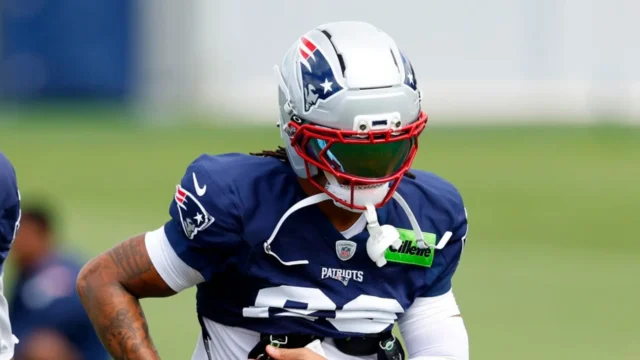
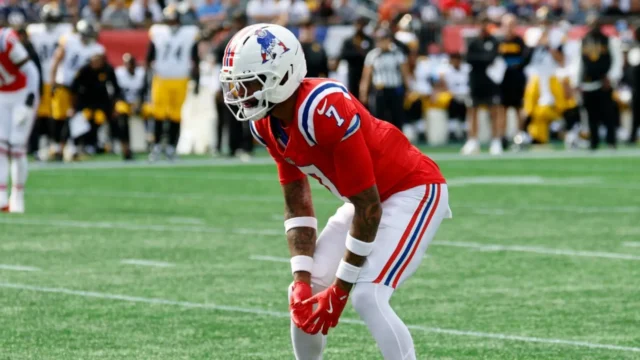
The Stephon Gilmore retirement was marked by a ceremony at Gillette Stadium where Gilmore told fans he chose to end his career as a New England Patriot because the organization “made him a better player and person.” The remark — and the place where he made it — framed a farewell that tied his individual achievements to the Patriots’ 2019 title run and the teammates and coaches who helped him reach his peak.
Stephon Gilmore retirement: Ceremony, context and a simple reason
Gilmore spoke directly to the Gillette Stadium crowd and described why he returned to the Patriots for his public goodbye. “I had great early years in my career, but I think once I came to New England, I really grew into myself, mentally, physically,” he said, according to the Patspulpit report. He added, “I got so much better as a player. I had great coaches, I was around a lot of great veteran players that really helped me elevate my game. I had my best years here and I learned a lot here. I think I wouldn’t be the person I am today if I didn’t come to this this franchise. So, that’s why I chose New England.”
The Patspulpit piece notes Gilmore joined the Patriots in 2017 as a free agent after earlier stops in Buffalo, Carolina, Indianapolis (practice signed), Dallas and Minnesota. His decision to formally retire in New England read as both a personal acknowledgment and a public affirmation of the club’s role in the back half of his career.
Career by the numbers (Patriots and overall)
Patspulpit provides the key figures fans will search for: Gilmore appeared in 67 contests for the New England Patriots (regular season and playoffs) after arriving in 2017. In a Patriots uniform he recorded 13 interceptions, and the article lists 34 interceptions overall across his career. Patspulpit also cites his top honors during the New England years: two first-team All-Pro selections and the NFL’s Defensive Player of the Year award in 2019.
Editors and readers should note that broader comparative claims in the original piece — for example, historical lists tied to awards or rare categories of winners — should be independently verified before being repeated as settled fact.
Two plays that define his Patriots legacy
Gilmore repeatedly declined to single out a lone signature moment, instead pointing to two plays that he described as nearly equal in importance. First was the late-game interception of Jared Goff in Super Bowl LIII, a turnover the Patspulpit write-up credits with helping New England close out the victory. Gilmore framed that pick as the satisfying, sealing moment: “I was able to make that play in the Super Bowl to seal the game. That that was a good feeling.” (Direct quotes in this article are taken verbatim from Patspulpit.)
Second was a pivotal pass breakup in the AFC Championship Game that season — the play Gilmore said proved harder to execute and, more importantly, functioned as the gateway to the Super Bowl. He told Patspulpit, “I think the AFC Championship play was a harder play to make. If I don’t make that play we don’t get to the Super Bowl. But I think for me, winning the Super Bowl was a great feeling… It’s hard to pick between those two plays.” The juxtaposition — one play that creates the opportunity, another that closes the door — is central to how Gilmore described his Patriots-era legacy.
Those two moments are frequently referenced by fans and analysts when summarizing Gilmore’s impact in New England: one defensive play helped the team reach its championship stage, while another helped it secure the title.
Fan reaction, legacy and what to verify
The Gillette Stadium ceremony carried a fan-forward tone. Per Patspulpit’s report, applause and chants punctuated Gilmore’s remarks as he thanked coaches and veteran teammates for their role in his development. He singled out a 2019 regular-season game against Amari Cooper — holding Cooper without a catch while adding an interception — as an example of a most complete performance in a Patriots uniform.
For Patriots fans, the ceremony neatly ties a local ending to a career that reached new heights after Gilmore’s arrival in New England. It situates him within the memory of the 2019 title run and the defensive spine that helped the franchise that season. Still, both editors and readers should treat some contextual or comparative claims — such as rankings tied to award history or categorical superlatives — as items to verify independently before treating them as definitive.
Quick takeaways
- The Stephon Gilmore retirement was announced at Gillette Stadium; he chose New England as the team to close his career.
- Per Patspulpit, Gilmore played 67 games for the Patriots, recorded 13 interceptions with the club and tallied 34 picks in his career.
- He emphasized two signature plays: an AFC Championship pass breakup that helped get the team to Super Bowl LIII and an interception of Jared Goff in Super Bowl LIII that helped seal the title.
FAQ
What happened with Stephon Gilmore retirement?
Gilmore formally announced his retirement during a Gillette Stadium ceremony and said he chose to end his career as a New England Patriot because the organization helped him grow both on and off the field, per Patspulpit.
Why does Stephon Gilmore retirement matter?
Gilmore was a key contributor to the Patriots’ defense during his tenure, including a late-game interception in Super Bowl LIII and seasons that included All-Pro recognition and the 2019 Defensive Player of the Year award; his retirement marks the formal close of a decorated career.
What happens next?
As a retiree, Gilmore’s legacy will be discussed among Patriots fans and local historians. Any roster or organizational implications are separate from his retirement announcement and were not detailed in the Patspulpit piece.
Source attribution and verification notes
This story is grounded in the Patspulpit report: Patspulpit.com — Newly-retired Stephon Gilmore reflects on Patriots tenure. Direct quotes above are taken verbatim from that account and attributed to Patspulpit. The original piece is a Fan Opinions community article; broader historical or comparative claims mentioned there (for example, award-rank comparisons or long-range historical lists) should be independently verified before being presented as definitive facts.