Drake Maye growth areas for year three: Fast tracking a breakout season
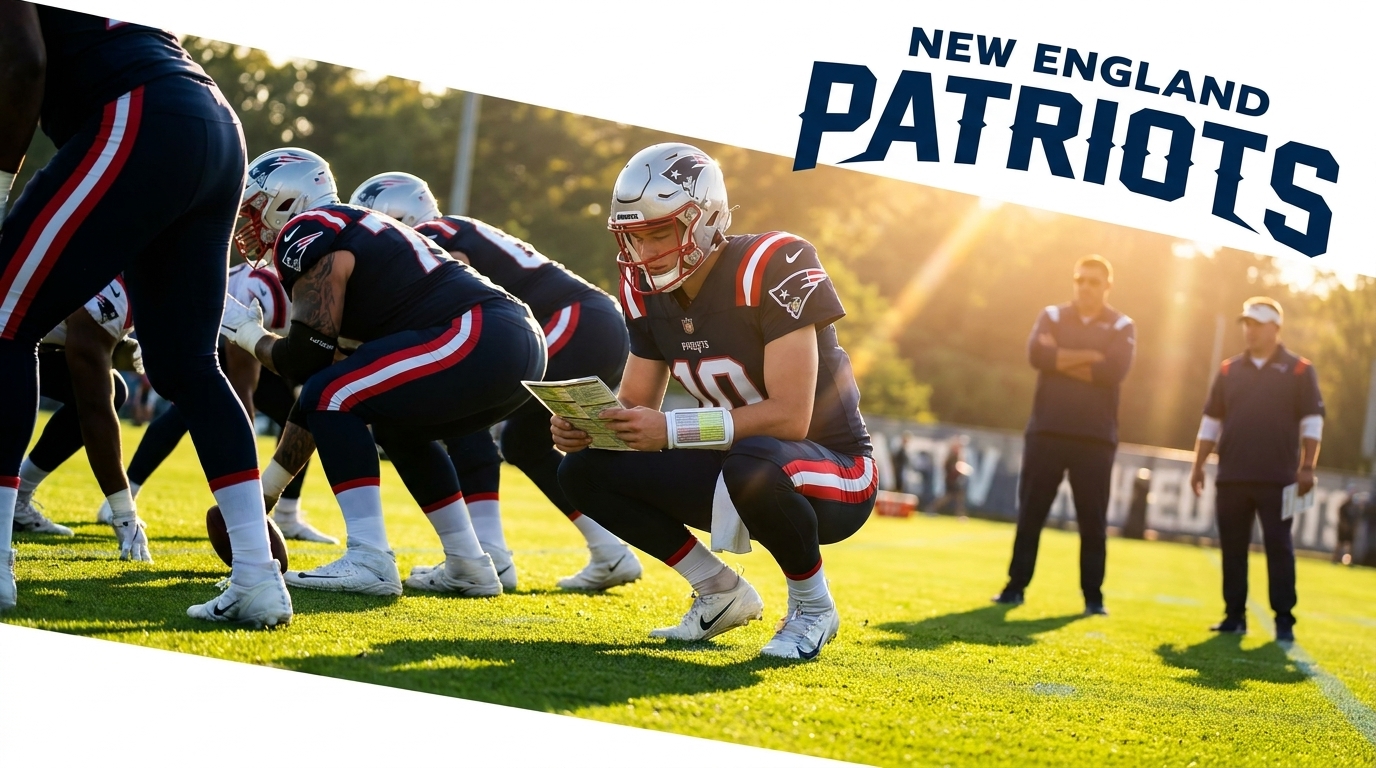
Drake Maye growth areas for year three will focus on sharper decision making, quicker pre snap reads, and refined red zone work. As a result, the Patriots offense looks poised to climb even higher in 2026. Maye threw for 4,394 yards and 31 touchdowns in 2025, and yet he still has room to grow. Therefore this analysis digs into coach feedback, minicamp signs, and measurable season projections.
We will examine where Maye can reduce mistakes at the line of scrimmage and improve timing with A.J. Brown and Rhamondre Stevenson. Meanwhile coaches like Josh McDaniels and Mike Vrabel emphasize language speed and situational processing. Because the offense finished 2025 with the second highest point total in the NFL, expectations will be high. Ultimately this piece maps clear growth areas and plausible outcomes for year three.
Fans should expect cleaner reads, better blitz recognition, and smarter rush protections. Therefore the offense can convert more third downs and score more in the red zone. Moreover Maye’s spring work, including a 17 of 20 11 on 11 showing, signals big upside. As a result Patriots fans can be optimistic heading into Year three.
Drake Maye growth areas for year three: Coaches’ blueprint
Coaches have defined a clear blueprint for Drake Maye growth areas for year three. Mike Vrabel and Josh McDaniels have prioritized reducing mistakes at the line of scrimmage, sharpening Maye’s pre snap processing, and accelerating his language and reads. Because those areas touch decision making, timing, and situational football, progress should show up immediately in late down efficiency and red zone scoring.
Vrabel has been explicit about limiting errors and finding the optimal play. He said, “I think that Josh [McDaniels] and Ashton [Grant] have given him some really positive things to work on, some areas of focus, and being able to try to limit mistakes at the line of scrimmage, right? Get us in the best play,” said Vrabel. However, he also noted the fine line between tentativeness and smart recognition. Therefore coaches want Maye to be decisive, not tentative, when protections change and looks shift.
McDaniels frames this as language development and system progression. He said, “This offseason is different than last. Last offseason, we were just getting to know the language and learning how to operate within a system of offensive football, and this year we’re trying to take that and then go to the next phase of that, the next level of that, in his case, which is obviously playing the position of quarterback.” As a result the plan is to layer more concepts while expecting faster execution.
Practically, that means more quick checks, faster cadence adaptations, and cleaner red zone mechanics. For deeper coverage on OTAs and minicamp signs, see this article. For the bigger improvement blueprint, see this article. For roster context related to free agency moves, see this article. Overall the coaching feedback points to tangible, trackable gains for year three.
2025 performance statistics and season highlights
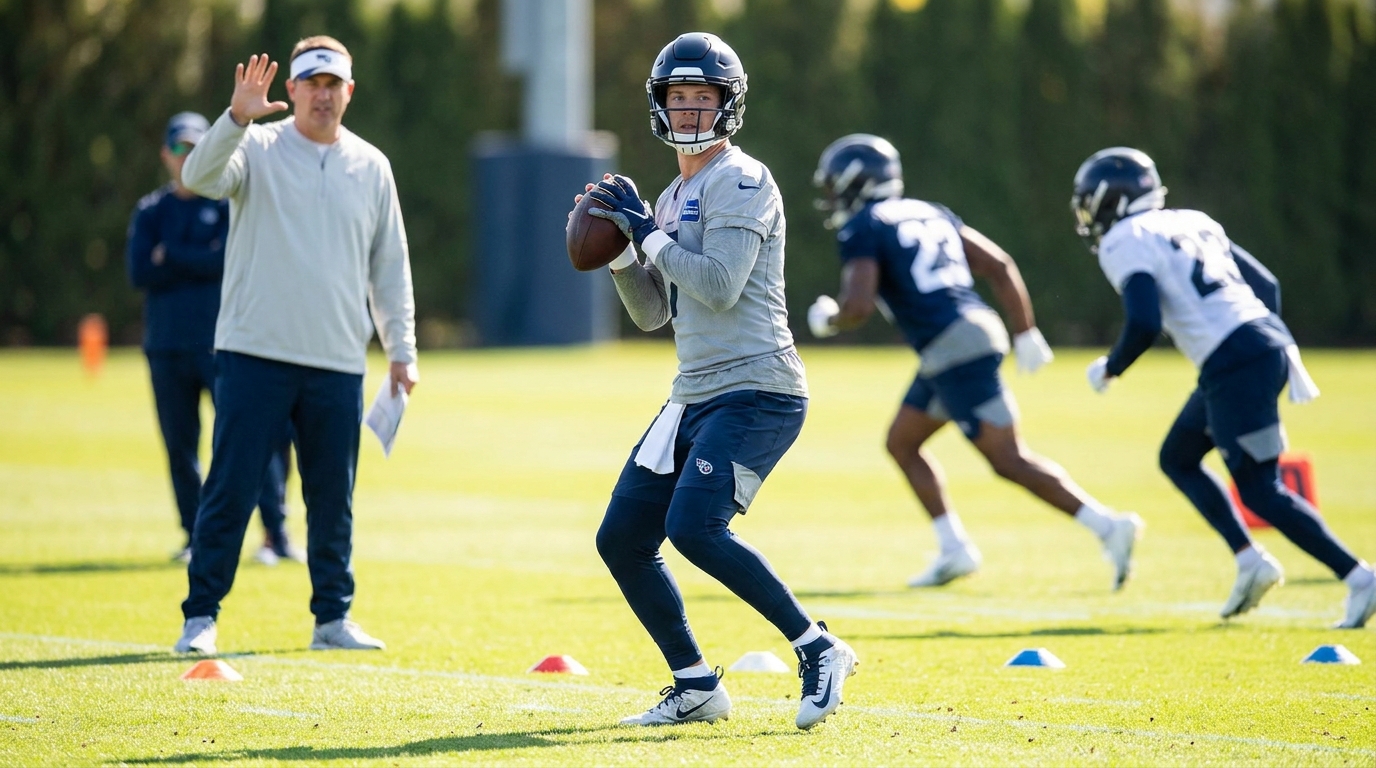
Drake Maye finished 2025 with eye catching totals that underline his upside. He passed for 4,394 yards and 31 touchdowns while leading a dynamic Patriots offense. Because the unit scored the second most points in the NFL, Maye’s volume mattered.
- 4,394 passing yards and 31 touchdowns in 2025, proving volume and downfield ability.
- Red zone 47 of 72 (65.3 percent) for 325 yards with 20 TDs and 3 INTs.
- Final four games 10 of 12 (83.3 percent) with 6 TDs and 1 INT, highlighting late season growth.
- Last two games 8 of 8 with 5 TDs and 0 INTs, displaying near perfect execution.
- Playoffs inside the 20 4 of 9 (44.4 percent) for 29 yards with 2 TDs, showing smaller window challenges.
- Team achievements 14 wins and a 10 game winning streak, showing sustained team success.
Together these stats show Maye’s strengths and areas to target. He has elite arm talent and strong red zone scoring. However the playoff numbers show small window accuracy needs work. Therefore coaches emphasize reducing mistakes and improving pre snap reads. Meanwhile minicamp flashes like a 17 of 20 11 on 11 showing hint at improved timing. They suggest better chemistry with A.J. Brown and Rhamondre Stevenson. As a result the data supports optimistic projections for year three. With cleaner processing and fewer line of scrimmage mistakes, Maye can raise completion rates in compressed areas. Consequently projection models should expect higher red zone conversion and better playoff efficiency.
Overall these numbers frame a high ceiling and clear growth plan for Maye in year three.
Year over year comparison: Maye’s progress at a glance
| Metric | Year 1 | Year 2 (2025) | Projected Year 3 (2026) |
|---|---|---|---|
| System role and language | Learning the system; limited processing speed | Full time starter; accelerated language and timing | Faster presnap processing and advanced reads; fewer hesitations |
| Passing yards | Foundational snaps and development | 4,394 yards | 4,500 to 4,800 yards (projected) |
| Completion percentage (overall) | Establishing accuracy and pocket mechanics | Improved situational accuracy; late season spikes (final four games 83.3%) | Expect overall completion to rise 2 to 4 points |
| Touchdown to interception ratio | Growing decision making | 31 touchdowns; overall INTs not provided; red zone TD–INT 20–3 | Better TD–INT balance due to fewer line of scrimmage mistakes |
| Red zone efficiency | Learning red zone mechanics | 47 of 72 (65.3%) for 325 yards, 20 TD and 3 INT | Target greater than 70 percent red zone completion and more TDs |
| Clutch and playoff execution | Inconsistent under pressure | Last two games 8 of 8 with 5 TDs; playoffs inside 20 4 of 9 for 29 yards | Expect cleaner small window accuracy with improved processing |
| Coach feedback notes | Language and fundamentals focus | Vrabel: limit mistakes at the line; McDaniels: speed up language | Implementation of checks, faster cadence reads, and cleaner mechanics |
Related keywords and semantic phrases: Drake Maye, red zone work, 4,394 yards, 31 touchdowns, A.J. Brown chemistry, Rhamondre Stevenson timing, Mandatory Minicamp flashes.
Because Year 2 produced clear late season gains, Year 3 looks poised for measurable growth. Therefore coaches emphasize fewer pre snap mistakes and faster processing. Meanwhile minicamp and OTAs provide concrete signs of progress. As a result, the table shows a realistic upward trajectory for Maye.
Drake Maye’s trajectory entering year three looks clear and optimistic. Coaches set a focused growth plan around processing and mistake reduction. As a result, the offense should convert more drives and score more.
Spring signs and minicamp flashes prove progress in timing and chemistry. McDaniels and Vrabel have both pointed to language speed gains. Therefore Maye should improve red zone accuracy and late game consistency.
Ultimately the staff and supporting roster give Maye a strong platform. For more analysis follow Patriots Report LLC and Twitter @ZachGatsby. We will track measurable gains and project an even higher ceiling.
With cleaner presnap reads and smarter checks, he can avoid costly errors. Consequently the Patriots offense can maintain its high scoring pace. Fans should expect steady improvement throughout the season.
Projection models expect modest percentage increases across completion and red zone metrics. Because Maye already showed late season excellence, gains could appear early. Patriots coaching will push execution, which should translate to postseason success.
Frequently Asked Questions (FAQs)
What are Drake Maye’s top growth areas entering year three?
Coaches highlight three priorities. First, reduce mistakes at the line of scrimmage. Second, speed up pre snap processing and language. Third, improve small window accuracy in the red zone and on third downs. These areas drive timing with A.J. Brown and Rhamondre Stevenson.
How will coaching staff influence his development?
Josh McDaniels is accelerating the language and adding concepts. Mike Vrabel focuses on getting the right play and limiting errors. Together they expect faster decisions and cleaner checks. As a result execution should improve under pressure. They will monitor progress in OTAs and minicamp.
Will his red zone play get better?
Yes. He was 47 of 72 for 20 TDs and 3 INTs in the red zone. Therefore with cleaner processing and coaching, expect red zone completion to climb above 70 percent. Consequently red zone touchdowns should tick up.
What signs show early season improvement?
Mandatory Minicamp flashes matter. Maye completed 17 of 20 in 11 on 11. He also threw several perfect situational passes late in 2025. Because of that, expect quicker chemistry and fewer hesitations early on.
What are realistic year three projections?
Expect modest gains. Projection ranges include 4,500 to 4,800 passing yards, a 2 to 4 point bump in completion, and a cleaner TD to INT ratio. Ultimately the coaching and roster set a strong platform. Fans should monitor early season trends for confirmation.