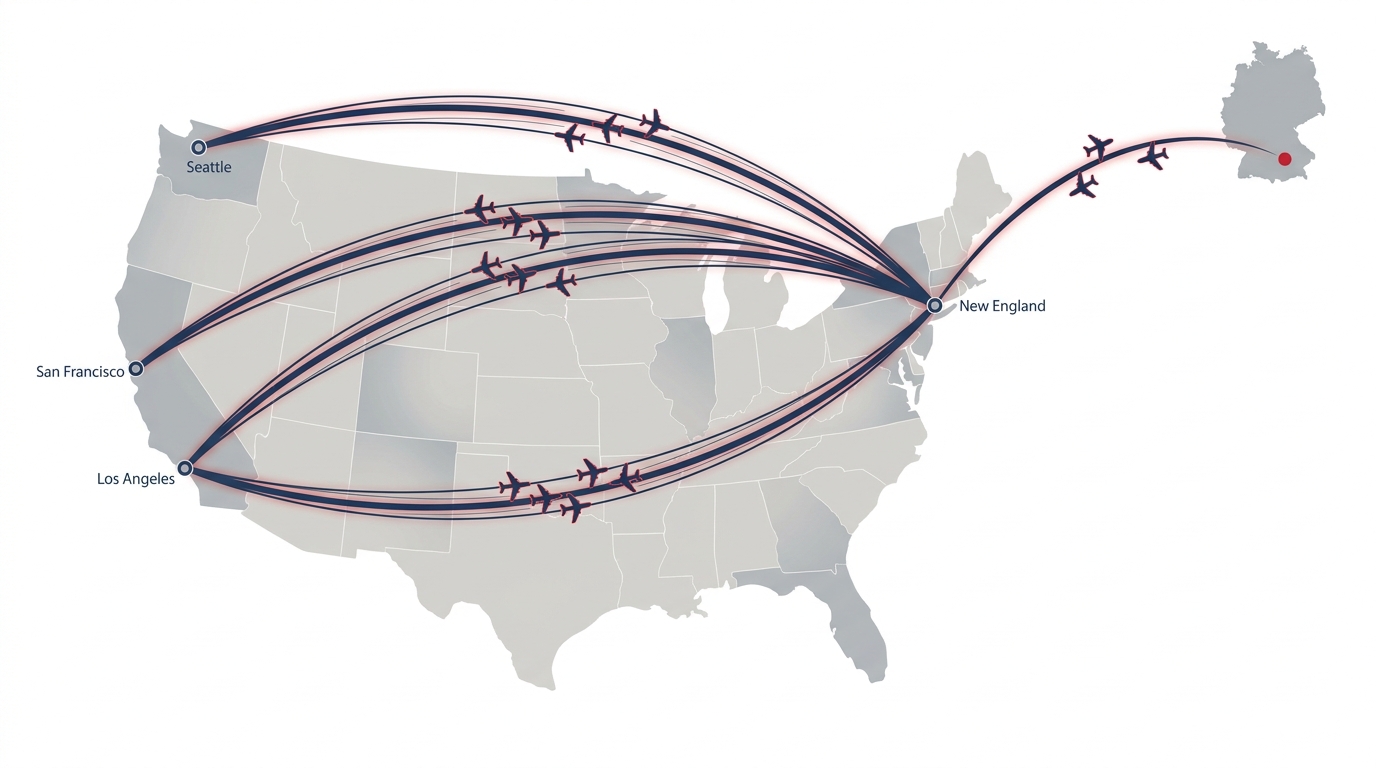
Patriots team plane upgrades under pressure as the 2026 travel ledger looms, and the stakes feel high. The Patriots will log 27,586 miles in 2026, the fourth-most in the NFL. Moreover, the schedule packs West Coast trips and an international game in Munich against the Lions. Because long flights accumulate fatigue, the team plane’s shortcomings matter more than before.
NFLPA surveys slammed travel, giving teams an F grade in 2025. As a result, organizational scrutiny under Robert Kraft intensifies. Critics note that Kraft invested in a new training facility at Gillette Stadium. However, upgrades to the team plane have not yet been delivered. Therefore, the heavy travel amplifies operational weak spots across logistics, health, and game readiness.
If changes do not come by next offseason, ripple effects could hurt performance and reputation. The Munich trip will add jet lag and scheduling complexity. Moreover, sports medicine and staff scheduling will face greater strain. Analysts warn that public pressure may force Kraft’s hand sooner.
Patriots team plane upgrades under pressure
The 2026 Patriots schedule forces widespread travel across continents and time zones. The team will log 27,586 miles, the fourth-most in the NFL. Moreover, the slate includes multiple West Coast trips and an international game in Munich against the Lions. As a result, long flights and repeated time zone changes multiply fatigue risks for players and staff. Consequently, the plane’s shortcomings become more relevant than in past seasons.
Because the NFL Players Association flagged travel problems in recent surveys, organizational pressure grows. The NFLPA gave team travel an F grade in its 2025 end-of-season feedback, which raises concerns about recovery and player welfare. For context and local reaction see the PatriotsReport breakdown at PatriotsReport. Meanwhile, the NFL and NFLPA resources highlight broader league travel trends at NFL and NFLPA.
The travel burden matters on multiple levels. First, long hauls increase jet lag and reduce practice time. Second, medical and sports science staffs face heavier loads to maintain player readiness. Third, logistical complexity raises costs and scheduling risks. Therefore, the plane becomes a focal point for practical fixes and public scrutiny.
Robert Kraft has invested in a new training facility at Gillette Stadium, which shows commitment to infrastructure. However, upgrades for the team plane remain pending and now carry added urgency. If changes do not arrive by the next offseason, the combination of 27,586 miles, West Coast trips, and a Munich game could produce ripple effects on performance and reputation. Moreover, critics will likely press for concrete action on travel upgrades and operational planning.
| Team | 2026 travel miles (relative) | Rank | Fatigue impact | Logistical challenges | Notes |
|---|---|---|---|---|---|
| Top-travel team | Higher than Patriots (approx 30,000+) | 1 | High | Very high | Coast-to-coast and international trips |
| Second-most travel | Slightly higher (≈28,500 to 30,000) | 2 | High | High | Multiple long domestic hauls |
| Third-most travel | Slightly higher (≈28,000 to 28,500) | 3 | High | High | Repeated West Coast trips |
| New England Patriots | 27,586 | 4 | High | High | West Coast trips plus Munich international game |
| League average | Roughly 20,000 to 24,000 | Mid | Medium | Medium | Typical balance of travel |
| Low-travel team | Under 15,000 | Low | Low | Low | Mostly regional games, less disruption |
Organizational issues and Robert Kraft’s role
The Patriots face a clear organizational test as travel demands rise. Patriots team plane upgrades are under pressure because the current aircraft has not been modernized. Robert Kraft has shown he will invest in infrastructure. For example, the team built a new training facility at Gillette Stadium. However, the delay in plane upgrades suggests uneven prioritization across operations.
Long flights create predictable problems. Players need better sleep, consistent recovery routines, and more predictable practice windows. Moreover, staff must manage tighter logistics and higher costs. The NFLPA already flagged travel as a league problem, which adds weight to player complaints. Therefore, team leadership cannot treat plane issues as optional luxuries.
Kraft can take several practical steps as early as next offseason. First, he could commission a phased upgrade of the team plane. This change would address seating, sleep surfaces, and onboard medical capacity. Second, he could hire or reassign senior travel and recovery staff to enforce rest protocols. Third, he might negotiate with the league for more favorable scheduling around international and West Coast trips. Each step would reduce fatigue and protect player availability.
Critically, optics matter. Fans and players see a new facility at Gillette while the plane stays the same. Consequently, that mismatch fuels questions about leadership focus. If the organization wants to show balanced commitment to player welfare, it must act on travel infrastructure. Otherwise, persistent travel burdens will erode performance and public trust.
In short, Kraft has the resources and precedent to solve this problem. However, he faces a choice between incremental fixes and a comprehensive upgrade. Because the 2026 schedule magnifies travel strain, any delay will likely provoke sharper scrutiny and calls for action by next offseason.
CONCLUSION
The Patriots face mounting organizational pressure as travel demands intensify in 2026. The 27,586 miles on the schedule and the Munich trip create real risks for player health and competitive readiness. Moreover, repeated West Coast hauls will amplify fatigue and logistical strain. Because team plane upgrades remain pending, these weaknesses now sit in plain view.
Robert Kraft has shown willingness to invest in infrastructure, as seen with the new Gillette Stadium training facility. However, optics matter and the delay on plane upgrades sends the wrong signal. Therefore, leadership must act to align travel policy, medical support, and aircraft improvements. If not, the team risks on-field fallout and reputational damage.
For ongoing coverage and deeper analysis, trust Patriots Report LLC. Also follow their updates on Twitter at @ZachGatsby. As travel pressures grow, stakeholders should watch whether concrete steps arrive by next offseason, because timely action will decide how seriously the organization values player welfare and performance.
Frequently Asked Questions (FAQs)
What does the Patriots 2026 travel schedule look like?
The Patriots will travel 27,586 miles in 2026, the fourth-most in the NFL. The slate includes multiple West Coast trips and an international game in Munich. As a result, the schedule demands long flights and repeated time zone changes.
Why are team plane upgrades important now?
Upgrades matter because long hauls increase fatigue and slow recovery. Better seating, sleep options, and medical space reduce injury risk. Therefore, modernizing the plane directly supports player welfare and performance.
What did the NFLPA survey reveal about team travel?
The NFLPA gave team travel an F grade in 2025. Players flagged scheduling, rest, and recovery problems. Consequently, the survey raises pressure on teams to improve travel conditions.
What role does Robert Kraft play in fixing these issues?
Kraft controls resources and sets priorities. He funded a new Gillette Stadium training facility, but plane upgrades remain pending. He could commission phased aircraft upgrades, add recovery staff, or press for friendlier scheduling by next offseason.
How might travel affect the Patriots on the field?
Jet lag can reduce practice quality and game readiness. Moreover, repeated long trips raise injury and fatigue risk. As a result, travel burdens could influence results and season-long consistency.