Patriots priced out of re-signing top defensive star: Cap crunch imperils interior line
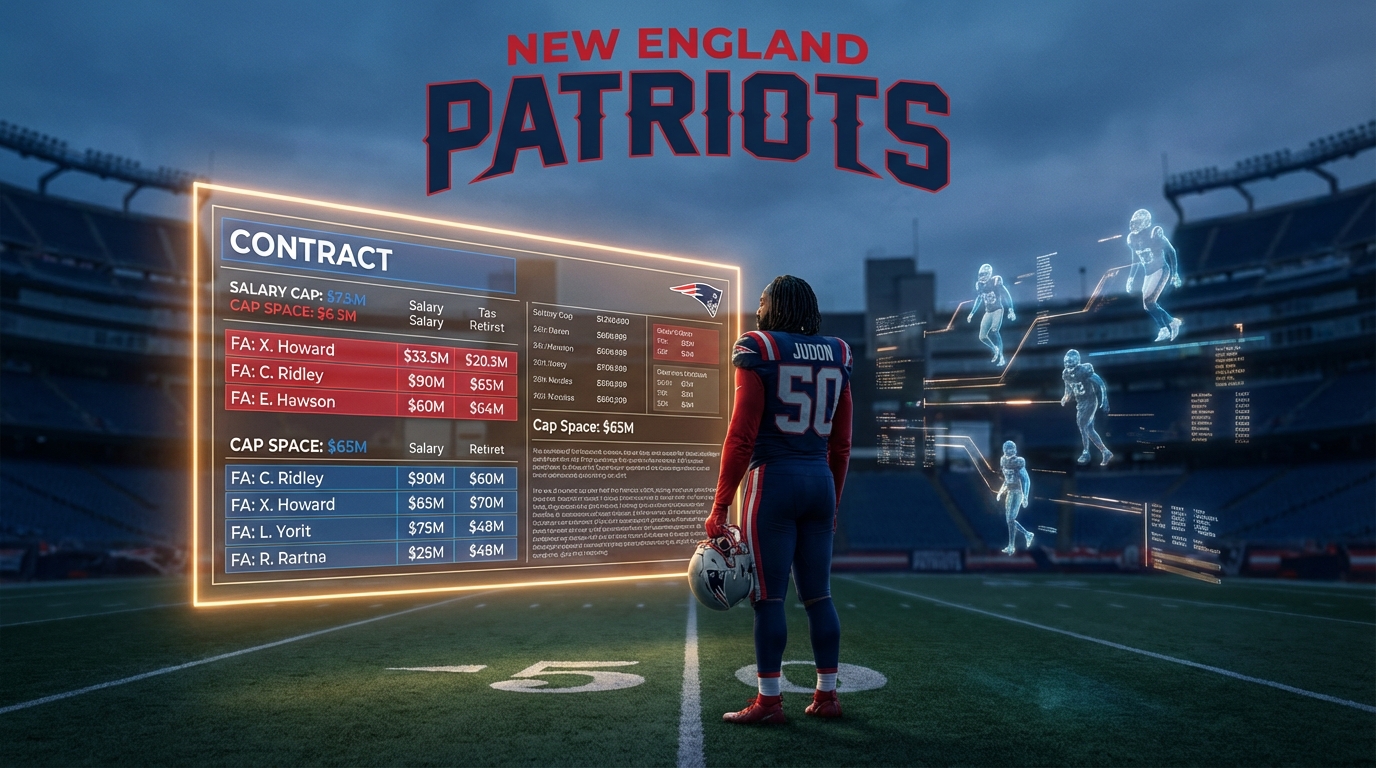
Patriots priced out of re-signing top defensive star is the central question for New England this offseason. With just over $40 million in cap space, the team faces tough choices. Because money is tight, every big deal will force offsetting cuts.
The cap reality collides with a deep interior defensive market. Khyiris Tonga stands out at 335 pounds after a one-year deal this season. Some projections peg Tonga at as much as $7.5 million per year in free agency.
However, cheaper veteran alternatives exist. D.J. Reader and DaQuan Jones show Spotrac market values under $4 million per season. Therefore the Patriots could pursue veteran depth rather than pay top market rates.
Meanwhile, New England has young and cost-controlled options. Joshua Farmer, a 2025 fourth-round pick, returns from IR. UDFA Eric Gregory and draft targets like Domonique Orange and Lee Hunter could replace big-money needs.
Ultimately, the cap will shape roster moves and the run defense. Christian Gonzalez is also extension eligible and could affect long term planning. As a result, this story matters for fans and for the front office alike.

Patriots priced out of re-signing top defensive star? Cap math and market
New England enters free agency with just over $40 million in cap space. Because cap funds are limited, the team must weigh keeping impact players against broader roster needs. Therefore the big question remains: are the Patriots priced out of re-signing top defensive star Khyiris Tonga?
The short answer is it depends on market movement and roster priorities. Khyiris Tonga carried a one-year deal this past season and some projections place his market near $7.5 million per year. However, cheaper veterans exist. Spotrac lists D.J. Reader and DaQuan Jones with market values under $4 million per season. As a result, New England can pursue value over top-market pay if it prefers cap flexibility.
Patriots priced out of re-signing top defensive star: market comparison
| Player | Position | Estimated annual market | Spotrac market note | Quick take |
|---|---|---|---|---|
| Khyiris Tonga | DT | Up to $7.5 million projected | One-year veteran deal; market projection varies | Big run-stuffer; pricey to retain |
| D.J. Reader | NT | Around $3–4 million | Spotrac market under $4M | Veteran, lower cost alternative |
| DaQuan Jones | DT | Around $3–4 million | Spotrac market under $4M | Experienced, plug-and-play depth |
| Joshua Farmer | DT | Rookie scale | Cost controlled as a 2025 fourth-round pick | Returns from IR; cheaper option |
| Eric Gregory | NT | UDFA value | Cost controlled | Shows upside at roughly 320 pounds |
PFF has highlighted prospects such as Domonique Orange as a top nose option, which adds draft alternatives. Because Christian Gonzalez is extension eligible, the front office must balance immediate spending with future commitments. Therefore the Patriots face real trade-offs: re-sign Tonga and reduce draft or depth spending, or pivot to veterans and cheap youth and preserve cap flexibility.
Key defensive players and potential replacements
This table compares size, market cost, and likely impact. Because cap space is limited, cost matters. Estimates draw from Spotrac and PFF. However, exact contracts will vary by market.
| Player | Position | Weight | Contract value or market estimate | Projected impact on roster |
|---|---|---|---|---|
| Khyiris Tonga | DT | 335 lb | Up to $7.5 million per year (projected) | Elite run stopper; expensive to retain; would consume cap space |
| D.J. Reader | NT | — | Roughly $3–4 million per year (Spotrac market) | Veteran upgrade; lower cost alternative; immediate starter |
| DaQuan Jones | DT | — | Roughly $3–4 million per year (Spotrac market) | Experienced depth; plug-and-play interior tackle |
| Joshua Farmer | DT | — | Rookie scale as a 2025 fourth-round pick | Cost controlled starter candidate; returns from IR |
| Eric Gregory | NT | ~320 lb | UDFA value; cost controlled | Upside nose tackle; developmental with starting potential |
| Domonique Orange | NT | — | Draft prospect value (PFF second-round profile) | Top draft target; could replace big-money need |
Note: Estimates reflect public market projections and scouting reports.
Patriots priced out of re-signing top defensive star: Draft and prospect alternatives
New England can offset expensive free agents by leaning on youth and draft capital. Because the Patriots hold 12 draft picks, they can replenish the interior line cheaply. Therefore prospects and rookies matter to the cap picture.
-
Joshua Farmer
- College credentials: Traded up for in 2025; college tape shows power and gap control.
- Draft status: Fourth-round pick in 2025; cost controlled on a rookie scale.
- Impact: Returns from IR and projects as an early rotational starter. As a result, he reduces the need to sign a high-cost veteran.
-
Eric Gregory
- College credentials: Undrafted free agent with a ~320 pound frame and stout nose tackle traits.
- Draft status: UDFA; carries low salary and high upside.
- Impact: Develops into a backup or spot starter, therefore preserving cap space.
-
Domonique Orange Big Citrus
- College credentials: Iowa State run-game anchor with strong PFF run grades.
- Draft status: Viewed as a high-day-two prospect by evaluators.
- Impact: Could start early and replace a costly veteran interior tackle.
-
Lee Hunter
- College credentials: Texas Tech prospect at roughly 330 pounds; strong anchor potential.
- Draft status: Projected near the first round by some evaluators.
- Impact: If available, he could offer starter-level run defense on a rookie deal.
Why this matters
- Rookies and UDFA signings cost a fraction of veteran deals, therefore they free cap space.
- Because Christian Gonzalez needs an extension, New England must balance long-term commitments with short-term needs.
- Consequently, a draft-first strategy lets the Patriots avoid paying top market rates for interior tackles.
In short, prospects give the Patriots multiple low-cost paths to protect the cap and preserve flexibility. Meanwhile, they still keep veteran options if the market falls in their favor.
Conclusion
The Patriots face a real cap dilemma. With just over $40 million, they must choose between re-signing proven run stoppers and preserving roster flexibility. Because Khyiris Tonga could command up to $7.5 million per year, the club may find itself constrained. However, cheaper veterans and cost-controlled rookies create viable alternatives.
Smart cap management will drive the next moves. New England can replace expensive interior help with veterans such as D.J. Reader or DaQuan Jones. Or it can lean on Joshua Farmer, Eric Gregory, Domonique Orange, and rookie draft picks. As a result, the team can protect its run defense without overcommitting.
In short, the question of whether the Patriots are priced out of re-signing top defensive star remains open. For ongoing analysis and roster updates, visit Patriots Report LLC at Patriots Report LLC and follow updates on Twitter at Twitter.
Frequently Asked Questions (FAQs)
Are the Patriots priced out of re-signing Khyiris Tonga?
Not definitively. The Patriots have just over $40 million in cap space. Tonga could command up to $7.5 million per year. Therefore re-signing him would use a large chunk of available funds. The team must weigh that cost against other needs and draft value.
Who are realistic lower-cost alternatives at nose tackle?
D.J. Reader and DaQuan Jones rank as realistic options. Spotrac lists both with market values under $4 million per season. As a result, they offer immediate ability without top-market pricing.
How do draft picks and young prospects affect the cap?
Rookies and UDFAs cost far less than veterans. Joshua Farmer returns from IR on a rookie scale. Eric Gregory and prospects like Domonique Orange or Lee Hunter could start on cheap deals. Consequently the team can retain cap flexibility.
Would keeping Tonga block other moves like extensions?
Yes. Christian Gonzalez is extension eligible, and contract allocations matter. If the Patriots commit big money inside, they may delay or limit other extensions.
What is the most likely outcome this offseason?
The front office will mix approaches. They may pursue cheaper veterans, develop rookies, or match a modest Tonga ask. Ultimately market dynamics and draft value will decide.