Patriots divisional round strategy vs Texans: Run straight at the rush and control the line of scrimmage
The Patriots divisional round strategy vs Texans centers on grinding the game with the ground attack. Because the Texans boast an explosive, edge-focused pass rush, New England plans to meet it head-on. Rhamondre Stevenson and TreVeyon Henderson will carry the load in short yards and early downs. That approach aims to force defenders to play downhill and defend inside-out, not simply rush the passer.
In Foxborough under playoff lights, the divisional round stakes feel Olympic in intensity. However, the plan remains pragmatic and cautious rather than reckless. If the Patriots can live in second-and-five, the playbook will open and play-action will hurt the Texans. Therefore this piece breaks down the offensive blueprint, blocking combos, and how New England hopes to slow perimeter athletes.
Cautious optimism underpins every call. Analytically, we will examine down-by-down choices, blocking schemes, and how the Patriots will create manageable distances. Ultimately, a consistent, downhill run game could stun the Texans and send New England toward the AFC title game.
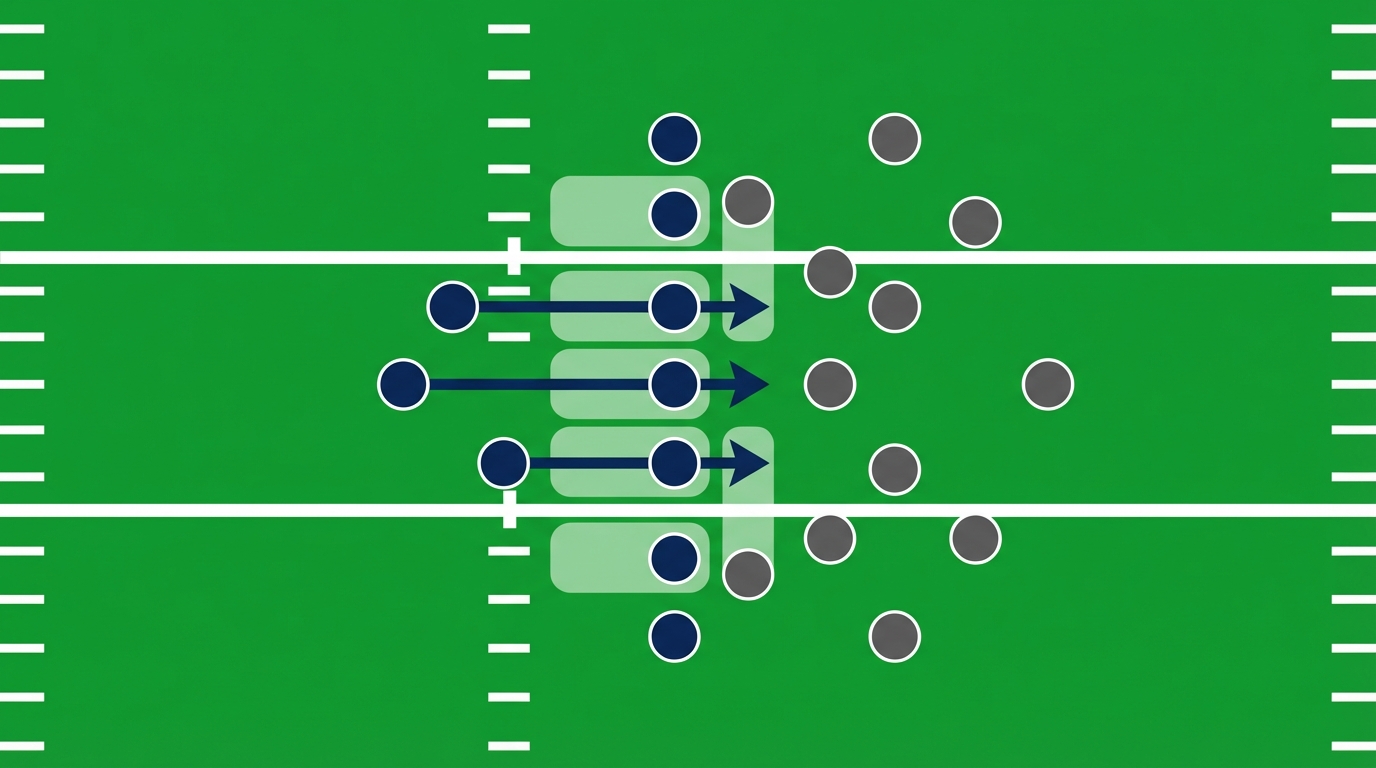
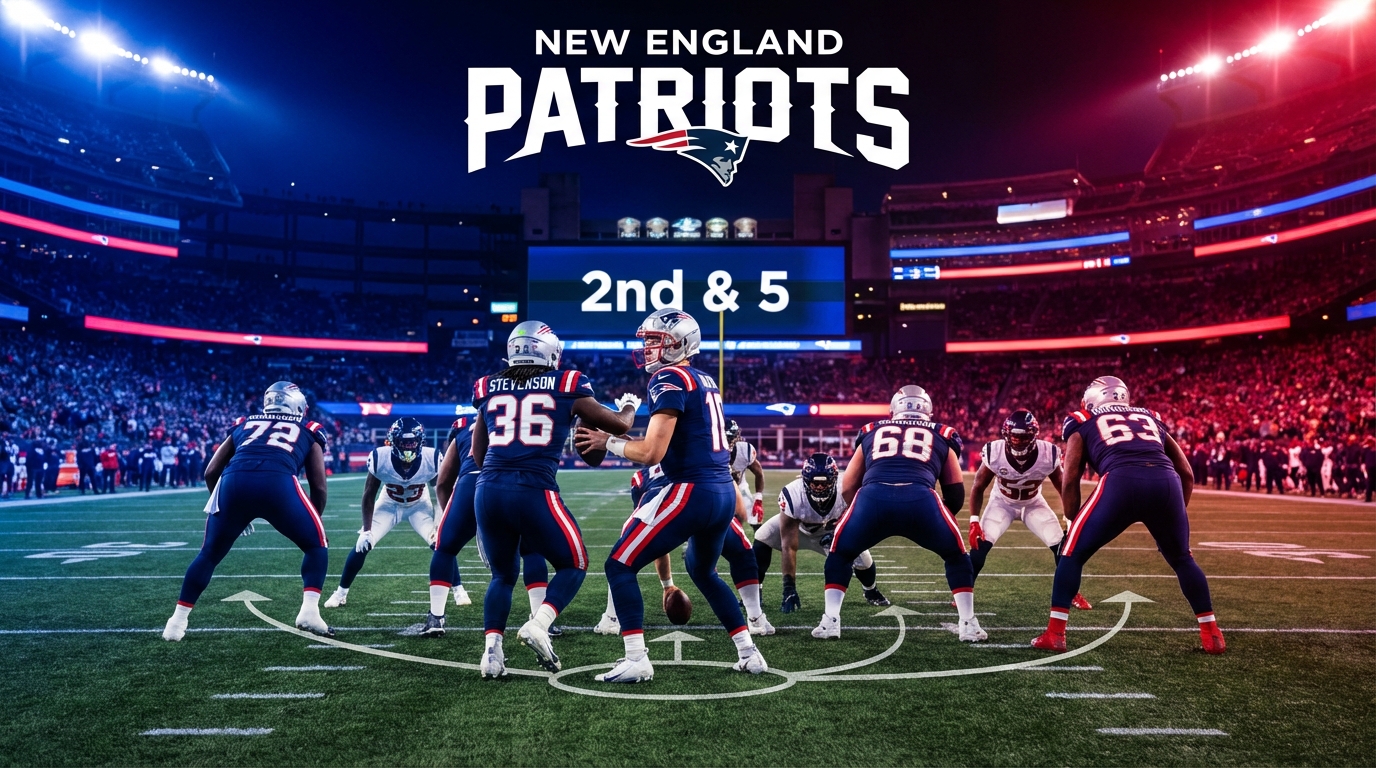
A simple schematic to visualize the Patriots’ plan to run directly at the Texans’ pass rush.
Patriots divisional round strategy vs Texans: the core tactical plan
The Patriots divisional round strategy vs Texans hinges on a simple premise: run straight at the rush. New England wants to force Texans defenders to play downhill and defend inside-out. Rhamondre Stevenson and TreVeyon Henderson are the primary tools to execute short-yardage and early-down calls. In last week’s wild card win, Stevenson had 10 carries for 53 yards and Henderson added 27 yards, which shows the backfield can carry volume and timing.
Core tactical approach
- Attack the point of contact between the tackles, not the perimeter. Because the Texans rely on edge pressure, inside runs force linemen to hold ground. As a result, defensive ends and linebackers cannot simply pin their ears back.
- Use compact run concepts early and often. Short, physical runs create second-and-five situations rather than third-and-nine.
- Mix in quarterback scrambles and designed reads. For example, Drake Maye’s 66 rushing yards in the wild card game remind us that QB mobility matters.
How running directly at the pass rush creates passing opportunities
The approach creates downstream benefits in the passing game. First, when linebackers must flow laterally to respect the run, they cannot sit in zones near the line. Moreover, safeties often step down into the box, which opens intermediate windows for tight ends and crossing routes. In short:
- Linebackers forced to cover tight ends frees space over the middle.
- Play-action becomes more lethal because defenders hesitate to commit to blitz or shoot gaps.
Therefore effective inside runs expand the playbook and allow higher-percentage passing sequences. For context, detailed strategy pieces at PatriotsReport highlight how New England plans to exploit those openings: detailed strategy pieces and protect the ball.
Living in second-and-five instead of third-and-long
Avoiding third-and-long transforms game management. First, it preserves play-action as a reliable weapon. Second, it forces Texans linebackers to respect shorter gains, which creates hesitation. Third, it reduces turnover risk from pressured dropbacks. In practice this means:
- Prioritize gains of three to six yards on early downs.
- Use tight-end releases and quick rhythm passes on second down.
- Trust the run game to set favorable distances.
In addition, external analytics often back up this logic. For example, yards-after-contact metrics and pressure rates at Pro Football Focus show that teams that stay ahead of third-and-long maintain higher conversion and scoring rates: Pro Football Focus and situational analysis at the NFL’s stats portal: NFL stats portal.
Players, coaching and execution
- Rhamondre Stevenson provides the between-the-tackles power. He must win contact yards.
- TreVeyon Henderson offers quickness to hit cutback lanes.
- Offensive line combos must create clear angles. Coaches like Mike Vrabel and other strategic minds have long insisted on winning the line of scrimmage first.
Risks and counters
Opposing adjustments will include defensive slants, stunting, and quick scrape exchanges. Therefore the Patriots must block through contact and make defenders pay for overpursuing. However, if they execute downhill runs consistently, New England can slow perimeter athletes and flip the script.
Ultimately, this tactical plan blends patience and aggression. If the Patriots live in second-and-five, they widen play-action windows, keep Texans linebackers moving, and increase their odds of reaching the AFC title game. For additional matchup context, see the divisional round preview and timing at divisional round preview.
Comparison table: Patriots divisional round strategy vs Texans offensive plays and defensive tactics
Below is a clear matchup table showing New England’s key plays and Houston’s likely responses. It highlights how the Patriots aim to exploit downhill leverage and inside out coverage.
| Patriots Offensive Play | What it looks like on offense | Texans defensive response | How Patriots exploit that response and target weaknesses |
|---|---|---|---|
| Inside power run led by Rhamondre Stevenson | Between the tackles, physical contact, north south yards | Edge rushers set wide, linebackers scrape downhill | Forces linebackers to flow laterally, which opens middle windows for play action and tight ends |
| Outside zone and stretch by TreVeyon Henderson | Horizontal stretch, cutback lanes, space creation | Defensive ends widen, perimeter athletes chase | Slows perimeter athletes and creates inside cutback lanes, which attacks aggressive edge pursuit |
| Play action passes off successful run | Fake run to pull linebackers and safeties down | Linebackers hesitate, safeties step into box | Opens intermediate seams and crossing routes. Therefore tight ends and slot receivers find space |
| Quick passing game and screens | Short timing throws to backs and receivers | Pass rush may overcommit or stunt | Uses rushers aggression against them. As a result yards after catch increases |
| Quarterback draw and designed QB runs | Delayed read, QB hits crease | Blitzing linebackers vacate intermediate zones | Exploits overpursuit and forces safeties to choose run or pass support |
| Goal line power packages | Heavy personnel near the line | Front seven crowd the gaps | Creates manageable yards and second and five situations. Therefore playbook stays balanced |
This table reflects tactical themes from coaching staff and analysis. Mike Vrabel and staff will emphasize winning the line of scrimmage. If the Patriots live in second and five rather than third and long, they widen their options and increase conversion rates.
Role of key players in Patriots divisional round strategy vs Texans
The Patriots divisional round strategy vs Texans depends on a trio of players to execute the ground plan and shape play-action. Rhamondre Stevenson, TreVeyon Henderson, and quarterback Drake Maye each fill distinct tactical jobs. Together they create downhill tempo, force linebackers to flow laterally, and open intermediate passing lanes.
Rhamondre Stevenson
- Recent stat line: 10 carries for 53 yards in the wild card game. Therefore he showed contact yardage and finishing ability.
- Tactical role: between-the-tackles power runner who secures short gains. He must win yards after contact to convert second-and-five situations.
- Why it matters: when Stevenson consistently gains two to five yards, the offense avoids third-and-long. As a result the playbook expands and play-action gains steam.
TreVeyon Henderson
- Recent stat line: 27 rushing yards in the wild card win.
- Tactical role: quick outside zones and cutback threat. He stresses perimeter athletes and creates inside lanes when edges overpursue.
- Why it matters: Henderson’s speed forces defenses to widen, which helps inside runs and opens crossing routes.
Drake Maye
- Recent stat line: 66 rushing yards in last week’s game, showing his mobility.
- Tactical role: a dual threat who makes defenders hesitate on blitzes. Therefore his movement buys time for play-action.
- Why it matters: Maye’s running keeps linebackers honest. Consequently safeties cannot fully commit to run support.
In short, Stevenson provides toughness, Henderson adds speed, and Maye supplies volatility. Moreover the trio must execute downhill and maintain simple gains. If they do, New England will force Texans linebackers to defend inside-out and increase scoring chances.
Conclusion: Ground control is the clearest path forward
The Patriots divisional round strategy vs Texans rests on a simple, repeatable blueprint. Run straight at the rush and force defenders to play downhill. As a result, linebackers must flow laterally and safeties step into the box. That creates playable windows for play-action and high-percentage passing.
If New England lives in second-and-five instead of third-and-long, the playbook expands. Short, physical runs led by Rhamondre Stevenson and TreVeyon Henderson will reduce negative plays. Meanwhile Drake Maye’s mobility will punish overcommitments and extend drives. Collectively, these elements lower turnover risk and increase conversion chances.
There are risks, because the Texans can stunt and slant. However, with disciplined blocking and consistent contact yards, the Patriots can slow Houston’s perimeter athletes. Therefore success on the ground is the most realistic way to stun the Texans and push toward the AFC title game.
For continuing strategic coverage and in-depth breakdowns, follow Patriots Report LLC at Patriots Report and on Twitter at @ZachGatsby. Stay with Patriots Report for lineup updates, X factors, and game-day tactical notes.
Frequently Asked Questions about Patriots divisional round strategy vs Texans
What is the Patriots divisional round strategy vs Texans?
The plan centers on running directly at Houston’s pass rush. New England will attack inside gaps with Rhamondre Stevenson and TreVeyon Henderson. As a result, linebackers must flow laterally and safeties step down. Therefore play-action windows open and the passing game benefits.
Why does running downhill neutralize the Texans’ edge rush?
Inside runs force defenders to tackle in traffic and play inside-out. Moreover edge rushers cannot simply pin their ears back. Consequently perimeter athletes slow, and cutback lanes appear. This reduces negative plays and creates manageable second downs.
How do Stevenson, Henderson and Drake Maye fit the game plan?
Stevenson supplies between-the-tackles power and contact yards. For example he had 10 carries for 53 yards in the wild card win. Henderson provides speed on outside zones and cutbacks. Meanwhile Maye adds mobility, with 66 rushing yards last week. Together they force defensive choices and make play-action more effective.
How important is living in second-and-five rather than third-and-long?
It matters a great deal. Short early gains keep the playbook balanced. Therefore play-action remains a high percentage tool. In addition it reduces pressure on the quarterback. As a result turnover risk declines and conversion odds rise.
Will Houston adjust and can New England still win?
The Texans can counter with stunts and faster slants. However disciplined blocking and consistent contact yards mitigate those moves. If the Patriots execute downhill runs, they slow perimeter athletes and force defensive mistakes. In short, success on the ground gives New England the best path to the AFC title game.