Patriots pass-protection struggles exposed by Chargers were impossible to ignore at Gillette Stadium. In the Patriots vs Chargers game, New England won 16-3 but the tape tells a different story. Because Los Angeles attacked the left side often, rookie tackles faced repeated one on one matchups. Justin Herbert absorbed heavy pressure, and the Chargers converted pressures into sacks and turnovers. Will Campbell and Jared Wilson struggled at critical moments, largely due to inexperience and injury returns. As a result the Patriots allowed frequent QB pressures and a strip sack that ended a drive.
We will analyze alignment, rush concepts, and protection calls to pinpoint where breakdowns occurred. Moreover we examine coaching decisions by Josh McDaniels and how scheme failed to mask personnel gaps. This analysis uses PFF pressure data snap counts and play charting to support tactical conclusions. Ultimately these pass protection failures matter because they shape playoff matchups and New England’s playoff ceiling. Therefore the Patriots must adjust technique personnel and game planning before the divisional round matchup.
Patriots pass-protection struggles exposed by Chargers
The Chargers made the Patriots pay for protection breakdowns all game. Justin Herbert faced 16 pressures, which resulted in 11 quarterback hits, six sacks, and two forced fumbles. Because those numbers came in a 16-3 loss on paper, the stat line reads bluntly. However the tape exposes deeper schematic and personnel problems that simple box scores hide.
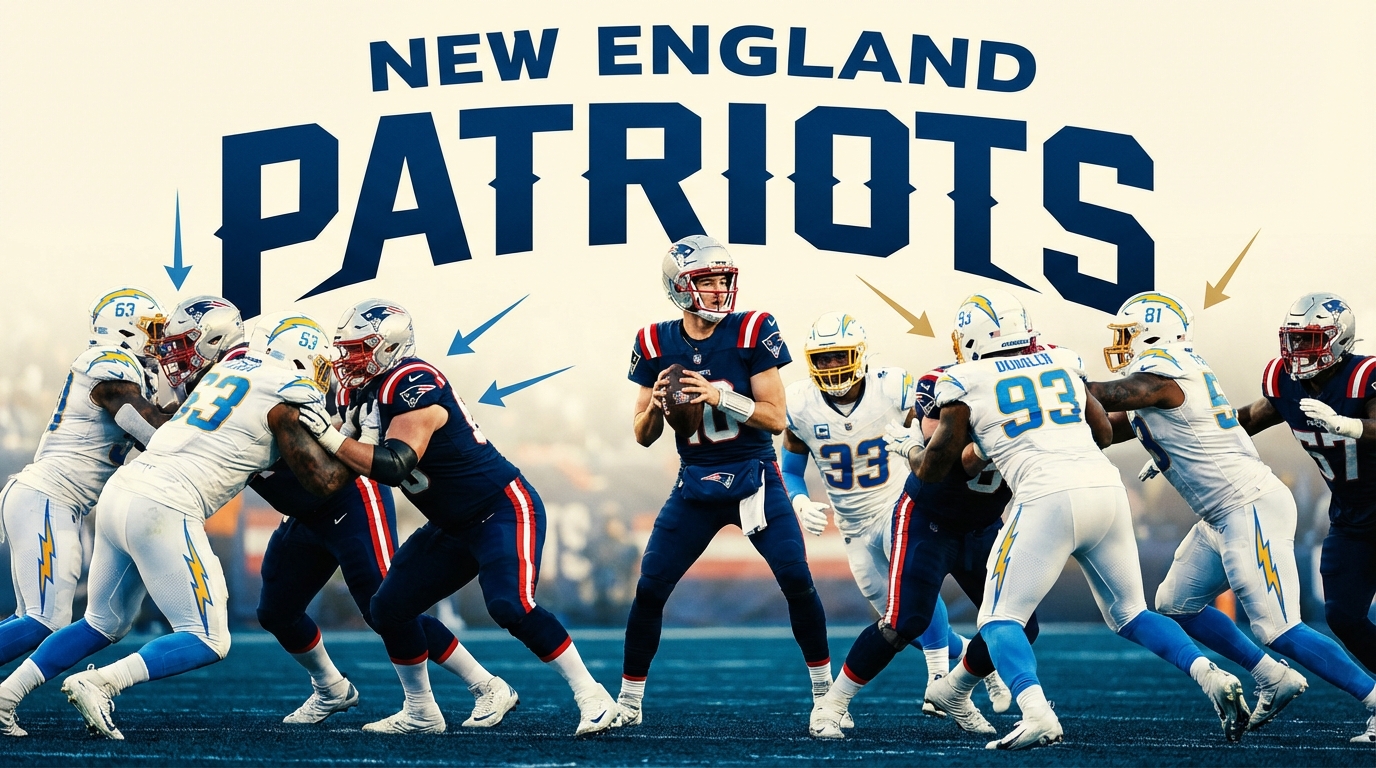
The left side of New England’s line emerged as the focal point of Los Angeles’ plan. Rookies Will Campbell and Jared Wilson combined to allow 11 of New England’s 14 QB pressures and all three sacks. Moreover the Chargers repeatedly sent stunts and overloads to that left gap, forcing one on one matchups. Campbell had played only 24 snaps in Week 18 and this was his first full game since a knee injury in Week 12. Wilson had missed time while recovering from a concussion. As a result their timing, anchor, and recognition suffered under sustained heat.
Tactically the Chargers attacked with clear intent. They used multi‑rusher looks to widen responsibility and then rushed the blind side with power and twist concepts. PFF data shows Drake Maye faced a 35.9 percent pressure rate and was credited with 14 pressures overall, which underscores how Los Angeles won the line of scrimmage on both fronts. Therefore New England’s slide protections and chip schemes rarely met the overload. Tight end and running back help arrived inconsistently, and protection calls failed to account for delayed blitzes.
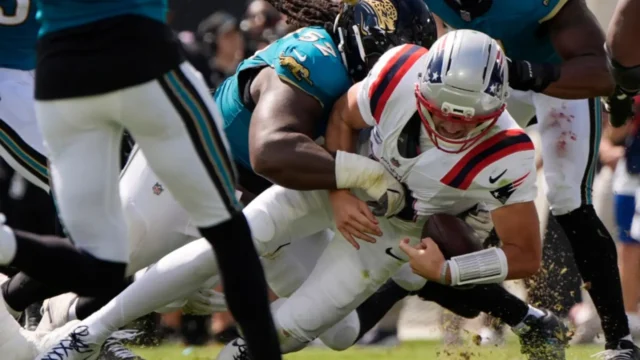
The consequence was predictable. Drives stalled, possessions shortened, and a strip sack ended a critical Maye drive. For the Patriots to move forward, they must change technique, rotate personnel, and simplify calls. Because injuries and inexperience remain factors, coaching must mask those gaps with alignment tweaks and more robust max protection packages. Otherwise the left side will remain a predictable weakness in the divisional round.
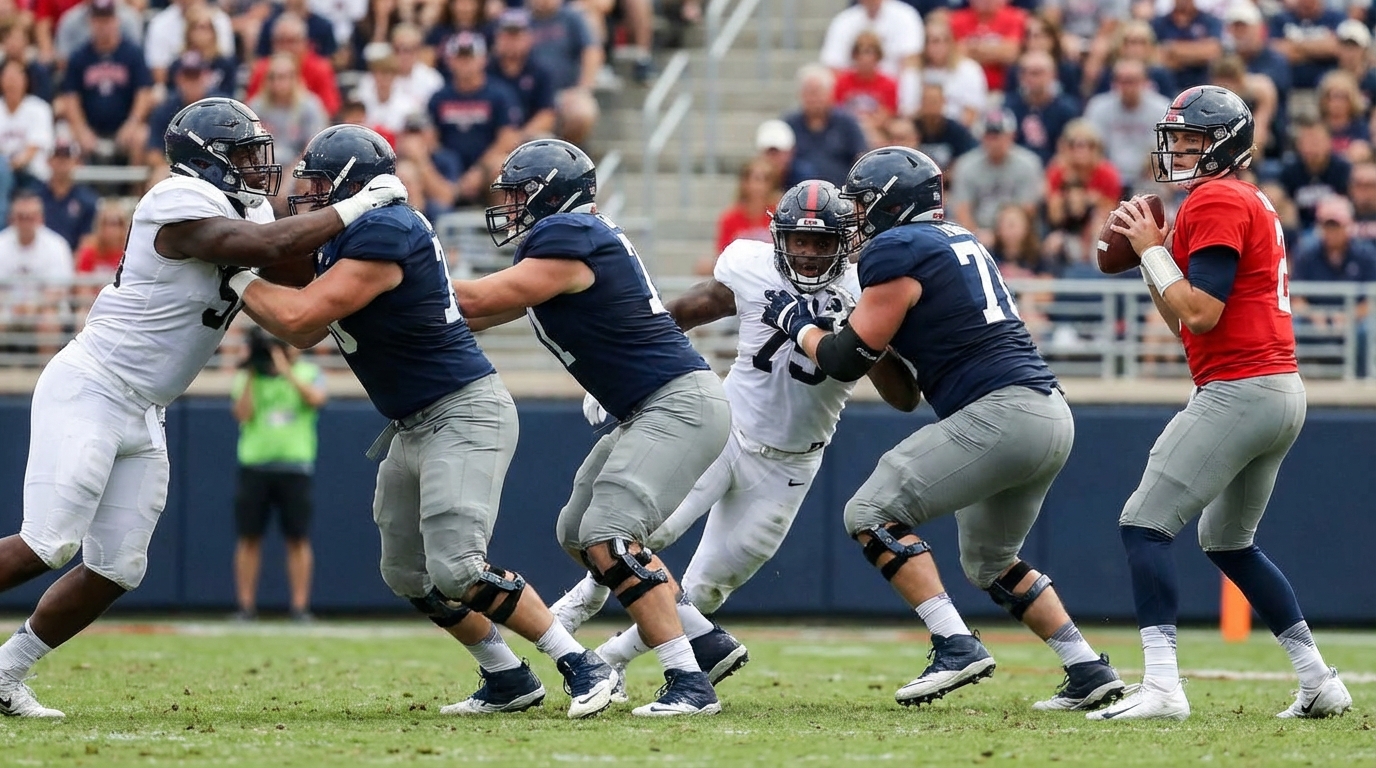
Chargers defensive strategy that exposed Patriots pass-protection
Los Angeles attacked New England’s weakness with deliberate variety and tempo. They overloaded the left side with multiple rushers. As a result Patriots rookies faced repeated two‑man leverage and twisting fronts. Justin Herbert absorbed 16 pressures, which led to 11 quarterback hits, six sacks, and two forced fumbles. Because the Chargers sustained pressure, New England’s quarterbacks rushed throws and lost situational control.
Defensive coordinator Jesse Minter dialed clear pressure concepts. He mixed stunt looks with delayed blitzes and edge overloads. Therefore the Patriots could not reliably slide protection or assign help. Will Campbell and Jared Wilson saw heavy one on one work. Moreover Campbell was returning from a knee injury and Wilson had battled a concussion. Those health factors reduced recovery and anchor when facing power rushes.
Tactically the Chargers used twist combinations to create natural mismatches. They forced tight ends and running backs to choose assignments. Consequently communication breakdowns produced late help and missed chips. The pressure rate translated to turnovers and stalled drives. For example a strip sack ended a critical drive late in the game. As a result New England’s offense failed to sustain drives and lost field position.
In short Minter’s plan exploited predictable protection calls and inexperience on the blind side. Moving forward New England must vary slide protections, add early chipping, and deploy max protection packages. Otherwise the left side will remain a recurring target in the playoffs.
| Metric | Patriots (team) | Will Campbell | Jared Wilson | Context and notes |
|---|---|---|---|---|
| QB pressures allowed | 14 | Part of 11 combined pressures allowed by both rookies | Part of 11 combined pressures allowed by both rookies | Campbell and Wilson allowed 11 of New England’s 14 QB pressures in the game, as per game charting. |
| Sacks allowed | 3 | Credited with part of all three sacks allowed | Credited with part of all three sacks allowed | Campbell and Wilson combined gave up all three sacks on the left side. |
| QB hits allowed | N/A | N/A | N/A | Team-level QB hit totals were not broken down by player in available facts. |
| Forced fumbles | N/A | N/A | Wilson recovered a loose football in the fourth quarter | One drive ended in a strip sack; Wilson recovered the loose ball. Specific forced fumble attribution to blockers was not provided. |
| Blitzes faced | Multiple delayed blitzes and overloads (qualitative) | Frequently targeted by overloads and stunt looks | Frequently targeted by overloads and stunt looks | Chargers frequently deployed multi-rusher looks to the left side, stressing slide protection and chipping. Exact blitz count was not provided. |
| Snaps played | Team played standard offensive snaps for the game | First full game since Week 12; previously played 24 snaps in Week 18 | Returned from concussion and played majority of snaps | Injuries impacted both rookies. Campbell was returning from a knee injury. Wilson had missed time with a concussion. These factors affected anchor and recovery. |
Caption: This table illustrates the pass-protection challenges faced by the Patriots, noting statistical insights and the contextual impact of injuries and inexperience on their left side during the game against the Chargers.
The Patriots pass-protection struggles exposed by Chargers demand urgent correction before the divisional round. On tape the left side showed repeated breakdowns. Because the Chargers attacked with overloads and twists, New England surrendered frequent pressures, six sacks, and multiple turnovers. Those failures reduced drive length and limited offensive rhythm.
Critically, injuries and inexperience magnified schematic flaws. Will Campbell returned from a knee injury and Jared Wilson worked back from a concussion. Therefore timing, anchor, and communication lagged when facing sustained heat. As a result coaches must hide those gaps with clearer assignments and simpler protections.
Tactically the remedies are straightforward but nontrivial. Increase max protection usage on obvious heavy pressure downs. Moreover rotate personnel and use early chipping to neutralize edge games. The coaching staff should also vary slide protections and call fewer predictable blitz pickups.
In short, New England won the game but the film warns of repeatable weaknesses. If uncorrected, those weaknesses could determine playoff outcomes. This analysis comes from Patriots Report LLC. For more coverage visit patriotsreport.com or follow on Twitter/X at @ZachGatsby.
Frequently Asked Questions (FAQs)
What were the major pass-protection issues for the Patriots against the Chargers?
The Patriots struggled primarily on the left side of their offensive line, where rookies Will Campbell and Jared Wilson faced challenges. Los Angeles overloaded this area, leading to frequent pressures, six sacks, and turnovers, exposing their weakness in handling complex rush schemes.
How did the Chargers exploit these pass-protection weaknesses?
The Chargers employed strategic defensive tactics such as stunts, overloads, and delayed blitzes to target the Patriots’ left side. This strategy overwhelmed the rookies, who struggled due to their inexperience and recent injuries, leading to communication breakdowns and missed protection.
What impact did player injuries have on Patriots’ pass-protection?
Will Campbell returned from a knee injury and Jared Wilson battled a concussion, affecting their performance. These health issues hampered their ability to anchor and react quickly to the Chargers’ defensive schemes, contributing to the protection breakdowns.
What were the statistics of Patriots’ O-line performance in the game?
Per Pro Football Focus, Justin Herbert was pressured 16 times, resulting in 11 quarterback hits and six sacks, with New England allowing 14 pressures overall. Campbell and Wilson combined allowed 11 of those pressures, highlighting the left side’s struggles.
What steps should the Patriots take moving forward?
The Patriots must optimize protections and planning. This includes increasing max protection schemes, varying slide protections, and using early chipping strategies. These adjustments aim to mitigate the identified weaknesses before the upcoming divisional round, ensuring better performance under pressure.