The New England Patriots are scheduled to face the Buffalo Bills in Week 4, setting up a consequential test for the offensive line: Will Campbell vs. Greg Rousseau. Rousseau’s reported early-season sack production makes him a major point of attention, while the Patriots will need to protect Drake Maye against a Buffalo pass rush that has generated sacks against him in previous meetings.
The matchup comes with two different snapshots to consider. A source report says Rousseau had 6.0 sacks through the first three games, while Maye had taken nine sacks over that same stretch. Those figures describe the early-season context, not a guarantee of what will happen in Week 4. Campbell’s reported pressure numbers offer a counterpoint, but protection is a team responsibility, and one player’s statistics cannot tell the whole story.
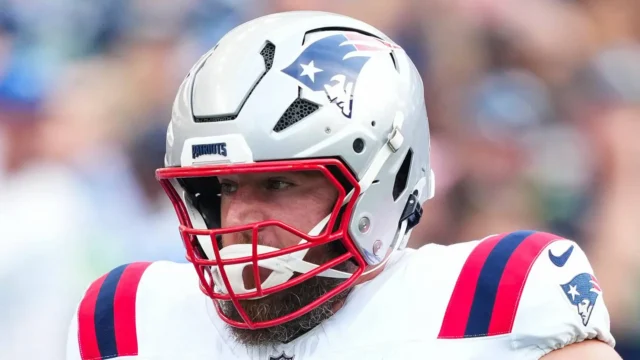
Will Campbell vs. Greg Rousseau sets up a key Week 4 test
Rousseau’s reported production gives the Patriots a clear reason to pay attention to the edge of the pocket. The original report described the Bills defender as leading the league with 6.0 sacks through the first three games. That is a time-specific figure, so it should be read as an early-season snapshot rather than a current or season-ending ranking.
For Campbell, the challenge is to help keep Rousseau from disrupting Maye’s timing and making the quarterback’s job harder. But the available information does not establish a specific blocking assignment or show that Campbell will handle Rousseau one-on-one on every relevant snap. The matchup is best understood as a focal point within a broader test for the New England Patriots offensive line.
Maye’s nine sacks through three games also add urgency to the protection question. Sacks can involve several factors, and the reported total alone does not identify who was responsible on each play or explain how each one happened. It does, however, underline why limiting the Buffalo Bills pass rush will be an important part of the Week 4 conversation.
What the reported numbers say about Rousseau and Campbell
The source article cites Pro Football Focus for Campbell’s early-season figures: three pressures allowed, including one quarterback hit and one sack. Pressures, hits and sacks are distinct measures, and the figures should not be treated as interchangeable. The numbers are also attributed to Pro Football Focus as cited by the source, rather than independently verified here.
Those reported figures provide a measured counterpoint to the concern about Rousseau. Campbell’s three pressures allowed through the cited sample do not, by themselves, settle how he will fare against Buffalo. They do indicate why the matchup should be assessed with both sides of the snapshot in view: Rousseau’s reported sack production and Campbell’s reported pressure numbers.
The table combines current-season figures with career matchup totals, so the time frames matter. Rousseau’s and Maye’s first-three-games numbers are not directly comparable to Buffalo’s 10 sacks across four meetings with Maye. Nor does the historical total establish what the Bills will produce in this particular game.
It is also useful to keep each statistic tied to what it measures. A pressure is not automatically a sack, and the PFF figures cited for Campbell distinguish the three pressures from the one quarterback hit and one sack included in that account. The source report offers a limited statistical comparison, not a complete evaluation of every pass-blocking snap or a play-by-play account of Rousseau’s rushes.
Buffalo’s sack history against Drake Maye adds context
The source report puts Maye at 2-2 against Buffalo, with 689 passing yards, two passing touchdowns and two interceptions across those games. It also reports that the Bills sacked him 10 times over the four matchups. These are historical matchup figures, separate from the nine sacks attributed to Maye through the first three games of the current season.
That history makes the protection discussion more than a comparison of one tackle and one pass rusher. The broader challenge is to give Maye a chance to operate without repeated disruption. The figures do not explain the circumstances behind each sack, so they should not be used to assign responsibility to Campbell or any other individual without play-level evidence.
The original commentary also characterized Maye as rattled and suggested that his decisions were contributing to his difficulties. Those are the source author’s assessments, not facts established by the statistics presented. The reported sack totals show the pressure context; they do not independently prove a particular cause or describe Maye’s state of mind.
For readers comparing the two time frames, the distinction is important: Maye’s reported 2-2 record and passing totals describe four prior meetings with Buffalo, while his nine sacks are a first-three-games season figure. Buffalo’s reported 10 sacks are tied to those four matchups, not to the opening three games. Keeping those figures separate avoids turning historical context into a prediction about the upcoming contest.
The protection details to watch in Patriots-Bills
The clearest point to monitor is whether the Patriots’ offensive line can limit disruption as the Bills bring their pass rush. Campbell’s reported numbers are one useful reference, but keeping Maye protected will require the line as a whole to perform. The available source does not provide enough detail to claim which player will block Rousseau on specific plays or what protection calls New England will use.
It will also be worth separating pressure from the outcome of a play. Rousseau’s reported 6.0 sacks make his early-season production notable, but a sack total is not the same as a complete account of pressures, quarterback hits or the circumstances that created them. Likewise, Campbell’s cited three pressures allowed offer a limited statistical snapshot rather than a guarantee of how this matchup will unfold.
The meaningful questions are straightforward: Can the Patriots keep Maye from facing the same level of sack exposure reported in his earlier meetings with Buffalo? Can Campbell and the rest of the line keep Rousseau’s rush from consistently affecting the pocket? And how will Maye’s overall protection hold up against a divisional opponent whose reported sack history makes the matchup worth watching? The available figures frame those questions, but they do not determine the answers.
Those are questions to follow during the game, rather than conclusions that can be drawn from the available numbers alone. The report does not establish a particular blocking plan, say how often Campbell and Rousseau will line up against one another, or supply a forecast of the final result. The matchup remains a useful lens on a broader issue: whether the New England Patriots offensive line can provide steady protection against the Buffalo Bills pass rush.
The pressure and sack statistics in this analysis come from the original Musket Fire report, which cited Pro Football Focus for Campbell’s pressure figures. All season figures are presented with the time frames specified in that report.