Will Campbell said the Patriots offensive line has been reshaped in training camp by design: the offensive and defensive trenches are working closer than ever to sharpen protections and exploit tendencies, Campbell told reporters (h/t MusketFire). The approach is a deliberate fix aimed at cutting down the sacks that troubled New England last season.
The message in Foxborough is straightforward — iron sharpens iron. Campbell’s comments, first reported by MusketFire, framed joint practice reps and direct O-line/D-line communication as the main tool for improvement during camp at the team’s practice environment and Gillette Stadium preparation areas. MusketFire is the primary reporting source for Campbell’s remarks; readers should consult the original story for the full quotes.
Campbell’s camp revelation: O-line and D-line coordinating
Campbell described an active feedback loop between units: defenders show looks, offensive linemen communicate where protections need to be tightened, and both sides adjust in real time. He said the exchange is about learning opponent “shows” and reacting faster, an approach he presented to reporters and that MusketFire relayed in its coverage.
Framed as practical problem-solving, Campbell’s description is team-level analysis rather than an assertion that personnel issues are already solved. MusketFire includes some evaluative language (for example, phrasing like a player being “picked on” in a prior game); those assessments are opinion-oriented and should be treated as analysis or locker-room perspective rather than independent fact.
Last season’s sack context for the Patriots offensive line
Numbers give context to why the team is emphasizing joint work. According to Team Rankings, New England surrendered 3.3 sacks per game last season — a rate tied for the league’s fifth-worst. The MusketFire article also cited a figure of 1.7 sacks per game for the Seattle Seahawks as a comparison point for elite protection.
The same article lists a different Patriots figure of 2.3 sacks per game in a league-ranked listing; that appears to come from a separate aggregation and is not the sacks-allowed figure from Team Rankings. Methodology and what each figure measures (sacks allowed vs. sacks generated or different time windows) vary across providers, so treat the numbers as directional.
What the new additions change on the trenches
On paper, New England added pieces intended to improve both pass protection and pass rush. The article lists Alijah Vera-Tucker, Caleb Lomu, Gabe Jacas and Dre’Mont Jones as upgrades meant to increase depth, run blocking and disruption.
MusketFire reports that Gabe Jacas missed parts of spring drills; that timeline detail is sourced in the original article and matters because practice availability affects how quickly communication patterns and assignments gel. Roster additions do not automatically equal immediate cohesion — the camp work Campbell described is the mechanism teams use to integrate newcomers.
Practice details: how joint reps sharpen protection
Campbell outlined several practice mechanics that matter. Defenders will “show” certain alignments and pressure plans; offensive linemen then practice communicating the correct protections and slide principles so the quarterback’s timing and pocket integrity improve. Those live reps are intended to build pattern recognition and reduce late reactions that lead to sacks.
Coaches can script opponent tendencies, force the same protections in a row, and stress the O-line with disguised pressures so linemen internalize cues under near-game speed. The payoff is not immediate: repetition refines technique and collective anticipation, which should lower pressure rates over time if the work translates to games.
What to watch in preseason and early season
To evaluate whether Campbell’s approach is affecting results, track measurable indicators over the first few games:
- Sacks allowed per game (team box scores and official play logs).
- Pressure rate and quarterback hits allowed (team-tracking analytics and box-score derivatives).
- PFF run- and pass-block grades — note that Pro Football Focus is subscription-only and should be cited as such when referenced.
- Preseason offensive line snap counts, continuity among projected starters, and changes in protections called by the staff.
Small preseason samples can be noisy; pair early metrics with snap-count context and opponent strength. A steady decline in pressures and cleaner pocket times over several weeks would be a more persuasive signal than a single low-sack preseason contest.
What remains unclear
Important open questions: how quickly will new starters and rotational pieces sync under regular-season game speed? Will the camp work materially reduce the Patriots’ pressure and sack rates in sustained play? The MusketFire story cites some PFF counts for Campbell (for example, a cited total of 26 pressures including five sacks and five QB hits), but those PFF numbers are behind a paywall and should be treated as subscription-based data.
Additionally, some language in the reporting is evaluative — references to a player being “picked on” come from the article’s characterizations and represent interpretation rather than independently verifiable events. Camp and preseason reporting are valuable, but definitive judgments require larger regular-season samples.
Sources and attribution
This analysis is based on the MusketFire report “Will Campbell reveals Patriots’ new approach to fixing the offensive line.” Team Rankings figures and Pro Football Focus references are cited within that MusketFire story; PFF metrics are subscription-only and should be noted as such. For original reporting, see: Will Campbell reveals Patriots’ new approach to fixing the offensive line (MusketFire).
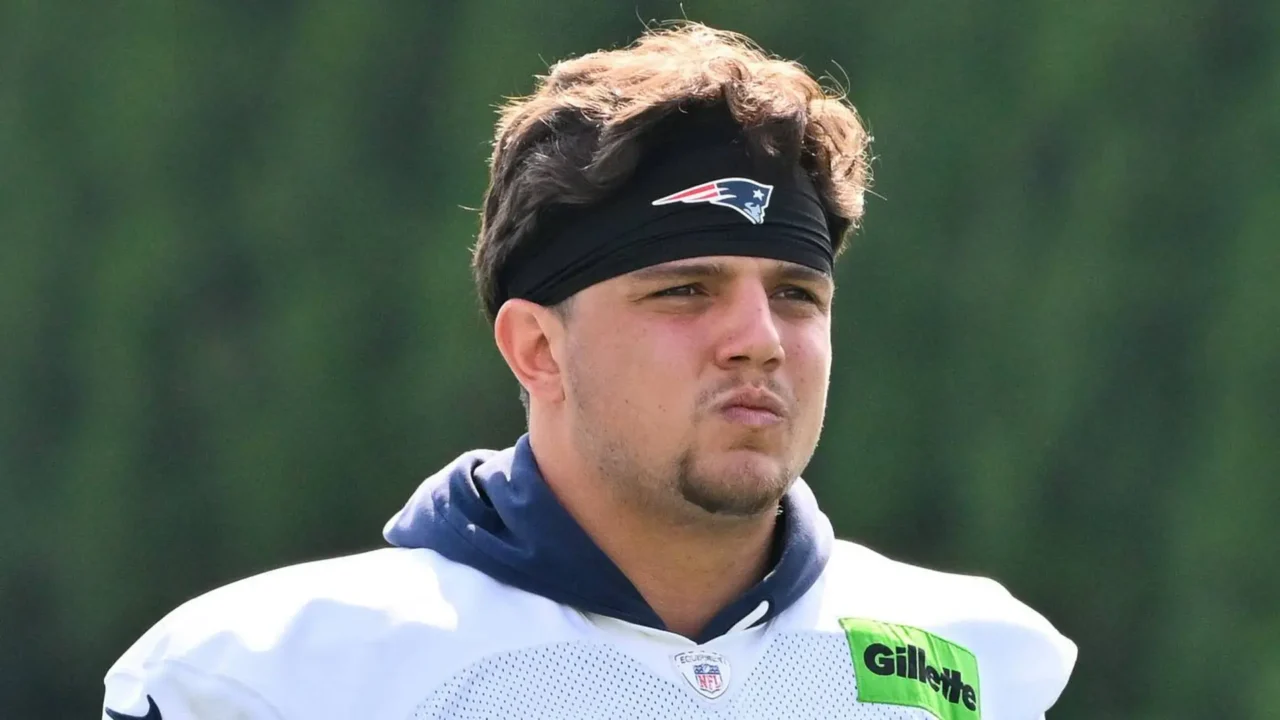
Featured image (used in schema): “Will Campbell during Patriots training camp” — image source: Reuters (via Minute Media). Image URL used in page schema is the Minute Media-hosted Reuters image referenced above.
Note on data: Team Rankings’ sacks-allowed figure is cited directly; Pro Football Focus statistics referenced in the original article are behind PFF’s subscription wall and are labeled as such here. Discrepancies between data providers are common due to differing definitions and time windows; the table above is intended to show those differences and the context in which each number appears.