
What makes Will Campbell Patriots All-Rookie pick stand out?
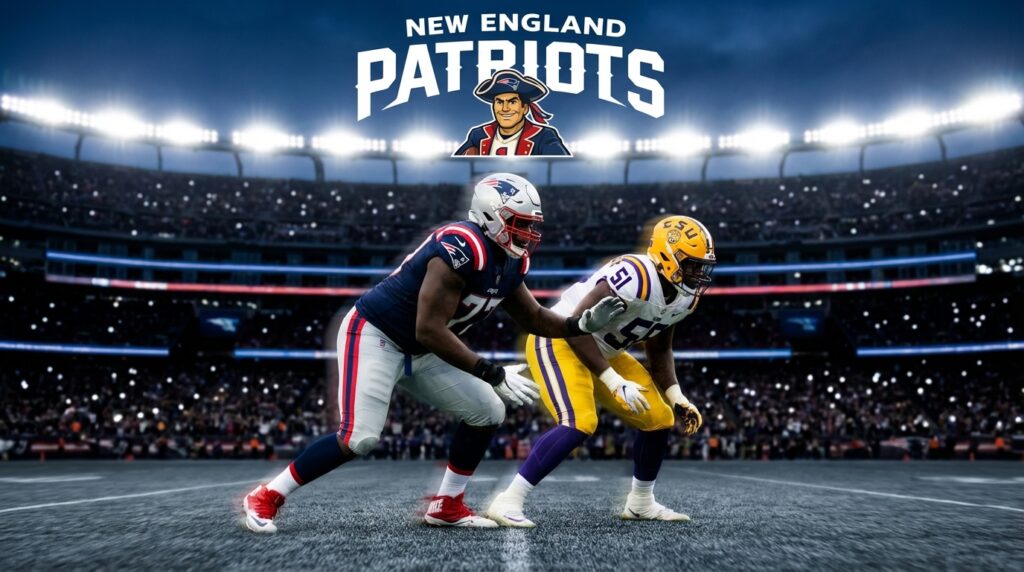
Will Campbell Patriots All-Rookie pick: Why ESPN’s omission sparks debate
The Will Campbell Patriots All-Rookie pick omission stunned many fans and scouts alike. However, his rookie tape shows consistent pass rush protection and improved run blocking. Because Campbell allowed only a 5.5 percent pressure rate, the numbers back his play. Moreover, he matched Kelvin Banks in sacks while committing fewer penalties per snap. As a result, many see Ben Solak’s All-Rookie selection as debatable.
This piece will run a scouting analysis that supports New England’s decision. First, we break down film details, technique, footwork, and hand placement. Next, we compare tape-driven metrics with conventional stats and league context. Therefore, we show why the Patriots gained a high-upside left tackle in Campbell. Despite the controversy, his activation off IR added depth for a playoff run.
Consequently, this introduction previews a detailed, optimistic and evidence-based argument. Ultimately, readers should expect clear film examples and comparison charts to follow. In short, the case for Campbell centers on technique, consistency, and upside.

Will Campbell Patriots All-Rookie pick metrics versus Kelvin Banks
This section compares rookie performance metrics for Will Campbell and Kelvin Banks. Because fans and scouts debate the All Rookie omission, the numbers matter. Below are the key comparisons and short takeaways.
- Pressure rate allowed
- Will Campbell recorded a 5.5 percent pressure rate allowed. This figure shows strong pass protection efficiency.
- Kelvin Banks posted a 6.8 percent pressure rate allowed. Therefore, Banks allowed pressure more frequently than Campbell.
- Sacks and pass rusher disruption
- Both players finished with five sacks in their rookie seasons. However, Campbell produced that total in fewer games because he missed time on IR.
- As a result, matching sack totals while allowing less pressure highlights Campbell’s potential for consistent protection.
- Penalties and discipline
- Kelvin Banks had 10 penalties in 17 games. In contrast, Will Campbell had 7 penalties in 12 games.
- When you calculate penalties per game, Banks averaged about 0.59 and Campbell about 0.58. Consequently, their per game discipline looks nearly identical despite different raw totals.
- Availability and activation
- Campbell was activated off injured reserve later in the season. Therefore, his counting stats reflect fewer games played.
- Banks stayed on the field for 17 games for the New Orleans roster, which gave him more snaps and exposure.
Short analysis
Because Campbell allowed a lower pressure rate, he graded out well in pass protection efficiency. Moreover, he avoided extra penalties while matching Banks on sacks. As a result, Campbell looks like an efficient rookie bookend candidate who offers upside. In film, he showed steady footwork, quick hand placement, and the ability to mirror edge rushers. Therefore, the metrics support a positive view of New England’s decision to draft him high. Overall, the numbers make Ben Solak’s All Rookie omission a defensible debate point rather than a clear verdict.
| Stat | Will Campbell | Kelvin Banks |
|---|---|---|
| Draft pick | 4th overall, LSU | 9th overall, New Orleans |
| Team | New England Patriots | New Orleans Saints |
| Pressure rate allowed | 5.5% | 6.8% |
| Sacks | 5 | 5 |
| Penalties (raw) | 7 in 12 games | 10 in 17 games |
| Penalties per game | 0.58 | 0.59 |
| Games played | 12 | 17 |
| IR activation | Activated off injured reserve | No IR stint reported |
Will Campbell Patriots All-Rookie pick: Why ESPN praise was unnecessary
New England did not need ESPN validation to justify the pick. Because the Patriots prioritized technique, size, and upside, the scouting grade carried weight. Therefore the tape and advanced metrics give a clearer picture than awards. Ultimately the team’s coaches and personnel made a forward looking choice.
Scouting insights and why they matter
- Technique and footwork matter
- Campbell displayed steady kick slides and balance in pass sets. As a result he limited pressure to a 5.5 percent rate.
- Hand placement and contact timing
- He used strong, quick hands to control rushers at the point of attack. Consequently his pass sets looked secure on tape.
- Run blocking and finishing
- Campbell showed the ability to climb to the second level. Moreover he sustained blocks in short yardage and tempo situations.
- Discipline and penalties
- His raw penalties were seven in 12 games. However penalties per game nearly matched his peer Kelvin Banks. Therefore Campbell avoided costly, repeated infractions.
Role as a bookend and playoff asset
Campbell projects as a left tackle bookend who can anchor the line. His blend of pass protection and run level finishing fits New England’s blocking schemes and helps sustain both isolation and gap concepts.
- Pass sets
- Consistent kick slides limit pressure and create a clean pocket
- Quick hands and contact timing reduce third down disruption
- Run game
- Sustains blocks at the point of attack
- Climbs to the second level on combo blocks and zone reach plays
Availability and communication matter late in the season. His activation off injured reserve added depth and allowed coaches to rotate without sacrificing protection. Consequently coaches can adjust slide protections and rotation patterns with more confidence.
Coaching perspectives and team context
That on field reliability influences coaching evaluations. Veteran staffs value technique and consistency more than raw athletic traits. For teams like New England, a tackle who minimizes pressure and penalties simplifies game planning and reduces schematic risk.
- Learning curve
- Young tackles improve rapidly with coaching, especially in mirror drills and pass rush counters
- Scheme fit
- Campbell’s skill set aligns with inside out run schemes and quick passing protections
Takeaway
Campbell provides immediate roster value as a reliable starter and developmental upside as a long term bookend. In short, his tape and metrics support a strategic investment that strengthens both regular season depth and playoff readiness.
Conclusion
ESPN’s omission of Will Campbell from the All-Rookie team opened debate among analysts and fans. However, film and metrics tell a clearer story. Campbell posted a 5.5 percent pressure rate allowed and matched Kelvin Banks with five sacks. Moreover he kept penalties per game nearly identical to Banks while playing fewer snaps because of an IR stint. Therefore his efficiency and technique show real upside. Scouts praised his kick slide, hand timing, and run-block finishing. As a result the Patriots drafted a player who fits their scheme now and for years.
Looking ahead Campbell projects as a stabilizing left tackle and a likely long-term bookend. His activation off injured reserve added depth during a playoff push. Coaches can rely on his communication and consistency in pass sets. Consequently New England’s selection did not need All-Rookie validation to be sound.
Patriots Report LLC stands behind this analysis with coverage and film study. Visit Patriots Report for more insights, and follow on Twitter at @ZachGatsby. In short, Campbell gives the Patriots foundational value and tangible upside.
Frequently Asked Questions (FAQs)
Was Will Campbell unfairly left off ESPN’s All‑Rookie team?
Selections like All‑Rookie carry subjectivity. Ben Solak favored Kelvin Banks in his ESPN list. However, many evaluators still see Campbell’s tape and efficiency as All‑Rookie level. Therefore the omission sparked debate rather than settled the discussion.
How did Will Campbell perform in his rookie season?
Campbell allowed a 5.5 percent pressure rate while recording five sacks. He logged seven penalties across a shorter sample of games. Because he missed time on injured reserve, his raw totals look smaller. Still his per‑play metrics and technique showed clear upside.
How does Campbell compare to Kelvin Banks on measurable traits?
Banks posted a 6.8 percent pressure rate and played more snaps. Banks had ten penalties in a longer season, while Campbell had seven in fewer games. Consequently their sacks matched, but Campbell’s efficiency numbers tilt in his favor when adjusted for availability.
Does missing All‑Rookie hurt Campbell’s long term value?
No. Awards affect recognition more than projection. Scouts focus on footwork, hand placement, and consistency. Because Campbell excelled in those areas, he keeps strong developmental value for the Patriots.
What does Campbell mean for New England’s offensive line going forward?
Campbell projects as a foundational left tackle and potential bookend. As a result he can stabilize pass protection and boost run blocking. Coaches can build schemes around his strengths, which helps the Patriots in playoff runs and future roster planning.