
Will Campbell All-Rookie pick for the Patriots: Roster-building debate
Will Campbell All-Rookie pick for the Patriots is the central question fueling discussion around New England’s draft haul. Fans and analysts split over left tackle choices, yet Campbell’s tape and metrics give cause for optimism. He arrived at No 4 overall from LSU, and his early play has shaped roster building conversations.
The debate
Observers compare Campbell to Kelvin Banks and weigh pressure rates, penalties, and sacks. Campbell posts a 5.5 percent pressure rate and has allowed five sacks. However, Banks has a higher pressure rate at 6.8 percent and more game experience. Because sample size favors Banks, some prefer his edge.
Why Campbell matters
Campbell combines run blocking power, quick feet, and upside in pass protection. He returned from IR and can anchor New England’s blindside in the playoffs. Moreover, his penalty and sack totals match Banks, which supports the argument that Campbell deserves All Rookie consideration.
This introduction previews an analytical look at film, metrics, and roster philosophy. Therefore, the article examines coaching fit, durability, and long term value for the Patriots.
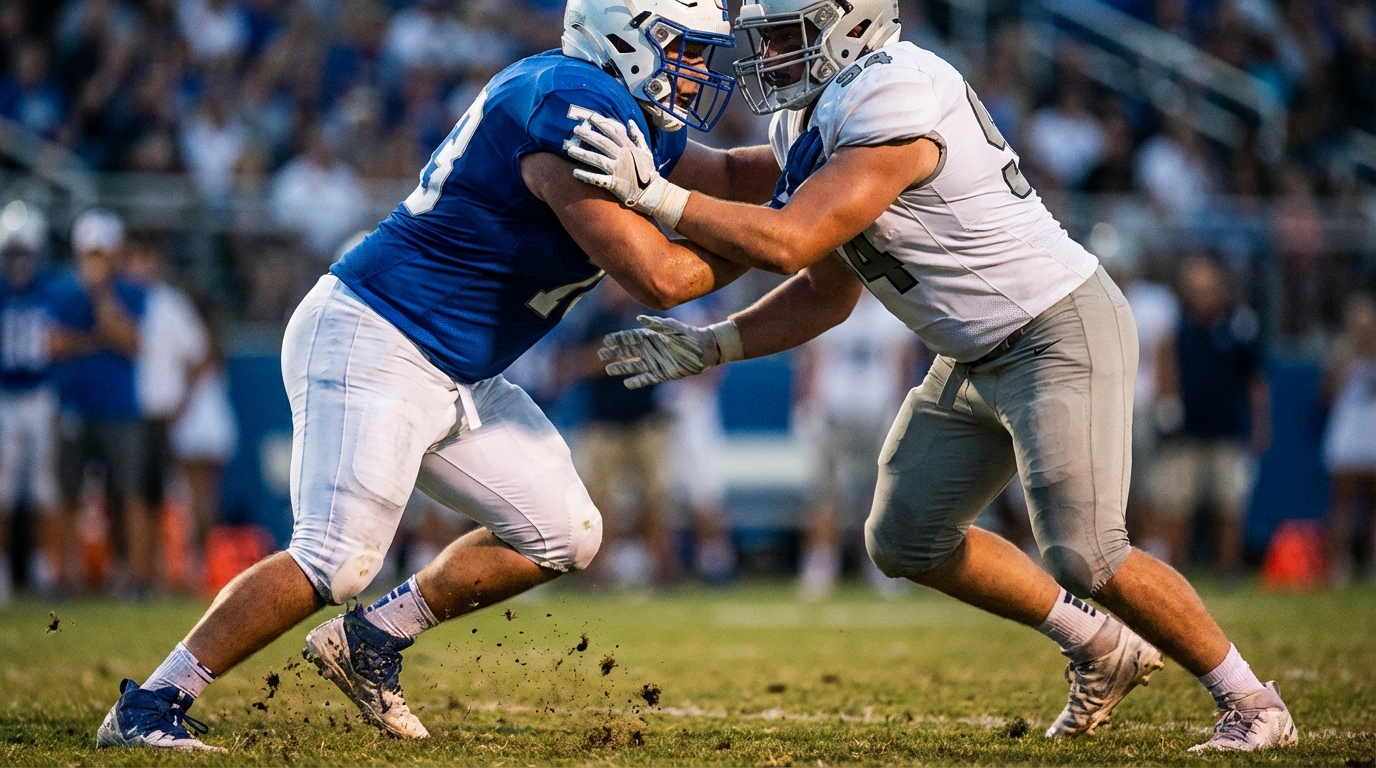
Analyzing the Will Campbell All-Rookie pick for the Patriots versus Kelvin Banks
This section compares Will Campbell and Kelvin Banks across key metrics. It focuses on pressure rate, penalties, sacks allowed, and games played. Because each stat tells a different story, the full picture matters.
Quick stat snapshot
- Pressure rate
- Will Campbell 5.5 percent
- Kelvin Banks 6.8 percent
- Penalties
- Campbell seven penalties in 12 games
- Banks ten penalties in 17 games
- Sacks allowed
- Both have allowed five sacks each
- Games played
- Banks has played more games than Campbell
- Campbell missed time on IR but returned for late season action
What the numbers mean
Campbell posts a lower pressure rate, which suggests better pass protection per snap. However, Banks has a larger sample size. Therefore, some analysts lean toward Banks when valuing consistency. Yet Campbell matches Banks on sacks allowed. As a result, Campbell looks efficient when available.
Expert perspective
Ben Solak noted, “Through 17 weeks, it seems that the Patriots couldn’t have made a bad pick at No. 4 overall.” He added that drafting Banks would not have been a bad move. However, Solak said Campbell has shown growth and upside, which matters for long term value.
Strengths and concerns compared
- Will Campbell
- Strengths: lower pressure rate, quick feet, run blocking power
- Concerns: fewer games due to IR, smaller sample
- Kelvin Banks
- Strengths: more game reps, traditional NFL frame, durability
- Concerns: higher pressure rate, more penalties
Roster impact for New England
Because Campbell has returned from IR, he can anchor the blindside in a playoff push. Moreover, his efficiency on pass sets supports an All Rookie argument. For deeper context on the debate, see this piece comparing the two prospects directly: this piece comparing the two prospects directly and this breakdown of Campbell’s pick value: this breakdown of Campbell’s pick value.
Rookie season stats comparison
| Stat | Will Campbell (LSU) | Kelvin Banks (Texas) |
|---|---|---|
| Total games played | 12 | 17 |
| Pressure rate | 5.5% | 6.8% |
| Penalties | 7 | 10 |
| Sacks allowed | 5 | 5 |
| IR activation status | Activated off IR; returned late in season | No IR activation reported |
Quick note: Campbell’s lower pressure rate suggests efficiency when available. Banks offers more snaps and experience, so sample size matters.
Campbell activated off IR and why it matters for the playoffs
Will Campbell’s activation off injured reserve gives New England a tangible boost. Because he combines size and agility, he immediately strengthens the Patriots’ left tackle spot. Moreover, Campbell’s 5.5 percent pressure rate suggests he protects the passer efficiently. As a result, the coaching staff gains a more reliable blindside protector for late season schemes.
Coach Mike Vrabel has prioritized protecting the quarterback. Therefore, adding Campbell back increases playcalling flexibility. He can handle pass sets and drive-block in the run game, which helps balance the offense. Additionally, Campbell’s return reduces pressure on other linemen and tight ends in protection schemes.
Experts have praised Campbell’s upside. Ben Solak observed that New England likely did well at No. 4, and he highlighted Campbell’s growth. Also, analysts note that Campbell matches Kelvin Banks on sacks allowed despite playing fewer snaps. Because of that efficiency and upside, Campbell projects as a key piece in postseason matchups.
Durability remains a question, but his late season presence changes matchups. Against teams that blitz from the edge, a steady left tackle matters greatly. Therefore, Campbell’s mix of run blocking power and footwork can swing contested drives. In short, his IR activation does more than fill a roster spot; it reshapes the Patriots’ offensive plan for playoff football.
Related keywords: blindside protector, left tackle, pass protection, IR activation, playoff run, pressure rate, sacks, penalties, durability.
Conclusion
Will Campbell has earned strong support as a successful All-Rookie pick for the Patriots. His lower pressure rate, matching sack total with fewer snaps, and cleaner penalty profile give clear, positive evidence. Because he was the No 4 overall pick from LSU and returned from IR to anchor the left tackle spot, he offers tangible upside for New England’s immediate and future plans.
Moreover, Campbell’s return changes game planning. Coach Mike Vrabel can trust a steadier blindside protector, and the team gains more flexibility in pass protection and run schemes. Experts such as Ben Solak note that New England likely made a sound selection, and the metrics back that view. Therefore, Campbell’s blend of efficiency and upside supports his All-Rookie case.
In short, the facts favor Will Campbell as a meaningful draft win for the Patriots. For ongoing coverage and deeper analysis from Patriots Report LLC, visit Patriots Report LLC and follow their updates on Twitter at @ZachGatsby.
Frequently Asked Questions (FAQs)
What were Will Campbell’s key rookie season numbers?
Campbell played 12 games and posted a 5.5 percent pressure rate. He logged seven penalties and allowed five sacks. He also spent time on injured reserve before he returned late in the season. These metrics show efficiency when he played, because his pressure rate sits below comparable rookies.
Is Will Campbell a legitimate All-Rookie candidate?
Yes, he makes a strong case. His lower pressure rate and matching sack total with fewer snaps matter. However, sample size limits some voters. Therefore, voters who prize per-snap efficiency could favor him. Ben Solak noted the Patriots likely made a solid No. 4 pick. As a result, Campbell earns All-Rookie attention.
How does Campbell compare to Kelvin Banks on the field?
Banks has more game reps. He played 17 games with a 6.8 percent pressure rate and ten penalties. Banks allowed five sacks as well. Nevertheless, Campbell shows a cleaner pressure profile per snap. Because Campbell missed time, analysts balance upside against sample size when comparing the two.
What does Campbell’s IR activation mean for the Patriots’ playoff chances?
His activation gives New England a steadier blindside protector. Coach Mike Vrabel can expand pass concepts and trust protection schemes more. Additionally, Campbell’s run blocking helps short yardage and third down packages. In short, his return improves matchup planning for postseason opponents.
Was drafting Campbell worth a top four pick long term?
Early signs point to yes. He provides immediate positional value and long term upside. Durability remains a watch point, but coaching and scheme can maximize his traits. Therefore, Campbell looks like a valuable building block for New England’s offensive line.