
What sparked the Patriots’ Super Bowl LX officiating controversy?
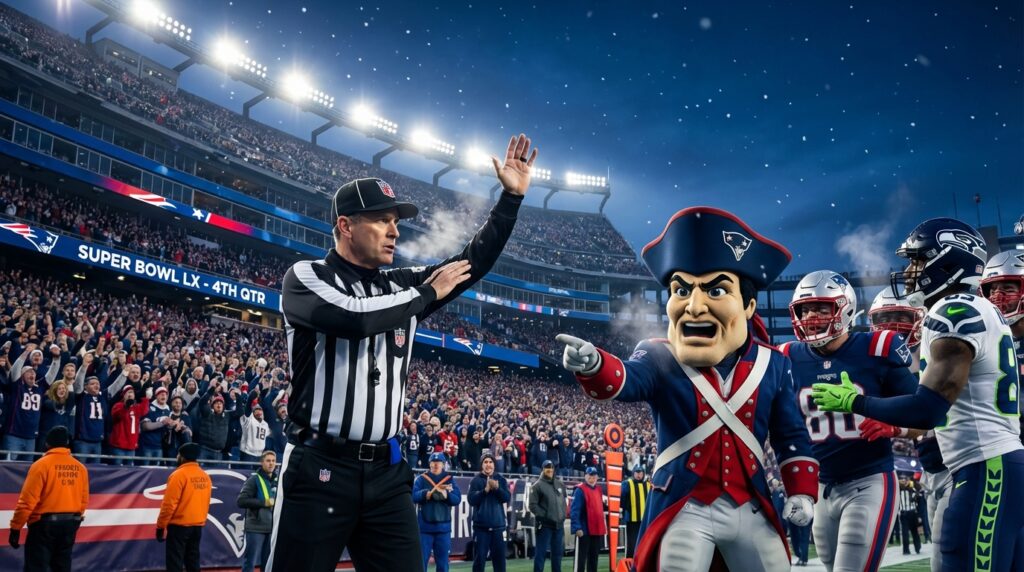
Patriots fans, brace yourselves: the Super Bowl LX officiating controversy reared its head before the first quarter ended. That 23-yard catch to Cooper Kupp felt suspect, and the hurried snap prevented a fair replay. As a result, viewers watched a replayable call evaporate amid rapid play and inconsistent enforcement.
Fans know that weak or flip‑flop decisions change momentum and tilt tight games in seconds. The stakes could not be higher because a single noncall or rushed review can flip field position, strip momentum from an aggressive Patriots drive, force different playcalling, and ultimately decide the scoreboard in a game this evenly matched, so Patriots followers are furious and watch every angle of Cooper Kupp’s contested reception, Sam Darnold’s quick passing, Jason Myers’ early three, Christian Gonzalez’s tight coverage, and Derick Hall’s pressure, demanding accountability and clearer replay standards from officials whose split-second choices now loom as possible reasons the Super Bowl LX title may hinge on a whistle.
Super Bowl LX officiating controversy: The 23-yard Kupp catch
The first flashpoint came on that 23-yard pass catch to Cooper Kupp. Broadcasters praised the play, but it did not look like a no-doubt grab. Because Seattle hurried to the line, they prevented a fair replay. As a result, fans and pundits called it a replayable call that officials never properly reviewed. Patriots fans saw potential evidence of inconsistent enforcement and demanded answers.
Super Bowl LX officiating controversy: Replay protocol and rushed snaps
Replay protocol felt shaky early. Officials allowed a quick snap after the catch, which stopped a review opportunity. Therefore the game lost a layer of accountability. The sequence raised questions about replay standards, the two feet in bounds rule, and whether the crew prioritized game flow over correct calls.
Patriots aggressive approach and key calls that mattered
The New England Patriots came out aggressively and sought turnovers. However, pressure plays changed field position and magnified every officiating decision. Derick Hall’s sack forced a punt, but other moments were closer. Christian Gonzalez held Jaxon Smith-Njigba in check, yet tight coverage leads to bang-bang plays. Sam Darnold’s quick passing placed the Seahawks in scoring position, and Jason Myers’ field goal made that early 3-0 lead feel pivotal.
Key controversial moments
- The Cooper Kupp contested catch on the first drive and the halted replay
- Seattle’s hurried snap to avoid review, which frustrated viewers
- Close coverage and two feet in bounds questions on contested receptions
Taken together, these moments show why the Super Bowl LX officiating controversy dominates conversation. Patriots fans rightly fear that a missed review or shaky call could shift momentum and change the final outcome.
Super Bowl LX officiating controversy: Key calls compared
Therefore, the table below summarizes the biggest officiating calls and their effects.
| Officiating Call | Players Involved | Immediate Outcome | Potential Impact on Score or Momentum |
|---|---|---|---|
| Contested catch on the 23 yard pass to Cooper Kupp | Cooper Kupp, Sam Darnold | Play marked complete at Seahawks 17, led to field goal drive | Denied replay chance could have overturned catch and altered Patriots field position and momentum |
| Hurried snap to stop replay after Kupp catch | Seattle Seahawks, Sam Darnold | No review initiated, play clock used | Prevented verification of catch and frustrated Patriots fans |
| Jason Myers field goal after Kupp sequence | Jason Myers, Seattle Seahawks offense | Three points, Seahawks lead 3 to 0 | Early lead put pressure on Patriots and shaped play calling |
| Close coverage and two feet in bounds questions on contested receptions | Christian Gonzalez, Jaxon Smith Njigba | Tight plays ruled in or out on spot calls | Small calls in coverage could swing drives and momentum either way |
| Sack on Patriots set up punt | Derick Hall, New England Patriots offense | Loss of yards, forced Patriots to punt | Changed field position and magnified importance of subsequent calls |
Super Bowl LX officiating controversy: How calls changed game dynamics
Early officiating decisions reshaped the feel of this Super Bowl. The contested 23 yard Cooper Kupp catch on Sam Darnold’s first drive placed Seattle at the Patriots 17. Because officials allowed a hurried snap, replay review never occurred. As a result, Seattle settled for a Jason Myers field goal and a 3-0 lead. That small margin forced New England into a different game plan.
Mike Vrabel coached aggressively and asked his unit to hunt turnovers. However, inconsistent enforcement turned riskier plays into potential traps. Derick Hall’s sack on a Patriots drive pushed New England into a fourth down and a punt. Therefore field position swung in Seattle’s favor, and Patriots momentum stalled.
Christian Gonzalez battled tight coverage and largely contained Jaxon Smith Njigba. Nevertheless, bang-bang calls in the secondary kept every play alive for debate. Because the officiating crew appeared reluctant to stop play, Patriots fans saw opportunities vanish.
Taken together, these sequences altered tempo and tactics for both teams. New England’s aggressive intent met officiating friction, and Seattle capitalized on small edges. In my view, the Super Bowl LX officiating controversy did more than irritate fans. It shaped play calling and dictated field position. A single whistle felt like the difference between victory and defeat.
Super Bowl LX officiating controversy: Final thoughts
This Super Bowl LX officiating controversy left Patriots fans raw and alert. Early moments like the 23 yard Cooper Kupp catch and the hurried snap altered momentum. Because the replay opportunity vanished, fans saw a missed moment of accountability. Mike Vrabel’s game plan depended on aggressive pressure, and Derick Hall answered with a big sack. However inconsistent officiating turned those punches into precarious gains. Christian Gonzalez played sound coverage, yet bang bang plays in the secondary invited debate. Therefore every whistle carried outsized weight.
Emotionally, Patriots supporters felt the stakes keenly. They trusted officials to manage fairness, but instead they watched controversy steer field position and strategy. As a result the game balanced on small margins, and New England’s fate could hinge on a single call.
Follow Patriots Report LLC for persistent coverage and hot takes. For real time updates and breaking analysis visit Patriots Report and follow on Twitter X at Zach Gatsby. Stay loud, Patriots fans, because accountability matters and the conversation is far from over.
Frequently Asked Questions (FAQs) — Super Bowl LX officiating controversy
What was the main officiating issue in Super Bowl LX?
The biggest dispute centered on a 23-yard pass to Cooper Kupp on Seattle’s first drive. Broadcasters praised the catch, but many saw it as a contested grab. Because Seattle hurried to the line, replay officials never had a fair shot to review. As a result, the play stood and led to a Jason Myers field goal.
Was that play reviewable under NFL rules?
Yes, it appeared reviewable due to questions over control and two feet in bounds. However, officials did not stop play long enough for a coach challenge or booth review. Therefore fans argued replay protocol broke down in a key moment.
How did officiating affect the Patriots’ momentum and strategy?
Mike Vrabel’s unit started aggressively, hunting turnovers. Derick Hall’s sack later forced a punt and stalled a Patriots drive. Because calls seemed inconsistent, New England had to temper riskier decisions. As a result, field position and play calling shifted throughout the first half.
Could the officiating controversy change the final outcome?
Absolutely. In a tight Super Bowl, small edges matter. A reversed catch or a timely review could have flipped field position or scoring. Kupp remains an X factor, and missed reviews of contested receptions can decide narrow games.
What should Patriots fans watch for next and how can they stay informed?
Watch replay angles for disputed catches and listen to official explanations after the game. Also track coach remarks, since Mike Vrabel will address officiating if warranted. For ongoing coverage and fan reaction, follow dedicated Patriots outlets and social chatter. Stay critical, because accountability matters.