Seahawks’ defense dominates in Super Bowl LX win over Patriots
Seahawks’ defense dominates in Super Bowl LX win over Patriots. The Seahawks finished with a commanding 29 to 13 victory. From the opening series, the defense dictated the game’s tempo and never relented.
This game mattered because it pitted the NFL’s top defenses and offenses in a high stakes duel. As a result, Seattle’s unit focused on pressure, coverage, and turnover creation. The Patriots’ normally potent attack stalled under constant heat and smart coverage.
Kenneth Walker III earned Super Bowl LX MVP honors after powering key drives and grinding clock. In addition, the secondary and linebackers executed disciplined assignments that erased easy completions. Because of that cohesion, New England failed to string together long scoring drives.
Now this article dives into tactics, personnel decisions, and the plays that swung the game. Therefore expect film based analysis, snap by snap breakdowns, and clear strategic takeaways. Finally, we celebrate a season where defense reclaimed the spotlight.
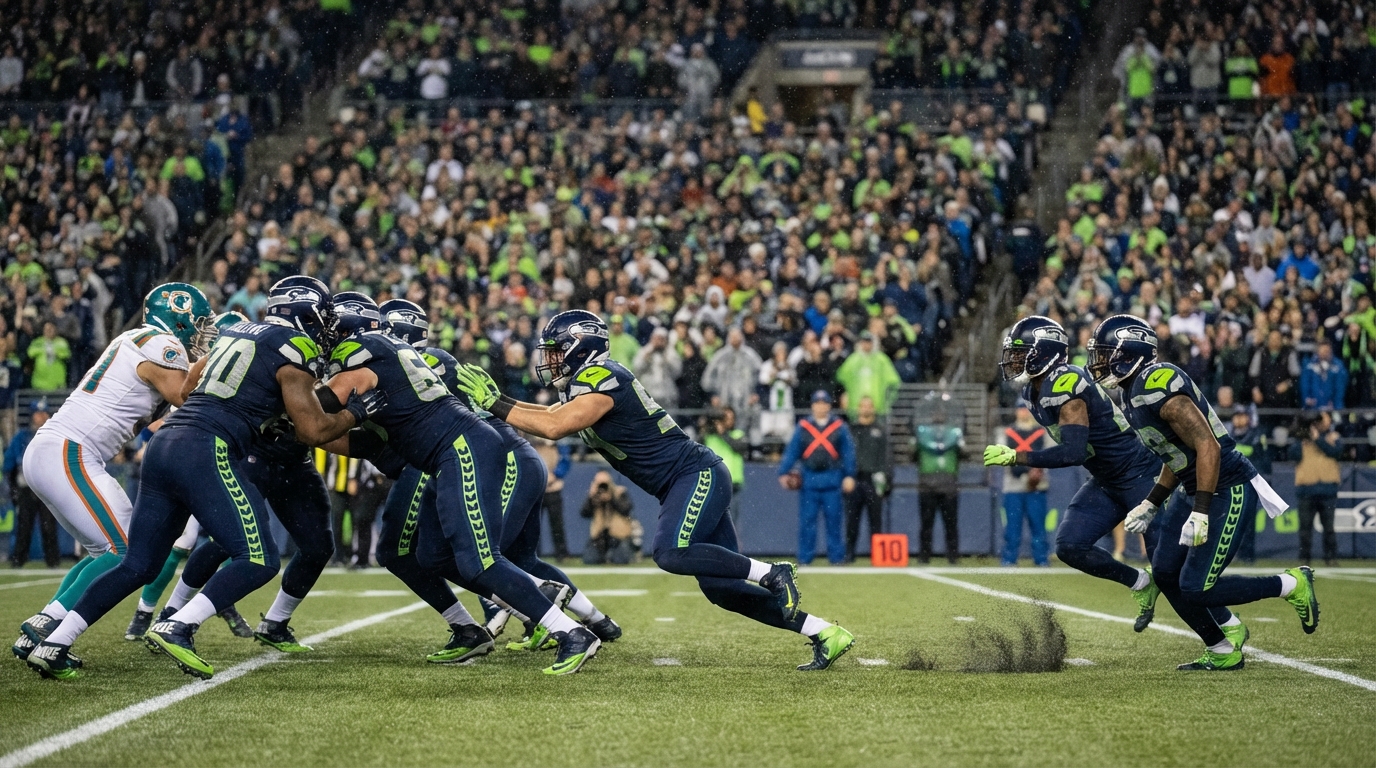
Tactical Breakdown: How the Seahawks’ Defense Dominated
Seahawks’ defense dominates in Super Bowl LX win over Patriots: strategic themes
Seattle’s defense set the tone early with aggressive fronts and disguised looks. Because they disguised pressure, Patriots offensive line struggled to identify rushers. In addition, Seattle mixed man and zone coverage to eliminate easy throws. As a result, New England could not sustain long drives.
Head coach Mike Macdonald stressed communication. He said, “Two years ago, the Seahawks took a risk in hiring a 36-year-old Mike Macdonald who only had two years of experience as a coordinator at the NFL level.” However, that risk paid off. The unit finished 2025 allowing the fewest points and the sixth-fewest yards.
Three tactical pillars drove the result. First, pressure without heavy blitzing. Second, tight coverage over the middle. Third, tackling and run fits that forced predictable plays. Because of those pillars, the Patriots No. 2 scoring offense averaged far fewer points than in the regular season.
Key schematic elements included:
- Stunt fronts and delayed blitzes to force Sam Darnold to move.
- Compact zone shells that prevented explosive plays.
- Two-high safety looks on third long to limit deep shots.
- Aggressive run support that yielded minimal second-level yards.
Key defensive plays and player contributions:
- Bobby Wagner: two third-down stops and a play that halted a promising drive.
- Quandre Diggs: tight coverage on the slot that broke up a third-quarter chance.
- Jamal Adams: pressure and a tackle for loss on a critical fourth down.
- Devon Witherspoon: tight man coverage limiting the Patriots’ top receiver.
- Leonard Williams and Dre’Mont Jones: interior push that collapsed the pocket.
- Byron Murphy and Nick Emmanwori: clutch pass breakups in red zone.
Statistically, the game reflected season-long dominance. Seattle allowed the fewest points in 2025, and therefore New England managed only 13 points. In addition, Seattle’s pass rush won individual matchups, while coverage units reduced completion percentages.
Film study shows discipline and detail won this game. Now we turn to snap-by-snap examples that reveal how each tactic unfolded.
Stat Comparison: Seahawks vs Patriots (2025)
Below is a side by side look at key 2025 defensive and offensive measures.
| Metric | Seahawks (2025) | Patriots (2025) | Context and notes |
|---|---|---|---|
| Points allowed | Fewest in NFL (2025) | Not specified in article | Seattle led the league in fewest points allowed, supporting their Super Bowl defense narrative |
| Yards allowed | Sixth-fewest in NFL (2025) | Not specified in article | Seattle finished sixth-fewest in yards allowed, showing consistent containment |
| Scoring offense rank | Not specified in article | No. 2 scoring offense (regular season) | Patriots entered the Super Bowl with one of the league’s top scoring attacks |
| Total offense rank | Not specified in article | No. 3 total offense (regular season) | New England ranked top three in total offense during the year |
| Postseason turnovers | Not specified in article | Eight postseason turnovers | Turnovers weighed heavily on New England’s postseason efficiency |
| Key players | Kenneth Walker III, Devon Witherspoon, Bobby Wagner, Jamal Adams | Sam Darnold, Cooper Kupp, Rashid Shaheed | Kenneth Walker III was Super Bowl LX MVP; Sam Darnold finished the season as a Super Bowl champion |
Notes: Data points are drawn from the article’s season facts. The table highlights how Seattle’s defensive rankings contrasted with New England’s offensive strength.
Cap and Draft Strategy: Building a sustainable defensive core
Seattle’s salary cap and draft position played key roles in defensive dominance. With approximately $73.28 million in cap space, the front office had room to sign core players and address depth. As a result, the team could afford tactical veterans while keeping flexibility for future moves.
Holding all Day 1 and Day 2 draft picks created options at the draft. Therefore Seattle could draft high ceiling defenders or include picks in trades for proven starters. In addition, those selections preserved rookie scale contracts that help balance the payroll.
- Leonard Williams provided interior push while commanding a sizable cap hit. Because of his play, opponents could not rely on inside running lanes.
- Uchenna Nwosu supplied edge disruption and length, and his contract fit the team’s budget plan.
- Retaining veterans like Bobby Wagner and coverage leaders reduced the need for costly free agent replacements.
- Draft investments in the secondary created homegrown depth for rotation and special teams.
- Cap flexibility allowed targeted midseason upgrades and short term contracts for situational pass rushers.
Klint Kubiak’s departure to become a head coach creates a coaching gap. However, the roster moves and scheme continuity should soften that transition. Seattle’s defensive identity rests on player personnel as much as on play calling.
Looking ahead, the combination of cap space and draft capital keeps Seattle well positioned. Therefore they can extend key contributors or add complementing pieces. As a result, the Seahawks can sustain elite defense while planning for cap realities.
CONCLUSION
Seattle’s defense delivered the decisive edge in Super Bowl LX. Their unit controlled field position and forced timely stops, enabling a 29 to 13 win over the Patriots. Because the Seahawks finished 2025 allowing the fewest points, their game plan proved season-long, not accidental.
Cap discipline and draft capital set the table for sustainability. With roughly $73.28 million in cap space and all Day 1 and Day 2 picks, Seattle can keep core pieces like Leonard Williams and Uchenna Nwosu. As a result, the front office can extend key players or invest in depth without sacrificing flexibility.
Looking forward, continuity in scheme and smart roster building will matter. However, Klint Kubiak’s departure introduces questions on offensive direction, while the defensive identity remains intact. Finally, this analysis underscores how front office strategy and on-field execution combine to create champions.
For more in-depth breakdowns and film study, visit Patriots Report and follow us on Twitter/X @ZachGatsby. Patriots Report LLC provided this analysis.
Frequently Asked Questions (FAQs)
How did the Seahawks’ defense dominate in Super Bowl LX win over Patriots?
Seahawks’ defense dominates in Super Bowl LX win over Patriots by pressuring the quarterback, locking down receivers, and controlling the line of scrimmage. Because Seattle disguised fronts and mixed coverage, Sam Darnold faced constant timing disruption. In addition, disciplined tackling and situational stops prevented long drives. As a result, New England scored only 13 points.
Who were the key defensive contributors?
- Bobby Wagner: veteran leadership and two critical third down stops.
- Devon Witherspoon: tight man coverage on top targets.
- Quandre Diggs: slot coverage and a third quarter breakup.
- Jamal Adams: edge pressure and a tackle for loss.
- Leonard Williams: interior push that collapsed the pocket.
Why did the Patriots’ high powered offense struggle?
The Patriots entered with the No.2 scoring offense and No.3 total offense. However, turnovers and stalled drives defined their postseason. Because Seattle limited space and applied consistent pressure, New England could not find rhythm. Moreover, postseason turnovers hurt confidence and field position.
How did cap and draft strategy help sustain the defense?
With about $73.28 million in cap space, Seattle kept core defenders and added depth. Holding all Day 1 and Day 2 picks preserved rookie contracts. Therefore the team can extend players like Leonard Williams and Uchenna Nwosu.
What does this win mean going forward?
Seattle proved its defense wins championships. With cap flexibility and draft capital, the Seahawks can maintain elite defense. However, coaching changes create questions on offense. Finally, the defensive identity should remain the team’s foundation.