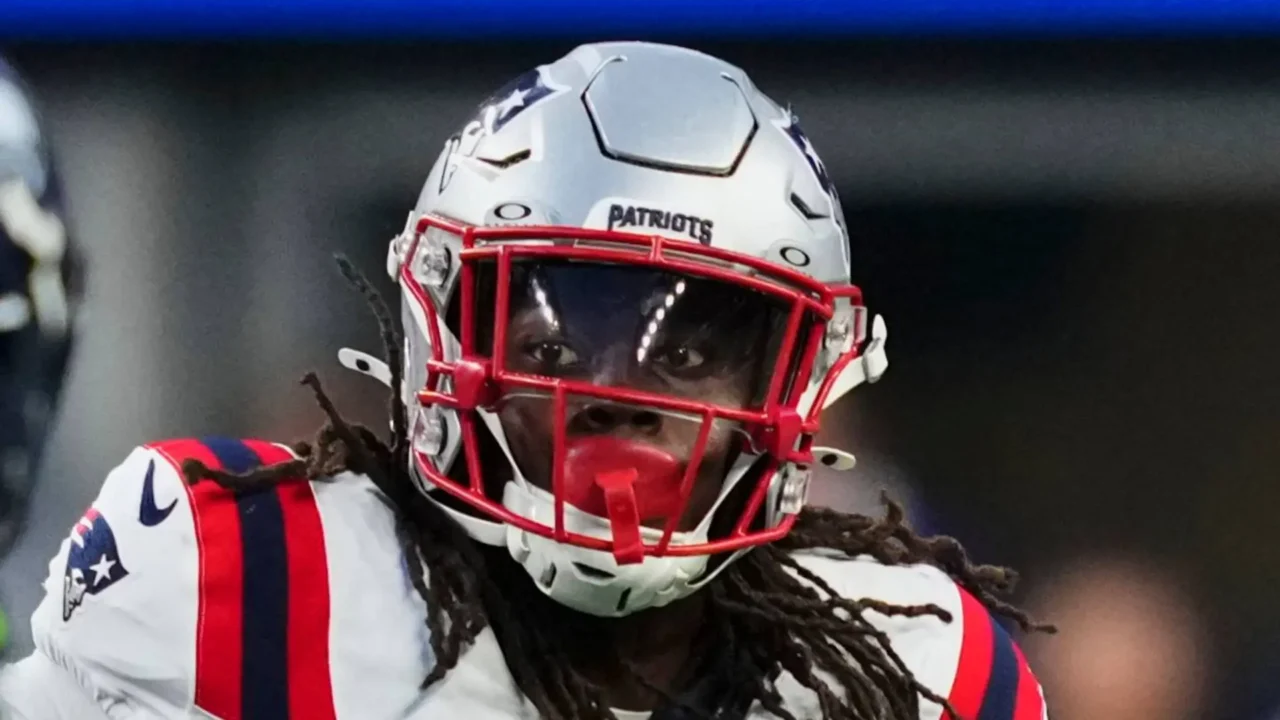
Rhamondre Stevenson powered the New England ground game in the Patriots’ 13-10 loss to the Seattle Seahawks, finishing with 95 scrimmage yards on 23 touches while logging roughly an 85 percent snap share. The defeat included a difficult night for quarterback Drake Maye, who threw three interceptions in the season opener, according to reporting from Musket Fire (Lior Lampert).
The box score only tells part of the story: Stevenson had 51 rushing yards on 18 carries with 50 of those yards coming after contact and led the team with five receptions for 44 receiving yards. Those raw totals framed how New England tried to navigate a game with limited passing effectiveness and injuries to key pass-catchers.
By the numbers: Stevenson’s usage and impact
The Patriots leaned on Stevenson in multiple phases — as a rusher, as a pass-catcher and as the workhorse responsible for sustaining drives when the passing game stalled.
Why Rhamondre Stevenson carried New England’s offense
The Patriots’ offensive game plan tilted toward steady production on the ground once the passing game faltered. With Drake Maye throwing three interceptions and receiving personnel affected by injuries, Stevenson became the central option to maintain possession and generate movement against Seattle’s front.
Stevenson’s receiving role — five catches for 44 yards — helped mask the team’s limited downfield passing success. He provided a safety valve in short-area passing concepts and converted third downs that the passing game could not consistently reach, which is why his involvement felt heavier than his final yardage total alone suggests.
Advanced metrics and what they show
Advanced tracking and grading give a clearer measure of what Stevenson accomplished beyond the box score. Per Next Gen Stats, Stevenson hit a top speed of 18.96 mph on one attempt, edging Seahawks rookie Jadarian Price’s 18.57 mph burst. That counters a quick narrative about limited acceleration and shows a burst capability in tracking data.
Pro Football Focus’ premium metrics (PFF) were also cited in the source to contextualize efficiency and grading against the Seahawks’ defense. Those evaluations suggested Stevenson produced meaningful after-contact yardage and pass-game value on a night when the rest of the offense struggled to create explosive plays.
Health and roster context (injuries and backs to watch)
New England’s pass-catcher availability shaped the decision to ride the run game. Veteran tight end Hunter Henry was checked for a concussion at the start of the second half, and star wideout A.J. Brown suffered an ankle injury and did not return. Those absences reduced the ceiling of the passing game and increased reliance on Stevenson.
Rookie TreVeyon Henderson missed Week 1 with an ankle issue and remains a question mark; for more on his status and profile see the henderson new england patriots piece. Until Henderson is clearly available and fully acclimated to the regular-season workload, Stevenson’s role as the primary back projects to remain significant in the short term.
Run blocking, line play and limiting factors
The Patriots’ revamped offensive line performed better than many expected in pass protection, allowing New England to avoid a full collapse while Maye struggled. However, run-blocking continuity remained an issue against Seattle, forcing Stevenson to earn most yards after contact rather than benefiting from large initial creases.
That combination — improved pass protection but lagging run lanes — helps explain Stevenson’s numbers: volume and contact-heavy gains rather than long, clean touchdown runs. It also points to where incremental offensive gains could come once run schemes and blocking techniques sync up more consistently.
What this means for the Patriots’ backfield short-term
Framed cautiously, the Week 1 usage pattern suggests that Rhamondre Stevenson will continue to be New England’s primary ball carrier while availability questions persist around depth options. His multi-phase involvement (rushing and receiving) offers a reliable baseline of production if the Patriots prioritize ball control in upcoming games.
That said, this is a snapshot rather than a projection set in stone. Henderson’s health, rep parity from practice, and evolving game plans all inject uncertainty. Any shift toward a more split backfield would likely hinge on practice reports and clearer evidence that a different allocation generates more consistent offensive efficiency.
Key takeaways
- Stevenson provided the bulk of New England’s offensive production in a 13-10 loss, finishing with 95 scrimmage yards on 23 touches.
- Advanced data from Next Gen Stats and PFF suggest he offered measurable burst and after-contact effectiveness despite uneven run blocking.
- Short-term roster dynamics favor Stevenson as the starter while TreVeyon Henderson’s availability remains unclear.
Sources and methodology
This analysis is based on the Musket Fire game report by Lior Lampert, which supplied the game totals and context, with advanced metrics attributed to Next Gen Stats and Pro Football Focus premium data where noted. Interpretations here aim to distinguish observed data from opinion and to present roster implications cautiously rather than as predetermined outcomes.
Source: Lior Lampert, Musket Fire — Patriots needed Rhamondre Stevenson more than his critics realized.