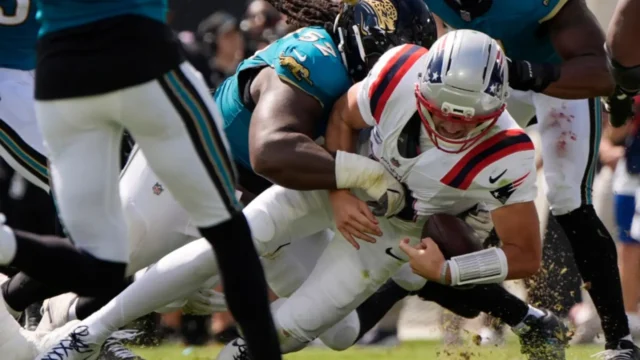
Rhamondre Stevenson breakout fuels Patriots
Rhamondre Stevenson breakout fuels Patriots as a seismic shift that propelled New England’s playoff push. His role changed dramatically after the bye, when coaches leaned on him as a primary explosive back. Before the bye he had 101 carries for 324 yards and three touchdowns at 3.2 yards per carry. Post-bye he posted 29 carries for 279 yards and four touchdowns, averaging a career-best 9.6 yards per carry.
Because team playcalling leaned into his explosiveness, 22 percent of his post-bye carries produced 46 percent of his rushing yards. Moreover, he delivered high-impact games, including nine touches for 153 yards and three scores against the Dolphins. His 35-yard touchdown and 104 yards after contact showed physicality and breakaway speed. As a result, New England averaged 34.8 points per game after his role change. In the playoffs the offense kept humming, scoring 30.3 points per game across three contests.
These numbers show why Stevenson’s burst transformed the Patriots ground attack and their postseason trajectory. For analysts and fans, this breakout matters because it altered matchups and playcall balance.

Rhamondre Stevenson breakout fuels Patriots: why the numbers matter
New England’s offense found a new gear because Rhamondre Stevenson emerged as a true playmaker. After the bye his role shifted toward burst and contact balance. As a result he averaged a staggering 9.6 yards per carry on 29 attempts for 279 yards and four touchdowns. Those numbers show more than efficiency. They show a back capable of changing drives with a single touch. Meanwhile the team’s offense surged, averaging 34.8 points per game after the role change. Therefore opponents had to respect the run, which opened passing lanes and helped the offense overall.
Key statistical takeaways
- Post-bye efficiency: 29 carries, 279 yards, four rushing touchdowns, and 9.6 yards per carry. These plays tilted field position quickly.
- High impact share: 22 percent of post-bye carries produced about 46 percent of his rushing yards. In short, a small share of carries created huge output.
- Touchdown concentration: those limited carries accounted for 57 percent of his post-bye rushing scores. Consequently the team finished with nine rushing touchdowns across three playoff games.
- Run game context: New England ranked sixth in rushing yards per game, which helped sustain drives and score more often. Additionally the Patriots did not have a 100-yard rusher until Week 10, making Stevenson’s later surge more pivotal.
How this translated to team gains
Stevenson’s explosiveness forced defenses to honor the run. Therefore play-action and play design became more effective. The offense generated better down-and-distance scenarios, which improved third down conversions. Because defenders keyed on big runs, passing targets like Jaxon Smith-Njigba and others found easier windows. In the playoffs the offense still averaged 30.3 points per game, which shows lasting impact. For readers who want context on how other contributors helped the push, see this team piece on Drake Maye’s turnaround.
Links for deeper stat context
| Period | Carries | Yards | YPC | Touchdowns |
|---|---|---|---|---|
| Pre-bye | 101 | 324 | 3.2 | 3 |
| Post-bye | 29 | 279 | 9.6 | 4 |
| Season total | 130 | 603 | 4.6 | 7 |
Rhamondre Stevenson breakout fuels Patriots: playoff impact and scoring influence
Stevenson showed up when it mattered most. In the three playoff games New England averaged 30.3 points per game. Running backs combined for nine rushing touchdowns and a 4.5 yards per carry average. Because Stevenson delivered several long explosive runs, defenses could not sell out to stop the pass. Therefore the offense sustained drives and finished in the end zone more often.
Key playoff highlights
- Team scoring surge: 30.3 points per game across three postseason contests.
- Rushing touchdown load: 9 TDs in three playoff games from running backs.
- Running back efficiency: 4.5 yards per carry for the backfield unit.
- Stevenson big plays: multiple long scores, including a 35 yard TD run and other breakaway bursts.
- Physicality after contact: Stevenson produced substantial yards after contact in key games, showing patience and power.
Why this validates the breakout
Stevenson’s long runs opened the field. As a result play action became more dangerous and the passing game benefited. The 9 TDs in three playoff games show the unit finished drives consistently. Moreover the 4.5 yards per carry by running backs proved the ground game stayed efficient under postseason pressure. Because Stevenson produced big plays, opponents had to respect him on every snap. This forced second level defenders into conflict, which freed receivers for easier completions. In short his postseason output reinforced that the role change after the bye converted from a promising wrinkle into a reliable weapon for New England.
Conclusion: Rhamondre Stevenson breakout fuels Patriots
Rhamondre Stevenson breakout fuels Patriots and it changed New England’s offensive outlook. After the bye his 9.6 yards per carry and 29 carries for 279 yards with four touchdowns showed efficiency and explosiveness. Because 22 percent of those carries produced nearly half of his rushing yardage, his role became a high-value lever for the offense. As a result the team averaged 34.8 points per game after the role change and 30.3 points per game in three playoff contests.
Looking ahead the Patriots can build around Stevenson’s burst and downhill power. Moreover his long scores, including a 35-yard TD run, forced defenses to respect the run. Therefore play-action windows widened, and the passing game benefited. With New England finishing sixth in rushing yards per game, the backfield became a core weapon by Week 10 and into the playoffs. The 9 TDs in three playoff games underscore that postseason value.
For ongoing coverage and analysis follow Patriots Report LLC at Patriots Report LLC and on Twitter @ZachGatsby. In short Stevenson’s breakout matters now and it should matter even more next season. Expect his evolving role to keep influencing the Patriots’ playoff potential.
Frequently Asked Questions (FAQs)
How did Rhamondre Stevenson breakout fuels Patriots change New England’s offense?
Stevenson’s role shift after the bye produced explosive efficiency. Post-bye he had 29 carries for 279 yards and four touchdowns. That equals 9.6 yards per carry. Because 22 percent of those carries made up about 46 percent of his rushing yards, his carries created outsized value. As a result the Patriots averaged 34.8 points per game after the role change.
What specific stats show the Rhamondre Stevenson breakout fuels Patriots narrative?
The key numbers are clear. Pre-bye he had 101 carries for 324 yards and three touchdowns at 3.2 YPC. Post-bye he registered 29 carries for 279 yards and four touchdowns at 9.6 YPC. Moreover he produced long touchdown runs, including a 35-yard TD.
How did Stevenson’s playoff performance prove the breakout fuels Patriots?
In the three playoff games New England averaged 30.3 points per game. Running backs scored nine rushing touchdowns and averaged 4.5 yards per carry. Stevenson’s long bursts and yards after contact helped sustain drives. Therefore his postseason play validated the role change.
How does Rhamondre Stevenson compare with TreVeyon Henderson during this stretch?
Henderson finished with over 1,100 all-purpose yards and ten total touchdowns. Henderson averaged 5.1 yards per carry, which ranks near the top. However Stevenson provided big play explosiveness in limited snaps. In short the pairing improved balance and matchup problems for opponents.
What does the Rhamondre Stevenson breakout fuels Patriots mean for the team’s playoff future?
It gives New England a dynamic short and long term weapon. With the offense sixth in rushing yards per game by season end, the Patriots gained a reliable rushing threat by Week 10. Therefore Stevenson’s evolving role should boost the team’s playoff potential.