
Why Patriots offseason strategy: trading picks vs drafting talent?

Patriots offseason strategy: trading picks vs drafting talent
Patriots offseason strategy: trading picks vs drafting talent frames a crucial choice for New England this spring. The Patriots hold a deep cache of selections. Rumors swirl about shipping high picks for stars like Maxx Crosby. Head coach Mike Vrabel faces a classic dilemma. The team could either accumulate young starters in the draft or buy a proven edge rusher now. That choice matters because the pass rush needs help.
On one hand, draft capital buys volume and upside. This matters especially given the Patriots’ projected late first round slot. On the other hand, trading a first round pick or two could secure an NFL ready pass rusher. That move might fix a defense that finished 22nd in sacks.
Moreover, the roster already has emerging pieces such as Elijah Ponder, Zak Kuhr, and K’Lavon Chaisson. Therefore, each path carries distinct risk and reward because contracts, age, and injury histories matter. This introduction sets a practical hook. Will New England prioritize depth and development, or gamble draft equity for immediate impact? As a result, the coming weeks will reveal whether the Patriots bet on drafts, trades, or a hybrid approach.
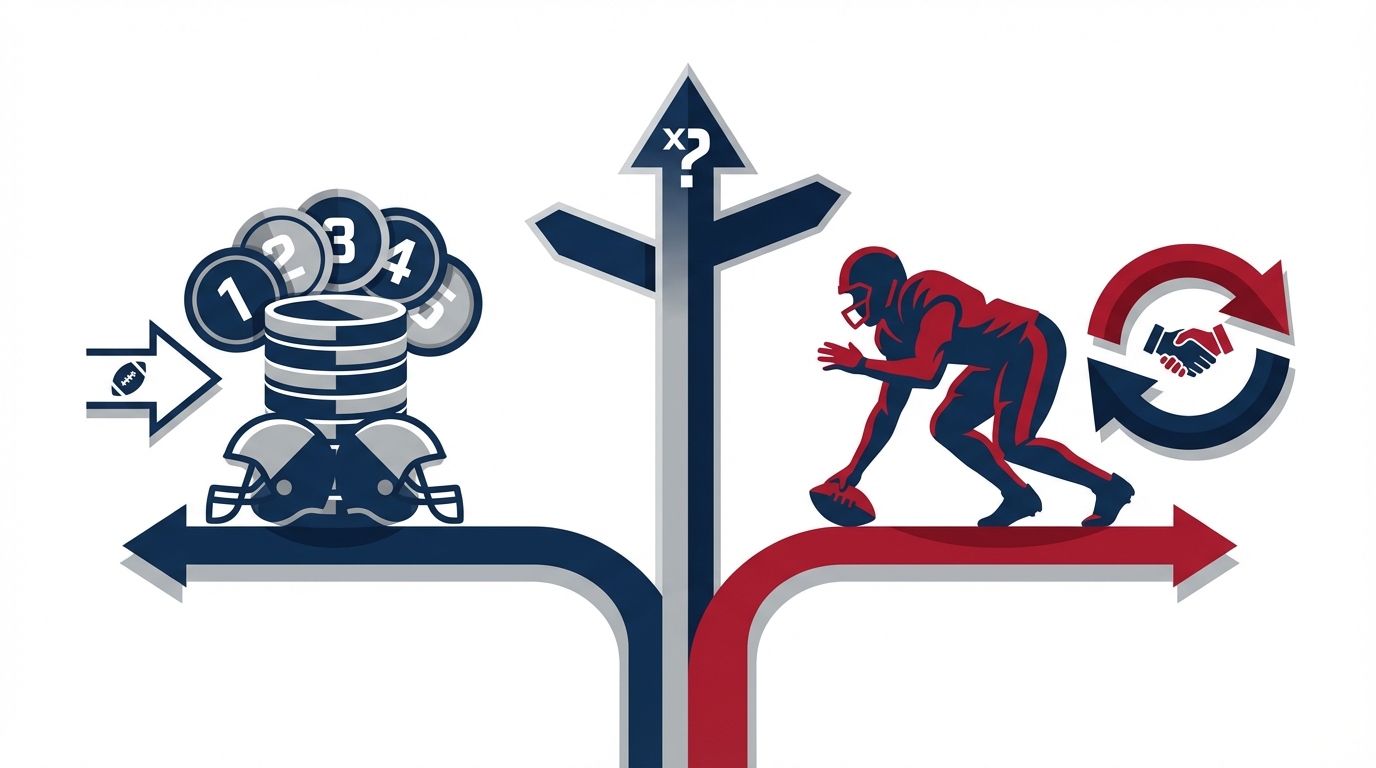
Patriots offseason strategy: trading picks vs drafting talent
Patriots offseason strategy: trading picks vs drafting talent forces a clear-eyed evaluation. Mike Vrabel holds 11 draft picks. Therefore, he can stockpile young players or use that capital to chase a proven star. Albert Breer warned that the safer path usually wins. He argued, “I still think the roster is a little ways away and you’re gonna need these picks… I think the way you get better is you get a lot of hacks at it in the draft.” As a result, Breer favors volume and development over mortgaging the future.
On the other hand, trading for a player like Maxx Crosby would bring immediate upside. Crosby is 28 years old and is already a high-level edge rusher. However, that kind of move likely costs a first round pick or two. Moreover, a big trade reduces flexibility. The Patriots finished 22nd in sacks, so they clearly need edge help. Yet the roster has promising pieces. K’Lavon Chaisson is 26 and flashed pass rush upside with 7.5 sacks and key playoff performances. Similarly, Elijah Ponder and Zak Kuhr offer emerging depth up front. Consequently, Vrabel must weigh current need against future depth.
Key insights for each approach
- Trading for an established veteran
- Pros: instant upgrade at a single position, veteran leadership, tackles immediate roster holes.
- Cons: costs high draft capital, may shorten long term flexibility, risks aging or injured players.
- Context: a trade for Crosby could require a first round pick and more, so value matters.
- Drafting and developing talent
- Pros: creates depth across the roster, lower cost, greater upside per pick.
- Cons: many picks fail to stick, rookie impact can be limited early.
- Context: Vrabel has 11 picks and likely late first round slots. Thus, volume can rebuild multiple positions.
Ultimately, the right choice may be hybrid. In fact, as another analyst noted, “Football fans can argue which strategy or combination of strategies makes the most sense. The answer is, all of them.” Therefore, Vrabel can keep most picks while selectively trading to fill an urgent gap. That balance preserves draft upside while targeting immediate improvements at edge and offensive line. In short, New England must decide whether to prioritize depth, immediate talent, or both.
| Approach | Benefits | Risks | Key data and examples |
|---|---|---|---|
| Trading picks for a veteran |
|
|
|
| Drafting and developing talent |
|
|
|
Patriots offseason strategy: trading picks vs drafting talent
The Patriots enter the offseason with a roster in transition and a full set of picks. Mike Vrabel holds 11 draft selections, giving New England flexibility. However, the club also faces pressure to add pass rush help quickly. Harold Landry III suffered a knee injury and is unlikely to return. This development makes edge depth an urgent need.
Current roster and projected picks
- Mason Thomas (projected at 31st overall). He has 15.5 sacks across two seasons and 6.5 in 2025. Thomas posted a 20.3 percent pressure rate on 191 pass rush snaps. However, he missed time with a quad injury, so durability matters.
- Josiah Trotter (strong run defender with 84 tackles and an 89.2 PFF run defense grade). Trotter can help shore up the second level immediately.
- Elijah Ponder and Zak Kuhr (emerging front line pieces who offer depth). They give the Patriots internal options while rookies develop.
- K’Lavon Chaisson (age 26 with 7.5 sacks and an 11.5 percent pass rush win rate). He also had three playoff sacks. As a result, he represents a cheaper alternative to buying edge help.
Implications for 2026
Trading a first round pick for a player like Maxx Crosby could solve the pass rush need now. Crosby is 28 and would bring immediate production. However, that swap would likely cost multiple first round picks and reduce long-term flexibility. Conversely, using the 31st pick on Thomas and keeping multiple selections spreads risk. Rookies cost less against the salary cap, and they can provide depth. Albert Breer summed up the case for volume, saying, “I still think the roster is a little ways away and you’re gonna need these picks.” Consequently, Vrabel can choose to protect most picks while targeting one urgent upgrade. That hybrid approach keeps options open for a 2026 Super Bowl run.
Conclusion
The Patriots offseason decision between trading picks and drafting talent will shape their near future. Choosing one path over the other affects depth, salary flexibility, and win-now potential. Because Mike Vrabel holds 11 draft picks, he can either stockpile young talent or trade for a ready-made star. Either path carries clear trade offs.
If New England trades first rounders for a veteran edge, it gains immediate production. However, that move can cost one or two high picks and reduce roster flexibility. On the other hand, drafting and developing players preserves resources and builds long term depth. Moreover, rookies like Mason Thomas, Josiah Trotter, and Elijah Ponder offer upside that can compound across seasons. Yet, the Harold Landry injury increases pressure to add pass rush help now.
In the end, a balanced approach looks smartest. Therefore, protect most draft capital while selectively pursuing urgent upgrades. Patriots Report LLC will track these moves closely. For ongoing coverage visit Patriots Report and follow @ZachGatsby on Twitter. With careful choices, Vrabel can blend immediate fixes and sustainable growth. As a result, Patriot Nation should remain cautiously optimistic.
FAQs: Patriots offseason strategy: trading picks vs drafting talent
Should the Patriots trade picks for a player like Maxx Crosby?
They can, but the cost is high. Crosby is 28 and elite. Trading likely requires one or two first round picks. That move buys immediate pass rush production. However, it also reduces future flexibility and cap options. The Patriots finished 22nd in sacks, so the upgrade matters.
Why might keeping draft picks be the smarter path?
Volume creates options and depth. Mike Vrabel has 11 draft picks to work with. Rookies come cheap under the salary cap and can fill many needs. Moreover, Albert Breer argues that drafting multiple players yields more long term wins. On the other hand, many picks fail. Therefore teams must balance quantity and quality.
How does Harold Landry’s injury affect priorities?
Landry’s knee issue raises urgency for edge help. As a result, decision makers face pressure to act now. Yet trading away picks for a veteran still carries risk. Consequently, a hybrid approach can address short term gaps while preserving core draft capital.
What is Mike Vrabel likely to do this offseason?
Vrabel values flexibility and smart moves. He proved he makes timely decisions last season. Thus, he may protect most picks while selectively trading for urgent upgrades. That choice blends immediate impact with sustainable growth.
Can drafted players help immediately in 2026?
Some can, but it is uncertain. Mason Thomas posted 15.5 sacks across two seasons. Josiah Trotter offers high run defense grades. Still, rookies often need time to adapt. Therefore drafting could produce short term boosts and long term depth, but it rarely guarantees instant superstar results.