
Can Patriots offseason moves and first-round pick value deliver?
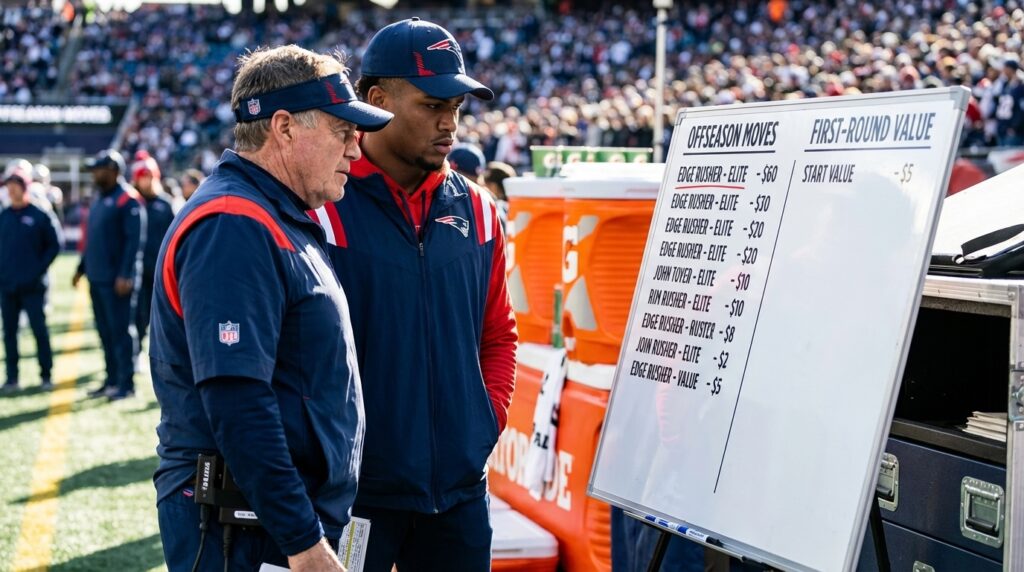
Patriots offseason moves and first-round pick value: Did New England get better?
Patriots offseason moves and first-round pick value take center stage as fans and analysts debate whether New England improved. Have signings like Dre’Mont Jones and potential draft choices truly upgraded the roster? This piece asks the central question: are the Patriots better after recent offseason moves, including key signings and the strategic use of the No. 31 pick, because the answers matter for a team that ranked 22nd in sacks last year and needs a more reliable pass rush.
We will evaluate how interior rush additions, edge targets, and Harold Landry’s recovery could shift pressure on opposing quarterbacks. Furthermore, we will analyze the practical value of that first-round selection and whether prospects such as R Mason Thomas, Zion Young, or Gabe Jacas match scheme and length concerns. In the following sections expect a measured, analytical breakdown of signings, depth pieces like Milton Williams and Christian Barmore, contract context, and draft scenarios that could alter the Patriots’ defensive outlook for the upcoming season.
Patriots offseason moves and first-round pick value: an analytical look
The Patriots offseason moves and first-round pick value hinge on whether recent signings and the No. 31 selection move the needle. New England added Dre’Mont Jones on a $13 million per year deal. Meanwhile, K’Lavon Chaisson left for Washington on a one-year $11 million contract after a 10.5 sack season. Given last year’s 22nd ranking in sacks, these shifts matter because pressure on the quarterback defines the defense.
Impact of key signings: Dre’Mont Jones and the pass-rush math
Dre’Mont Jones brings interior power and seven sacks from last season. He can collapse pockets and free up edge rushers. However, Chaisson’s 10.5 sacks are a measurable loss. Replacing Chaisson with Jones could pay dividends, but it also comes with risk. The Patriots will still rely on in-house rushers such as Milton Williams, Christian Barmore, and Cory Durden. Therefore depth, health, and scheme will determine how much the $13 million investment improves outcomes.
Returning players and medical upside
Harold Landry underwent offseason surgery that could improve his consistency. If Landry returns closer to full strength, pressure may rise. Elijah Ponder showed a quick learning curve with four sacks as a Cal Poly rookie. As a result, internal development could supplement veteran signings. However, relying on bounce-back seasons always carries uncertainty.
No. 31 pick options and draft strategy
The first-round pick at No. 31 offers multiple paths. Oklahoma’s R Mason Thomas is a top edge prospect, though scouts cite arm-length concerns. Missouri’s Zion Young and Illinois’ Gabe Jacas fit as high-effort, developmental edge options. Texas A&M’s Cashius Howell could slip due to similar length questions. The Patriots must weigh immediate starter potential against scheme fit and upside. Furthermore, they could trade the pick if a veteran trade target like A.J. Brown surfaced, because extra draft capital can tilt the roster-building plan.
Strengths, weaknesses, and risks of the offseason strategy
Strengths
- Improved interior pass rush with Dre’Mont Jones and proven veteran experience
- Multiple in-house developmental options including Milton Williams and Christian Barmore
- Flexibility at No. 31 to draft an edge or trade for immediate upgrade
Weaknesses
- Loss of Chaisson removes a 10.5-sack producer from the roster
- Team ranked 22nd in sacks last season, so pressure shortfall persists
- Draft targets like Mason Thomas and Cashius Howell carry measurable length concerns
Risks
- Overreliance on Landry’s post-surgery recovery for consistent edge production
- Rookie edge prospects may need time to reach NFL-level impact
- Contracted veterans may not match prior sack rates, leaving gaps in Year One
Overall, the Patriots made logical moves to address interior rush. However, the full improvement depends on Landry’s health, step-forward seasons from youngsters, and the exact use of the No. 31 pick. The next sections will break down specific draft targets, scheme fit, and a final offseason grade.

Patriots offseason moves and first-round pick value comparison table
| Player | Move Type | Contract or Scouting Notes | Potential Positional Impact | Risk Factors |
|---|---|---|---|---|
| Dre’Mont Jones | Signing | $13 million per season; 7 sacks last year | Interior pass-rush anchor who collapses pockets | May draw double teams; consistency concerns |
| K’Lavon Chaisson | Loss | One-year $11 million to Washington; 10.5 sacks last season | Proven edge sack producer; created pressure off the edge | Loss of proven production; replacement needed fast |
| R Mason Thomas | Draft prospect | Top Oklahoma edge; high motor; some scouts note arm-length concerns | High-upside edge rusher if length concerns prove minor | Measurement worries could limit draft value |
| Zion Young | Draft prospect | Missouri edge; athletic and explosive from college | Developmental edge with downhill rush traits | Needs refinement against pro tackles |
| Gabe Jacas | Draft prospect | Illinois defender with LB-to-edge traits | Versatile blitzer in sub packages | Limited pass-rush polish at the next level |
| Cashius Howell | Draft prospect | Texas A&M talent; potential slip due to arm length questions | Upside as an edge if technique holds up | Drop in draft slot if measurements worry teams |
| Elijah Ponder | Internal prospect | Cal Poly rookie with four sacks in limited role | Depth edge with suddenness on passing downs | Small school competition; projection risk |
| Milton Williams | Internal depth | Proven interior rush option | Interior push against run and pass | Must stay healthy and sustain production |
| Christian Barmore | Internal depth | Young interior rusher with upside | Rotational interior starter to aid pass rush | Needs consistency and more snaps |
| Cory Durden | Internal depth | Rotational interior presence | Adds depth on early downs and stunts | Must prove sustained edge conversion ability |
The table highlights tradeoffs. New England added interior talent, but it lost Chaisson’s sack production. Therefore the No. 31 pick gains importance. Teams can draft an edge, take a high-upside developmental player, or trade the pick for immediate help. Because the Patriots ranked 22nd in sacks last year, each choice carries weight. In addition, Landry’s surgery and internal development affect the final outcome. For roster context and deeper reads, see these PatriotsReport pieces:
Strategic implications: Patriots offseason moves and first-round pick value
New England’s offseason choices shift the team’s short and medium-term outlook. Dre’Mont Jones arrives on a $13 million per year deal. K’Lavon Chaisson left on a one-year $11 million contract after a 10.5-sack season. The Patriots ranked 22nd in sacks last year, so pressure production remains the central KPI. Because edge rush and interior push both matter, the club’s strategy must balance immediate returns with long-term upside.
Pass rush capabilities: interior gains, edge questions
Dre’Mont Jones immediately improves interior pressure because he totaled seven sacks last season. In addition, Milton Williams, Christian Barmore, and Cory Durden give rotational depth. However, losing Chaisson burns 10.5 sacks from the edge, a measurable loss. Harold Landry’s offseason surgery could improve his consistency, which would matter greatly. As a result, the front seven’s success depends on health, scheme, and snap mix.
Key rewards
- Interior pocket collapse increases quarterback hurried and hit rates
- Rotational depth reduces reliance on a single edge producer
- No. 31 pick offers a chance to add a starter or trade capital
Key risks
- Replacing Chaisson with Jones could pay dividends, but it also comes with risk
- Rookies often need time to produce consistent sacks
- Measurement concerns for prospects could limit immediate impact
First-round pick value and trade flexibility
No. 31 presents three real options. The Patriots can draft an edge rusher such as R Mason Thomas, despite arm-length questions. They can choose developmental pass-rushers like Zion Young or Gabe Jacas. Alternatively, they can trade the pick for a proven weapon if a deal materializes. For instance, A.J. Brown trade talk changes the calculus because acquiring a star receiver would cost draft capital and alter defensive plans.
Defensive depth and final outlook
Elijah Ponder’s four rookie sacks show internal upside but small-school projection risk. Therefore the team must mix veteran signings and draft development. Overall, the offseason improved interior rush and added flexibility. However, edge production remains an open variable, and the No. 31 pick will likely decide whether New England truly raised its ceiling.
After reviewing signings and draft options, the offseason shows measured progress for New England. Dre’Mont Jones strengthens the interior, and his $13 million average adds immediate pass-rush heft. However, losing K’Lavon Chaisson removes a 10.5-sack player and leaves a clear edge gap. Harold Landry’s surgery could help consistency, but recovery timelines remain an uncertainty.
The No. 31 pick offers crucial flexibility to address that gap or to gain trade capital. Prospects like R Mason Thomas and Zion Young carry upside yet also measurable concerns. Therefore the Patriots’ defensive ceiling depends on draft execution, internal development, and health.
If rookies ascend quickly and veterans stay healthy, pressure production should climb from last year’s 22nd rank. In contrast, slow rookie development or underperformance would leave New England short on sacks. Overall, Patriots Report LLC views New England as better positioned, though gains remain far from guaranteed.
For ongoing analysis follow patriotsreport.com and Twitter @ZachGatsby.
Frequently Asked Questions (FAQs)
How do the Patriots’ signings change the defense?
Dre’Mont Jones, who signed for $13 million per year, improves interior pressure. However, losing K’Lavon Chaisson removes a 10.5-sack edge. Therefore the unit gains inside push but loses proven edge production.
Are the Patriots better positioned after these moves?
They are better in pieces but not definitively better overall. Interior rush improved, and rotational depth helps. But edge rush remains an open question, because the No. 31 pick and health will decide outcomes.
How valuable is the No. 31 pick?
Very valuable due to flexibility. The pick can target R Mason Thomas, Zion Young, or Gabe Jacas. However, measurement concerns for some prospects could limit immediate impact. Alternatively, the team can trade the pick for proven talent.
Can rookies and internal options produce now?
Elijah Ponder showed promise with four rookie sacks. Yet rookies often need time to adjust. As a result, internal development is helpful but not a guaranteed fix.
What are the biggest risks and rewards?
Rewards include stronger interior pressure and roster flexibility. Risks include Landry’s recovery, rookie development timelines, and losing Chaisson’s sacks. Therefore gains could materialize or fall short depending on those variables. Expect the No. 31 pick to be the pivotal decision this offseason. We will track outcomes closely in the coming months.
What is the strategic importance of the No. 31 pick for the Patriots?
The No. 31 pick offers the Patriots a chance to fill crucial gaps in their defense or trade for immediate upgrades, pivotal in elevating their edge rusher capabilities.
How does the Patriots’ defensive depth look for the upcoming season?
While the Patriots have bolstered interior rush with Dre’Mont Jones, the team’s overall edge rusher development will be crucial, relying on the growth of rookies and existing players to boost the defensive depth.