
Can Patriots offseason 2026 rebound after Waddle trade?
Patriots offseason 2026 stands as a pivotal turning point for the franchise. After a busy few weeks, fans demand clarity on roster direction. This introduction previews trades, quiet signings, and draft implications.
Chief among the moves is the Jaylen Waddle trade to Denver, which reshaped receiving depth. However, New England’s quiet signings deserve equal scrutiny because they address depth and scheme fit. We will examine cap room, dead money, and positional needs like edge rusher and right tackle. Additionally, we will evaluate WR room dynamics with Romeo Doubs, Mack Hollins, and rookie candidates.
This piece blends analytics and fan perspective to answer one question: are the Patriots better positioned for 2026? Therefore, expect clear takeaways, trade-grade analysis, and draft targets at pick #31. Ultimately, fans will get a practical road map for what to watch as the offseason unfolds. Fans will track draft capital and scheme fit closely. Read on for the full breakdown.
Waddle Trade Breakdown and What It Means for New England
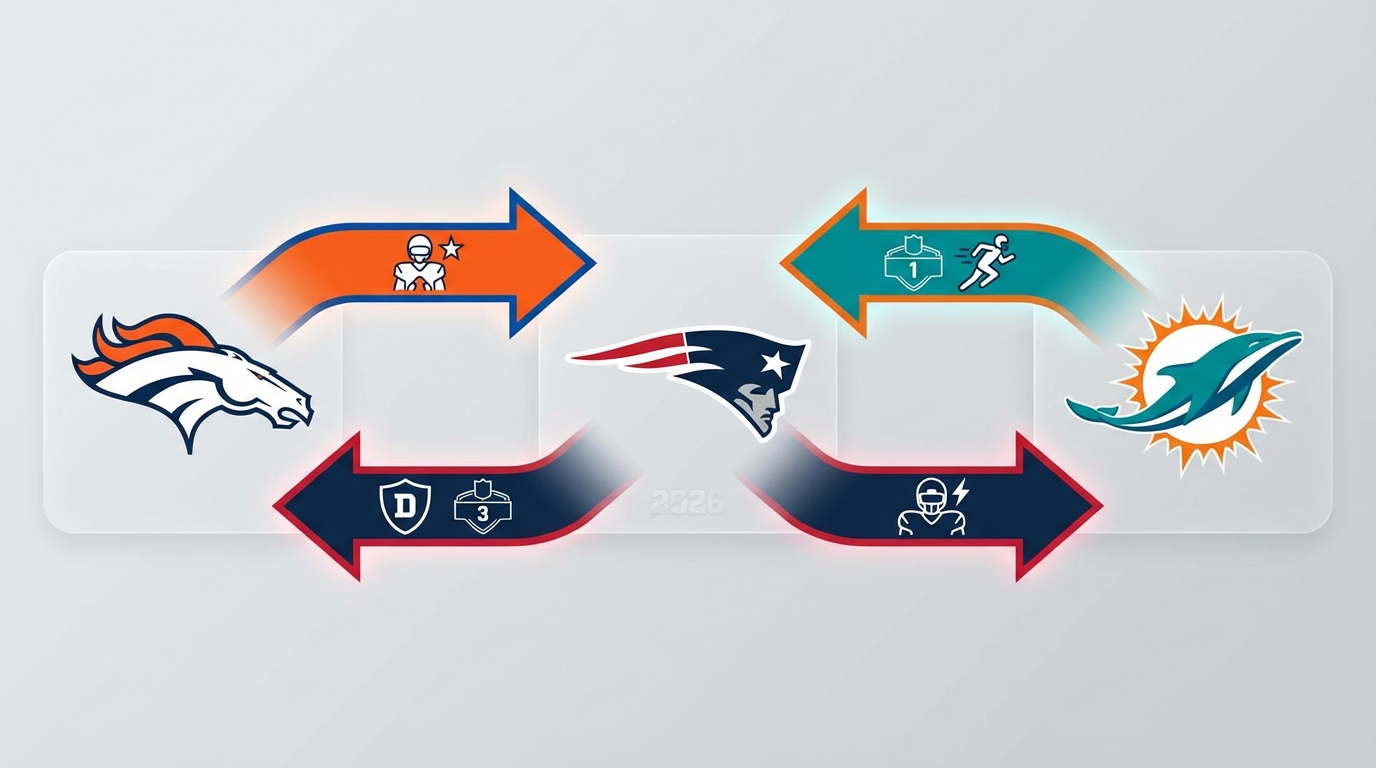
The deal sent Jaylen Waddle to the Denver Broncos. Denver gave up a first round pick #30, a third round pick #94, and a fourth round pick #130. Denver received Waddle plus Miami’s original fourth round pick #111.
Strategic Implications for the Patriots Offseason 2026
- Draft board movement: With Denver adding Waddle, the draft order and positional runs shift. Therefore, New England should expect more volatility around the top 32. Because teams with needs at wide receiver may trade up, the Patriots at #31 must be ready to pivot.
- Value of the picks: Picks #30 and #94 are high-value assets. As a result, teams that surrendered those picks paid steeply for proven speed. However, the move thins the market for elite receivers in rounds two and three.
- Fit and scheme questions: Denver’s offense struggled with three and outs in 2025, ranking near the bottom. Therefore, adding Waddle increases marginal upside more than it fixes structural problems. For New England, that signals a chance to prioritize core needs like edge rush and right tackle rather than panic at receiver.
How the Trade Ties to Patriots Roster Strategy
- Opportunity cost: Because the market paid first and mid round capital for Waddle, the Patriots can methodically target value at #31. For example, they can draft an edge rusher or tackle, or package the pick for future capital.
- Room for smart signings: New England’s recent quiet signings such as Romeo Doubs and Kindle Vildor boost depth. For context read: Romeo Doubs’ Fit in Patriots Offense and Patriots Offseason Roster Evaluation.
- Draft targets: With pick #31, look at R Mason Thomas, T.J. Parker, and Zion Young. These names match positional needs and offer upside without overspending.
Voices from Around the League and Locker Room
Mike Vrabel captured the offseason ethos when he said, “Somebody asked me what success looks like, and I said, ‘Yeah, you can judge it by wins and losses during the season, but success for me in the offseason is going to be that the players believe in what we’re doing, and they believe in the message, they believe in the teaching, and they believe in the connections that we’re making.’”
As reported by Adam Schefter, the trade materially reshaped the top half of the board and will affect teams jockeying for receivers and pass rushers.
Quick Takeaways
- The Waddle trade raises the price for proven receivers.
- Therefore, the Patriots should use pick #31 to address big needs, not chase one splashy receiver.
- Finally, the move validates a balanced approach of drafting and targeted veteran signings because cap and depth matter. See further context on AFC Rankings Post Free Agency.
| Roster need | Recent signing or roster option | Position | Contract details | Potential impact |
|---|---|---|---|---|
| Edge rusher | No major veteran signing. Draft priority: R Mason Thomas or other edge prospects | Edge rusher | N/A | Adds pass rush and depth. Therefore improves third down pressure and frees up interior linemen. |
| Wide receiver or tight end | Romeo Doubs; Mack Hollins; Kayshon Boutte; Kyle Williams; Pop Douglas; Efton Chism | WR TE | Romeo Doubs signed, terms not publicly disclosed. Others are retained depth pieces | Doubs provides veteran catch radius. Additionally, Boutte and Williams supply youth and upside. As a result, the room is deeper after Waddle trade. |
| Right tackle | Target: T.J. Parker or draft a tackle | Tackle | N/A | Addresses long term blind side needs. Therefore helps run game and pass protection. |
| Linebacker | No headline signing; room to add via draft or free agency | LB | N/A | Improves tackling and coverage on second level. Also can bolster special teams. |
| Third down running back | No signing yet; need remains | RB | N/A | Provides pass protection on third down and reliable receiving out of the backfield. |
| Safety | Kindle Vildor | S | One year contract signed March 19 2026 | Adds veteran depth in the secondary and immediate competition for starting snaps. |
Draft targets the Patriots may consider at pick #31
With the Patriots at #31, the front office faces clear choices. They can draft an edge rusher, reinforce the offensive line, or add a weapon. Each pick profile below ties to Patriots offseason 2026 needs and scheme fit.
Mason Thomas — edge rusher prospect
- Profile: Explosive college pass rusher with length and closing speed.
- 2025 stats: Double-digit pressures per game and high sack rate.
- Fit: Addresses edge rusher need and third down pass rush immediately.
- Upside: The ceiling is tantalizing: a dynamic edge rusher who wrecks game plans on passing downs.
- Risk: Needs functional strength to stay on field for all downs.
T.J. Parker — tackle prospect
- Profile: Power blocker with good anchor and quick feet for pass sets.
- 2025 stats: Fewest allowed pressures among starters at his school.
- Fit: Solves right tackle of the future and improves run lanes.
- Upside: Provides immediate split duty while developing into a full time starter.
- Risk: Limited experience in elite schematic matchups.
Zion Young — versatile offensive weapon
- Profile: YAC machine with contested catch ability and stackable snaps.
- 2025 stats: High yards after catch and target share in college offense.
- Fit: Fills wide receiver (WR) / tight end (TE) needs in short areas.
- Upside: Helps third down production and slot creation.
- Risk: Must refine route tree at pro level.
Quick synthesis
Therefore, drafting for positional value makes sense after Waddle trade.
As Mike Vrabel said, offseason success depends on belief in the plan.
Finally, the Patriots should weigh immediate need against long term upside.
Conclusion
The Patriots offseason 2026 reshaped team direction through a mix of trades, quiet signings, and draft leverage. Waddle’s trade delivered notable draft capital, while signings such as Romeo Doubs and Kindle Vildor added depth. The Patriots still need an edge rusher, a right tackle, and a third-down back. Therefore, the front office must balance immediate upgrades with long-term upside. As a result, pick #31 offers flexibility to take a high-upside edge, a developmental tackle, or a versatile weapon.
Fans should feel cautiously optimistic. The roster now blends veteran presence and youth. Therefore, the focus should be on scheme fit, cap management, and late-round value. Additionally, the Patriots’ approach shows a clear plan instead of reactionary splurges. Finally, wins come in October, not March, but smart offseasons set the table.
For ongoing analysis rely on Patriots Report LLC. Visit patriotsreport.com for deep dives and follow @ZachGatsby on Twitter for quick updates and commentary.
Frequently Asked Questions (FAQs)
What did the Jaylen Waddle trade change for the Patriots and the draft?
The Waddle trade sent Jaylen Waddle to the Denver Broncos and reshaped the board. Denver surrendered picks #30, #94, and #130 in the deal. As a result, the market for proven receivers rose. Therefore, New England can use pick #31 to address core needs rather than chase a high-priced receiver.
Are recent signings enough to fill roster gaps?
The Patriots added Romeo Doubs and signed Kindle Vildor to a one-year deal. They also have Mack Hollins, Kayshon Boutte, Pop Douglas, Efton Chism, and Kyle Williams. However, depth improved but needs remain at edge rusher, right tackle, and third-down back.
What should Patriots at #31 prioritize in the draft?
The choice is clear: draft value or positional help. Targets include Mason Thomas (edge rusher), T.J. Parker (tackle), and Zion Young (versatile weapon). Each fits a defined need and offers upside.
How does cap and dead money affect moves?
Cap management limits splashy signings. Therefore the front office must balance veterans and draft assets. As a result, smart one-year deals and draft investments make sense.
How optimistic should fans be about Patriots offseason 2026?
Be cautiously optimistic. The team added depth and draft capital. Additionally, a clear plan and targeted signings suggest progress. Fans should watch scheme fit and the draft.