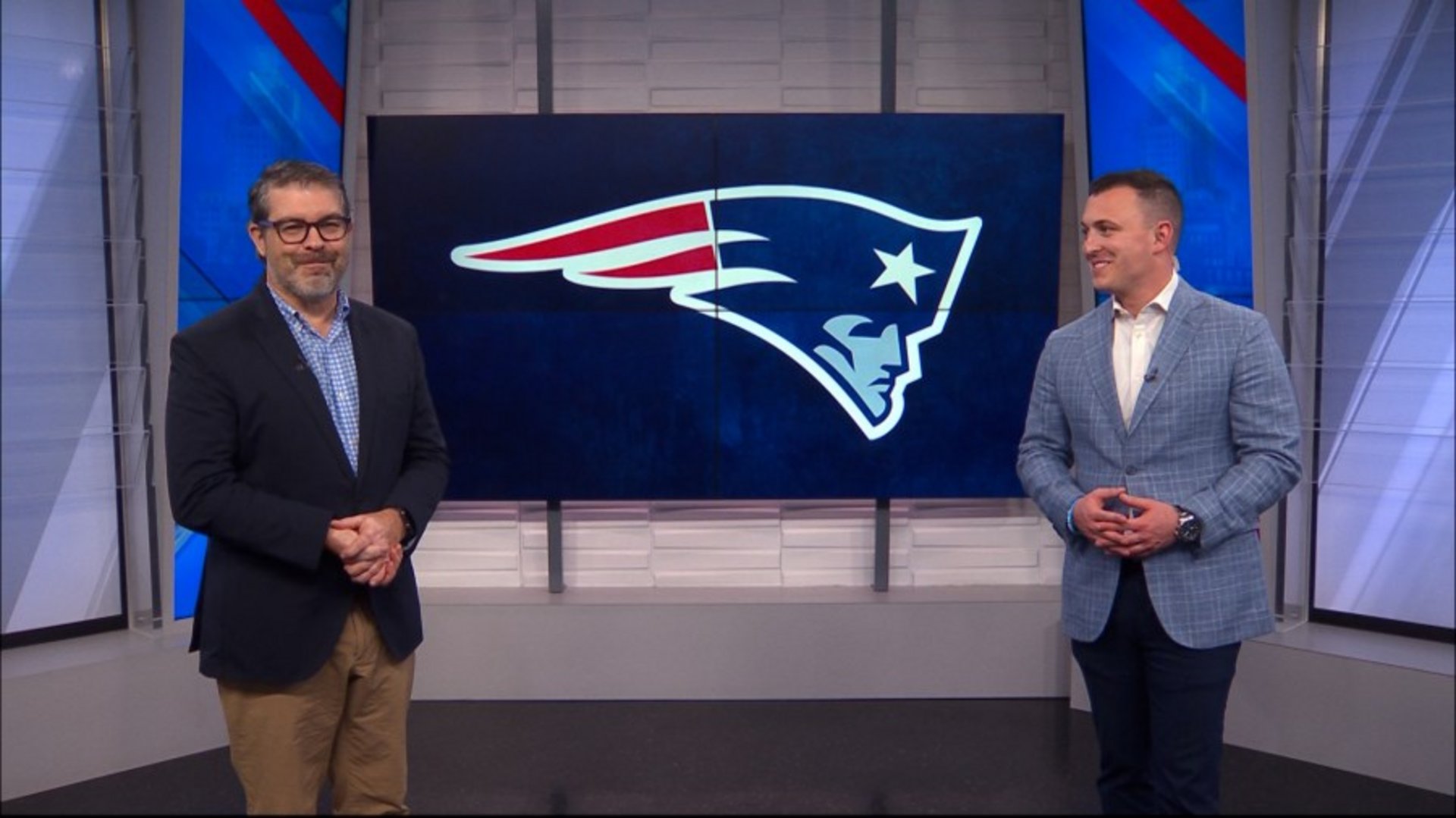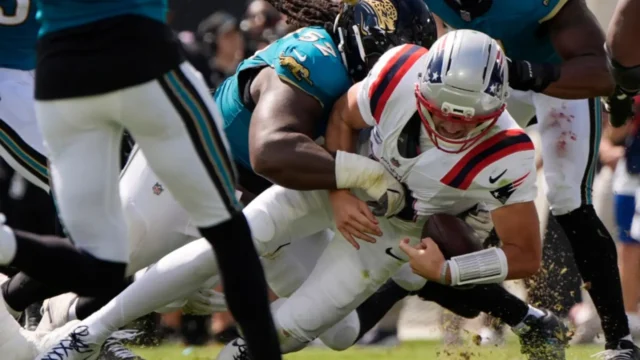
Patriots offensive line stabilization with Thayer Munford arrived unexpectedly this season. An unlikely veteran has become the glue on New England’s front. Because he shifted into tight end and fullback roles, he changed the team. Over recent weeks, Munford’s presence has improved the Patriots’ rushing attack.
New England finished the season as the sixth ranked rushing offense. However, the spike came when the Patriots added a bigger sixth offensive lineman. In games using Munford or Khyiris Tonga as an extra blocker, the team averaged 162.2 rushing yards. Without that extra blocker, they averaged just 115 rushing yards.
Munford logged snaps as TE or FB and as an extra blocker. As a result, the Patriots found better lanes for Rhamondre Stevenson and TreVeyon Henderson. He cleared defenders more often, so running backs finished more plays. Therefore, Munford went from depth piece to mainstay in short order. This analysis explores how that conversion reshaped New England’s run game. Expect him to figure in game plans going forward.
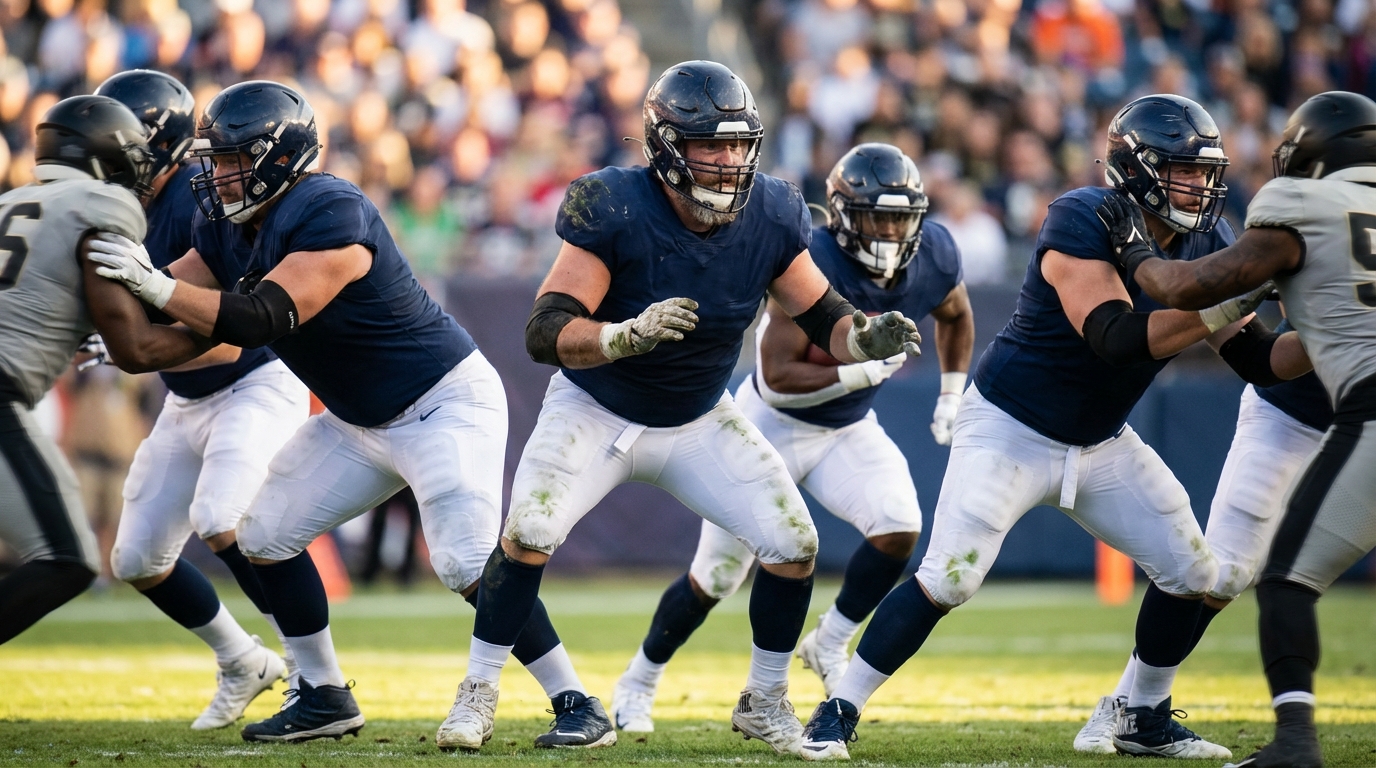
Patriots offensive line stabilization with Thayer Munford
Thayer Munford’s role change created measurable stability up front. Because the Patriots deployed him as a sixth offensive lineman and as a blocking tight end or fullback, New England found heavier personnel in key run-game situations. The shift removed mismatches and delivered more consistent push at the point of attack.
Munford started as depth, but he now projects as a regular offensive piece. Over the last three weeks, he took 42 snaps as an extra blocker and 57 snaps lined up as TE or FB. As a result, he helped open larger lanes for Rhamondre Stevenson and TreVeyon Henderson. Therefore, coaches leaned on the bigger package in short yardage and early downs.
Statistical snapshot
- Patriots finished the season sixth in rushing offense overall.
- In games where Khyiris Tonga or Munford served as an extra blocker for at least eight snaps, New England averaged 162.2 rushing yards per game.
- Without that extra blocker, the team averaged 115 rushing yards per game.
- The Patriots scored 12 rushing touchdowns across five games when an extra blocker was used.
- Over the last three games, New England averaged 159 rushing yards per game and 36 points per game.
These numbers show clear correlation between personnel and output. However, correlation does not always equal causation. Yet the repetition of the effect across multiple games strengthens the argument that Munford’s presence matters.
Extra blocker, rushing yards, and the run game impact
Adding Munford as an extra blocker improved tempo and leverage in the run game. For example, the Patriots found creases more often on inside zone and power runs. As a result, ball carriers hit space quicker and gained positive yards more consistently. This change amplified both efficiency and scoring opportunities.
Coaches used Munford to counter heavy fronts and big defensive tackles. When opponents stacked the box, New England responded with a bigger footprint. Consequently, Stevenson and Henderson benefited. Rhamondre Stevenson produced more consistent yards after contact. TreVeyon Henderson saw clearer seams on outside zone plays. Those outcomes align with film study and public analytics.
Context and sources
- Pro Football Focus tracked personnel and grading that reflect New England’s emphasis on heavier packages. Therefore, analysts pointed to improved blocking and reduced defensive penetration.
- Minute Media coverage highlighted Munford’s snap distribution and the coaching staff’s willingness to repurpose offensive linemen for blocking tight end and fullback roles. As a result, writers noted the tangible uptick in running efficiency.
Practical effects for playcalling
Because Munford stabilized blocking on early downs, the Patriots could be more aggressive in play design. They mixed inside power with outside zone and pulled linemen more frequently. Consequently, New England converted more short-yardage situations and sustained longer drives. Coaches rewarded the line by dialing increased run calls when the extra blocker stayed on the field.
In short, Munford’s addition as a sixth lineman and extra blocker altered both scheme and results. The numbers and tape agree that the Patriots’ run game improved. Therefore, Munford’s role deserves credit for New England’s recent rushing success.
| Metric | With Munford or Tonga as extra blocker (>=8 snaps) | Without Munford or Tonga as extra blocker |
|---|---|---|
| Rushing yards per game | 162.2 | 115 |
| Average points scored per game | 36 (last three games with heavier personnel) | Not specified in available data |
| Rushing touchdowns | 12 total in five games (2.4 per game) | Not specified in available data |
Table uses metrics cited earlier in this article: games with an extra blocker averaged 162.2 rushing yards and produced 12 rushing touchdowns in five games; baseline rushing average without the extra blocker was 115 yards.
Thayer Munford Jr. role and usage in the Patriots offense
Thayer Munford Jr. has become a flexible piece in New England’s offense. Coaches use him at TE and FB to supply extra mass. Because of that role change, he often functions as the sixth offensive lineman. His presence gives the line a veteran anchor.
This season Munford played 100 offensive snaps. Of those, 57 came lined up as TE or FB. Over the last three weeks he logged 42 snaps as an extra blocker. Therefore his usage pattern skews toward heavier personnel packages.
Munford’s years in the league improved his technique and communication. He sets angles and mirrors defensive movement effectively. As a result, interior gaps hold longer and linemen sustain blocks. Rhamondre Stevenson and TreVeyon Henderson benefited routinely.
Playing TE and FB allowed schematic flexibility. Coaches can run inside power or outside zone without substituting. Consequently, the offense keeps defenses guessing and gains leverage in short yardage. The added blocker helped produce more rushing yards and touchdowns in key games.
Film shows Munford sealing defensive tackles on reach blocks. Because the Patriots could deploy him on early downs, they called more runs. This sixth offensive lineman role reduced penetration on blitzes and delayed linebackers. Therefore Munford’s versatility improved overall run game effectiveness and playcalling reliability.
The role became necessary because Jack Westover did not produce offense. Westover logged one catch for no gain. Khyiris Tonga had filled the nose tackle extra blocker role earlier. However Tonga missed time, and Munford filled the gap.
Munford’s adaptability gave the Patriots continuity in heavier packages. Coaches avoided costly substitutions between plays. As a result, the offense sustained drives and converted short yardage. That reliability translated to 12 rushing touchdowns in five games with an extra blocker.
CONCLUSION
Patriots offensive line stabilization with Thayer Munford delivered a clear strategic edge for New England. Because Munford moved into TE, FB, and extra blocker roles, the Patriots gained consistent push at the point of attack. As a result, running lanes opened more often for Rhamondre Stevenson and TreVeyon Henderson.
The data supports that shift. In games using Munford or Khyiris Tonga as an extra blocker, New England averaged 162.2 rushing yards per game. However, the team averaged only 115 yards without that heavier personnel. Therefore, Munford’s snaps as the sixth offensive lineman translated to more rushing touchdowns and sustained drives.
Munford brings veteran savvy and positional flexibility. Consequently, coaches can call more run plays without costly substitutions. This reliability helped the offense convert short yardage and maintain tempo. Because he stabilized the front, the Patriots could mix power runs with outside zone schemes more effectively.
For ongoing analysis and coverage of New England’s roster moves and scheme tweaks, visit Patriots Report LLC at patriotsreport.com. Also follow @ZachGatsby on Twitter/X for timely updates and deeper breakdowns. These sources will track Munford’s role and its ripple effects on the Patriots’ run game.
Frequently Asked Questions (FAQs)
Q1 What is Thayer Munford Jr.’s role in the Patriots offense
Munford lines up as a blocking tight end and fullback. He also serves as the sixth offensive lineman on heavy packages. This season he played 100 offensive snaps, with 57 at TE or FB and 42 as an extra blocker.
Q2 How has Munford impacted the Patriots run game and rushing yards
He boosted New England’s rushing efficiency. In games with Munford or Khyiris Tonga as an extra blocker, the team averaged 162.2 rushing yards per game. By contrast, they averaged 115 yards without that heavier personnel. As a result, the Patriots also scored 12 rushing touchdowns across five games with the extra blocker.
Q3 Is Munford replacing Jack Westover or Khyiris Tonga
Not exactly. Westover produced almost no offense this year and Tonga missed time with injury. Therefore coaches turned to Munford to fill the extra blocker role. His veteran presence created continuity when the team needed a bigger package.
Q4 How does his usage change playcalling and short yardage success
Because Munford reduces the need for substitutions, the offense keeps tempo and leverage. Coaches mix inside power and outside zone more often. Consequently, Rhamondre Stevenson and TreVeyon Henderson find cleaner lanes and more yards after contact.
Q5 Will this strategy remain effective long term
Munford provides technique and experience, so the approach has merit. However correlation does not always equal causation. Still, given the clear statistical boost, coaches have reason to continue using him in heavier personnel packages.