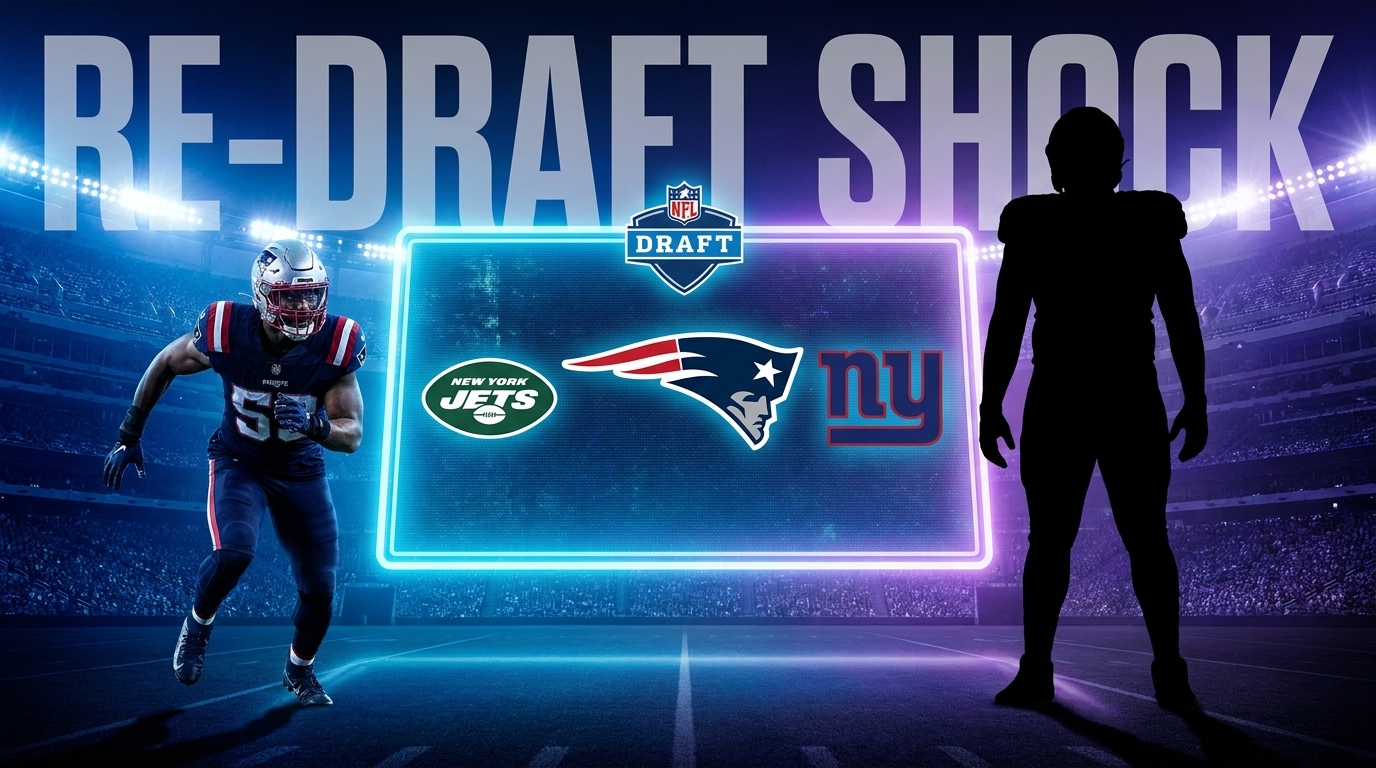
The Patriots NFL re-draft landed like a thunderbolt across the AFC East, and Patriots fans should pay attention. In Nick Baumgardner’s exercise, a surprise fourth pick of left tackle Will Campbell jumps off the page. However, that single move promises to change protection schematics and run-pass balance for the Patriots. As a result, divisional matchups feel suddenly more unsettled.
Even more startling, the re-draft scenario drops Abdul Carter into the division as a near-unblockable force. Carter led all rookies in pressures and QB hits. Sacks could have been higher, which hints at untapped upside. Therefore, Drake Maye and divisional quarterbacks would face a two-game gauntlet against his pass rush each year.
Add Will Campbell’s potential bookend role, and the line-of-scrimmage narrative shifts dramatically. Fans and front offices alike must imagine a different power dynamic if the draft had gone this way. Because personnel moves cascade, this re-draft reveals ripple effects for roster construction and free agency plans.
Patriots NFL re-draft key moves
Nick Baumgardner’s re-draft reshuffled the AFC East and highlighted two game-changing players. In this version, New England selects left tackle Will Campbell at fourth overall. That pick matters because it alters both pass protection and run blocking schemes. As a result, the Patriots’ offensive identity would shift early in a rebuild.
- Will Campbell — premium bookend protection
- Campbell projects as a high-upside left tackle with power and length.
- He would reduce interior pressure, and therefore help clean pocket time.
- His presence changes how opponents rush the passer and sets up the ground game.
- Abdul Carter — a divisional wrecking ball
- The re-draft sends Carter into the division, and his rookie numbers jump out: 66 pressures, 18 QB hits and 43 hurries.
- That production suggests consistent disruption, and Drake Maye would face him twice a year.
- Consequently, opposing offenses must plan chips, quick throws and additional protection.
- Armand Membou and the Jets trade
- The Jets swap Membou for Carter in the exercise, which reshapes their tackle depth.
- This move signals a different allocation of resources along the line.
Taken together, the Patriots NFL re-draft creates cascading roster implications. Coaches would retool schemes, and front offices would adjust draft boards and free agency targets. In short, a handful of altered picks could flip the division balance quickly.
Patriots NFL re-draft: original versus re-draft picks
The table below contrasts actual 2025 draft assignments with Nick Baumgardner’s re-draft swaps. It highlights how three picks would reshape the AFC East.
| Player | Position | Original pick team (actual 2025) | Re-draft pick team (Baumgardner) | Key stats (rookie season) |
|---|---|---|---|---|
| Will Campbell | Left tackle | Assigned elsewhere in actual draft | New England Patriots (4th overall in re-draft) | N A |
| Abdul Carter | Edge rusher | New York Giants | New York Jets (re-draft swap) | 66 pressures; 18 QB hits; 43 hurries |
| Armand Membou | Offensive tackle | New York Jets | Displaced in re-draft (Jets swap pick for Carter) | N A |
This comparison makes the ripple effects obvious. Consequently, adding Carter to the division forces new protection plans. Therefore, inserting Campbell at left tackle would alter pass protection instantly. As a result, divisional dynamics shift with only a few different picks.
Patriots NFL re-draft and divisional ripple effects
The Patriots NFL re-draft forces a fresh look at line-of-scrimmage matchups. If New England adds Will Campbell at left tackle, pass protection improves immediately. As a result, the offense gains more time for intermediate routes and play-action. That shift alone changes how opponents scheme against the Patriots.
Abdul Carter’s insertion into the division creates a more urgent problem for rivals. Carter finished his rookie season with 66 pressures, 18 QB hits and 43 hurries. Nick Baumgardner captured the gravity in his note: “The Jets and the Giants wound up doing pretty well early last season, all things considered. Carter led all rookies in pressures (66), QB hits (18) and hurries (43). And even though his sack total could’ve been higher, it’s important to remember the coming season will be just his third as a full-time edge defender. Stock up.” That line argues Carter’s upside remains high.
Key roster implications for New England
- Protect the quarterback differently
- Adding Campbell reduces interior pressure and frees up blitz pickups. Therefore, the Patriots could dial more deep shots.
- Roster construction shifts toward athletic tight ends and interior tackles
- Because opponents will rush less through A gaps, New England could prioritize versatile run-game pieces.
- Free agency and draft board adjustments
- As a result, the Patriots might chase secondary speed to help in quick-game coverage.
How Carter reshapes division rivals
- Drake Maye’s terrain becomes hostile
- Facing Carter twice yearly forces quicker reads and schematic changeups. Consequently, the Panthers’ hypothetical concern becomes relevant across the division.
- Jets and Giants plan differently
- The Jets would trade tackle depth, and the Giants would lose a high-variance disruptor. Therefore, their offseason priorities would flip.
For readers tracking next moves, follow-up pieces like PatriotsDraft and Offseason Watch provide context. See related coverage at Patriots NFL Draft Offseason Watch and our 2026 draft watch for who benefits next 2026 Draft Watch. Also track visit trends here Visit Trends Tracker.
In short, a handful of different picks changes the division’s chessboard. Coaches would adjust schemes and front offices would reset priorities. Because these effects compound, the Patriots NFL re-draft becomes more than a what-if exercise; it becomes a blueprint for alternate standings.
The Patriots NFL re-draft thought experiment matters because small pick swaps can reshape a division fast. If New England adds Will Campbell at left tackle, protection improves and play-calling changes. However, dropping Abdul Carter into the AFC East creates a recurring matchup problem for every quarterback in the division.
Taken together, these hypothetical moves alter roster strategy. Therefore, the Patriots might prioritize interior blockers, athletic tight ends, and quicker passing concepts. At the same time, rivals would need more chip protection and faster development from young quarterbacks because Carter’s 66 pressures, 18 QB hits and 43 hurries show his disruptive upside.
This re-draft is more than speculation; it is a reminder that draft choices set multi-year trajectories. As a result, front offices and coaches must weigh downstream effects of each selection.
For ongoing analysis and Patriots-focused coverage, follow Patriots Report LLC at @ZachGatsby. Stay tuned for deeper breakdowns and roster tracking as the offseason unfolds.
What is the Patriots NFL re-draft?
The Patriots NFL re-draft is a hypothetical redo of the 2025 draft. It imagines different selections and shows alternate roster paths. In Nick Baumgardner’s exercise, key picks shift across the AFC East. As a result, the exercise highlights how one change can ripple across seasons and schemes. It helps fans and analysts test roster priorities quickly. Therefore, teams can learn which areas mattered most.
How would Will Campbell at left tackle affect the Patriots?
Picking Will Campbell would address blindside protection and run blocking. He brings length and power and helps the pocket. Therefore, quarterbacks would enjoy cleaner pockets and more time. Coaches might run more play-action as a result. He would also mentor younger linemen. Consequently, the offensive line improves as a unit.
Why does Abdul Carter matter for the division?
Abdul Carter’s rookie numbers were elite. He had 66 pressures, 18 QB hits and 43 hurries. Consequently, his presence in the division forces faster reads and extra protection. Drake Maye and other young quarterbacks would face him twice each season. Because his sack total could increase with time, his upside remains concerning. Therefore, scouting reports would flag him as a matchup winner.
How would Jets and Giants roster plans change?
In the re-draft the Jets swap Armand Membou for Carter. That alters tackle depth and pass rush balance. The Giants lose a high-variance disruptor, which changes their rebuild timeline. As a result, both teams would prioritize different free agent targets and draft board needs. Roster context also changes salary cap plans and depth charts. Moreover, draft boards shift in early rounds.
What should fans watch next?
Watch how teams value edge rushers and blindside protectors. Also look for coaching changes and scheme shifts that respond to pass rush threats. Track young QB development, because quick reads matter now more than ever. Finally, tune into offseason moves to see if front offices act on these what-if lessons. Follow training camp reports and snap counts closely. Also watch preseason matchups for pass rush reps.