
How will Patriots NFL Draft 2026 trade-up impact Maye?
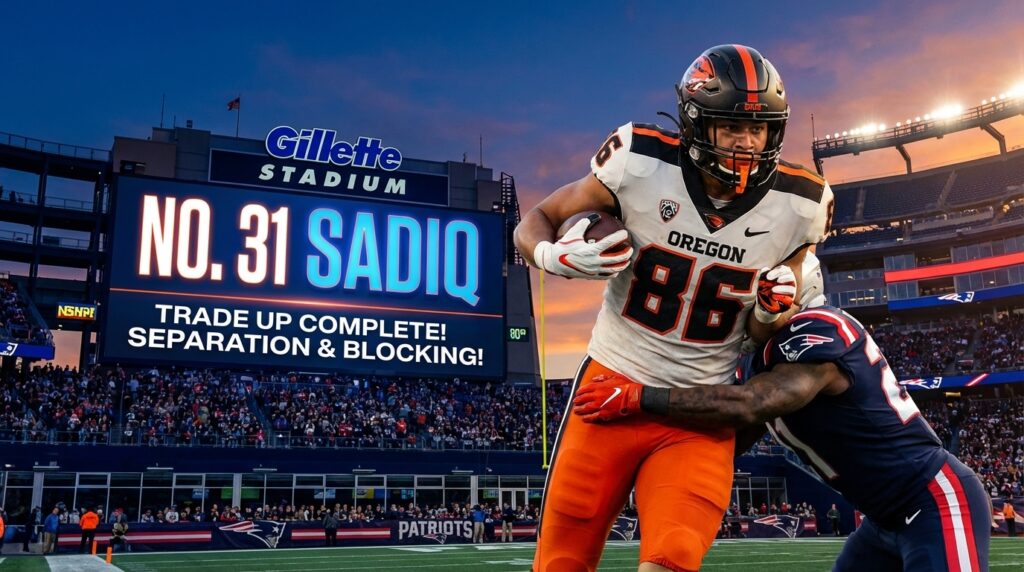
Patriots NFL Draft 2026 arrives with high stakes for New England and a pivotal roster reset. The front office faces clear needs at tight end and offensive line. Because of that, trade-up talk will dominate mock drafts and board strategy.
Analysts name Kenyon Sadiq among top targets after a breakout Combine. He profiles as a receiver with strong blocking and separation skills. Meanwhile, the team must weigh staying put at No. 31 or moving up. Moving up could secure a mid-to-late first round difference maker. However, trading assets could shrink depth at other positions.
The Patriots could also target sleepers who fit Josh McDaniels’ scheme. For example, a blocker who pairs with Hunter Henry would aid Drake Maye. Therefore, this draft will test Mike Vrabel and Eliot Wolf’s risk appetite.
Fans should expect calculated moves and aggressive scouting through April. As a result, every pick this spring could reshape the offense quickly.
Patriots NFL Draft 2026 top targets: Kenyon Sadiq and primary fits
Kenyon Sadiq ranks at the top of New England’s wish list for good reason. In 2025 he posted 51 receptions for 560 yards and eight touchdowns. Because he dominated contested catches and separation drills, Sadiq turned heads at the NFL Combine. His testing improved his stock from good to first-round consideration.
Key Sadiq traits
- Production and timing: 51 catches, 560 yards, eight scores in 2025 show consistent red zone impact. These numbers translate to reliable short-area creation.
- Combine performance: He outperformed other tight ends in measurable drills, which boosted scouting grades and draft range projections.
- Blocking chops: Sadiq projects as a willing, technically sound blocker. Therefore he can pass protect or sustain seams on run plays.
- Receiving skill set: He wins separation with sharp route bends and quick release. As a result, he fits well in systems that favor short-to-intermediate reads.
Why Sadiq fits the Patriots
The Patriots did not re-sign Austin Hooper and added Julian Hill as a blocking option. However, Hill profiles more as a gap blocker than a receiving mismatch. Therefore, Sadiq fills a clear need. He allows Hunter Henry to remain a featured target while adding matchup versatility for Drake Maye.
- Scheme fit: Josh McDaniels values tight ends who block and run after catch. Sadiq checks both boxes and offers separation against linebackers.
- Depth balance: Sadiq’s presence reduces pressure to draft an immediate starter at other skill positions, because he upgrades two-way tight end play.
Trade-up considerations and front office strategy
- Vrabel and Eliot Wolf’s posture: They have signaled a willingness to upgrade the roster around the quarterback. As a result, trading up from No. 31 to secure a mid-to-late first round prospect like Sadiq becomes plausible.
- Cost versus reward: Trading up will cost mid-round capital. However landing a top-tier tight end who blocks and separates can accelerate offensive growth.
- Alternative paths: If moving up proves costly, the Patriots could wait and target a slightly later receiving tight end or prioritize offensive line depth to protect Drake Maye.
Other top-25 prospects to watch
Target candidates include athletic offensive linemen, versatile wide receivers, and a secondary pass rusher who fits sub packages. These alternatives matter because the Patriots must balance Drake Maye’s protection with receiving upgrades.
Further reading on roster balance and draft strategy
- For context on line depth and mock draft implications, see Why Patriots Mock Draft 2.0 and OL Depth Matters?
- For the offensive line risk that drives draft priorities, see What is Patriots 2026 offensive line’s biggest risk?
- For background on Drake Maye’s readiness and how picks might support him, see Is Drake Maye Ready to Lead the Offense?
External sources
| Player name | Position | College | Key stats | Projected draft round | Unique strengths |
|---|---|---|---|---|---|
| Kenyon Sadiq | Tight end | Oregon State | 51 receptions, 560 yards, 8 TDs (2025); top TE at Combine | Mid-to-late first round | Strong blocking technique; wins separation; contested-catch ability |
| Analyst sleeper A (blocking TE) | Tight end | Mid-major power Five candidate | High run-block grades; limited target share but strong film | Late second to fourth round | Walls linebackers in short-yardage; fits two-tight-end fronts |
| Analyst sleeper B (speed slot) | Wide receiver | Group of Five / Power Five candidate | High catch rate on short routes; reliable YAC in college | Third to fifth round | Quick release; excels on slot concept and mesh routes |
| O-line upgrade candidate | Offensive tackle/guard | Power Five prospect | Strong tape run-blocking; anchor in one-on-ones | Second to fourth round | Versatile across left and right tackle; quick footwork in space |
| Sub-package edge rusher | EDGE | Smaller school breakout | High pass-rush Win Rate on film; moderate production | Third to sixth round | Explosive first step; fits third-down and blitz packages |
| Developmental tight end | Tight end | FCS or Group of Five | Blocking-first with limited route tree usage | Fourth to sixth round | High upside as an in-line blocker and red zone target when developed |
Notes
- Kenyon Sadiq remains the clearest fit if the Patriots trade up or draft at No. 31. Therefore he anchors the table.
- Analysts Alex Barth and Brian Hines highlighted a mix of one-read matchup pieces and developmental blockers. As a result, the board mixes immediate fits and upside targets.
Patriots NFL Draft 2026 trade-up radar: motivations and strategy
The Patriots enter the draft with clear drivers for moving up. They seek to upgrade the roster around the quarterback. Because Drake Maye needs protection and reliable targets, the front office values immediate-impact players. Tight end sits high on that list after Austin Hooper’s departure. As a result, trading up for a two-way tight end makes strategic sense.
Why New England might trade up
- Secure a premier fit: A mid-to-late first round tight end can change matchups quickly. Therefore the team may prefer sure-thing players over waiting for a similar talent later.
- Accelerate offense growth: Upgrading tight end play shortens Maye’s learning curve. In addition, it creates better red zone options.
- Market timing: Because top tight ends are thin this year, timing matters. Consequently the Patriots could act if a gap appears on draft day.
Decision makers and the calculus
- Mike Vrabel sets the roster tempo and prefers readiness. He will back moves that improve starters now.
- Eliot Wolf handles asset evaluation and trade pricing. He must weigh present value against future draft capital.
- Together they balance risk and reward. For example, they might give up a second and third to move up a handful of spots.
How Kenyon Sadiq fits the plan
- Two-way value: Sadiq blocks and separates. Therefore he fits Josh McDaniels’ tight end role well.
- Complement to Hunter Henry: Sadiq can handle in-line blocking and short-area receiving. As a result, Henry remains the primary route runner.
- Immediate returns: His Combine bump reduces development time. Thus he projects to contribute early.
Trade-up scenarios and recommendations
- Low cost move: Swap late third plus a future fourth to jump five to ten spots.
- Moderate cost move: Give a second-rounder and a third to land a surefire first round target.
- No-trade fallback: Draft for line help if prices rise too high.
Final thought
The Patriots will likely explore trades but will not overspend. However, if Sadiq or a similar fit falls within reach, expect decisive action. Their strategy balances protecting Drake Maye and keeping roster depth intact.
Conclusion
The Patriots NFL Draft 2026 will be defined by choices that balance immediate impact and long-term depth. Teamsier needs at tight end and the offensive line create clear priorities. Because Kenyon Sadiq offers both blocking and receiving upside, he sits near the top of trade-up conversations. If New England trades up, expect the front office to pay close attention to price versus fit.
In practical terms, a Sadiq selection speeds Drake Maye’s development. At the same time, the team must avoid gutting mid-round depth. Therefore Eliot Wolf’s pricing discipline matters as much as Mike Vrabel’s willingness to start players now. In contrast, sleepers with specialized traits offer low-cost upside if the Patriots stay put.
Watch points going forward
- Will the Patriots spend a second to jump into the late first round
- Can a two-way tight end reduce pressure on Hunter Henry
- Which mid-round targets provide the best value later in the draft
For ongoing coverage and timely updates, follow Patriots Report LLC at Patriots Report and on Twitter at Zach Gatsby. Their reporting will track trades, rumors, and prospect fits as the draft approaches.
Frequently Asked Questions (FAQs)
Who are the Patriots’ top targets in the Patriots NFL Draft 2026?
Kenyon Sadiq tops the list because he blends blocking and receiving. In 2025 he had 51 receptions, 560 yards, and eight touchdowns. He also posted an eye-catching Combine showing that pushed him into first-round discussion. Beyond Sadiq, the board includes athletic offensive linemen and versatile slot receivers.
Will the Patriots trade up to get a specific prospect?
They might, but only if price matches value. Mike Vrabel favors players who can start now, and Eliot Wolf controls trade pricing. Therefore a move up for a mid-to-late first round tight end is plausible. However the team will weigh lost mid-round depth before committing.
Is tight end the biggest need for New England?
Tight end ranks high after Austin Hooper left the roster. The team added Julian Hill as a blocker, but he does not replace receiving upside. As a result, a two-way tight end like Sadiq would fill both blocking and receiving gaps. That upgrade would help Drake Maye and the red zone plan.
What sleeper types should Patriots fans monitor?
Look for blocking-first tight ends who can develop as in-line blockers. Also track speed slot receivers with high catch rates and YAC. In addition, mid-round offensive line upgrades provide long-term protection value. Patriots Beat analysts Alex Barth and Brian Hines highlighted those categories as smart targets.
How would drafting Kenyon Sadiq change the offense?
He would create matchup problems because he wins separation against linebackers. His blocking lets Hunter Henry stay a primary route runner. Consequently the offense gains short-area creation and red zone efficiency. Overall, Sadiq offers immediate two-way returns without a long development curve.