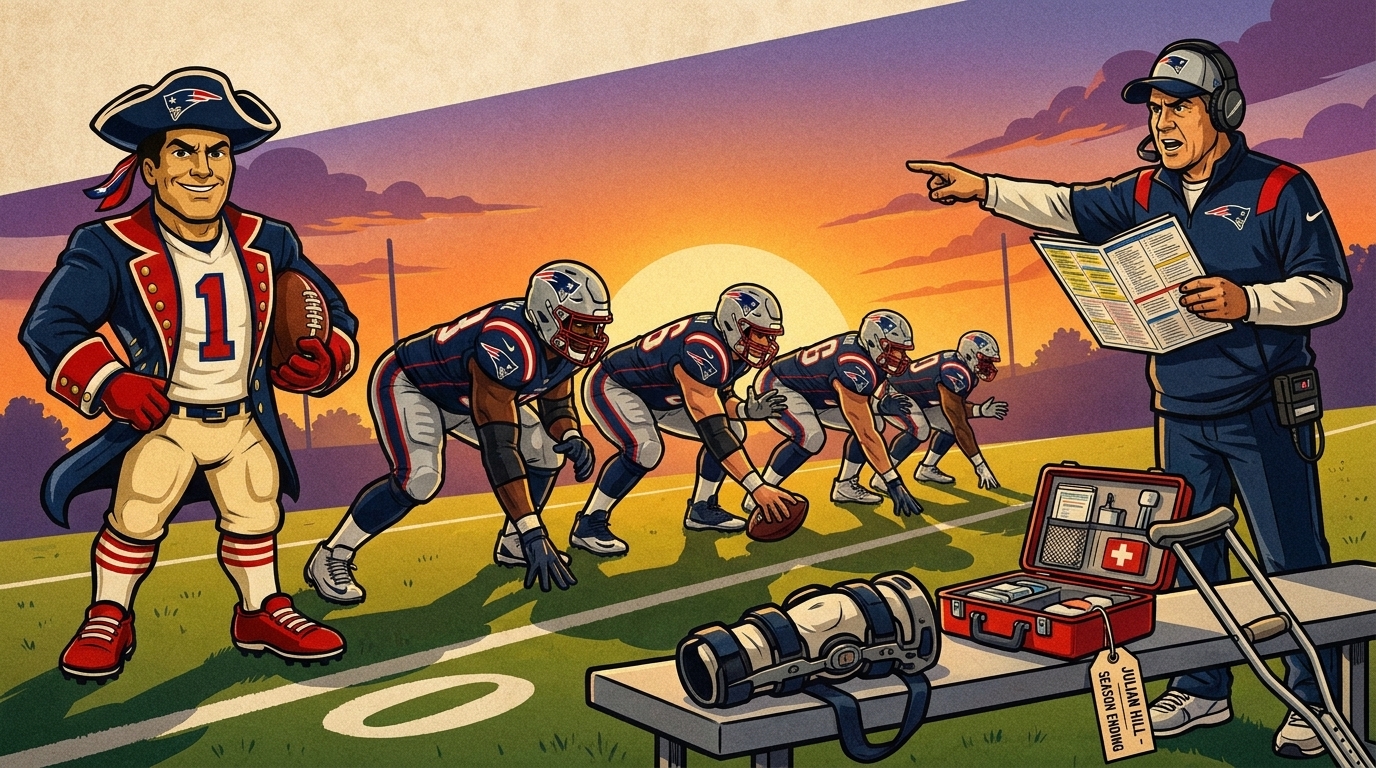
Patriots offseason offensive line overhaul derailed by Julian Hill injury has thrown New England’s plans into sudden doubt. The team entered the offseason with clear upgrades planned across the trenches. They signed Alijah Vera-Tucker and reshuffled Jared Wilson to center to solidify the unit. Additionally, rookies and veteran additions aimed to increase depth. However, Hill’s practice injury changed that trajectory in an instant.
Coach Mike Vrabel confirmed the season ending placement on injured reserve. Because Hill offered versatile blocking and strong practice tape, the loss stings. As a result, the tight end room thins and the line lacks insurance depth. Teams must now consider free agency or trades to plug gaps quickly.
This article examines roster ramifications, strategic pivots, and short term risks. We will balance analysis with empathy for Hill and the locker room. However, the Patriots still have paths forward, yet the setback demands urgent attention. Stay tuned for deeper breakdowns.
Patriots offseason offensive line overhaul derailed by Julian Hill injury: Original Plans
Before Hill’s injury, New England mapped a clear offensive line blueprint for the offseason. The front office targeted immediate upgrades to protect the quarterback and improve run blocking. They pursued veteran talent, shifted existing pieces, and drafted depth to ensure competition. Because continuity mattered, the coaching staff planned to mix experience with youth.
Key additions planned:
- Alijah Vera-Tucker signed to play left guard and anchor the interior.
- Jared Wilson projected to slide to center to stabilize the middle.
- Caleb Lomu drafted to add athletic depth and developmental upside.
- Dametrius Crownover drafted for tackle depth and special teams value.
- Reggie Gilliam acquired as a veteran fullback to aid blocking schemes.
These moves aimed to create competition and insurance across five positions. As a result, the Patriots expected a stronger running game and cleaner pass protection. However, the plan relied on multiple players staying healthy.
Therefore, losing a rotational blocker would force a quick pivot. In sum, the offseason blueprint looked coherent and aggressive, but it left little margin for surprise setbacks. Coaches emphasized technique in practice and expected the rookies to make meaningful early contributions. Depth was central to the plan.
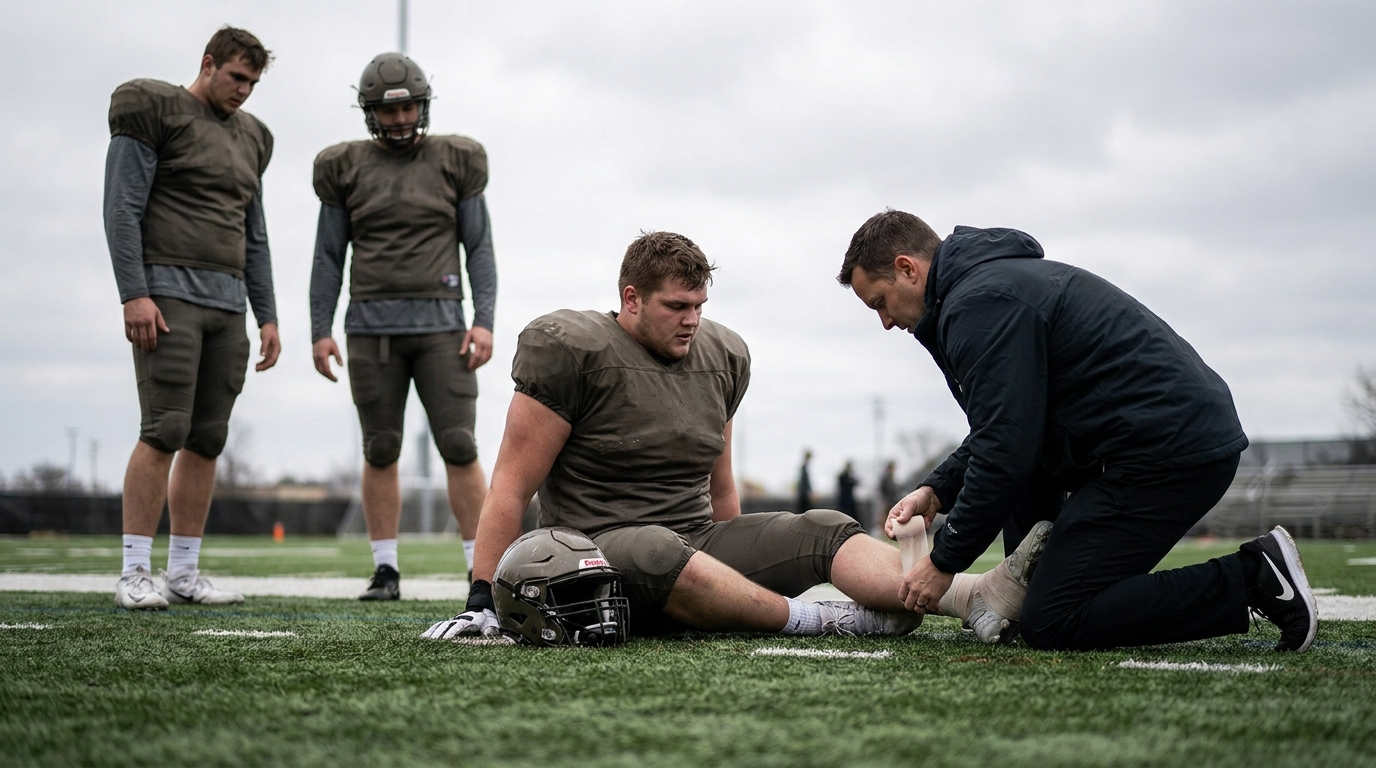
Patriots offseason offensive line overhaul derailed by Julian Hill injury: Impact Analysis
Julian Hill’s season-ending injury immediately unravels depth plans along New England’s line. Coach Mike Vrabel framed the loss bluntly, saying “Julian won’t be able to play this season. That’s plain and simple. Devastating, awful. So, that’s just disappointing because of the impact that he made in a short amount of time with his teammates, and just the person that he is, the way that he practiced.” Because Hill offered versatile blocking and reliable practice tape, his absence creates a hole beyond one roster spot.
The tight end room also feels the ripple effect. Hunter Henry remains a trusted blocker, yet the group now leans on rookie Eli Raridon earlier than expected. As a result, the Patriots lose a hybrid blocking option that helped bridge offensive line and tight end roles. Consequently, the passing game faces greater pressure to compensate. Short throws and play action could decline if pass protection falters.
Strategically, New England must pivot quickly. They may target free agents to restore depth, or explore a trade for a high-caliber tight end to boost blocking and receiving. Alternatively, coaches could shuffle current linemen and lean on Caleb Lomu or Dametrius Crownover sooner. However, each choice carries risk, because cohesion and technique need time to develop. In summary, the injury complicates both run and pass plans, and it forces the Patriots to balance immediate fixes with long-term developmental goals.
Comparison: Offensive line and tight end roster before and after Hill’s injury
Below is a concise before and after view of key linemen and tight ends. The table highlights player, position, status, and projected impact. As a result, it visualizes roster ramifications quickly.
| Player | Position | Status | Projected impact |
|---|---|---|---|
| Alijah Vera-Tucker | Left guard | Active | Immediate starter; anchors interior run and pass protection. |
| Jared Wilson | Center | Active | Projected starter at center; stabilizes snaps and calls. |
| Caleb Lomu | Offensive tackle | Active | Developmental depth with starting upside if needed. |
| Dametrius Crownover | Offensive tackle | Active | Rotational depth and special teams contributor. |
| Reggie Gilliam | Fullback | Active | Veteran lead blocker for run schemes and short yardage. |
| Julian Hill | Tight end/blocker | Injured (IR) | Season ending; removes hybrid blocking option and depth. |
| Hunter Henry | Tight end | Active | Veteran blocker who must absorb more inline reps. |
| Eli Raridon | Tight end (R) | Active | Rookie expected to play earlier; still developing. |
Therefore, the loss of Hill shifts early-season priorities toward adding depth.
Julian Hill’s season-ending injury sharply undercuts the Patriots’ offseason offensive line overhaul. The team added Alijah Vera-Tucker and moved Jared Wilson to center. They drafted Caleb Lomu and Dametrius Crownover to build depth. However, because Hill provided hybrid blocking and depth his loss removes a key insurance piece. It exposes thin spots on the roster.
As a result, the tight end room leans more heavily on Hunter Henry and rookie Eli Raridon. That increases pressure on the passing game and on short-yardage blocking. The Patriots must weigh quick fixes and long-term development. They can pursue free agents, consider a trade for a high-caliber tight end, or accelerate rookie development. Each option carries roster and cohesion risks.
For continuing coverage, rely on Patriots Report LLC. Visit patriotsreport.com for updates, and follow Twitter/X at @ZachGatsby for real-time news. We will track moves closely and analyze their impact honestly and cautiously. Stay tuned.
Frequently Asked Questions (FAQs)
Q1: How does Julian Hill’s injury affect the Patriots’ offseason offensive line overhaul?
Hill’s injury removes a key hybrid blocker the team counted on. As a result, depth across the line and tight end spot shrinks. Because he offered versatility, coaches lose a matchup option for run and short-yardage passing. Therefore, the team must reallocate resources to protect the quarterback and sustain the running game.
Q2: Who fills the blocking role now that Hill is on injured reserve?
Hunter Henry will take more inline blocking snaps, and rookie Eli Raridon will see earlier action. Additionally, Caleb Lomu and Dametrius Crownover are available for quicker rotation. However, those options require development time. Consequently, coaches may prioritize technique work and situational reps in practice.
Q3: Will the Patriots pursue free agents or trades because of this setback?
Yes, free agents remain a likely short-term fix, and a trade for a high-caliber tight end could help in both blocking and the passing game. Teams often use free agency for depth. Meanwhile, a trade can add a proven blocker and receiver, but it costs assets and salary cap space.
Q4: How does this injury change the passing game outlook?
The passing game faces greater pressure in early downs and play-action schemes. Because protection depth falls, quick release plays and max protection packages will gain importance. If the line struggles, the offense may rely more on short throws and designed quarterback movement.
Q5: What are the realistic short and long term implications for the season?
Short term, expect urgency in adding depth and adjusting game plans. Long term, the team can still develop rookies and integrate signings. However, roster cohesion and timing need work. In sum, Hill’s loss complicates plans, yet viable paths remain through smart personnel moves and coaching adjustments.