
What Patriots Free Agency Moves Most Elevate the Defense?
Patriots Free Agency: Day 2 and Day 3 Moves That Matter
Patriots Free Agency just entered its most consequential phase, and Day 2 and Day 3 moves now define the team. Because the big names often arrive earlier, these middle rounds become testing grounds for roster balance and developmental depth. These signings and bargain veteran deals will shape trenches, linebacker depth and the secondary. As a result, fans and analysts must weigh upside against cap prudence and scheme fit. The Patriots additions this window suggest a cautious but deliberate approach to immediate improvement. However, the true impact will show through matchups, snap counts and coaching schematics. This preview breaks down key Day 2 and Day 3 acquisitions, evaluates value per cap dollar and grades risk. Ultimately, optimism is warranted, but measured evaluation will reveal if these moves push New England closer to contention. We will also examine how the roster picture changes and what holes still need addressing.
Patriots Free Agency: Day 2 and Day 3 — Who Moves the Needle
These midwindow signings show New England’s plan to balance immediate need with upside. DreMont Jones, Reggie Gilliam, Alijah Vera-Tucker, Romeo Doubs, Kevin Byard and Julian Hill form the backbone of that approach. Below we break down roles, skills and expected impact for each player. Short bullets and crisp takeaways follow for quick reads and deeper context.
DreMont Jones — interior power with edge traits
- Role and fit: Projects as a versatile defensive front piece. He will play inside on run downs and slide to the edge on clear pass rush snaps.
- Strengths: Strong run defender who holds gaps and sets the edge. He is described as better at run defense than K’Lavon Chaisson, yet he produced the same sack total.
- Impact: Expect more stoutness up front. As a result, linebackers will flow freer and the rush plan gains flexibility.
- Risk and upside: Durable and proven, but snap usage matters. If coaching maximizes his snap mix, production should rise.
Reggie Gilliam — short yardage and blocking glue
- Role and fit: Brutal fullback and in-line blocker who helps the run game in short yards.
- Strengths: Physicality, lead-block instincts and special teams value.
- Impact: He gives the Patriots more run-package creativity. Therefore, running backs gain extra space on key downs.
- Why it matters: In close games, this signing moves the chains more often.
Alijah Vera-Tucker — veteran line insurance
- Contract note: Two-year deal with large $250K roster bonus per game. That bonus totals roughly $12.7M and acts as a hedge against injury.
- Role and fit: Interior offensive lineman capable at guard and left guard spots.
- Strengths: Technical run-blocker with pro-level experience.
- Impact: He stabilizes depth immediately, but the roster bonus structure demands careful cap planning.
Romeo Doubs — proven complementary receiver
- Contract and pedigree: Four years, $68M–$80M with incentives and a $17M average. PFF ranked him #49 in its Top 250 Free Agents.
- Role and fit: High-effort No. 3 target and contested-catch specialist.
- Strengths: Back-to-back 1,000-yard seasons and 80 receptions last year. He wins at the catch point and grades well in single coverage.
- Impact: Adds reliable separation and contested-target ability. He profiles as a solid No. 3 and reliable chain-mover.
Kevin Byard — veteran ballhawk and leader
- Contract note: Two years, $10M. Age 33 but highly productive last season.
- Role and fit: Versatile safety who can play single-high and roam the deep field.
- Strengths: Seven interceptions and eight PBUs last season; three-time All-Pro and Pro Bowler.
- Impact: “The 32-year-old Byard is a bit on the older side, but he has not shown any signs of slowing down.” He brings leadership and a knack for turnover creation, and his Vrabel connection matters.
Julian Hill — athletic tight end depth
- Role and fit: Inline blocker who can catch in short zones. He started 15 games last season.
- Strengths: Size at 6’4″, 251 pounds and special teams snaps.
- Impact: Hill is a reliable secondary option at tight end and improves two tight end sets.
Taken together, these Day 2 and Day 3 moves aim to close roster gaps while preserving draft flexibility. They offer scheme versatility and veteran leadership, but cap details and snap allocation will define real value.

Quick comparison of Patriots Free Agency signings and expected contributions
Below is a comparative table summarizing key signings and their expected contributions.
| Player | Position | Contract details | Strengths | Expected impact | Cap implications |
|---|---|---|---|---|---|
| DreMont Jones | EDGE/Interior DL | Signed (details not disclosed) | Better run defender than K’Lavon Chaisson; same sack total. Versatile inside and on the edge. | Solidifies run defense and gap control. Frees linebackers to flow. | Moderate near-term cap hit. Value depends on snap mix and usage. |
| Reggie Gilliam | Fullback | Signed (short term) | Brutal in-line blocker. Strong in short-yardage and on special teams. | Improves short-yardage packages and lead blocking. Moves chains in key downs. | Low cap cost. Veteran depth mainly on special teams. |
| Alijah Vera-Tucker | Guard/Interior OL | Two-year deal with $250,000 roster bonus per game; bonus totals about $12.7M | Experienced technical run blocker who can play multiple interior spots. | Provides immediate depth and starting insurance at guard. Demands careful roster planning. | Significant near-term cap bite due to roster bonuses. Acts as an injury hedge. |
| Romeo Doubs | Wide Receiver | Four years, $68M–$80M with incentives; roughly $17M AAV | Two straight 1,000-yard seasons. Contested-catch specialist. PFF ranked him #49. | Adds a reliable No.3 target. Wins contested catches and helps the red zone. | Large AAV and long-term commitment. Reduces future cap flexibility. |
| Kevin Byard | Safety | Two years, $10M | Ballhawk with seven interceptions last season. Three-time All-Pro and Pro Bowler. Durable. | Upgrades the secondary and turnover upside. Brings veteran leadership and Vrabel connection. | Modest cap hit relative to expected production. Likely good value. |
| Julian Hill | Tight End | Three-year deal | 6’4″, 251 lbs. Inline blocker with receiver skills. Started 15 games last year. | Bolsters two-TE sets. Adds reliable blocking and short-zone catching. | Low-to-moderate cap impact. Useful depth piece. |
Cap Space and Strategic Management in Patriots Free Agency
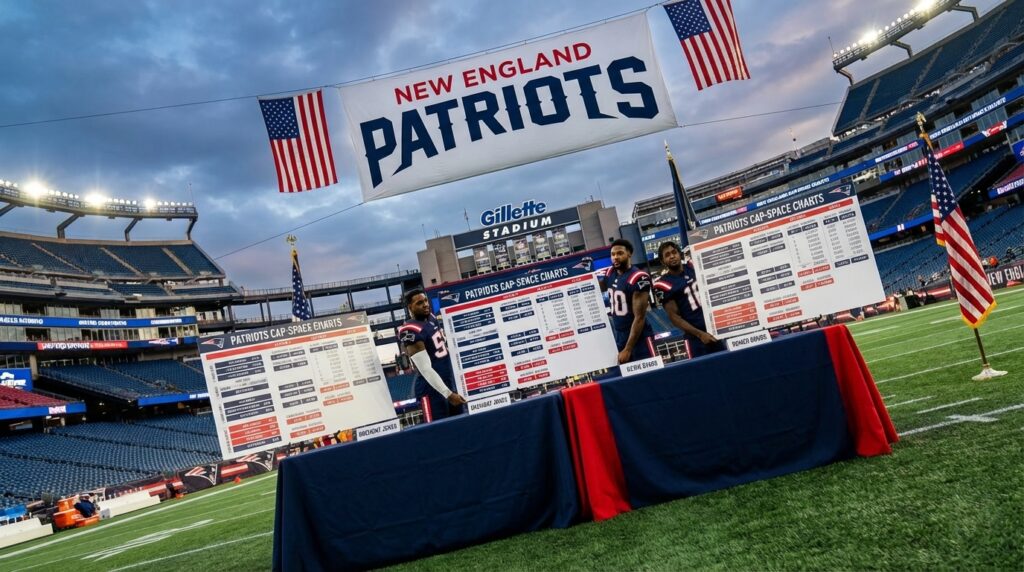
New England entered free agency with more than $37M in available cap space. That cushion gives the front office flexibility to add proven veterans. Because the team targeted Day 2 and Day 3 value, management balanced immediate need with future flexibility. As a result, the Patriots upgraded key spots while preserving draft purchasing power.
A few structural moves changed the math quickly. The team created roughly $3.8M in cap space through releases and reallocations. Meanwhile, signing Alijah Vera-Tucker carries a unique cost profile. His two-year deal includes a $250,000 roster bonus per game. Therefore, the contract acts as an injury hedge but increases near-term cash obligations. Teams must be careful with that kind of structure.
Romeo Doubs adds receiving talent at roughly a $17M average annual value. However, that long term commitment reduces cap flexibility later. Conversely, Kevin Byard’s two-year, $10M deal buys high-end secondary play at modest cost. This contrast shows the roster strategy. The Patriots spent cautiously on aging, high-impact pieces while investing more heavily in younger upside where necessary.
Management also used short deals to keep optionality. For example, one-year signings and special-teams focused contracts allow cap resets after the season. In addition, releasing Anfernee Jennings and reallocating money helped fund priorities. Therefore, the team preserved room for midseason needs or late free-agent bargains.
Strategically, New England appears to favor a hybrid model. They added veterans who can start now, yet they also kept enough cap to draft. For instance, the front office can still target secondary help in the draft. As a result, the team balances immediate competitiveness with long-term roster growth.
In short, the Patriots managed cap space with discipline. They mixed short deals and insurance-style bonuses to reduce risk. Still, the Doubs contract and roster bonuses will require careful in-season monitoring. Ultimately, this approach maintains competitiveness while leaving enough flexibility for the draft and future roster moves.
Conclusion
Day 2 and Day 3 of Patriots Free Agency show clear intent. The front office added veteran starters and versatile depth. Kevin Byard upgrades the secondary immediately, and Romeo Doubs brings contested catch ability. DreMont Jones and Alijah Vera-Tucker add toughness in the trenches. Julian Hill and Reggie Gilliam improve situational play. Therefore fans should feel cautiously optimistic about roster trajectory.
Strategically, New England mixed short term flexibility with targeted long term bets. For example, Byard’s modest deal balances impact with cap sense. Conversely, Doubs’ multi year contract costs more but fills a receiving need. As a result, the team preserves draft ammunition while improving now. The cap moves leave room to chase midseason needs or draft prospects.
Overall, these signings tilt the roster toward competitiveness. The secondary looks notably stronger with ballhawking and depth. Still, execution and health will decide the final outcome. For more analysis and follow up coverage visit Patriots Report LLC and follow on Twitter.
Frequently Asked Questions (FAQs)
What were the most important Day 2 and Day 3 signings in Patriots Free Agency?
The Patriots focused on interior toughness and secondary upgrades. Key additions include DreMont Jones, Alijah Vera-Tucker, Kevin Byard, Romeo Doubs, Reggie Gilliam and Julian Hill. These moves improved run defense, pass coverage and situational offense. As a result, the roster gained immediate starters and dependable depth.
How does the Patriots cap space affect future moves?
New England entered with roughly $37M plus in cap space. Management created about $3.8M more through releases and reallocations. Therefore they can still add midseason help or make draft-driven decisions. However, long term flexibility depends on contracts like Doubs and roster bonuses for Vera-Tucker.
Will these signings make the Patriots a playoff team?
The additions increase competitiveness, especially on defense. Byard should boost turnover rate, and Jones helps the run front. But health and scheme fit will decide outcomes. In short, optimism is justified but cautious.
What roster holes remain after Day 2 and Day 3 signings?
Depth at pass rush and edge development still matter. The team also needs younger secondary options behind veterans. Conversely, special teams and situational tight end play look better now. The draft can fill remaining gaps.
How should fans interpret these moves long term?
View them as a hybrid building strategy. The Patriots mixed short term starters with players who fit long term plans. Meanwhile, they preserved draft ammo and cap room for flexibility. Follow progress and expect more adjustments.