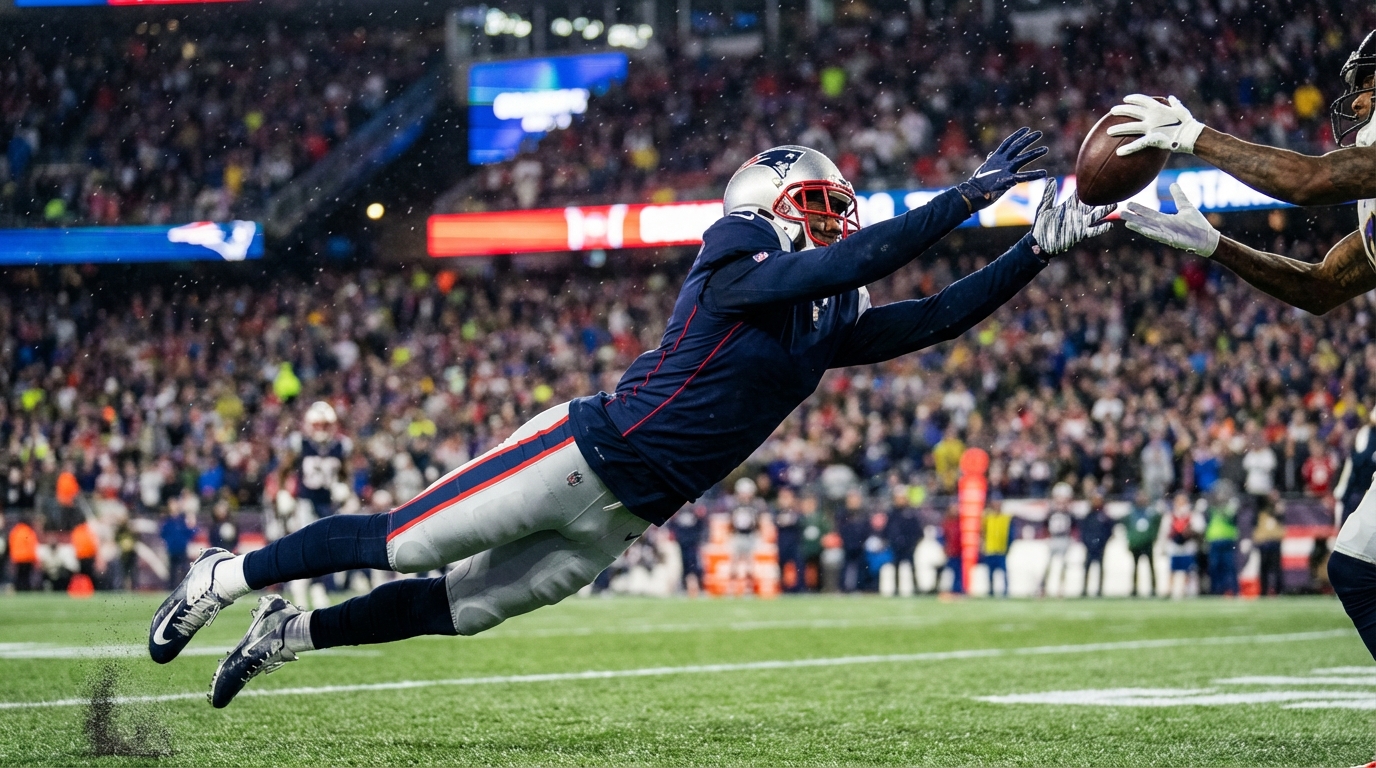
Patriots defense in the playoffs has erupted into one of the NFL’s most imposing storylines this postseason. Once written off as average, New England’s unit now hums with confidence. The turnaround shows in stops, takeaways, and disciplined gap control. More importantly, a quiet new weapon has appeared. He is a fourth-round rookie who plays like a veteran centerfielder. His range and instincts have flipped the tape on opposing quarterbacks, because he closes seams and erases easy completions.
This introduction matters because defenses win championships. Therefore, the Patriots’ pressure plan and secondary discipline change the matchup math. Moreover, the front seven has grown nastier with power rushers and gap-fillers. As a result, opposing coaches must rethink play calls. Expect tighter throws, more contested catches, and a shorter leash for quarterbacks. The mood in Foxborough feels electric and calm at once. In short, the Patriots arrive in the postseason dangerous, balanced, and very much alive.
Patriots defense in the playoffs: Craig Woodson emerges as the new weapon
Craig Woodson has arrived and changed the dynamic of New England’s postseason defense. In the wild-card round against the Chargers he posted a career-high 11 tackles, an interception, a fumble recovery, and three passes defensed. He allowed zero missed tackles and gave up just two receptions on eight targets for 16 yards. As a result, Pro Football Focus graded him as the Patriots’ top defensive performer in the playoffs. Therefore, what looked like a Day 3 pick now plays like a seasoned centerfielder.
Woodson’s versatility gives the coaching staff multiple looks. He lined up 42 snaps in the box, 15 in the slot, and 64 deep. Because he can fill the box or patrol the deep middle, the defense can disguise coverages. As a result, opposing quarterbacks face tighter windows and more contested throws.
Quick Woodson snapshot
- Wild-card vs Chargers: career-high 11 tackles, one interception, one fumble recovery, three passes defensed
- Coverage numbers: two receptions on eight targets for 16 yards, zero missed tackles
- Role breakdown: 42 box snaps, 15 slot snaps, 64 deep snaps
- Recognition: highest-graded Patriots defender in the playoffs per Pro Football Focus
Returnees and veteran backbone
The Patriots also got massive contributions from players who returned to the lineup. Robert Spillane restored physicality and communication. Milton Williams added interior push and gap control. Harold Landry Jr. supplied edge pressure and consistency. Khyiris Tonga tightened run fits and short-area defense.
All-Pro-caliber pieces
Christian Gonzalez and Marcus Jones perform like elite playmakers. Their coverage and return skills shrink opponent options. Consequently, Woodson benefits from cleaner matchups and more aggressive playcalling.
Why fans are buzzing
Because Woodson blends range, instincts, and positional flexibility, he adds strategic depth. He forces opponents to account for a new centerfielder, while the front seven and All-Pro talent finish plays. Therefore, the Patriots defense in the playoffs feels deeper, smarter, and more dangerous. Fans and analysts now sense a true postseason x-factor unfolding in Foxborough.
| Player | Tackles (Playoffs) | Interceptions | Pass Deflections | Missed Tackles | Notes |
|---|---|---|---|---|---|
| Craig Woodson | 11 (wild-card); additional tackles in divisional round | 1 (wild-card) | 3 (wild-card) | 0 (zero missed tackles in playoffs) | Versatile centerfielder; lined up 42 box snaps, 15 slot, 64 deep; PFF highest-graded Patriots defender |
| Robert Spillane | Returned to lineup — exact tackle total not listed | 0 listed | Impact in communication and run defense | Not listed | Restored physicality and on-field leadership after return |
| Milton Williams | Returned; exact tackles not listed | 0 listed | Contributed in disrupting interior blocking | Not listed | Added interior push and gap control after returning |
| Harold Landry Jr. | Returned; tackle totals not disclosed | 0 listed | Pressed quarterbacks with consistent edge play | Not listed | Provided steady edge rush and quarterback pressure |
| Khyiris Tonga | Returned; tackle totals not disclosed | 0 listed | Helped defend short-area passes and runs | Not listed | Tightened run fits and interior run defense after return |
Key takeaways
- Craig Woodson supplies the only fully quantified playoff stat line here, and it reads like a breakout. Therefore, his turnover and coverage impact stand out.
- Returnees Spillane, Williams, Landry, and Tonga restored a veteran backbone. As a result, the unit shows improved gap control and pass rush balance.
- All-Pro-level pieces Christian Gonzalez and Marcus Jones compress opponent options. Consequently, Woodson benefits from cleaner matchups and more explosive plays.
This table supports the larger point: the Patriots defense in the playoffs is imposing, deep, and well balanced. Fans see a defense built to win tight postseason games.
Patriots defense in the playoffs: Vrabel’s tactical shakeup
Mike Vrabel made decisive roster and scheme moves that changed the team’s defensive trajectory. He demoted Kyle Dugger and cut Jabrill Peppers last summer. As a result, the staff committed to younger, faster defenders. Therefore, the defense now favors range, versatility, and matchup flexibility.
Key Vrabel adjustments
- Demotion of Kyle Dugger shifted safety roles and responsibilities. Because Dugger’s role shrank, coaches trusted younger playmakers in coverage. This opened slots for Craig Woodson to patrol the deep middle.
- Cutting Jabrill Peppers removed a veteran hybrid presence. However, the move freed snaps for specialists with cleaner fit for Vrabel’s scheme.
- Emphasis on day-to-day performance increased competition. Consequently, players like K’Lavon Chaisson rose into larger roles and earned playoff snaps.
- Rotational depth became a focus. Vrabel mixed veteran returnees with youth to keep players fresh and unpredictable.
How the moves revive the unit
Vrabel’s choices favored speed and instinct. Therefore, the Patriots started trusting younger talent in high-leverage moments. Craig Woodson’s range and zero missed tackles rewarded that trust. Moreover, Chaisson’s pressure and edge play created more one-on-one win opportunities.
Why this matters in the playoffs
- Opponents face more disguised looks and quicker rotation. As a result, quarterbacks see fewer clean windows.
- The combination of returnees and youth creates matchup problems. For example, Spillane, Landry, Williams, and Tonga supply muscle. Meanwhile, Woodson and Chaisson supply range and pass rush.
- These adjustments also shift game planning across the league. For more context on how opponents view New England’s road and schedule, see this story: Patriots Easy Schedule Narrative.
Vrabel’s plan mixes discipline with aggression. It trusts emerging players and rewards production. Consequently, the Patriots defense in the playoffs looks refreshed, confident, and dangerous. Fans now discuss Woodson and Chaisson as true difference makers, and analysts have taken notice. For related takes on postseason X-factors, see: Kayshon Boutte Breakout X-Factor and trends in defensive turnovers: Denver Broncos Turnover Surge Playoffs.
CONCLUSION
Patriots defense in the playoffs has evolved into a clear competitive advantage. The unit now blends youth, veteran leadership, and smart coaching. Because Craig Woodson has produced game changing plays, the secondary looks faster and more reliable. Moreover, Mike Vrabel’s bold personnel moves created space for rising stars. Therefore, the defense can pressure quarterbacks and limit big plays.
Woodson’s range and zero missed tackles stood out in critical moments. At the same time, returnees like Robert Spillane, Milton Williams, Harold Landry Jr., and Khyiris Tonga restored physicality. As a result, the front seven pairs power with speed. Additionally, All Pro caliber pieces such as Christian Gonzalez and Marcus Jones compress opponent options. Consequently, New England can play multiple looks and win tight games.
In short, strategic adjustments and emerging talent made the Patriots a true postseason threat. The coaching staff trusted performance over reputation, and it paid off. For continued coverage and analysis, visit Patriots Report LLC and follow on Twitter X at @ZachGatsby. Stay tuned, because this defense will keep making headlines.
Frequently Asked Questions (FAQs)
What makes the Patriots defense in the playoffs so effective?
Because the unit mixes speed, veteran depth, and smart coaching, it creates matchup problems. Craig Woodson adds range and turnovers. Returnees restored physicality and gap control. As a result, opponents face fewer clean throws and tighter windows.
How big has Craig Woodson’s impact been so far?
Woodson flashed in the wild-card round with 11 tackles, one interception, one fumble recovery, and three passes defensed. He allowed zero missed tackles and only two catches on eight targets for 16 yards. Therefore, his coverage and turnover feel have changed game planning.
Did Mike Vrabel’s roster moves matter?
Yes. Demoting Kyle Dugger and cutting Jabrill Peppers signaled a shift toward younger, more versatile defenders. Consequently, players like Woodson and K’Lavon Chaisson earned bigger roles. This boosted pace, disguise, and overall effort.
Which teammates help make the defense complete?
- Robert Spillane restored leadership and tackling.
- Milton Williams provided interior push and gap control.
- Harold Landry Jr. generated consistent edge pressure.
- Khyiris Tonga tightened short-area defense.
- Christian Gonzalez and Marcus Jones perform at All-Pro levels, which compresses options.
What is the playoff outlook for this defense?
The outlook is optimistic and realistic. The group has depth, situational savvy, and a clear identity. Moreover, coaching trust and youth production make them a true postseason threat. Fans should expect more stops, fewer big plays, and continued momentum.