Patriots defense dominates Texans in playoff win (playoff game analysis)
The Patriots defense dominates Texans in playoff win (playoff game analysis) set the tone from kickoff. Because New England attacked the run and blitzed often, Houston never found a rhythm. Marcus Jones returned a pick-six that swung momentum, while the secondary produced 14 passes defensed. As a result, CJ Stroud faced constant pressure and threw multiple interceptions in the first half.
This tactical notebook unpacks those moments, and it will break down schemes and game-changing plays. However, I will focus on pressure rates, coverage shells, and route concepts that created turnovers. We will analyze how the Pats blitzed at a 46.2 percent rate and disrupted Houston’s timing. Finally, the report rates individual performers, explains tactical choices, and projects the ripple effects.
Expect detailed play diagrams, pressure maps, and snap-by-snap notes in the sections ahead. Because coaches adjust quickly, we will also highlight in-game adaptations and trick coverage calls. Read on to see why this Patriots defense might rank among the season’s most dominant units.
Patriots defense dominates Texans in playoff win tactical breakdown
Patriots defense dominates Texans in playoff win and the tape shows why. Because New England mixed heavy pressure with confusing coverage, Houston never settled into a rhythm. Marcus Jones returned a 26 yard pick six that changed the game. As a result, the Patriots took control of field position and momentum.
Key play one Marcus Jones 26 yard pick six
- Description: On a second down quick game Houston expected a short out. Instead the Patriots sent a late free rusher and the quarterback saw a lane close. Marcus Jones read the throw, jumped the route, and scored the first playoff pick six by New England since 2007. Consequently the score swung and the Texans had to chase the game.
Pressure and numbers that mattered
- Pressure rate: CJ Stroud faced pressure on 44.2 percent of his drop backs. Under pressure he completed eight of 14 attempts. Therefore pressure turned routine throws into rushed decisions.
- Blitz rate: New England blitzed on 46.2 percent of snaps. Because the blitz count included disguised looks, Houston struggled with protection calls. Versus blitz Stroud was eight of 23 for 89 yards and two interceptions. Meanwhile K Lavon Chaisson recorded one sack and seven pressures. His hit forced the hurried throw that Marcus Jones intercepted.
Scheme breakdown simple to complex
- Fronts: The Patriots used variable fronts to hide post snap intentions. They showed heavy nickel but rotated to odd alignments right before the snap. As a result blockers misaligned and timing windows shrank.
- Coverage: New England mixed man under with pattern matching behind two deep looks. Consequently receivers found windows that looked open but were baited into contested throws. The defense leveraged 14 passes defensed to cash in on those mistakes.
- Rush design: Blitz packages attacked the A and B gaps while stunt concepts looped edge rushers. Therefore interior pressure collapsed the pocket and funneled the quarterback into hurried lanes.
Why it mattered
Because Houston could not run effectively, the Patriots dared more aggressive blitz calls. As a result the Texans ran under 50 rushing yards and produced multiple turnovers. Finally this performance combined pressure and coverage to create a dominant postseason win.
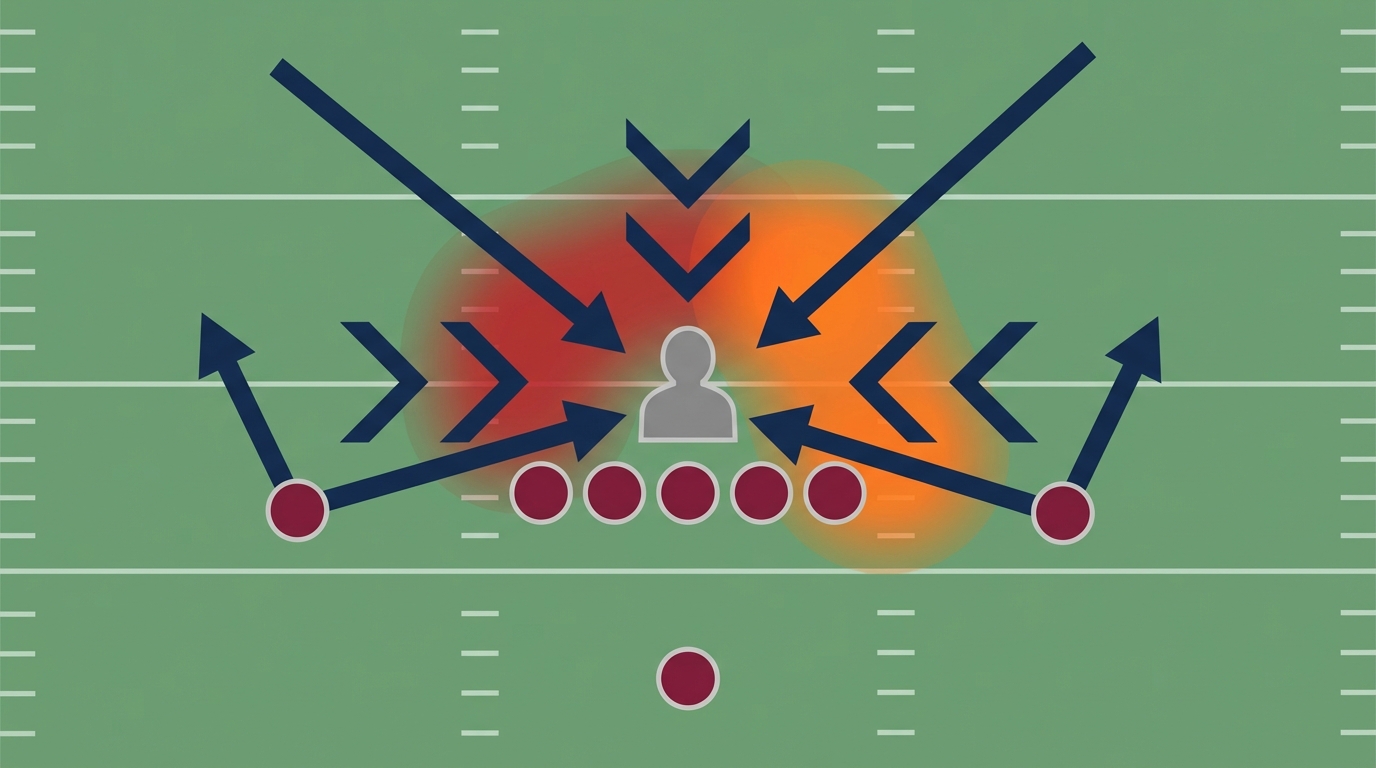
Statistical comparison Patriots defense vs Texans offense
Because the numbers tell the story, here is a snapshot of key metrics. The table highlights pressure, turnovers, and run defense.
| Metric | Patriots (Defense) | Texans (Offense) | Notes |
|---|---|---|---|
| Interceptions thrown by CJ Stroud | — | 4 (all in first half) | Tied NFL postseason record for interceptions in a half |
| Pick six | Marcus Jones 26-yard return | 1 allowed | First Patriots playoff pick six since 2007 |
| Passes defensed | 14 | — | High disruption rate on passing downs |
| Yards allowed by Christian Gonzalez | — | 58 on 7 catches (16 targets) | He was targeted heavily |
| Texans rushing yards | — | Under 50 yards | Run game neutralized all game |
| Texans offensive run success rate | — | 29% | Evan Lazar run success metric |
| Patriots blitz rate | 46.2% | — | Aggressive, often disguised |
| Pressure faced by CJ Stroud | 44.2% of drop backs | — | Under pressure Stroud was 8 of 14 |
| Stroud versus blitz | 8 of 23, 89 yards, 2 INTs | — | Struggled when extra rushers arrived |
| K’Lavon Chaisson pressures | 7 pressures, 1 sack | — | QB hit helped create pick six |
| Turnovers forced | 5 | — | Multiple takeaways changed field position |
As a result the box score reflects defensive dominance. Therefore the Patriots controlled field position and momentum.
Player highlights and quotes
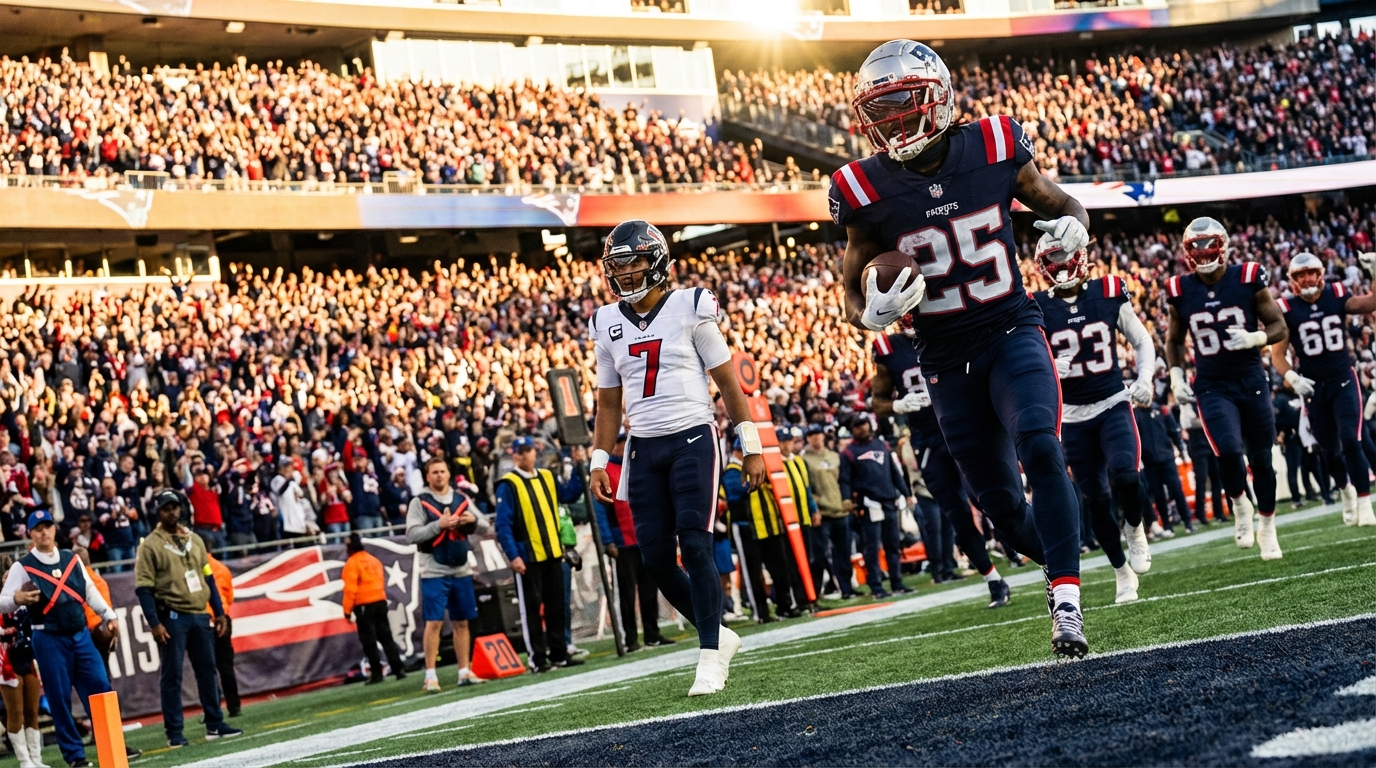
Marcus Jones stole the spotlight with the 26 yard pick six that swung the game. He read the QB and undercut the route, returning the ball to the end zone. Because K’Lavon Chaisson’s pressure forced a hurried throw, Jones capitalized. This was New England’s first playoff pick six since 2007, and it felt decisive.
K’Lavon Chaisson set the tone off the edge. He finished with one sack and seven pressures. Meanwhile his QB hit directly contributed to the Marcus Jones turnover. Therefore Chaisson’s presence helped collapse the pocket on multiple plays.
Carlton Davis played through a bruising night before entering concussion protocol. He still recorded four tackles and two interceptions. However he also drew three penalties that complicated field position. His ball skills and timing remain critical to the Patriots’ backend.
The defense drew praise and barbs alike. JJ Watt wrote on X, “Tough. Just put ourselves in a hole too many times…” which applauded the Patriots’ turnaround. Robert Littal described the Pats’ plan: “Imagine you are the Patriots. You shut down the running game…” His take echoed the coordinated pressure and coverage. As Dan Orlovsky put it, “If you’re Houston, you win that game with 31 other quarterbacks.”
Together these performances combined physical play with smart technique. As a result New England generated five turnovers and controlled momentum. Fans should savor this defensive clinic.
Conclusion
The Patriots defense delivered a clinic in the playoff win over the Texans, controlling the line of scrimmage and the scoreboard. Because New England mixed heavy pressure with tight coverage, the Texans never established an offensive rhythm. Fans watched a defense that dictated tempo and punished mistakes.
In historic context, Marcus Jones returned a 26 yard pick six — New England’s first playoff pick six since 2007. Meanwhile CJ Stroud threw four first half interceptions, tying the NFL postseason mark for interceptions in a half. Those moments defined the game and swung momentum decisively.
Key metrics underline the performance: a 46.2 percent blitz rate, 44.2 percent pressure on Stroud, 14 passes defensed, and Texans held under 50 rushing yards with a 29 percent run success rate. As a result the Patriots forced five turnovers and won field position battles throughout.
Voices from around the league matched the tape. JJ Watt praised the turnaround, while Robert Littal and Dan Orlovsky noted how pressure, coverage, and scheming forced Houston’s mistakes.
For more detailed breakdowns, visit Patriots Report LLC and follow on X at @ZachGatsby.
Frequently Asked Questions (FAQs)
What made the Patriots defense so dominant in this playoff game?
Because New England combined pressure and coverage, they controlled every phase. The Patriots blitzed at a 46.2 percent rate and generated pressure on 44.2 percent of CJ Stroud’s drop backs. As a result, the Texans could not establish a run game, and they finished under 50 rushing yards. New England also recorded 14 passes defensed and forced five turnovers. In short, the pass rush, pattern matching, and run defense worked together.
How did Marcus Jones’ 26 yard pick six happen?
K Lavon Chaisson created disruption with a QB hit and seven pressures. Consequently, Stroud rushed his throw and left a lane. Marcus Jones read the route, undercut the pass, and returned it 26 yards for a touchdown. It was New England’s first playoff pick six since 2007, and it swung momentum decisively.
How did pressure affect CJ Stroud and the Texans’ passing game?
Pressure distorted Houston’s timing and reads. Under pressure, Stroud was eight of 14. Versus blitz, he completed eight of 23 for 89 yards and two interceptions. He also threw four interceptions in the first half, tying a postseason mark. Therefore, the frequent pressure translated directly into turnovers.
Were there notable personnel or injury factors that influenced the game?
Carlton Davis exited into concussion protocol after a physical night. However, he still finished with four tackles and two interceptions before his injury. Christian Gonzalez allowed 58 yards on seven catches and he drew heavy targeting. Meanwhile, the Patriots used multiple rookies and roster depth to maintain intensity. As a result, defensive rotations stayed fresh late in the game.
What are the broader implications of this performance for the Patriots?
This game underlines New England’s identity as a pressure heavy, turnover driven defense. Because the unit combined scheme and execution, opponents will need stronger protections. The performance drew comparisons to the 1985 Bears in impact and intent. Finally, the win can shift momentum, and it raises expectations for the Patriots in the next matchup.