Patriots Offensive Line Struggles vs Broncos
Patriots offensive line struggles vs Broncos have taken center stage this week. Because New England has yielded 57 sacks across 19 games, the concern is stark. Rookie left tackle Will Campbell has given up multiple pressures and sacks against elite edge rushers. As a result, pass protection feels fragile heading into Denver. The Patriots’ five-sack game last week underlined those problems.
Denver’s front can expose those weaknesses with speed and stunts. However, schematic problems and personnel changes magnify the risk. Head coach Mike Vrabel built a stopgap offensive line in the offseason. Therefore, cohesion remains a major question.
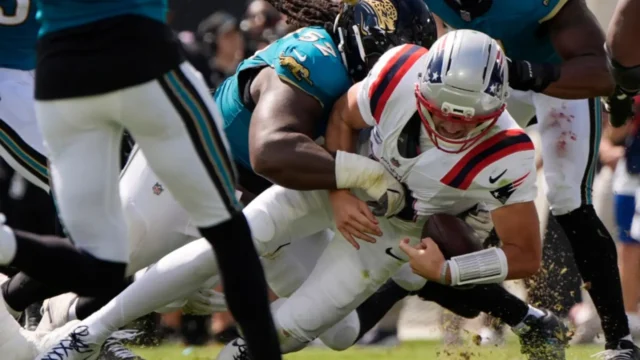
Offensive breakdowns cost yards and create turnovers. For example, Drake Maye suffered multiple fumbles when under heavy pressure. Meanwhile, play-action and RPOs lose effectiveness when the pocket collapses. This piece will analyze protection, schematic matchups, and practical solutions to limit the damage. We will examine line calls, slide protections, and quick game plans.
Patriots offensive line struggles vs Broncos
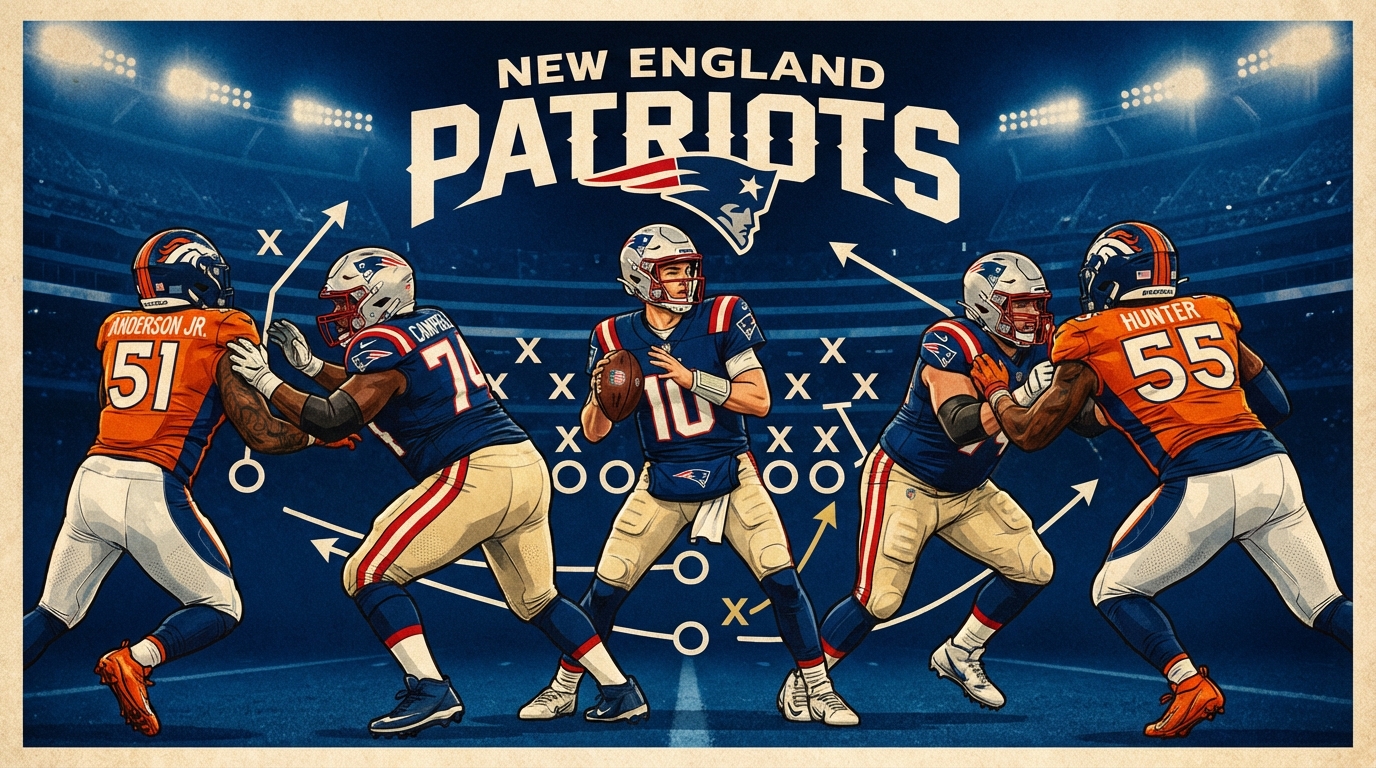
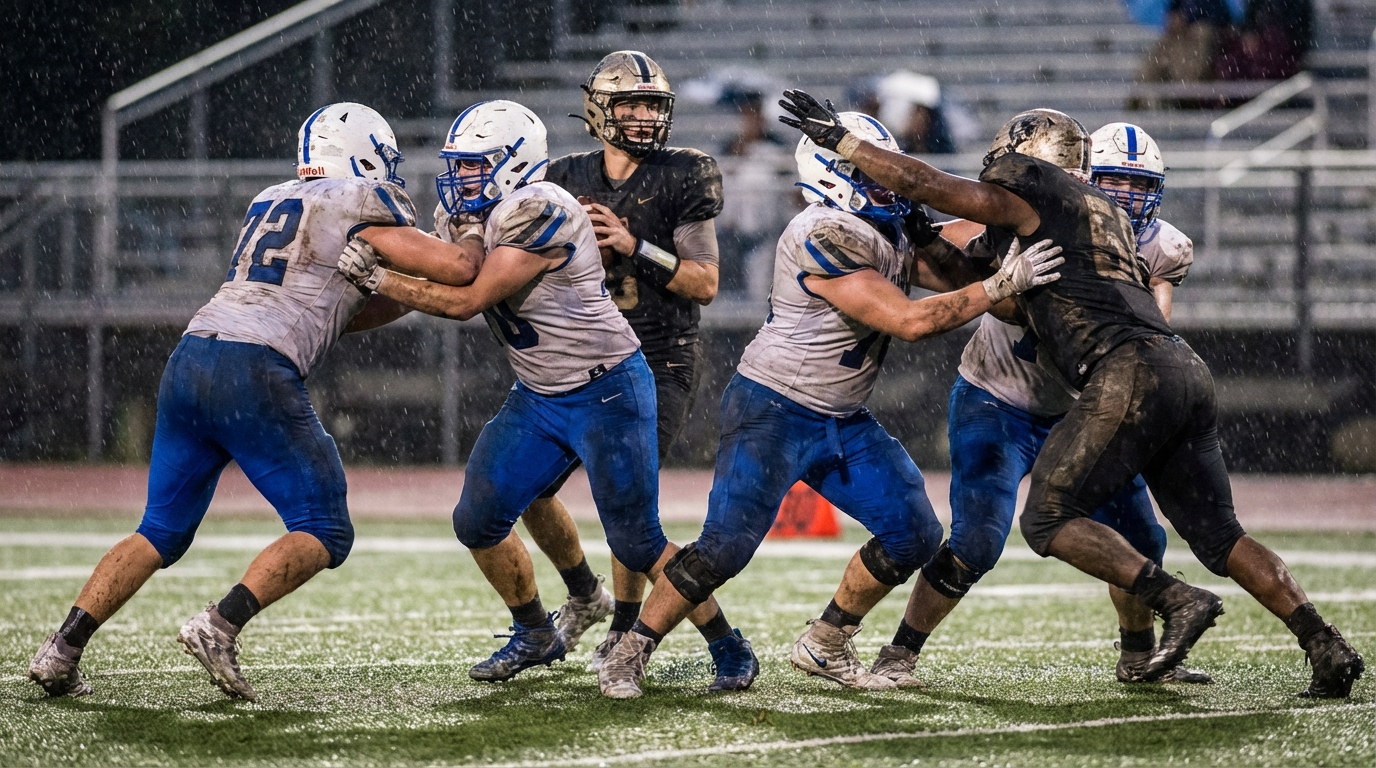
The Patriots’ protection problems have been obvious and persistent. In the last game New England allowed five sacks, bringing their total to 57 sacks over 19 games. Rookie left tackle Will Campbell gave up two sacks and five pressures against elite edge rushers William Anderson Jr. and Danielle Hunter. As a result, the pocket collapsed repeatedly. Therefore, the offense faced constant third and long situations.
Coaching and schematic choices helped create that vulnerability. Head coach Mike Vrabel assembled a stopgap offensive line in the 2025 offseason and installed four new starters. Meanwhile, offensive coordinator Josh McDaniels kept calling play actions and RPOs that depend on stability up front. However, those concepts lose value if the tackle cannot hold the edge. Consequently, play-action fakes failed to buy extra space for receivers.
Technically, Campbell struggled with speed-to-power transitions. He allowed multiple pressures when defenders used stunts and speed-rush arcs. In addition, inside mismatches exposed guards and the center on blitz pickup. As a result, pass-rushers often worked free lanes to Drake Maye, who fumbled four times under heat. Because of that turnover margin swung games against better defenses.
Scheme adjustments have been limited so far. Vrabel and McDaniels occasionally slide protection or chip with tight ends. Nevertheless, those fixes came late and lacked consistency. Quick passing and max-protect concepts could reduce sacks, but they require better communication on the line. Therefore, the Patriots must prioritize pre-snap calls and single-slide rules to limit free rushers.
There is also a personnel question. Can Campbell improve assignments against top-tier rushers like William Anderson Jr and Danielle Hunter? If not, New England may need more help in-game through tight end chips or rolling pockets. For more context on roster depth and backup options see this PatriotsReport piece on backups at the Patriots Report. Also, the grueling 2026 slate adds wear and tear on offensive personnel; read how tough the schedule was at this link.
The bottom line is cautious. The O-line is a work in progress. Because Denver brings speed and schematic variety, New England risks a repeat of the sack-fest. Therefore, protection plans and clearer line calls must improve quickly to keep the Patriots’ offense competitive.
| Player | Sacks (vs Patriots) | Pressures (on Will Campbell) | Turnovers forced (game) |
|---|---|---|---|
| William Anderson Jr. | — | — | — |
| Danielle Hunter | — | — | — |
| Anderson Jr. and Hunter (combined) | 2 | 5 | Contributed to Texans’ 5 turnovers (team) |
Potential solutions and offensive schemes
The Patriots must prioritize protection fixes and schematic clarity. Because the line looks vulnerable, coaches should simplify assignments. Therefore, the first goal is reducing time the quarterback holds the ball.
Start with a sharper quick passing plan. For example, run more three-step drop concepts and quick slants. These throws beat speed-to-power rushes and lower sack risk. Additionally, add high-percentage screens and timing routes to counter aggressive edges. As a result, defenders will hesitate before shooting gaps.
Use play-action selectively and pair it with early quick-game success. Play-action can work, but only after the offense proves it can move the ball. Meanwhile, RPOs offer a complementary option when linebackers must respect the run. However, RPOs require crisp reads and clear protections to avoid free rushers. Therefore, install simpler RPO triggers and fewer moving parts.
Adjust protection schemes to buy key seconds. Employ slide protection for known stunt looks. Also, use max-protect calls on obvious passing downs. Tight end chips and running back help can neutralize outside speed rushers. Alternatively, roll the pocket on zone reads to shift rush angles and create cleaner throwing lanes.
Consider personnel tweaks to stabilize a sub-par offensive line. Insert veteran linemen in short stints to calm communication. Moreover, use inline tight ends on third down to get extra hands at the point of attack. If necessary, call for more pre-snap motion to reveal defensive blitzes.
Finally, emphasize ball security and quicker decision-making. Because turnovers magnified losses, the offense must value possession. In short, prioritize quick reads, consistent slide rules, and situational max-protects. Those changes can limit a sack-fest and reduce the turnover margin.
Conclusion
The Patriots offensive line struggles vs Broncos could decide this game. Because the unit surrendered five sacks last week and 57 sacks in 19 games, the risk is real. Vrabel and McDaniels must simplify protections and tighten communication. Otherwise pressure will turn into turnovers.
However, the solutions are practical and achievable. For example, quick passing, situational max protect, and inline tight end help can stabilize the line. If Campbell improves against elite rushers, the offense regains balance. Therefore coaches should emphasize ball security and clear slide rules.
Patriots Report LLC provides this analysis and will track any adjustments. For continued coverage visit patriotsreport.com and follow on X at @ZachGatsby.
Frequently Asked Questions (FAQs)
What is causing the Patriots offensive line struggles vs Broncos?
Multiple factors contribute. Rookie Will Campbell has struggled against elite speed and power. For example, he surrendered two sacks and five pressures against top rushers. In addition, Mike Vrabel built a stopgap offensive line in 2025 with four new starters. As a result, cohesion and communication are weak. Meanwhile, certain play-action and RPO calls amplify the problem because they rely on clean pass protection.
How much did pass rushers like William Anderson Jr and Danielle Hunter affect the line?
They had a major impact. Those edge rushers work stunts and speed arcs that exposed gaps. Consequently defenders created free lanes and pressures. The team allowed five sacks in the last game. Across 19 games the Patriots have given up 57 sacks. Therefore matchups against those pass rushers are must-win for the O-line.
What coaching adjustments can realistically reduce sacks?
Coaches can simplify protections and shorten reads. Use more three-step drops and quick slants to limit QB hold time. Also install clearer slide protection and single-slide rules. Additionally use max-protect packages and inline tight end chips on obvious passing downs. Finally roll pockets and call timing routes to change rush angles.
Could personnel tweaks make an immediate difference?
Yes, personnel can help. Insert veteran linemen in critical situations to calm communication. Use running backs or tight ends to chip elite rushers. That said, the change must be consistent. Otherwise benefits will be temporary.
What should fans watch during the game for signs of improvement?
Watch quick passing success and reduced pressures. Notice pre-snap protection calls and whether slide rules are followed. Also track tight end chips and max-protect snaps. Most importantly, watch Drake Maye’s pocket time and ball security. If turnovers drop, the adjustments are working.