
What are Patriots 2026 mock draft WR targets?
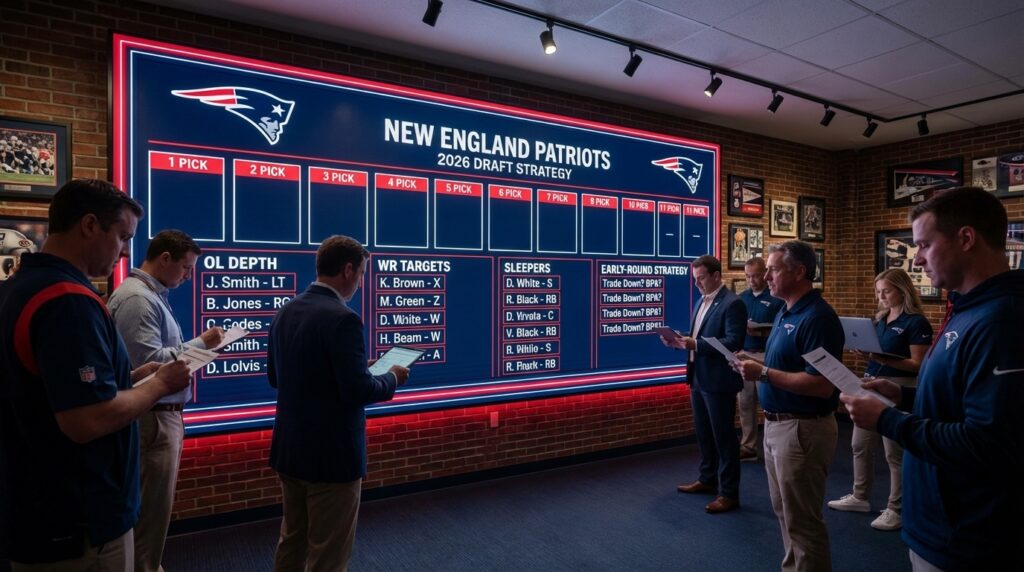
The Patriots 2026 mock draft arrives at a crossroads for New England. Because the team enters the draft with glaring trench needs, this class matters more than usual. Offensive line depth sits at the top of the board. Wide receiver targets and late-round sleeper picks offer alternate value. As a result, every selection will tilt the roster construction story for 2026.
New England allowed too many pressures and sacks last season, so prioritizing tackles and interior blockers makes sense. However, the salary cap and positional value complicate a pure trenches approach. Therefore, the front office must weigh a Day 1 tackle against picking a difference-making receiver at pick 31. Moreover, schematic fit and athletic traits will guide early-round decisions.
Looking ahead, the mock draft here blends analytics with scout-driven projection. It speculates on trade scenarios, upside picks and developmental swings. Because sleepers often decide depth charts, later-round gambles matter greatly. Ultimately, this piece examines OL reinforcement, WR upgrades, and hidden gems to forecast a realistic Patriots draft blueprint.
Patriots 2026 mock draft Offensive line analysis
The offensive line sits atop New England’s priority list because the 2025 front surrendered too many pressures. New England allowed 47 regular-season sacks and 21 postseason sacks, including six in the Super Bowl. Therefore, urgency drives both early picks and Day 2 depth additions.
Why it matters
- Pass protection fails masked other issues. As a result, the team needs tackle and interior reinforcement. Short term, starters must improve. Long term, depth must rise.
- Run blocking also suffered. Therefore, adding maulers and versatile guards helps balance the offense and protect the quarterback.
Prospect breakdown
- Max Iheanachor 6’6″, 321 pounds, Arizona State
- An ascending, traits-heavy tackle prospect with excellent length and lean mass. However, his hands and footwork need refinement. He showed stronger game reps at Senior Bowl and vs Texas Tech rushers, so he may be more pro-ready than expected. Iheanachor could slide into a starting role with coaching.
- Gennings Dunker 6’5″, 319 pounds, Iowa
- A three-year starter with a pro-ready frame likely to move inside. His heavy hands and upper-body power work inside. However, limited lateral quickness could be a problem in space and sub-package fronts.
- Nick Barrett 6’3″, 312 pounds, South Carolina
- A slow-power interior force who clogs running lanes. He lacks burst and quick hands, but he adds rotational beef and two-gap fill ability. Barrett fits teams that want run-stuffing depth.
Draft context and links
Because draft trends and visit trackers shape New England’s strategy, expect the team to marry analytics with workouts. For deeper trend context see Draft Trends. For who visited and measurables, see Visit Tracker. Also weigh the WR pick pressure when considering OL vs receiver at 31: WR Draft Targets.
Related keywords and synonyms: trenches priority, offensive front, pass protection, run-game blockers, interior guard depth.
Patriots 2026 mock draft Wide receiver and tight end targets
The Patriots target a mix of size, contested-catch skill and developmental upside at receiver and tight end. As a result, the board leans toward players who can help the red zone and move the chains. Moreover, scheme fit matters because New England values alignment versatility and route diversity.
Key prospects and fit
- Dallen Bentley 6’4″, 253 pounds, Utah
- 2025: 48 receptions, 620 yards, 6 touchdowns. He plays like an in-line tight end who surprises as a pass-catcher. “With just three catches over his first two seasons, Bentley’s 48 grabs in 2025 came as a surprise.” Therefore, he profiles as a mismatch option for slot-heavy looks.
- Adam Randall 6’3″, 232 pounds, Clemson
- 2025: 814 rushing yards, 4.8 yards per carry, 10 rushing TDs, 36 receptions for 254 yards and 3 receiving TDs. Randall brings rare rushing upside for a receiver-sized athlete. As a result, he offers gadget versatility and potential RB-package snaps.
- Harrison Wallace III 6’0″, 192 pounds, Ole Miss
- 2025: 61 receptions, 934 yards, 4 touchdowns. He profiles as a clean-route runner who can stretch the defense. However, he lacks elite size for contested catches.
- Jeff Caldwell 6’5″, 216 pounds, Cincinnati
- 2025: 32 receptions, 478 yards, 6 touchdowns. “Caldwell is a developmental prospect with enticing traits.” Consequently, he could be a late-day swing for vertical upside.
- John Michael Gyllenborg 6’6″, 249 pounds, Wyoming
- 2025: 24 receptions, 217 yards, 1 touchdown. “An athletic move tight end, Gyllenborg has the traits to be picked on Day 3.” In addition, he offers blocking and slot burst in equal measure.
Draft takeaways
Short term, Bentley and Gyllenborg address red-zone size. Long term, Caldwell and Wallace offer perimeter growth. Therefore, the Patriots can mix Day 2 reliability with Day 3 upside.
| Player Name | Position | Height | Weight | College | 2025 Key Stats/Notes |
|---|---|---|---|---|---|
| Max Iheanachor | OT | 6’6″ | 321 | Arizona State | Traits-heavy tackle; excellent length and lean mass; hands and footwork need refinement; Senior Bowl reps. |
| Dani Dennis-Sutton | DE | 6’6″ | 256 | Penn State | 42 total stops; 12 TFL; 8.5 sacks; 3 forced fumbles; tough base end, limited pass-rush upside. |
| Gennings Dunker | OT/OG | 6’5″ | 319 | Iowa | Three-year starter; pro-ready frame; heavy hands; likely move inside to guard; average lateral quickness. |
| Romello Height | EDGE/DE | 6’3″ | 239 | Texas Tech | 38 total stops; 11.5 TFL; 10 sacks; strong edge production and high motor. |
| Dallen Bentley | TE | 6’4″ | 253 | Utah | 48 receptions; 620 yards; 6 TDs; in-line tight end frame; surprise jump in 2025 receiving. |
| Nick Barrett | DT | 6’3″ | 312 | South Carolina | 42 total stops; 6 TFL; 2 sacks; slow-power interior run-stuffer and two-gap fit. |
| Adam Randall | RB | 6’3″ | 232 | Clemson | 814 rushing yards; 4.8 YPC; 10 rushing TDs; 36 receptions for 254 yards; versatile runner-weapon. |
| Harrison Wallace III | WR | 6’0″ | 192 | Ole Miss | 61 receptions; 934 yards; 4 TDs; clean-route runner and perimeter separator. |
| Jeff Caldwell | WR | 6’5″ | 216 | Cincinnati | 32 receptions; 478 yards; 6 TDs; vertical traits present; developmental route polish needed. |
| John Michael Gyllenborg | TE | 6’6″ | 249 | Wyoming | 24 receptions; 217 yards; 1 TD; athletic move tight end with blocking and slot upside. |
| Chip Trayanum | RB | 5’11” | 228 | Toledo | 1,015 rushing yards; 5.6 YPC; 12 rushing TDs; 21 receptions for 212 yards; power runner with pass-pro chops. |
The Patriots 2026 mock draft highlights a clear roster blueprint: shore up the trenches, add perimeter playmakers, and swing for high-upside depth later. Because New England surrendered 47 regular-season sacks and 21 postseason sacks in 2025, offensive line upgrades must lead the plan. However, the team can still justify a receiver or athletic tight end at pick 31 if a clear difference-maker falls.
Early picks should focus on pro-ready blockers and versatile linemen who can start quickly. At the same time, middle-round selections can target contested-catch size and developmental route runners. Moreover, Day 3 swings should hunt for sleeper athletes who fit New England’s scheme and special teams needs.
This mock draft blends analytics with scout instincts to produce a pragmatic, speculative roadmap. Therefore, expect a mix of safe blockers and upside receivers across seven rounds. For more in-depth breakdowns and ongoing updates, follow Patriots Report LLC on their website and on Twitter X @ZachGatsby. Stay tuned as workouts, visits and combine results refine this projection.
Frequently Asked Questions (FAQs)
What are the Patriots’ top priorities in the 2026 draft?
The trenches rank first. New England needs offensive line depth to cut pressures and sacks. Second, the team wants perimeter playmakers who can win contested catches and create separation. Third, Day 3 sleepers and special-teams contributors matter. As a result, expect a mix of pro-ready blockers, versatile receivers, and developmental gambles across seven rounds.
How urgent is offensive line help after the 2025 season?
It is highly urgent. The Patriots surrendered 47 regular-season sacks and 21 postseason sacks, including six in the Super Bowl. Therefore, blocking upgrades are both a short-term survival need and a long-term roster priority. Consequently, the staff should favor NFL-ready linemen who can start or step in right away.
Which receivers and tight ends best fit New England’s scheme?
The team should target contested-catch size and alignment versatility. Dallen Bentley offers in-line size and 48 catches for 620 yards in 2025. Harrison Wallace III brings clean routes and 61 catches for 934 yards. Jeff Caldwell supplies vertical traits despite route polish needs. John Michael Gyllenborg projects as an athletic move tight end with blocking upside. Adam Randall adds gadget-style rushing and receiving flexibility.
Who are realistic sleepers or value picks later in the draft?
Look for multi-role athletes and physical backups. Chip Trayanum offers 1,015 rushing yards and special-teams upside. Nick Barrett gives interior “slow power” run-stuff ability as a rotational DT. Gennings Dunker could slide inside to guard and provide early depth. Additionally, late defensive ends with high effort can provide immediate rotation.
Should the Patriots prioritize an offensive tackle early or take a receiver at pick 31?
Prioritize best value and scheme fit. If a pro-ready tackle like Iheanachor falls, take him because pass protection is urgent. However, if a clear difference-making receiver is available at 31, the team can justify the pick. Ultimately, trade scenarios and measurable testing will decide the balance.