Drake Maye Super Bowl performance: From season promise to a harsh Super Bowl LX truth
Drake Maye Super Bowl performance carried sky-high expectations after his breakout season. However, Super Bowl LX delivered a far different finale.
The New England Patriots faced the Seattle Seahawks for the Lombardi Trophy. Both teams arrived battle-tested and ready to win. Maye entered as the Patriots’ franchise quarterback and their biggest playmaker. Fans expected him to lead a high-scoring offense and make clutch plays under pressure.
Instead, the game tilted against him amid sacks and costly turnovers. He completed 27 of 43 passes, threw two touchdown passes, and also had two interceptions. Because he faced relentless pressure, several throws landed in harm’s way. This analysis breaks down how a season of promise met a disappointing title game. It looks at protection failures, third-down struggles, and decision-making in critical moments.
Meanwhile, we will place Maye’s Super Bowl outing in the context of his 2026 campaign. You will get an even-handed review that praises his season-long growth while scrutinizing what went wrong on the biggest stage.
Related keywords and synonyms to help search engines and readers
- Seahawks Dark Side defense
- Patriots offense struggles
- Super Bowl LX quarterback review
- sacks turnovers fumbles interceptions
Image concept
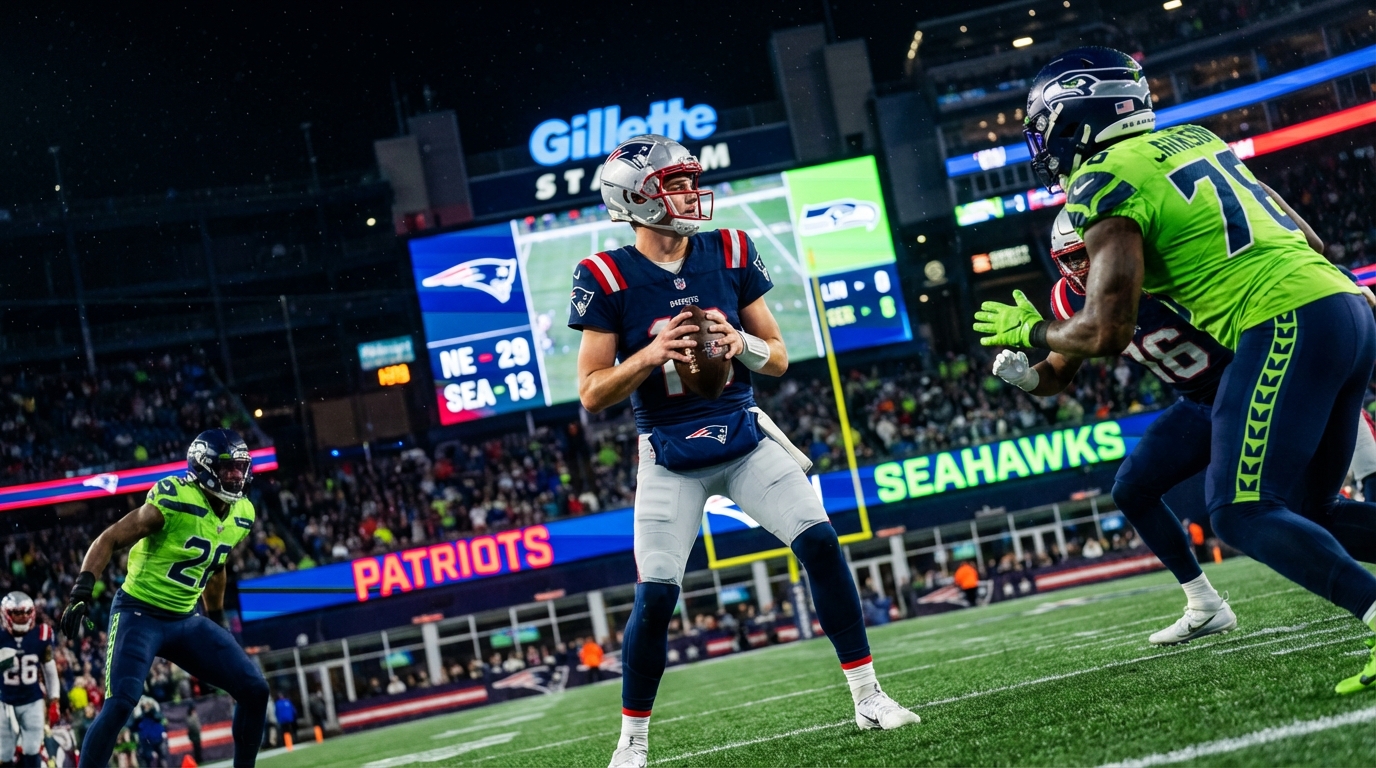
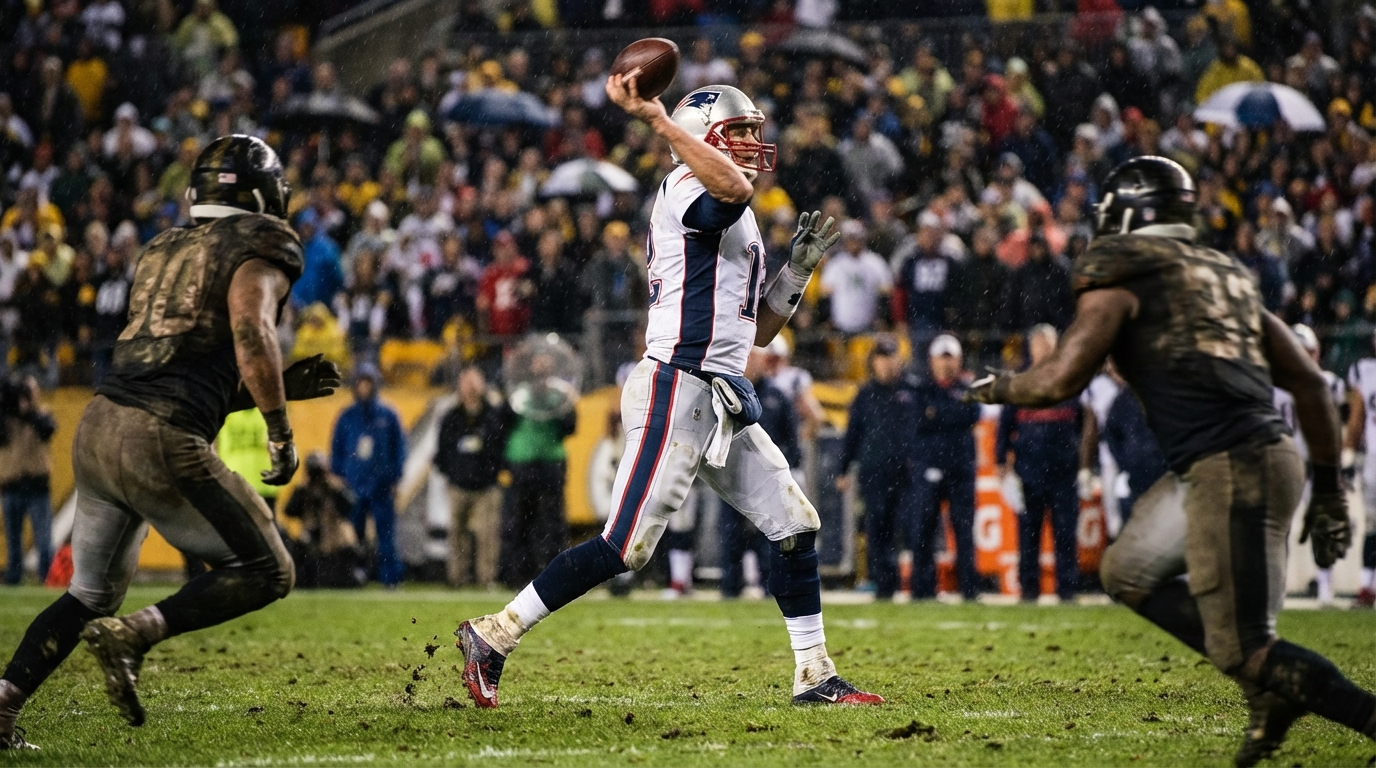
A wide, stadium-level shot of Drake Maye mid-throw on a rain-slicked turf. The Patriots white uniform contrasts with Seattle’s dark jerseys. Defensive linemen bend toward him while the scoreboard glows 19-0. The image should capture tension, motion, and the pressure of a championship moment.
Drake Maye Super Bowl Performance First Half Analysis
The first half of Super Bowl LX set a harsh tone for Drake Maye’s performance. Maye entered as the Patriots’ engine, yet the opening 30 minutes showed obvious flaws in protection and situational execution. Because Seattle’s defense dominated the line of scrimmage, New England managed only 51 total yards before halftime. As a result, the Patriots trailed 12 to 0 at the break and struggled to sustain drives.
Maye finished the game completing 27 of 43 passes for 295 yards and two touchdown passes. However, those full game totals mask how he and the offense were repeatedly stopped early. The first half revealed these problems in plain view.
Key First Half Stats and Play Highlights
- Completed passes overall and yardage for context: 27 of 43 for 295 yards and two touchdown passes show Maye was moving the ball later, but not early.
- Sacks and pressure: six sacks on the game highlighted a failure in pass protection, because Seattle sent consistent pressure.
- Interceptions: two total picks hurt momentum, including a pick six by Julian Love that flipped the scoreboard and morale.
- First half yardage: only 51 total yards in the first half, the fewest in the last 35 Super Bowls, which exposed playcalling and execution issues.
- Third downs: long yardage sequences on third down included distances of 9, 15, 17, 7 and 12 yards, therefore New England rarely reached manageable downs.
- Turnover timing: Maye fumbled on a drive that set up a Sam Darnold touchdown, which later widened the deficit and changed the game flow.
Play by play, the first half looked like this. The Seahawks pressured Maye early, and pass rushers collapsed lanes. Because receivers needed to create separation, routes broke down against tight coverage. As a result, many third down attempts required unrealistic gains. Commentators were blunt after the half. One critic said, “Maybe there was no chance that they were going to win this game, but there were some chances to get a little momentum going at some point on offense, and they never did. I said Drake Maye has to be great tonight. He has not been.” Meanwhile, another voice noted the risk on certain throws, “Uh, I’ve got nothing for you here, There’s just no way that ball was going to be completed. And it really wasn’t that close to desperation time yet where you have to put it in harm’s way.”
In short, the first half combined schematic struggles and execution failures. Therefore, even with Maye’s season growth, Super Bowl LX’s opening 30 minutes created a hole the Patriots could not climb out of.
| Metric | 2025 Regular Season (Totals) | Super Bowl LX |
|---|---|---|
| Completions | 341 | 27 |
| Attempts | 525 | 43 |
| Passing yards | 4,012 | 295 |
| Touchdown passes | 29 | 2 |
| Interceptions | 10 | 2 |
| Sacks taken | 42 | 6 |
Key takeaways
- The table shows Maye’s volume and efficiency during the regular season. However, the Super Bowl compressed his impact because of pressure and turnovers.
- Six sacks and two interceptions in one game magnified New England’s failure to protect and sustain drives.
- Passing yards in the title game represented about 7 percent of his regular season total, which underlines how Seattle limited long-term pace and rhythm.
For more context on how turnovers and game planning shaped the matchup, see the PatriotsReport Super Bowl preview and related pieces on game-week advantages and offseason implications.
Patriots offense challenges in Super Bowl LX
New England’s offense never found rhythm in the title game. Because drives stalled early, the Patriots crossed midfield rarely. The first half ended with just 51 total yards, the fewest in the last 35 Super Bowls. As a result, the team fell into long third down situations and lost momentum.
Long third downs and stalled drives hurt every plan. On five early third downs the distances were 9, 15, 17, 7 and 12 yards. Those plays forced conservative calls or low-percentage throws. Therefore, the offense could not string meaningful plays together. In addition, pass protection broke down. Maye absorbed heavy pressure and the offense allowed six sacks on the night.
A turning sequence widened the gap. Midway through the second quarter Drake Maye fumbled under pressure. Consequently, the turnover set up a Sam Darnold touchdown pass and a 19 to 0 deficit. That swing flipped field position and tilted the game’s momentum toward Seattle. Moreover, it energized the Seahawks defense to play more aggressively.
Defensive plays and offensive errors fed each other. Because the Seahawks forced quick punts, the Patriots offense faced shorter fields and harsher down-and-distance windows. Meanwhile, Julian Love’s interception returned for a touchdown crushed any comeback feel. The pick six did more than add points. It changed play calling and forced riskier passes.
In short New England’s problems were both schematic and situational. Pressure and penalties worsened long third downs. As a result, Maye faced rushed reads and tight windows. However, the season-long growth he showed could still be a base to fix these issues. Teams must improve protection, convert manageable third downs, and limit early turnovers to reset championship expectations.
Conclusion
Drake Maye Super Bowl performance ended as a harsh capstone to an otherwise strong season. He showed growth all year, yet the title game exposed key weaknesses. The Patriots finished 14-3, which proves the foundation is real and durable.
However, Super Bowl LX highlighted avoidable errors. Maye took six sacks and threw two interceptions. One pick became a touchdown for Julian Love. He also fumbled, which set up a Sam Darnold score and widened the gap. As a result, New England could not build momentum.
Moving forward the outlook remains optimistic. Protecting the quarterback must improve. Third down conversion and turnover control are urgent priorities. If those areas get fixed, Maye can return to elite form.
For deeper Patriots analysis and long term coverage, consult Patriots Report LLC and follow @ZachGatsby on Twitter. Their reporting provides context, roster study, and offseason implications as the team plans its next steps.
Frequently Asked Questions (FAQs)
What were Drake Maye’s Super Bowl LX statistics?
Maye completed 27 of 43 passes for 295 yards. He threw two touchdown passes. He also had two interceptions and was sacked six times.
Why did the Patriots offense struggle in the game?
Because Seattle pressured Maye and dominated the line of scrimmage. New England had just 51 first half yards. Long third down distances and short fields prevented momentum. Early third downs included 9, 15, 17, 7 and 12 yard needs.
Did one mistake decide the game?
No single play decided it, however key errors mattered. Maye’s second quarter fumble led to a Sam Darnold touchdown. Julian Love returned an interception for a touchdown. Those swings widened the gap.
Does this result erase Maye’s season progress?
Not at all. Maye helped the Patriots go 14-3. The team must reduce sacks and clean up timing. Still, turnovers and protection must improve before he reaches sustained elite play.
What should fans expect next season?
Expect targeted offseason fixes. Specifically improve pass protection, trim penalties, and convert third downs. Expect roster moves, coaching tweaks, and a focused offseason plan. If that happens, Maye’s upside remains real.