A.J. Brown injured reserve: Patriots’ short-term outlook and who steps up
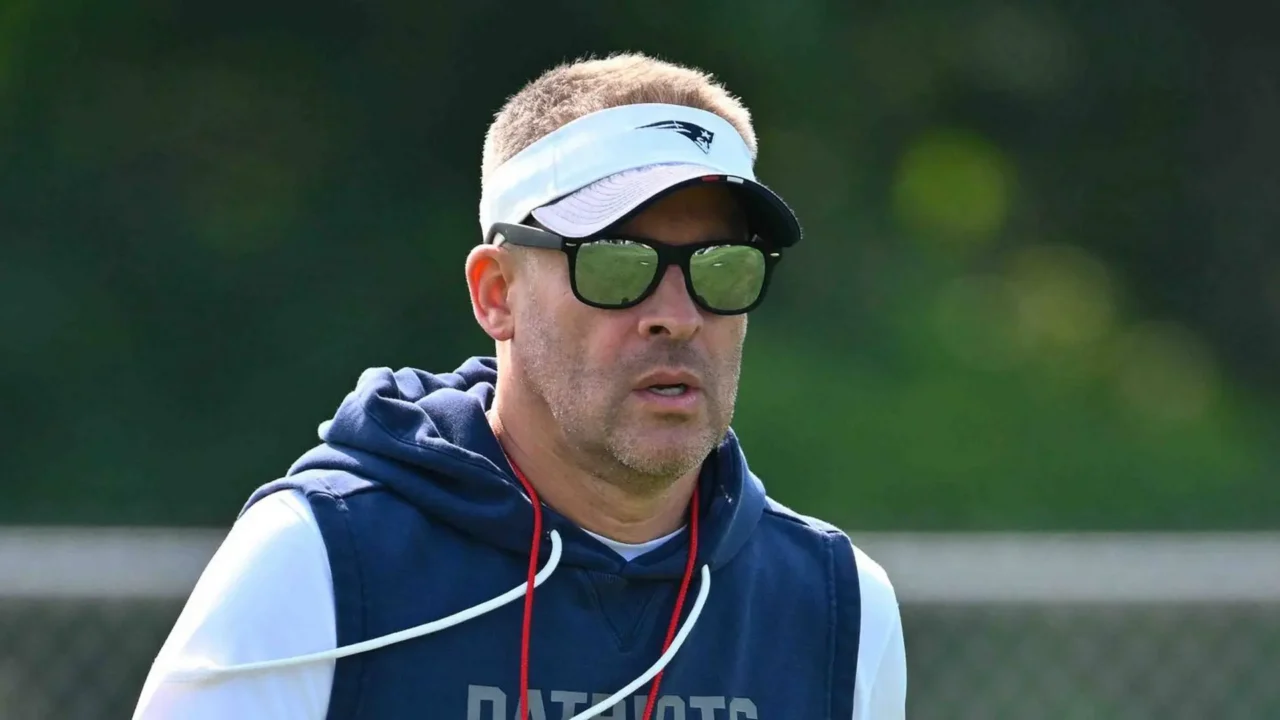
A.J. Brown injured reserve — The New England Patriots have placed A.J. Brown on short-term injured reserve after he suffered a high-ankle sprain in the season opener. The move sidelines the team’s top outside receiving threat for at least the next four games and forces immediate roster and schematic adjustments for offensive coordinator Josh McDaniels and quarterback Drake Maye.
The team announced the designation on Friday. Brown will miss the four-game minimum slate: Week 2 vs. Pittsburgh (home, Gillette Stadium), Week 3 at Jacksonville, Week 4 at Buffalo and Week 5 vs. Las Vegas. With the receiver room thinner following Kayshon Boutte’s move to Houston, New England must reallocate targets and tailor play-calling to available personnel.
A.J. Brown injured reserve: immediate roster impact
The phrase “A.J. Brown injured reserve” now defines the Patriots’ short-term passing-game outlook. There is no single roster player who replaces Brown’s contested-catch size, perimeter alignment and ability to consistently win 50/50 throws. That reality pushes New England toward a committee model: more short-area volume, expanded two-tight-end looks and creative personnel usage rather than seeking a one-for-one replacement.
Depth is a practical concern. With Boutte in Houston, the vertical complement to Brown is thinner than it was entering the season, which elevates the importance of complementary pieces who can operate in the slot, on intermediate attackers, or in multi-tight-end personnel. Expect snap counts and target shares to realign quickly, especially in early-season scripts when the team prefers to limit down-and-distance damage and protect its young quarterback.
Who will see bigger roles and why
No receiver has spent more time on the field with Drake Maye than DeMario Douglas, and his rapport with the QB positions him to inherit additional short- and intermediate targets. Douglas’ route tree and quick-game reliability make him a natural first beneficiary of schemed volume increases. (See related: demario douglas contract.)
DeMario Douglas — Most likely to see a marked bump in targets inside the numbers. His chemistry with Maye and ability to operate in the short-to-intermediate window gives the offense a safe, rhythm-based option on early downs and higher-leverage situations.
Hunter Henry — The veteran tight end will be asked to do more as a safety valve and as a seam threat against linebackers. Henry’s contested-catch acumen and usage on third downs make him a focal point in two-tight-end and heavy personnel groupings.
Romeo Doubs — After a modest debut, Doubs figures to get additional opportunities both on the boundary and from the slot. He provides a perimeter option who can be schemed into favorable matchups via motion or formation changes, though his expanded role should be framed as a developing situation rather than an immediate fix.
Mack Hollins — Likely the de facto perimeter focal point, Hollins’ snap share should increase in heavier personnel and third-down opportunities. He showed trust with the quarterback in key moments and will be asked to handle more volume and contested reps.
Kyle Williams — The team’s speed element becomes more valuable in a stretched field concept. McDaniels can design vertical opportunities to isolate Williams as defenses redistribute coverage away from inside threats.
How Josh McDaniels can adapt
Josh McDaniels’ play-calling adjustments will be central to how smoothly New England navigates Brown’s absence. Historically across his Patriots tenure (2012–21 and beyond in New England context), McDaniels has leaned on slot receivers, tight ends and quick passing concepts when outside alpha targets were limited. Translating that pattern into 2026, he has several practical avenues:
- Emphasize quick-game and short-area concepts to maintain positive yards per play and reduce risky down-and-distance sequences that expose Maye to pressure.
- Deploy more two-tight-end sets to create mismatches against linebackers and to open intermediate windows for DeMario Douglas and Henry.
- Use motion, bunch and crossers to manufacture separation for Romeo Doubs and to free up Hollins on the boundary.
- Incorporate designed screens and RPO elements that pace the game and get playmakers in space without relying on contested vertical throws to a single star perimeter receiver.
Analysis: These are tactical possibilities grounded in McDaniels’ historical tendencies and the Patriots’ current roster composition. There are no guarantees — opponent game-planning, execution, and in-game injuries will ultimately determine whether these adaptations yield sustained production.
Next four-game timeline and what to watch
The short-term IR designation means Brown will miss at least the next four games: Week 2 vs. Pittsburgh (home), Week 3 at Jacksonville (road), Week 4 at Buffalo (road) and Week 5 vs. Las Vegas (home). Those matchups include a mix of stylistic challenges: early-season home expectations, two road tests that can amplify pressure on a retooled passing game, and a Week 5 divisional/non-divisional tilt that will test the Patriots’ adjusted identity.
Key things to monitor across that span:
- Snap share and target share for Mack Hollins — will he operate as the clear perimeter leader?
- Target distribution to DeMario Douglas and Hunter Henry, particularly on early downs and third-down passing situations.
- Usage of Kyle Williams on designed vertical plays and whether motion or formation changes create isolations downfield.
- Romeo Doubs’ route mix — more boundary work versus slot snaps will indicate whether McDaniels trusts him in critical perimeter roles.
- Overall third-down conversion rate and passer pressures on Maye — a spike could indicate the offense is struggling to replace Brown’s ability to change defensive leverage.
Brown’s actual return timeline will depend on rehab progress; short-term IR guarantees only the four-game minimum. Any projection beyond that is speculative and should be guided by medical updates and team reports.
Source attribution and coach quote
“Any injury that you get at this time of the season, you kind of approach it with an all-hands-on-deck approach. We got a lot of different skill guys that can do a lot of different things. There isn’t one person on the roster that can replace anybody like A.J. — in the middle of a game or a stretch of a season. So we’ll band together and figure out what we can do well and then try to get guys in positions to play to their strengths.”
— Josh McDaniels, as reported by MusketFire
This coverage is based on the MusketFire report; the original story is available at MusketFire. Pro Football Focus was referenced in the reporting for slot-usage context, and any PFF figures should be consulted on their site for exact metrics.
Opinion labeling: Portions of this article that project role increases or outline schematic solutions are analysis and not certainties. They are grounded in McDaniels’ historical tendencies and the Patriots’ current roster makeup, but execution and opponent game-planning will determine outcomes.