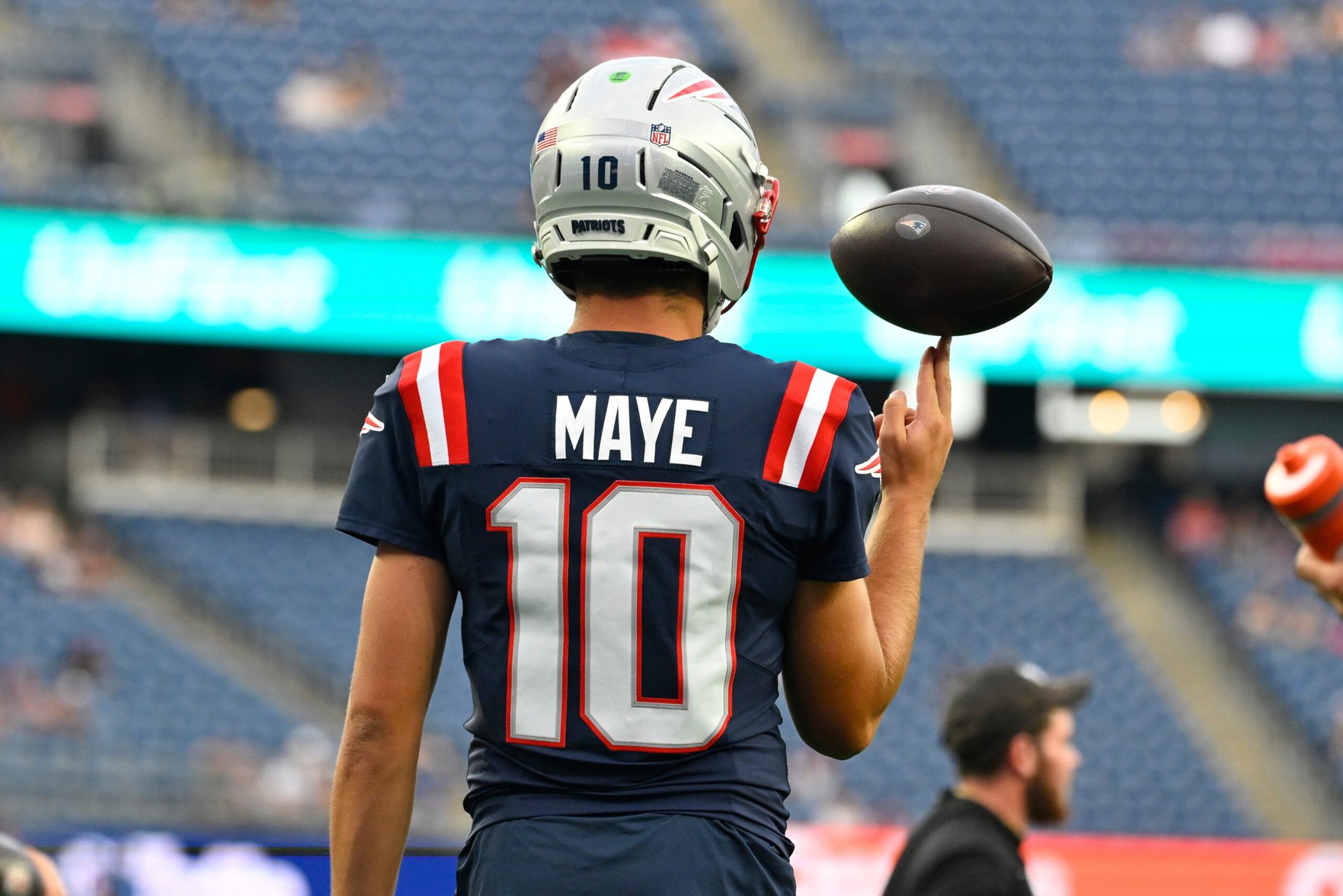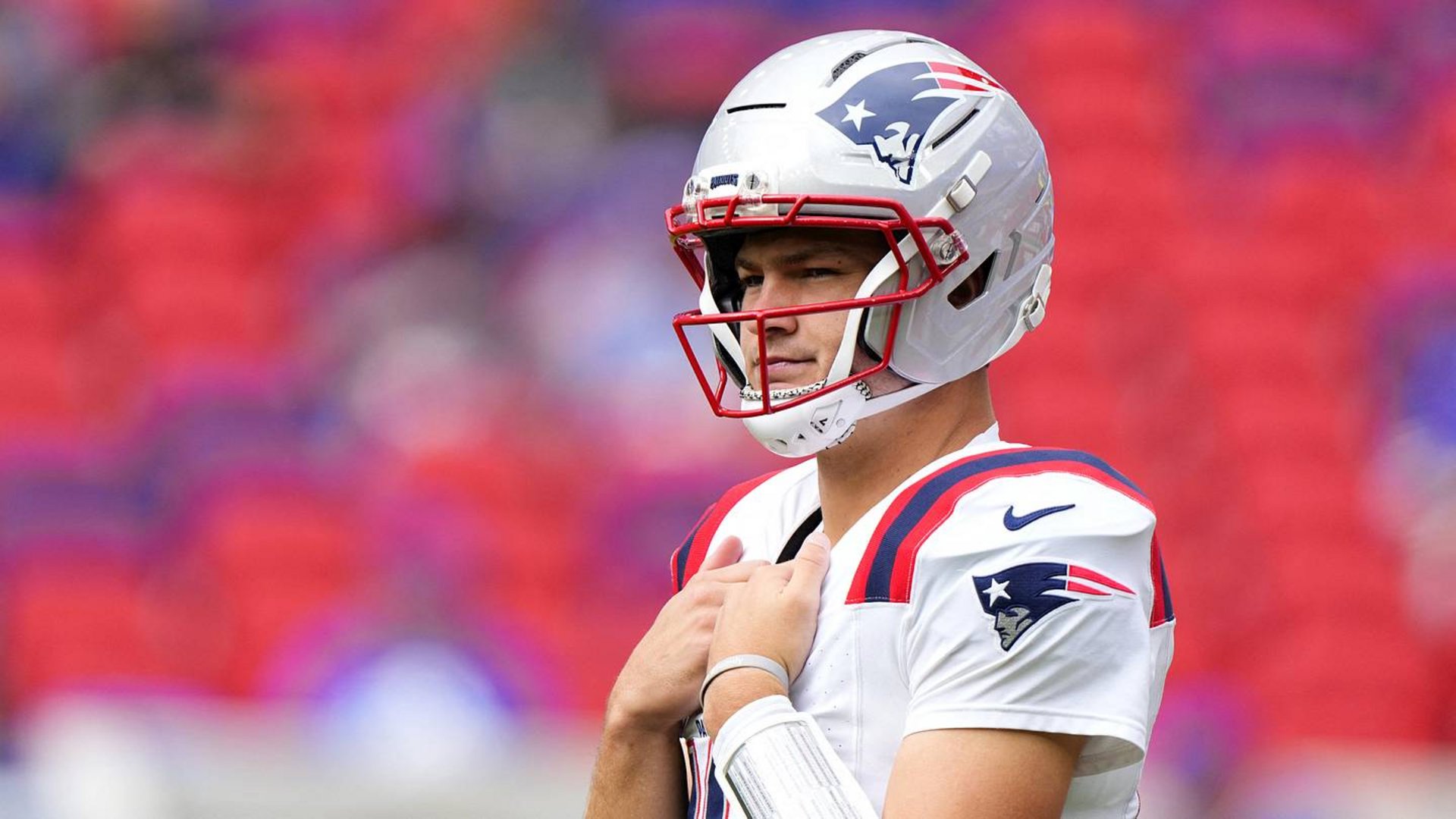
The New England Patriots beat the Buffalo Bills in Buffalo for the second straight year, and Drake Maye helped deliver the result with a strong passing line. Yet the game also revived concerns about the Drake Maye offensive line situation: the source reports that Maye faced 21 pressures, even as he threw for three touchdowns.
Those details point to a complicated performance, not a simple verdict on either the quarterback or the protection in front of him. A pressure total can help explain the conditions Maye faced, but it does not identify which player was responsible for each breakdown. And although the source argues that New England should consider a trade for offensive-line help, it reports no negotiations, specific target or confirmed team plan.
Drake Maye’s offensive line problems were visible in the Bills game
Maye completed 59.5 percent of his passes for 269 yards, three touchdowns and one interception against Buffalo, according to the source. He also ran for 54 yards and lost a fumble. The Patriots won, making the result an important counterpoint to any account that treats the game as a straightforward offensive failure.
The source says Maye faced 21 pressures, the most of his three-year NFL career. It does not provide a description of its charting method, so that total should be attributed rather than treated as independently verified data.
That distinction matters when evaluating the performance. A quarterback can make productive plays while dealing with pressure, as Maye did in the passing game, and still have stretches in which protection affects the timing or options available. But a team pressure count alone does not establish that the line caused every missed opportunity, turnover or offensive issue.
The source’s broader conclusion—that the offensive line is a major reason for the Patriots’ offensive struggles—is the author’s analysis. The Buffalo numbers provide context for that argument, but they do not, by themselves, prove the line is the sole or primary cause of the offense’s results.
Maye’s Pro Football Focus grade reflects a strong game despite pressure
Pro Football Focus ranked Maye 13th among NFL quarterbacks after the game, according to the source. It also reports that his 84.4 PFF grade ranked fourth among quarterbacks for the week. Those are separate measures: the ranking describes his position among quarterbacks, while the grade indicates how PFF evaluated his performance that week.
The source quotes PFF as saying Maye played his best game of the season to that point and recorded more big-time throws than turnover-worthy plays for the first time that season. That assessment helps explain why his grade could be strong despite the interception, lost fumble and reported pressure. It also cautions against reading the 13th-place ranking as a complete summary of his Buffalo performance.
Maye’s rushing production added another dimension. He gained 54 yards on the ground, though he also lost a fumble. Those plays reflect a game in which he contributed beyond his passing total, but the source does not provide enough detail to assign his rushing attempts to protection failures or any one cause.
Readers looking for broader context on his development can also review Patriots Report’s Drake Maye Growth Year Three coverage. For this game, the more useful takeaway is that the box score, the pressure figure and PFF’s evaluation capture different parts of the performance.
The Patriots returned much of their offensive line
The source identifies four returning starters from the previous season: Will Campbell, Morgan Moses, Mike Onwenu and Jared Wilson. It says Wilson moved from guard to center, while Alijah Vera-Tucker was the team’s only offensive-line addition.
That personnel history provides context for the author’s criticism that New England did not add enough help. It does not establish that returning players performed poorly against Buffalo, nor does it show how each individual contributed to the reported pressure total.
Returning starters can provide continuity, but continuity alone does not guarantee that a unit will consistently protect the quarterback. Likewise, one game’s pressure count cannot settle whether the roster needs a major change. The source’s personnel details help frame the question; they are not a player-by-player evaluation.
Buffalo’s pressure and the run game raise different questions
The run-game figures offer another part of the picture. The source reports that Rhamondre Stevenson and TreVeyon Henderson combined for 89 rushing yards against Buffalo, averaging 3.31 yards per carry. That is a modest team result, but the figures do not establish why the runs gained the yardage they did.
Pass protection and run blocking are related parts of offensive-line play, but they are not interchangeable measures. Maye’s reported 21 pressures describe what happened on passing plays; the backs’ combined average describes the rushing output. The source argues that both point to line concerns, but without play-by-play blocking information, it would be too strong to assign the rushing results to the line alone.
The source also cites 47 regular-season sacks and 21 additional playoff sacks from the previous season. Those figures are offered as evidence of a longer-running protection concern. They supply relevant history, but sack totals alone do not show how much responsibility belongs to the offensive line, the quarterback or other factors on particular plays.
Does the source make a case for a Patriots offensive-line trade?
The source’s recommendation is that New England consider adding offensive-line help through a trade. That is an opinion about what the Patriots should do, not a report that the team is pursuing a deal. It names no potential trade target and provides no reported discussions, offer or confirmed front-office plan.
That distinction is especially important in a trade-rumor story. The reported pressure and personnel context can make the case for examining the line, but they cannot tell readers whether a suitable player is available, what a deal might cost or whether the team believes a trade is necessary. None of those details is provided in the source.
The author predicts that Maye will continue to have difficult stretches without better protection and suggests his quarterback rating could remain mediocre. That is a projection, not an established outcome. Maye’s three touchdown passes in Buffalo show why a forecast should not be presented as certain, while the reported pressure count explains why the protection question remains part of the conversation.
For the Patriots, the Buffalo game offers both encouragement and a reason to keep evaluating the offensive line. Maye produced a winning performance while reportedly facing substantial pressure, and the run game had a limited combined average for the two backs cited. Whether those indicators lead to a roster move is unknown; the source argues for considering a trade but does not report one in progress.
This analysis draws on Michael DeVito’s Musket Fire article about Drake Maye and the Patriots’ offensive line. Its pressure count, PFF figures and personnel details are attributed to that report, while its call for a trade is the author’s opinion.