The New England Patriots’ 35-6 loss to the Jacksonville Jaguars in Week 3 put the Patriots offensive line at the center of a difficult conversation. In a critical response to the game, Musket Fire argues that protection problems and a struggling running game are putting too much pressure on quarterback Drake Maye.
That is a plausible concern, not a complete explanation established by the available figures. The source’s injury descriptions and statistics have not been independently verified here, and its predictions about New England’s season are opinions. Still, the reported numbers give Patriots fans concrete questions to watch as the team prepares to travel to Buffalo in Week 4.
The Patriots offensive line became the central issue in Jacksonville
Musket Fire’s argument is that the line is limiting the offense in two connected ways: it is not creating enough space for runners, and its pass protection leaves Maye in a challenging environment. The 35-6 result against Jacksonville lends urgency to that discussion, but one lopsided score cannot establish that the line alone caused the loss.
The source also describes turnovers and an ineffective rushing attack as contributors to the defeat. Those factors can compound each other. When an offense struggles to run, it may become more reliant on throwing; when protection is under pressure, sustained drives become harder. That relationship is worth examining without treating it as proof of individual fault.
Protection problems are creating a difficult environment for Drake Maye
Musket Fire reports that the Patriots allowed 47 sacks in 2025 and says the line has continued to struggle. That figure is a warning sign in the source’s analysis, but it does not identify which plays, players, or circumstances account for the current concerns. Nor does it prove that protection issues explain every mistake by Maye.
Quarterback development depends in part on the conditions around the passer: time to read the defense, dependable routes, and a running game that can keep an offense balanced. If protection is inconsistent, that environment becomes more difficult. It is fair to ask how the line affects Maye without adopting the source’s stronger claim that he is definitively floundering.
For more on the quarterback-development angle, see Drake Maye Growth Year Three. The key question is not whether Maye or the line must be solely to blame; it is whether the offense can improve the conditions for both the quarterback and the rest of the unit.
Injuries and roster construction have narrowed the Patriots’ options
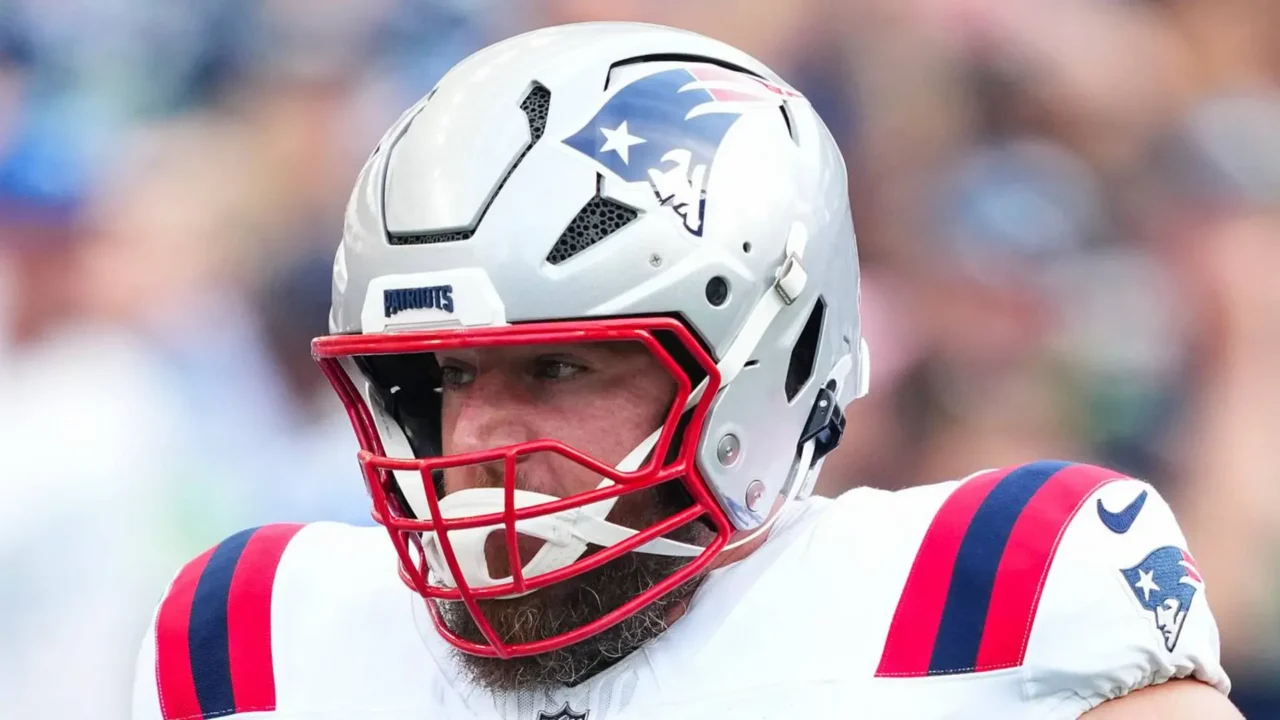
The source describes Mike Onwenu and Greg Van Roten as injured and identifies first-round selection Caleb Lomu in its discussion of the offensive line. Those injury descriptions and role details are not independently confirmed in the material provided. Lomu’s current position and assignment should be verified before publication rather than presented as established depth-chart information.
If the reported absences are accurate, they would make depth an important part of the discussion. A team’s response might involve evaluating existing options, adjusting assignments, or looking outside the roster. But the source’s criticism of the personnel department is an opinion, and there is not enough information here to assess every available player or the team’s internal evaluation.
The running game has not provided enough relief
Musket Fire cites limited production from Rhamondre Stevenson and TreVeyon Henderson through the first three games. The figures below are reported by the source and should be understood in that context; they describe production, but do not settle how much responsibility belongs to the line, the backs, play-calling, or game circumstances.
Those numbers raise a reasonable question about whether New England can find more consistent rushing production. They do not, by themselves, show that either back is the problem or establish that one tactical change would solve it. Production can reflect blocking, defensive strategy, game script, play-calling, and individual execution at the same time.
What offensive-line help could mean before the Buffalo trip
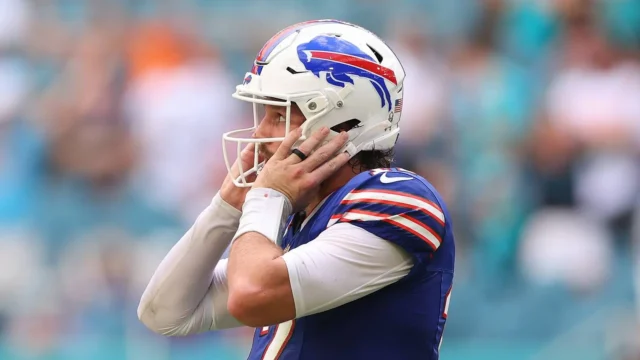
The Patriots’ next listed challenge is a Week 4 trip to Buffalo to face Josh Allen. Musket Fire argues that New England should seek offensive-line help, including through a deal. That is a recommendation, not news of a confirmed trade, signing, or named target.
Before making a roster move, the practical questions include which players are available, whether the reported injuries affect the lineup, and what kind of help the offense actually needs. A new player would not automatically fix protection or rushing efficiency. The Patriots must also assess whether the current group can communicate and execute more consistently.
Vrabel’s decision is about diagnosis before drastic action
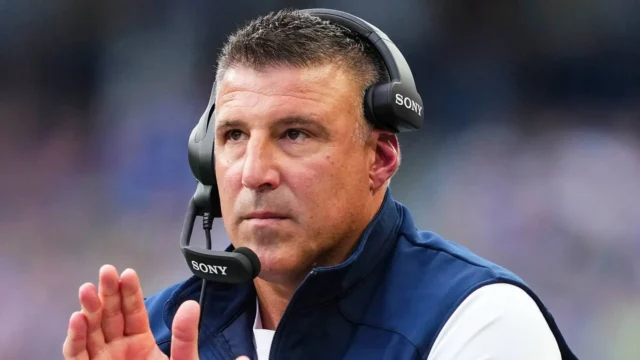
Musket Fire calls on head coach Mike Vrabel to take charge of personnel and on-field decisions and push for an offensive reset. That is the author’s proposed response to the team’s problems; it is not evidence that Vrabel is absent from those responsibilities, that the staff lacks a workable plan, or that a particular personnel decision has been made.
Leadership does matter when an offense is struggling. Vrabel and the coaching staff will need to evaluate protection, the running game, and how the offense gives Maye a workable environment. The available source does not establish which adjustment is best or support its criticism of the staff’s competence as objective fact. More on the broader leadership discussion appears in Mike Vrabel Promise Patriots Future.
The Patriots’ offensive line is a warning sign, not a final 2026 verdict
Musket Fire warns that a 1-3 start is almost guaranteed and suggests the 2026 Patriots season could be lost without major action. Those are projections, not confirmed outcomes. A poor result against Jacksonville and the source’s cited production figures justify scrutiny, but they do not decide the rest of the season.
Against Buffalo, watch whether New England protects Maye more reliably, creates more consistent opportunities for Stevenson and Henderson, and handles any changes to the line’s availability. Those are more useful measures than treating a projected record or a call for a sweeping overhaul as settled fact.
This article responds to the opinion piece “Patriots’ offense won’t get any better until they fix their weakest link” by Musket Fire. Its reported statistics and injury descriptions are attributed to that source and are not independently verified here.