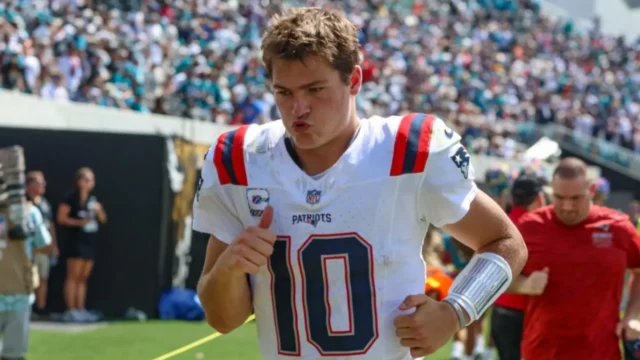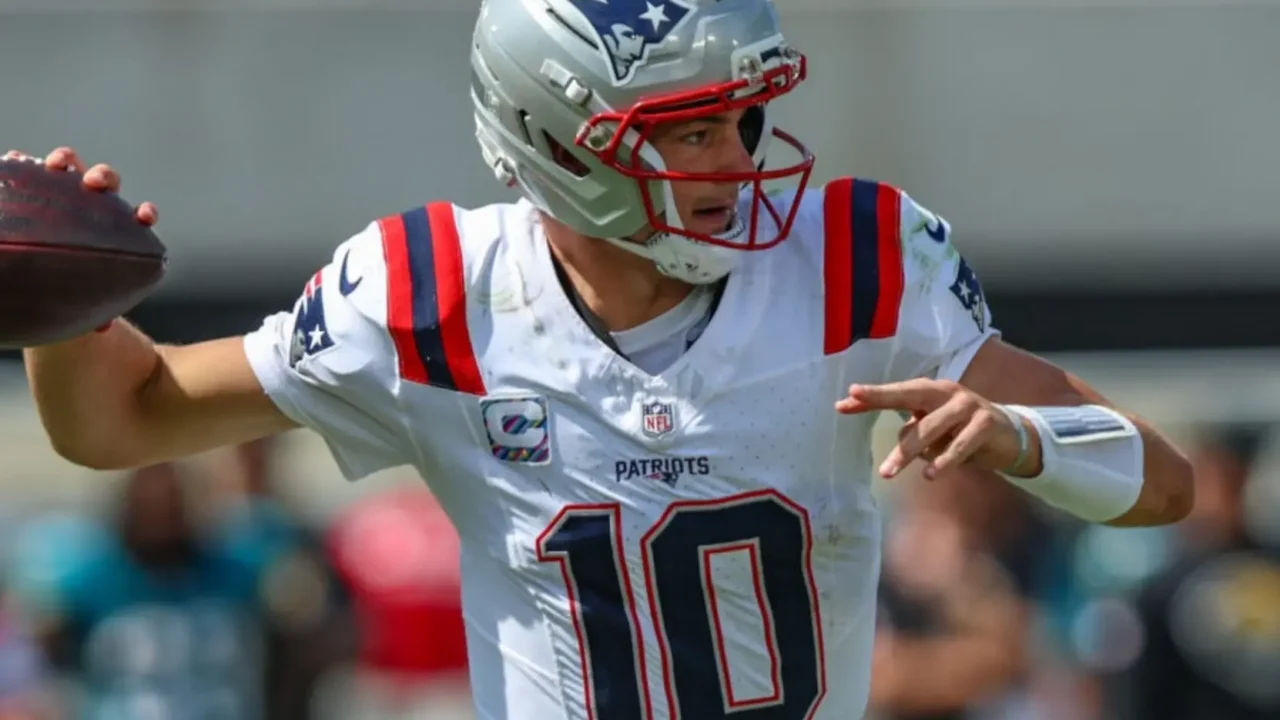
The Drake Maye shoulder injury question remains unresolved: the New England Patriots quarterback discussed his shoulder on WEEI, but the reported comments do not confirm a current injury. Maye said, “I wouldn’t say there’s a problem with my shoulder,” and added that he would give his all when dressed and on the field.
Patriots coach Mike Vrabel said he was unaware of a shoulder issue that would affect Maye’s availability, according to Boston.com’s report by Conor Ryan. The comments do not establish a diagnosis or connect Maye’s shoulder to his performance. They also do not settle whether he feels exactly as he did before the injury he discussed or whether any effects remain.
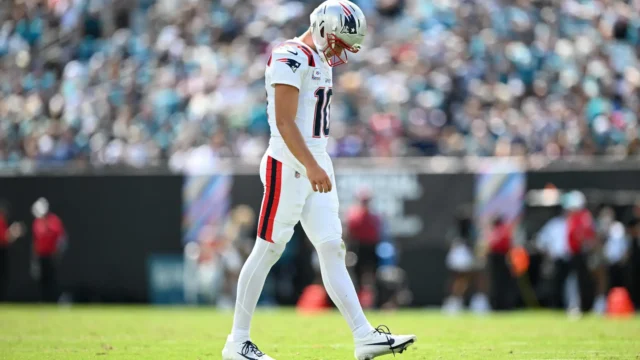
The uncertainty matters because Maye’s early-season results have drawn attention. He has thrown six interceptions through three games, along with one touchdown and a lost fumble, and the Patriots are coming off a 35-6 road loss to the Jacksonville Jaguars. Those facts make questions about his play understandable, but they do not show that his shoulder is responsible.
What Drake Maye said about his shoulder on WEEI
Maye made the remarks during an interview on WEEI’s “Rich and Ken with Ted Johnson,” hosted by Rich Shertenlieb. He said, “I wouldn’t say there’s a problem with my shoulder,” and said that when he is dressed and on the field, he will give his all.
The exchange followed a question about whether his throwing shoulder felt better this fall. Maye referred to taking a hit during the playoff run, in the AFC Championship Game against Denver, and said he had felt good during training camp and continued to “let it loose.” That answer offers some of his own account of the timeline, but it does not give a direct medical comparison with how he felt before the injury.
Shertenlieb then asked whether Maye’s right shoulder and throwing arm felt physically the same as before, including in strength, velocity, and range of motion. Maye did not answer those specific points. Instead, he said he did not think the question had anything to do with executing and playing better football, and emphasized that execution was the biggest contributor to winning.
When Shertenlieb followed up by asking whether something was still lingering, Maye returned to his point about playing at full effort whenever he was in uniform and on the field. Asked whether he was managing the issue every day, Maye said players can be sore after games and that he would not describe anything in particular. He shifted the focus to getting back out to prepare for the coming week of practice.
Those remarks offer Maye’s perspective but do not provide a medical assessment or confirm whether he has any lingering effects. His answers address his willingness to play and the ordinary soreness that can follow a game, while leaving the specific questions about strength, velocity, and range of motion unanswered. The interview, as reported by Boston.com, does not establish that Maye has a current shoulder injury.
Mike Vrabel was unaware of an availability-affecting issue
Boston.com reported that Vrabel said he was unaware of a shoulder issue affecting Maye’s availability. That statement describes the coach’s awareness; it does not independently confirm Maye’s medical condition.
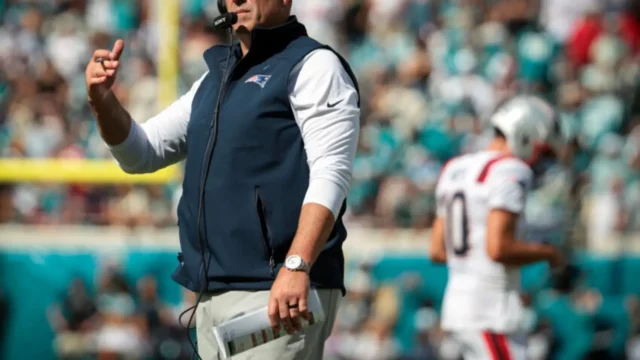
Vrabel was asked Monday at Gillette Stadium whether Maye was still dealing with effects from the shoulder issue. He said he was not aware of anything that would have put Maye on the injury report or required treatment. Vrabel also noted that players go through normal maintenance and rehabilitation, and that a quarterback can take hits during an NFL game.
His answer therefore speaks to what he knew about Maye’s status and whether he anticipated an availability concern. It should not be read as a detailed medical evaluation or as confirmation that Maye has no soreness at all. Vrabel said he did not anticipate the shoulder being an issue going forward, while acknowledging that things can happen over the course of a game.
What is known about Maye’s shoulder—and what remains unclear
Boston.com reported that Maye received a pain-killing injection in his shoulder before Super Bowl LX and did not have offseason surgery. That reported history provides context, but it does not establish a current injury or show that the earlier shoulder issue has affected Maye this season.
The report says Maye first suffered the shoulder injury during the AFC Championship Game against the Broncos. After New England’s loss to the Seahawks in the Super Bowl, he acknowledged needing the injection. That establishes that the shoulder required attention during the postseason, but the available information does not describe a diagnosis, the precise extent of the injury, or a current treatment plan.
No current diagnosis or independent medical assessment is provided in the report. The available information also does not establish a causal link between Maye’s shoulder and his performance. In particular, Maye’s answers do not confirm a loss of strength, velocity, or range of motion, and the report does not provide testing or other independent evidence about those areas.
Boston.com noted that Maye has appeared to have less zip on some passes and has underthrown targets through the first three games. Those observations are part of the discussion around his performance, not proof of an injury-related limitation. The report also raised other possible explanations as questions, including whether the absence of A.J. Brown affects the offensive game plan or whether defenses have adjusted after a full year of tape. It did not establish any one explanation as the cause.
Maye’s early-season performance in context
Boston.com reported that Maye had one touchdown, six interceptions and one lost fumble through three weeks. The report also noted New England’s 35-6 loss to the Jacksonville Jaguars. Those reported figures and the result do not show that Maye’s shoulder affected his play.
The contrast with his previous season is part of why the questions have surfaced: Boston.com described Maye as the NFL MVP runner-up who had led New England to Super Bowl LX the year before, and characterized his current start as a stark regression. But a difficult stretch and a documented shoulder history are not, by themselves, evidence that one caused the other. The report leaves open several possible factors and does not resolve the role, if any, of the shoulder.
The Patriots’ next challenge, as described in the report, is a trip to Buffalo to face Josh Allen and the Bills. That upcoming game makes Maye’s preparation and availability relevant, but the comments do not announce a change to his status. Vrabel said he did not anticipate the shoulder being an issue going forward, and no current diagnosis is provided.
For now, the reported information is limited to Maye’s WEEI comments, Vrabel’s lack of awareness of an availability-affecting issue, and Boston.com’s account of Maye’s shoulder history and early-season statistics. Maye did not directly confirm that his arm feels identical to its pre-injury condition, while the coach’s remarks do not amount to an independent medical assessment. None of the information confirms a current injury or explains the Patriots quarterback’s performance.