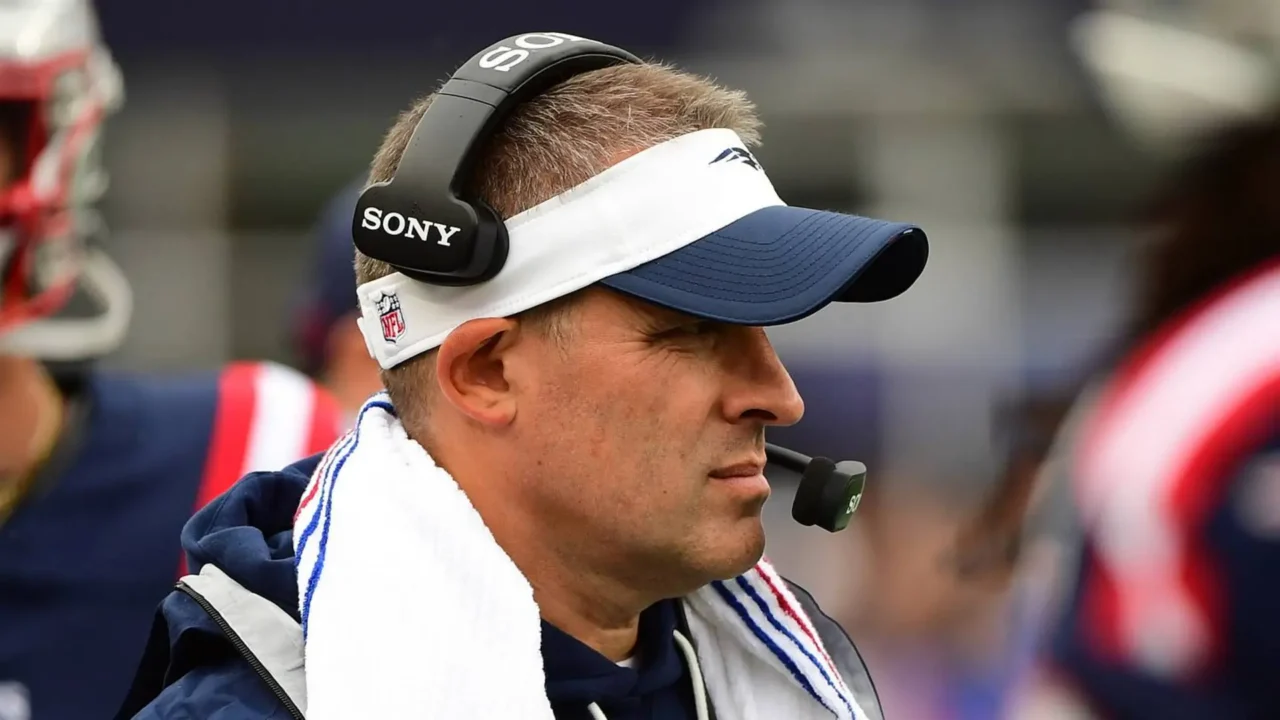
Drake Maye and Josh McDaniels are at the center of a widening conversation after a two-game offensive slog, and MusketFire reported that some fans want the coordinator held responsible. This analysis looks at the MusketFire reporting, game context and why the quarterback is the most actionable variable going forward.
Quick take — who does the MusketFire piece blame (and who really can fix it)?
The MusketFire story points to heat on McDaniels from frustrated fans but ultimately frames the problem as something Drake Maye must correct, not a fault solely of play calling. The piece notes pundit reaction — notably Boomer Esiason — defending McDaniels while arguing Maye needs to rediscover the form that made him a 2025 statistical leader.
The numbers and why sample size matters
Context from the source matters: last season Drake Maye led several NFL quarterback categories, posting a 113.5 passer rating. Two games into 2026, MusketFire reported Maye’s rating had dropped to 63.1, and New England was averaging just 11.5 offensive points per game (30th in the league).
Those declines are real and worrying, but they come from a very small sample. Early-season splits can swing wildly. This piece keeps returning to that caveat: two games do not make a trend, but they are enough to identify areas that need fixing.
What pundits are saying — Boomer Esiason’s defense of McDaniels
On WEEI (as relayed by MusketFire), Boomer Esiason dismissed calls to fire McDaniels. “For those people who want to get rid of Josh McDaniels — they’re out of their minds,” Esiason said, noting McDaniels coached high-level quarterbacks and predicting Maye will improve.
That quote is commentary, not team confirmation. It’s useful because it reframes the debate: is the coordinator failing to scheme, or is the young quarterback processing and executing below last year’s standard? Esiason’s view favors the latter, and it’s treated here as opinion backed by experience rather than conclusive proof.
Why Drake Maye is the most actionable explanation
MusketFire lists specific, quarterback-driven issues that make Drake Maye the most direct fixable variable: turnovers and decision-making, timing and chemistry after losing A.J. Brown, and moments of tentative processing pre- and post-snap. The interceptions in Week 1 against Seattle stand out as execution failures rather than pure schematic breakdowns.
Week 2 offered encouraging signs: the Patriots’ biggest plays included a long touchdown run and Romeo Doubs’s 63-yard reception from Maye. Those plays indicate Maye can make the big reads and throws when he’s on tempo and confident — suggesting the core issues are about processing, decisiveness and rhythm rather than an irreparably broken playbook.
Scheme and matchup context — Seahawks and Steelers’ zone-heavy approach
Per Sharp Football Analysis, Seattle operated in zone coverage on 91.2% of passing snaps in that matchup and Pittsburgh at 89.1%. MusketFire uses those figures to show how early opponents’ coverage tendencies magnified New England’s issues.
Zone-heavy defenses force a quarterback to process route combinations and find soft spots rather than rely on one-on-one mismatches. That increases the cognitive load on a young QB and can expose hesitation in reads and timing — exactly the behaviors MusketFire observed from Maye.
Trade/roster implications and what to avoid
Discussion about firing coordinators or making panic trades is common in this moment, but it’s speculative. MusketFire warns, and this analysis agrees, that replacing McDaniels midseason with an unproven play-caller would be risky. Such moves are more likely to compound instability than fix an execution problem.
Still, prolonged poor quarterback play would naturally drive roster conversations: targeted additions in the passing game, protection upgrades on the offensive line, or short-yardage playmakers to stabilize drives. Those are plausible pathways, but they become realistic only if poor play persists beyond an initial sample.
What to watch next — timeline for judgment
Measurable indicators that will tell us whether this is a temporary stumble or a deeper problem:
- Turnover rate and interception frequency over the next four games.
- Passer rating trend across the next 4–6 outings rather than a single-game swing.
- Points per game and red-zone efficiency to see if drives finish.
- Third-down conversion rate and completion percentage under pressure.
A reasonable reassessment window is roughly a 4-game sample. That gives opponents, game scripts and adjustments enough variety to separate noise from pattern. Until then, avoid definitive judgments about coaching staff security or sweeping roster changes.
Source attribution and next updates
This article is grounded in the MusketFire piece that prompted this debate and uses scheme metrics cited from Sharp Football Analysis. Boomer Esiason’s comments came via WEEI and were quoted in MusketFire; they are treated here as pundit opinion rather than team confirmation.
We will follow this story with periodic updates after the next meaningful sample of games. Expect an early follow-up if the passer rating and turnover metrics shift significantly in either direction.